National Park · CA · Est. 1968
Redwood
Overview
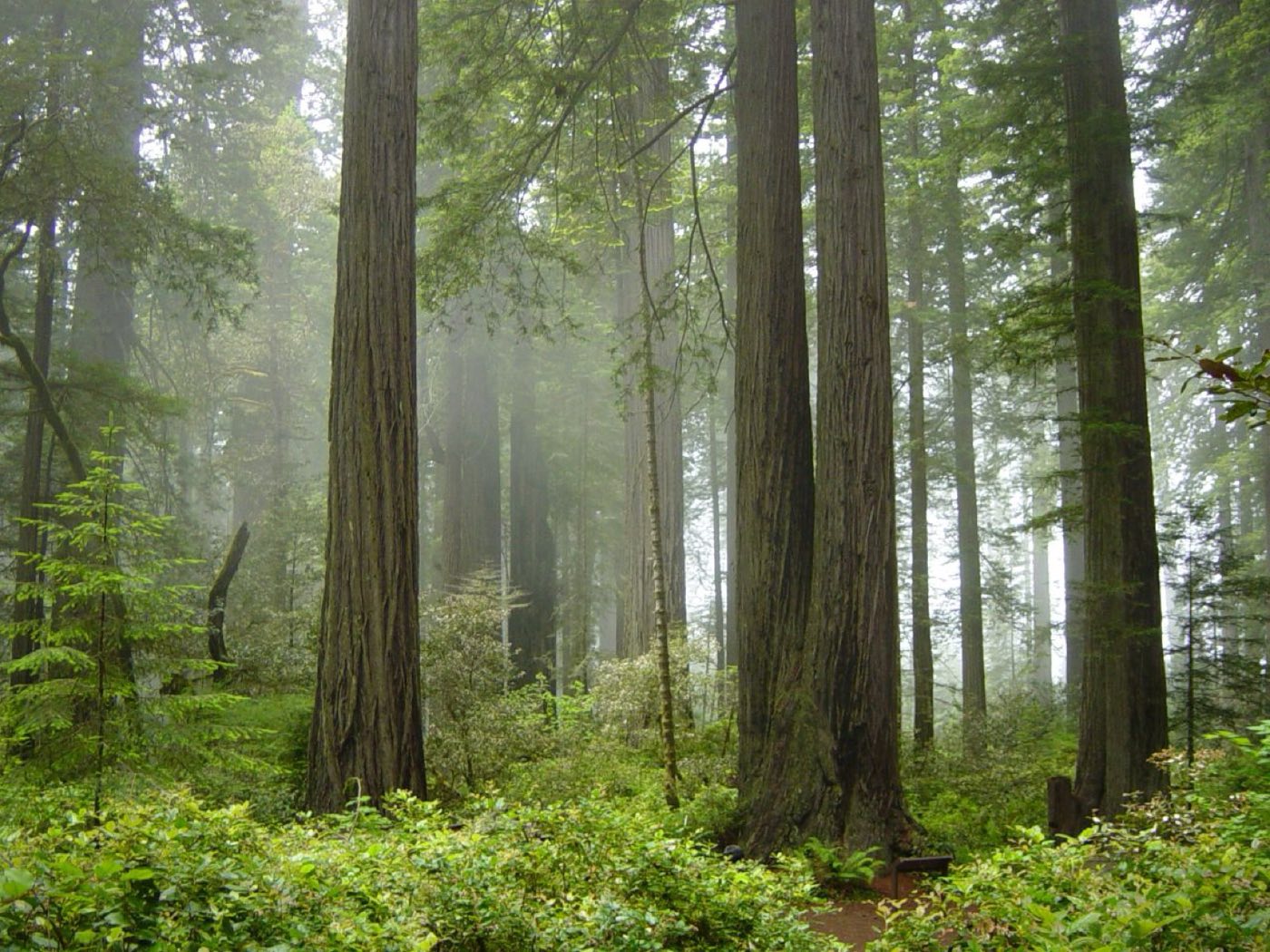
The coastal redwoods of far-northern California are the tallest living things on Earth, rising more than 350 feet in fog-soaked cathedral groves that have been growing since before the Roman Empire. The park isn't a single unit — it's a cooperative patchwork of Redwood National Park and three California state parks (Jedediah Smith, Del Norte, and Prairie Creek) stitched together along 40 miles of coastline, so your day will move between inland redwood groves, elk-grazed meadows, and driftwood beaches in the same afternoon. What surprises most first-time visitors is how wet and quiet it is. Fog rolls in off the Pacific almost every summer morning and condenses on the needles high above, which is how these trees drink — so you'll walk among them in a diffuse green light with water dripping from 300 feet up and sword ferns pushing chest-high along the trail. Plan on layers and a waterproof shell even in July. Redwood is also a two-hour drive from the nearest real airport and another hour-plus between its trailheads, so build a three-day minimum and pick a base in Crescent City, Klamath, or Orick rather than trying to day-trip from Eureka.
What to See & Do
Fern Canyon — a slot canyon draped in five-story ferns
A 30-foot-deep slot cut by Home Creek, with vertical walls lined ground-to-rim in five species of fern that give the place its lost-world look (Spielberg filmed Jurassic Park sequences here). You'll wade a few shallow stream crossings, so wear shoes you don't mind soaking. A summer access permit is required and parking at Gold Bluffs Beach fills early — reserve ahead on recreation.gov, arrive before 10 a.m., and combine it with a walk down the beach to watch Roosevelt elk on the meadow.
Tall Trees Grove trail to the world's tallest measured trees
A free permit from the Kuchel Visitor Center gets you through a locked gate and down a 7-mile unpaved road to the trailhead, then a steep 4-mile round-trip drops into the grove where the record-breaking trees stand. The permit system caps daily visitors to around 50, so it feels like a private audience with the giants. Go on a weekday if you can, pack a lunch, and give yourself half a day — the climb back out is a thousand vertical feet.
Howland Hill Road drive through Stout Memorial Grove
A 10-mile gravel one-lane road through old-growth Jedediah Smith — arguably the single best redwood experience in the park and one most visitors miss. The trees press right up to the road, and pull-outs let you walk a hundred yards into cathedrals no one else is in. The road is passable in any normal car but not to RVs or trailers. Combine it with the short, flat loop through Stout Grove, which sits on a bend of the Smith River.
Roosevelt elk herd grazing at Gold Bluffs Beach and Elk Meadow
Roosevelt elk were nearly wiped out by the 1920s and now number around 1,000 in the park. You'll see them most reliably at Elk Meadow off Highway 101 near the Prairie Creek Visitor Center, and down on the bluffs behind Gold Bluffs Beach. Stay in your car or keep 50 yards away — bulls in September rut are genuinely dangerous. Dawn and late afternoon are the best light and the best odds; midday they bed down in the trees.
Lady Bird Johnson Grove loop through old-growth canopy
A flat 1.4-mile loop that feels like the redwood picture-book version of the park — signed interpretive stops, a suspension-bridge start, and massive trees on every side. It's the easiest way to walk through mature old-growth without a long drive or a permit, making it ideal for a first evening in the park or for visitors with limited mobility. Come in the morning for fog in the canopy, or dusk when the forest goes quiet.
Newton B. Drury Scenic Parkway through Prairie Creek
A 10-mile alternate route that parallels Highway 101 and runs straight through Prairie Creek Redwoods State Park. Drive it slowly with windows down — the road bends through columns of 300-foot trees and past short trailheads like Big Tree Wayside and the Prairie Creek Trail. Elk Meadow sits at the southern end. It adds 20 minutes to your drive north or south and is worth an hour or three on its own.
Enderts Beach tide pools and coastal trail
A 1-mile walk down the bluff from the Crescent Beach Overlook to a pocket beach with some of the best tide pools on the north coast — anemones, sea stars, hermit crabs, and the occasional octopus at minus tides. Check a tide chart before you go and aim for a low tide below zero. The trail continues past the beach as part of the California Coastal Trail if you want to keep walking along the sea cliffs.
Getting There & When to Go
The closest airport is ACV in Arcata/Eureka, about 50 minutes south of the park; Crescent City's tiny airport is closer but has limited service. Most visitors fly into Medford, Oregon (3 hours north) or San Francisco (6 hours south) and make it a road trip. June through September is the driest and sunniest stretch, though summer fog keeps the forest cool and damp even in August — pack layers and a rain shell year-round. May and October are quieter with similar conditions. Winter (November through March) brings heavy rain, dramatic coastal storms, and near-empty trails; some unpaved roads like Howland Hill and Davison may close after storms, so check park alerts.
Where to Stay
There are no lodges inside the park — this is a campground-and-gateway-town park. Jedediah Smith, Mill Creek, Elk Prairie, and Gold Bluffs Beach campgrounds each sit inside one of the cooperating state parks and are the best way to wake up in the trees; book six months ahead through reservecalifornia.com for summer. For hotels, Crescent City at the north end has the most options (chain hotels, a few inns, and motels along Highway 101), Klamath sits between the north and south groves, and Arcata/Eureka at the south end offers the widest range of restaurants and Victorian inns at the cost of an hour's drive each morning.
Frequently Asked Questions
- Do I need a permit to enter Redwood National and State Parks?
- No entrance fee or general permit is required — entry is free. However, two specific destinations require free timed-entry permits in summer: Fern Canyon / Gold Bluffs Beach and the Tall Trees Grove. Both are reserved on recreation.gov and tend to book out a few days ahead in peak season.
- How many days do I need to see the redwoods?
- Plan on at least two full days, ideally three. The park stretches 40 miles along the coast and the best groves (Jedediah Smith in the north, Prairie Creek in the middle, Lady Bird Johnson and Tall Trees in the south) are each an hour or more apart — trying to do it as a day trip from Eureka leaves you mostly driving.
- Is it foggy year-round?
- Coastal fog is heaviest in summer mornings, when it rolls in off the Pacific almost daily and burns off by early afternoon in the inland groves. Winter is rainier than foggy. The fog is part of why the redwoods grow here — they drink it out of the air — so leaning into it (and packing layers) usually improves a visit rather than ruining it.
- Can I see the elk up close?
- You'll often see Roosevelt elk at Elk Meadow along Highway 101 and on the bluffs behind Gold Bluffs Beach, but stay in your car or at least 50 yards away. Bulls weigh over 1,000 pounds and are especially aggressive during the September-October rut; several visitors are injured each year by getting too close for photos.
Plan Your Visit
Book Nearby HotelsHave you visited Redwood?
Track all 63 national parks on your map