National Park · TN · Est. 1934
Great Smoky Mountains
Overview
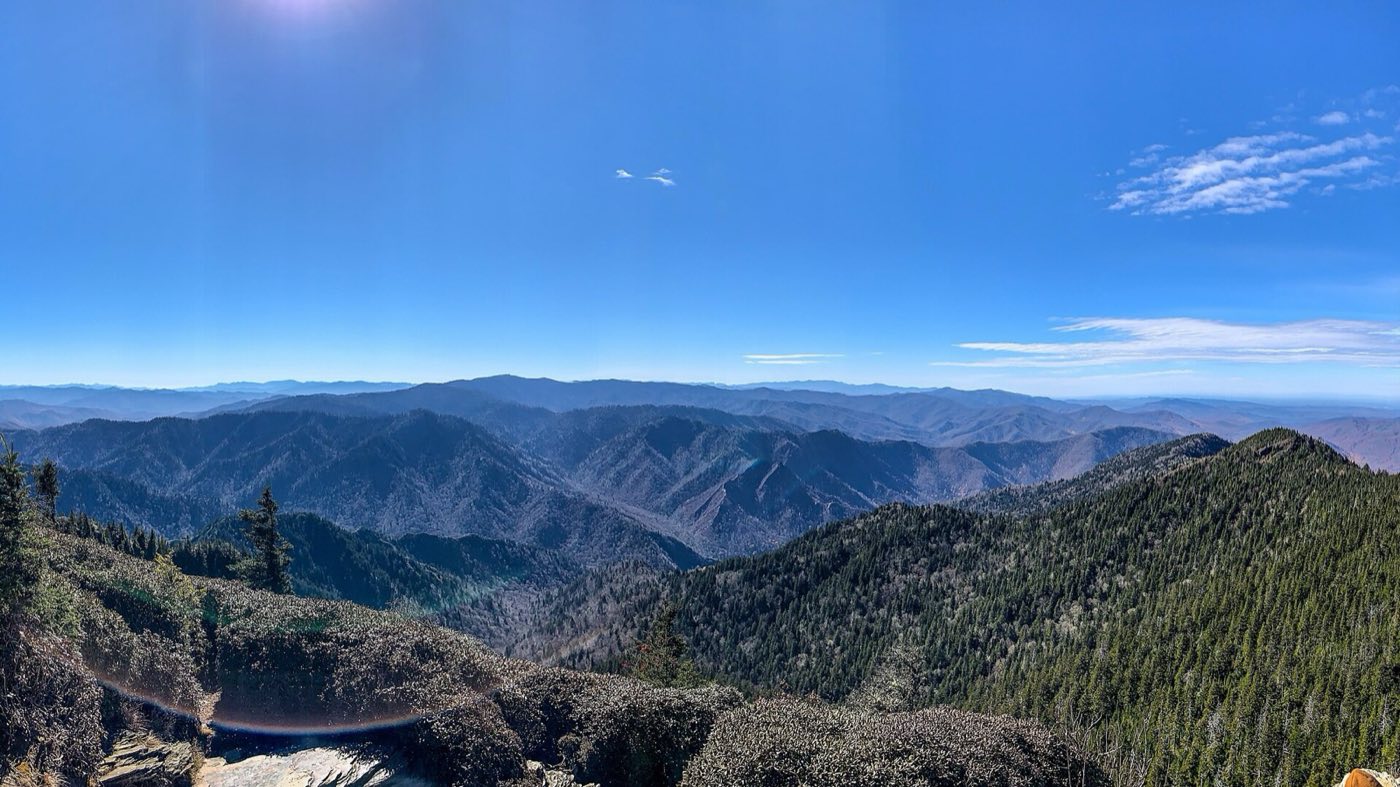
Great Smoky Mountains is the most visited national park in America — around 12 million people a year, roughly double Grand Canyon — and it earns that traffic through sheer accessibility. The park straddles the Tennessee–North Carolina line in the southern Appalachians, has no entrance fee, and sits within a day's drive of half the U.S. population. The payoff is a mountain landscape of layered blue ridges wrapped in the characteristic smoky haze — actually volatile organic compounds released by the dense hardwood forest, which gives the range its name. Biologically, the Smokies are one of the richest temperate zones on Earth: more than 19,000 documented species and perhaps another 80,000 waiting to be cataloged. You'll see that diversity in the spring wildflower season (late March to early May), the autumn leaf display that peaks mid-October, and the synchronous firefly show in early June when Photinus carolinus males flash in unison for two weeks a year. Wildlife is genuinely abundant — about 1,500 black bears live in the park, plus reintroduced elk in Cataloochee Valley. Expect crowds on fall weekends and summer afternoons, especially around Cades Cove and Clingmans Dome; go at dawn or pick the quieter North Carolina side to find space to breathe.
What to See & Do
Cades Cove loop road through a historic mountain settlement
The 11-mile one-way loop road circles a broad valley framed by mountains, passing preserved 19th-century cabins, churches, and a working gristmill. Wildlife viewing is exceptional — white-tailed deer are constant, black bears and coyotes common at dawn and dusk. The loop can take one hour or five depending on traffic (summer afternoons it's bumper-to-bumper). The road is closed to cars every Wednesday from May through September for cycling and walking only; that's the single best time to experience it.
Synchronous firefly viewing in Elkmont
For about two weeks in late May or early June, the synchronous firefly (Photinus carolinus) males flash in unison along the Little River at Elkmont — one of only a few places in the world where this happens. Access during the event is by lottery only through recreation.gov; applications open in late April and winners get a parking permit for one evening. Rangers run a shuttle from Sugarlands. Don't bring flashlights (red filters only) and expect to stand quietly in the dark.
Alum Cave Trail to the summit of Mount LeConte
Alum Cave is one of the park's signature hikes — 11 miles roundtrip with 2,800 feet of climbing to the 6,593-foot summit of Mount LeConte. The trail passes Arch Rock, a natural tunnel, then the Alum Cave Bluffs overhang (a popular turnaround at 2.3 miles) before the final climb. LeConte Lodge at the top is the only backcountry lodge in the park — cabins, meals, no electricity — and it books a year ahead by lottery. Day-hike or stay, the summit sunrise is worth the effort.
Clingmans Dome observation tower
At 6,643 feet, Clingmans Dome is the highest point in the park and in Tennessee. A paved half-mile trail (steep enough to feel it) climbs from the parking lot to a spiral concrete observation tower with 360-degree views. On clear days you can see seven states; more often you're in cloud, which has its own beauty. The access road closes from December through March. Go at sunrise or sunset for the best light; midday in fall the parking lot can back up onto the access road.
Roaring Fork Motor Nature Trail past waterfalls and cabins
This 5.5-mile one-way loop just outside Gatlinburg winds through dense forest past a handful of preserved log homesteads and several short waterfall hikes — Grotto Falls, reached by a 3-mile roundtrip trail, is one you can walk behind. The narrow paved road is closed to buses and RVs and to all traffic in winter. Early morning is quiet and the light filtering through the rhododendron canopy is the reason people drive this slowly.
Cataloochee Valley elk herd at dawn and dusk
On the quieter North Carolina side, Cataloochee Valley was a Cherokee and then Appalachian settlement until the park displaced its residents in the 1930s. Today the valley holds a reintroduced elk herd of 200-plus animals that graze the open meadows at dawn and dusk during the September–October rut. The access road is a narrow, winding gravel route that most visitors skip, which is part of why the valley still feels like a discovery. Bring a camp chair and binoculars.
Laurel Falls
Laurel Falls is the park's most-hiked waterfall — an easy 2.6-mile roundtrip on a paved trail to an 80-foot double cascade. The pavement helps with family logistics but does nothing to thin the crowds; on a summer weekend afternoon you'll share the trail with hundreds. Go at first light or on a rainy weekday and you might have it to yourself. The paved surface is cracked and steep in places; not as stroller-friendly as it sounds.
Getting There & When to Go
Knoxville, Tennessee, is the closest major airport (about an hour to Gatlinburg); Asheville, North Carolina, is similar on the eastern side. The park has three main entrances — Gatlinburg on the northwest, Townsend on the west, and Cherokee on the southeast — and no entrance gate or fee, though you need a parking tag ($5 per day or $40 per year) for any stop of more than 15 minutes. The park is open year-round. October is peak fall color and peak crowds; plan dawn starts. April and May bring wildflowers; June is firefly season by lottery. Winter is quiet and often beautiful, but higher elevation roads close for snow.
Where to Stay
There are no lodges inside the park (LeConte Lodge, accessed only on foot, is the lone exception). Gatlinburg and Pigeon Forge on the Tennessee side offer a huge range from chain hotels to cabin rentals, with the tradeoff that they're commercial tourist towns. Townsend, also in Tennessee, is quieter and has cabins and small inns. On the North Carolina side, Cherokee has casino-resort lodging, Bryson City is small and quiet, and Waynesville is a good base for the Cataloochee side. The park's 10 developed campgrounds reserve through recreation.gov; Cades Cove Campground is the most popular and fills months ahead for fall weekends.
Frequently Asked Questions
- Is there an entrance fee for Great Smoky Mountains?
- No — it's the only major national park without an entrance fee, a condition of the original land transfer from Tennessee and North Carolina. A parking tag is required for any stop longer than 15 minutes: $5 per day, $15 per week, or $40 per year. Purchase at visitor centers or online through recreation.gov.
- When is peak fall color?
- Elevation stretches the fall season across nearly a month. The highest ridges (Clingmans Dome area) peak in early October, mid-elevations peak mid-October, and the lower valleys (Cades Cove, Cataloochee) peak late October into early November. Mid-October is the traditional sweet spot for mixed elevation color, and also the busiest weekend traffic of the year.
- How do I see the synchronous fireflies?
- A lottery through recreation.gov opens in late April for viewing dates in early June. If you win, you get a parking pass at Sugarlands and ride a shuttle to Elkmont in the evening. No flashlights beyond red-filtered, no pets, and expect to stand in the dark for two hours. The event is typically around the first week of June but shifts year to year.
- Are black bears a safety concern?
- Black bears are common — an estimated 1,500 in the park — and encounters are routine. They're generally wary of humans but will raid unattended food. Keep a minimum 50-yard distance, never feed bears, and store food properly at campgrounds. If a bear approaches, make noise and act large; don't run, and don't play dead with black bears (that's for grizzlies).
Plan Your Visit
Book Nearby HotelsGreat Smoky Mountains Planning Guides
Compare focused Great Smoky Mountains National Park lodging, itinerary, and activity guides before you book.
Itinerary
Great Smoky Mountains National Park Itinerary
Plan a Great Smoky Mountains National Park itinerary with Cades Cove, Clingmans Dome, Roaring Fork, waterfalls, and gateway towns.
Where to stay
Where to Stay Near Great Smoky Mountains National Park
Compare where to stay near Great Smoky Mountains National Park, including Gatlinburg, Pigeon Forge, Townsend, Cherokee, and Bryson City.
Have you visited Great Smoky Mountains?
Track all 63 national parks on your map