National Park · CA · Est. 1994
Joshua Tree
Overview
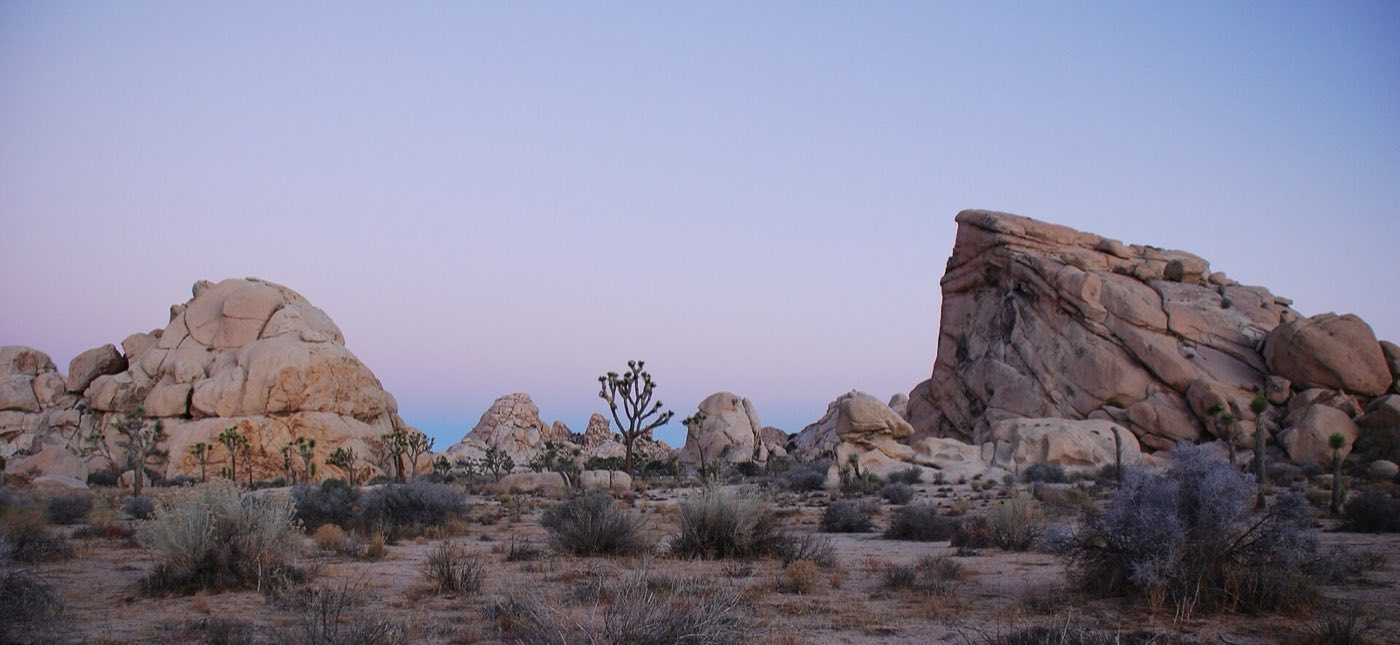
Joshua Tree sits at the seam between two deserts — the higher Mojave to the north and west, the lower Sonoran to the south and east — and the difference in a few hundred feet of elevation produces a landscape that shifts radically as you drive through it. In the Mojave half, granite boulders the size of houses pile on top of each other across high valleys, with spiky Joshua trees standing like surrealist sculptures between them. Drop into the Colorado section of the Sonoran and the Joshua trees disappear, the ground gets flatter and rockier, and ocotillo and cholla take over. The park rewards people who slow down. Rock climbers come for the adhesive monzogranite and the sheer volume of routes — over 8,000 of them. Stargazers come for skies dark enough that the Milky Way casts a shadow on moonless nights. Hikers come for the short, weird walks through places like the Cholla Cactus Garden or Arch Rock. You'll probably come for one of those reasons and leave thinking about the others, because the thing about Joshua Tree is that it keeps revealing itself the longer you stay. An hour at Keys View at sunset, a 4 a.m. wake-up for a pre-dawn climb on Intersection Rock — both are the park, and neither tells the whole story.
What to See & Do
Cholla Cactus Garden at golden hour
A quarter-mile boardwalk loop runs through a dense stand of teddy bear cholla along Pinto Basin Road in the transition zone between the two deserts. In the hour before sunset, backlight turns the cactus spines into halos of fuzz — it's one of the most photographed spots in the park for good reason. Stay on the path; cholla segments detach at the slightest touch and embed their barbed spines in skin and shoes. Bring tweezers just in case, and go at 4 p.m. in winter or 6:30 p.m. in spring.
Skull Rock and the nature trail loop
Skull Rock is a car-accessible granite boulder that erosion has hollowed into two eye sockets — right off the main park road between Jumbo Rocks and Split Rock. A 1.7-mile nature trail loop connects it with Split Rock through a chain of boulder piles and desert washes. The rock itself is most interesting at dawn or dusk when shadows fill the eye sockets; midday it looks flat. Pair it with the Arch Rock spur for a good half-day loop on foot.
Keys View overlooking the Coachella Valley and Salton Sea
Keys View sits at 5,185 feet on the park's southern ridge and looks out across the San Andreas Fault, the entire Coachella Valley, the Salton Sea, and — on clearer-than-usual days — Mount San Jacinto and even a corner of Mexico. Go at sunset when the valley fills with golden light and the Salton Sea mirrors the sky. The drive from the main park road takes 20 minutes. Winds at the overlook are often fierce, especially in late afternoon; bring a windbreaker.
Barker Dam trail to a desert water hole
Barker Dam is a 1.3-mile loop to a small cattle-ranching-era stone dam that captures rainwater into a seasonal pool — a genuinely rare sight in the Mojave. The trail passes through boulder-strewn Joshua tree stands and ends at the dam itself, where the water level varies with winter rain. After wet years, bighorn sheep come down to drink. A short spur off the loop leads to petroglyph panels left by the region's Cahuilla, Serrano, and Chemehuevi peoples.
Ryan Mountain summit for 360-degree desert panorama
Ryan Mountain is the park's best workout — 3 miles roundtrip with a steady 1,000-foot climb up a rocky trail to a 5,457-foot summit. The payoff is a 360-degree view of the Mojave desert, Lost Horse Valley, and Mount San Jacinto to the west. Plan on two hours and start early; there's no shade on the trail and the summit can be 20 degrees colder and windier than the valley floor. Winter is the ideal season; summer afternoons are genuinely dangerous.
Rock climbing at Hidden Valley — world-class bouldering
Hidden Valley is the heart of rock climbing in Joshua Tree and one of the major climbing destinations in North America, with over 400 named routes within a half-mile radius. The monzogranite has a sandpaper texture that grips shoes and skin, and the short approaches — most climbs are a 2-minute walk from the road — make it possible to do 10 routes in a day. Guided climbs run year-round; the American Alpine Institute and Cliffhanger Guides are the long-running outfits.
Arch Rock trail at White Tank campground
Arch Rock is a naturally eroded granite arch about 30 feet across, hidden among the boulder piles behind the White Tank campground. A 1.2-mile loop from the campground or the designated parking area leads past the arch and through the surrounding formations; sunset light streams through the arch and photographers line up for the shot. The trail is flat and easy, but rock scrambling off-trail in the area is some of the best in the park if you want to explore further.
Getting There & When to Go
Joshua Tree is a 2.5-hour drive east of Los Angeles and a 45-minute drive north of Palm Springs, the closest airport. The park has three entrances — the west entrance at Joshua Tree town, the north entrance at Twentynine Palms, and the south entrance at Cottonwood off I-10 — and you can traverse the whole park in a single day. October through May is prime time with daytime highs in the 60s and 70s; March and April bring wildflowers after wet winters and the heaviest crowds. Summer regularly tops 100 degrees and hiking becomes genuinely dangerous between 10 a.m. and 4 p.m., though mornings and evenings remain magical. New moon nights are best for stargazing; the park is an International Dark Sky Park.
Where to Stay
The park has nine campgrounds — Jumbo Rocks, Belle, White Tank, and Hidden Valley are the standouts for location, all tucked among boulder piles with dramatic night skies. Most sites are reservable on recreation.gov; a few are first-come-first-served. Outside the park, the gateway town of Joshua Tree is full of quirky vacation rentals in the desert hills — mid-century ranches, Airstream trailers, and architect-designed cabins have made this one of the most-searched Airbnb markets in California. Twentynine Palms on the north side has motels and chain lodging at lower prices; Palm Springs and the other Coachella Valley towns are an hour south if you want resort amenities and real food at night.
Frequently Asked Questions
- Is Joshua Tree doable as a day trip from Los Angeles?
- Technically yes, but barely — a 2.5-hour drive each way leaves you with maybe 6 hours in the park. You can see the main highlights: Cholla Cactus Garden, Skull Rock, Keys View, and a short hike. Plan at least two nights to do the park justice, or one night minimum to catch a sunset and the star-filled sky.
- When do the Joshua trees and wildflowers bloom?
- Joshua trees bloom in late February through April with tall spikes of cream-colored flowers — but not every year, since flowering depends on a rare combination of winter rain and a freeze. Wildflower super blooms in the desert floor happen in March and April after wet winters, with poppies and desert dandelions carpeting the ground. Check bloom reports before you go.
- Can I see the Milky Way from inside the park?
- Yes — Joshua Tree is a certified International Dark Sky Park, and on moonless nights the Milky Way is brilliantly visible from almost anywhere inside. Keys View, Cap Rock, and the campgrounds are popular stargazing spots. Plan around the new moon, bring warm layers (desert nights are cold year-round), and let your eyes adapt for 20 minutes.
- Do I need a 4x4 to drive in the park?
- No — the main park roads are all paved and accessible to any vehicle. A handful of unpaved backcountry roads like Geology Tour Road and Queen Valley Road require high-clearance and sometimes 4x4, especially after rain, but you can see 90% of the park without leaving paved surfaces.
Plan Your Visit
Book Nearby HotelsJoshua Tree Planning Guides
Compare focused Joshua Tree National Park lodging, itinerary, and activity guides before you book.
Where to stay
Where to Stay Near Joshua Tree National Park
Compare where to stay near Joshua Tree National Park, including Twentynine Palms, Joshua Tree village, Yucca Valley, and Palm Springs.
Itinerary
Joshua Tree National Park Itinerary
Plan a Joshua Tree National Park itinerary with Hidden Valley, Skull Rock, Keys View, Cholla Cactus Garden, and stargazing tips.
Things to do
Things to Do in Joshua Tree National Park
Explore the best things to do in Joshua Tree National Park, including Hidden Valley, Skull Rock, Keys View, Cholla Cactus Garden, and stargazing.
Have you visited Joshua Tree?
Track all 63 national parks on your map