National Park · AK · Est. 1980
Kenai Fjords
Overview
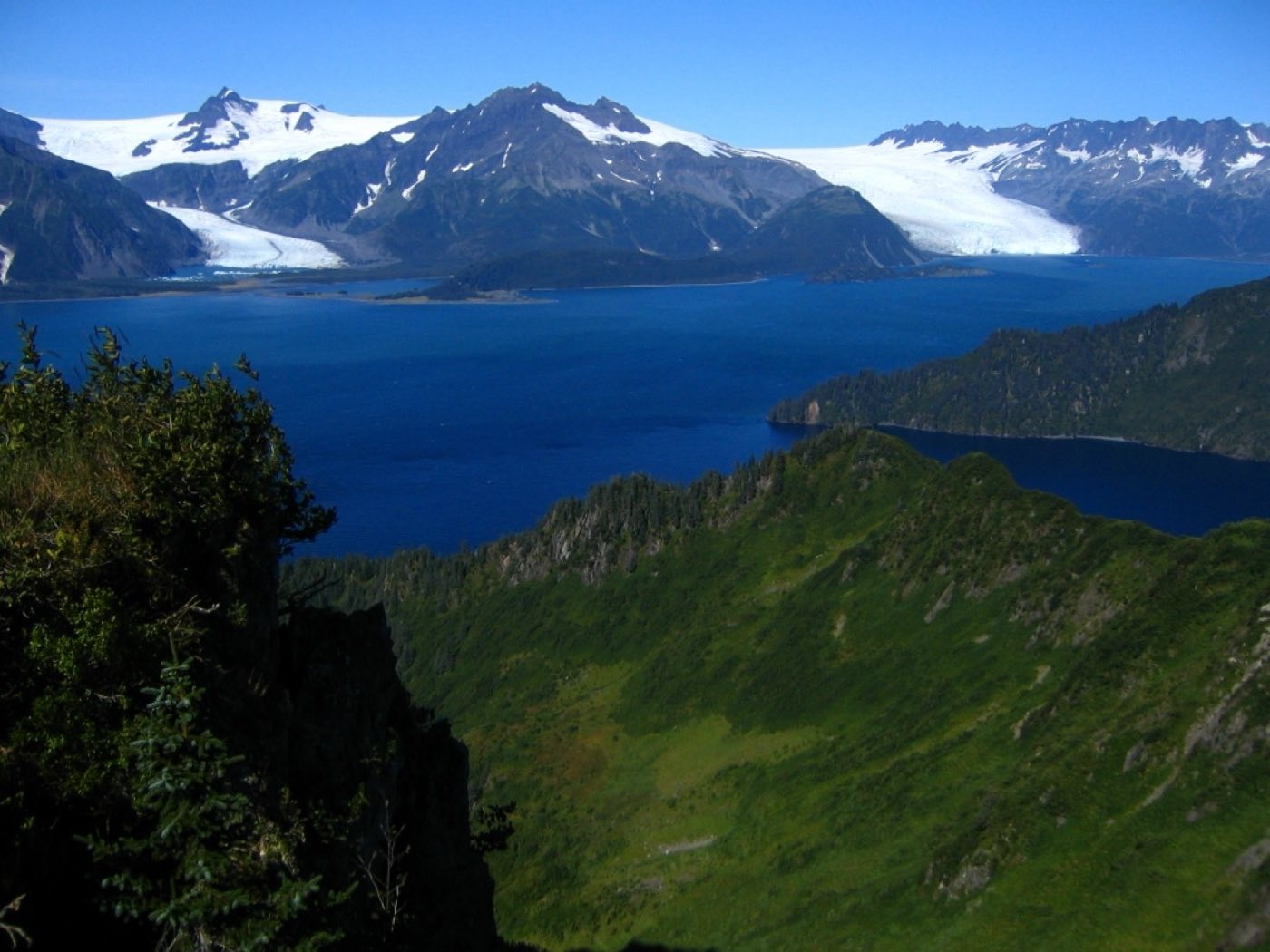
Kenai Fjords starts where the road ends in Seward, Alaska, about 130 miles south of Anchorage on a drive that's worth a full day on its own. This is the rare Alaska park where you don't absolutely need a floatplane: you can drive right up to the Exit Glacier visitor center, and the rest of the park opens up from a boat dock in Seward harbor. What's remarkable here is the concentration of glacial ice. The 700-square-mile Harding Icefield sits on top of the Kenai Mountains and spills out as 40 separate glaciers, seven of which calve directly into the Pacific. A day trip here usually looks like this: you drive to Exit Glacier in the morning to see receding ice up close, then board an afternoon tour boat for the fjords themselves. On the boat you'll watch tidewater glaciers drop house-sized chunks of ice into the sea, and you'll likely see humpback whales, Dall's porpoises, sea otters draped in kelp, and puffin colonies on rocky stacks. Orca pods cruise Resurrection Bay regularly in summer. The water is typically calm in July and early August; by late August the weather turns, and the outer fjord tours — Aialik, Northwestern — start getting canceled by swell. Come prepared for cold even in summer: 50°F on deck with 25-knot wind off the ice is a different kind of chill than any weather app prepares you for.
What to See & Do
Exit Glacier face and the Recession Trail showing ice retreat
Exit Glacier is the only part of the park accessible by road, and the face is about a three-quarter-mile walk from the parking lot. The striking thing is the trail itself — roadside signs mark where the glacier's terminus stood in 1917, 1951, 1998, 2010, and 2021, and you walk past all of them to reach today's ice. It's a chest-tightening climate lesson. The face changes daily; the park service reroutes the final approach trail every summer. Come early in the day before the tour buses arrive, and wear sturdy shoes for the gravelly outwash plain.
Harding Icefield Trail — a strenuous 8-mile roundtrip to the icefield edge
This is the park's signature day hike — 8.2 miles roundtrip with 3,500 feet of gain, finishing at the rim of the 700-square-mile Harding Icefield. You climb through cottonwood, then alpine meadow full of salmonberry and fireweed, then finally onto exposed rock above tree line. The payoff is a white-on-white plain of ice stretching to the horizon. Plan 6 to 8 hours, carry bear spray (black bears and the occasional brown), and start by 8 a.m. so you're off the ridge before the afternoon weather rolls in. Snow lingers on the upper third into mid-July.
Full-day boat tour to Aialik or Northwestern Fjord
The 8-hour tours on Major Marine or Kenai Fjords Tours run roughly $220 to $260 per adult and take you deep enough to see an actively calving tidewater glacier — Aialik is the most-visited, Northwestern the more dramatic. You'll typically get two or three hours idling a quarter-mile from the ice face, watching and listening for the artillery crack of calving events. Bring layers you can peel and re-layer all day; the wind flips from warm to ice-cold when the boat turns a headland. Lunch is usually included; seasick prone travelers should medicate.
Orca, humpback whale, and sea otter sightings from tour boats
Resurrection Bay and the outer fjords are one of the richest marine mammal corridors on the Pacific coast. Summer tours reliably see sea otters (often mothers floating with pups on their bellies), humpback whales feeding and breaching, Dall's porpoises riding the bow wake, Steller sea lions hauled out on rocky points, and with some luck orca pods — both the fish-eating residents and the larger mammal-eating transients. Captains radio each other when whales surface, so your boat will often detour for a sighting. Binoculars help; a long lens helps more.
Tidewater glacier calving into the fjords
Watching a tidewater glacier calve is the main event of any fjord boat tour. You drift in front of a blue-white ice wall 200 to 400 feet tall and wait. A crack like a rifle shot, then a hush, then a slab the size of a small apartment building peels off and hits the water, throwing a wake that reaches you a minute later. The captain idles far enough out to be safe — typically a quarter-mile — but the sound carries and the sight doesn't translate to photos. Aialik and Northwestern Glaciers are the two most reliable calvers.
Puffin colonies on the Chiswell Islands
The Chiswell Islands, about 35 miles out from Seward, are protected as part of the Alaska Maritime National Wildlife Refuge and host breeding colonies of horned and tufted puffins, common murres, black-legged kittiwakes, and pelagic cormorants. Full-day tour boats slow down against the cliffs and you'll see thousands of birds stacked on ledges. Puffins are easiest to spot May through early August while they're feeding chicks; they leave the colonies by late August. Bring a 300mm or longer lens — the boats stay at a respectful distance from the nests.
Bear Glacier kayaking with icebergs
Bear Glacier is the longest in the park and ends in a lagoon studded with blue and turquoise icebergs — a dreamlike paddle. Guided day trips water-taxi you from Seward into the lagoon, set you up with a tandem kayak, and run three to four hours paddling among the floating ice. Prices run $400 to $550 per person, and the water-taxi portion depends on weather. Keep 100 yards from any iceberg — they roll without warning, and the wake can capsize a kayak. No experience required, but wet-weather gear is essential.
Getting There & When to Go
Fly into Anchorage and drive the Seward Highway south 2.5 hours to Seward, one of the most scenic drives in North America — past Turnagain Arm, over Moose Pass, and into the Kenai Mountains. The Alaska Railroad runs the same route as a scenic day service in summer. Exit Glacier is 12 miles northwest of Seward on a paved road open late May through mid-October; the rest of the park is by boat or water-taxi. Peak season is mid-June through mid-August for the calmest seas and most reliable flights for flightseeing. July brings warmest weather and longest daylight. By late August, the outer fjord tours start canceling for swell — build in a flex day if that's the plan.
Where to Stay
Seward is the base camp. The town sits on Resurrection Bay with a walkable harbor, a handful of locally owned hotels (Harbor 360, Hotel Seward, the Van Gilder), and dozens of vacation rentals in the $200-to-$400 range. Book well ahead for July and August — Seward fills up on Alaska Railroad weekends. Inside the park, Kenai Fjords Glacier Lodge at Pedersen Lagoon is a fly-in-only wilderness lodge with all-inclusive packages around $1,800 per night, reached by water-taxi. For campers, Seward's waterfront city campground is a great-value oceanfront strip; the Exit Glacier Campground is a free primitive walk-in site with bear lockers near the glacier trailhead.
Frequently Asked Questions
- Do I need a boat tour to see Kenai Fjords?
- Practically yes — the fjords themselves are only accessible by boat or kayak, and the signature sights (tidewater glaciers, orca pods, puffin colonies) all happen offshore from Seward. The one exception is the Exit Glacier area, which you can drive to and walk without a guide. But if you've come all the way to this park, plan on at least a half-day tour out of Seward harbor.
- What should I pack for a glacier boat tour?
- Layers you can peel and re-add all day, a windproof outer shell, a warm hat and gloves even in July, sunglasses, sunscreen, and seasickness medication if you're at all prone. The boat cabins are heated, but you'll want to be on deck for the calving and wildlife, and 50°F with wind off the ice feels much colder than the number. Most boats have coffee and lunch onboard.
- Can I see Exit Glacier in winter?
- Partly — the Exit Glacier Road closes to vehicles from mid-October through mid-May due to avalanche risk and snow cover, but it stays open as a Nordic ski and snowshoe route from the Herman Leirer Road closure gate. The round-trip ski to the visitor center and back is about 9 miles. Summer trails near the glacier face are usually buried in deep snow from November through April.
- Are there bears in Kenai Fjords?
- Yes — black bears are common near Exit Glacier and along the Harding Icefield Trail, and brown bears are occasionally seen on the fjord coastlines. Carry bear spray on any hike in the park, make noise on the trail, and store food properly at the Exit Glacier Campground. On the water, your risk is effectively zero — boat tours don't stop in bear habitat.
Plan Your Visit
Book Nearby HotelsHave you visited Kenai Fjords?
Track all 63 national parks on your map