National Park · AK · Est. 1917
Denali
Overview
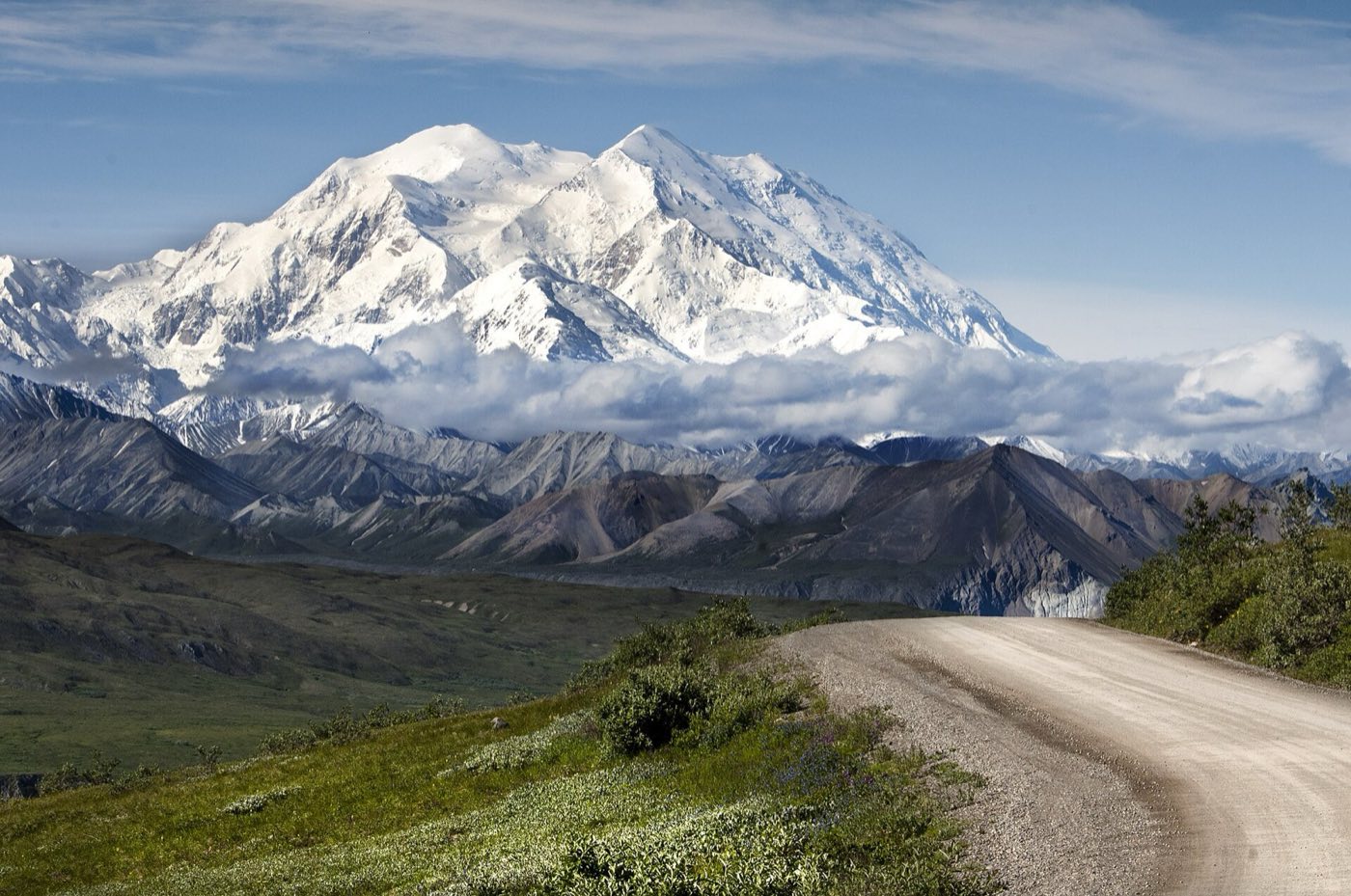
Denali is the biggest peak in North America and the park built around it covers six million acres of Alaska's interior — an area larger than New Hampshire. The mountain itself is so tall (20,310 feet) and so close to the Arctic Circle that it makes its own weather; the summit is only clearly visible about 30% of summer days, which means you can spend five days in the park and never see the thing the park is named for. The other 70% of the time, low clouds sit on the Alaska Range and you see taiga, tundra, grizzlies, wolves, caribou, and moose instead. Most visitors walk away thinking that's the better deal. The park has one road. It's 92 miles long, mostly gravel, closed to private cars past mile 15, and currently shortened by a major landslide at Pretty Rocks that cut the road in half — buses turn around at mile 43 until the repair reopens the western half. You board a park-operated bus at the entrance and ride for hours through a valley where the ranger-driver stops for every animal. Come with time — two full days minimum, three or four ideally — warm layers for any season, and a willingness to let the weather dictate your plans.
What to See & Do
Park road bus ride to Eielson Visitor Center (66 miles in)
The standard Denali experience is an all-day bus ride on the park road, and under normal conditions the turnaround is Eielson Visitor Center at mile 66. With the Pretty Rocks landslide currently closing the road at around mile 43, buses now turn around at the East Fork or Polychrome Overlook until repairs open the road west again. Expect eight to twelve hours round-trip, bring food and water (there's nothing to buy on the route), and book your Transit or Tundra Wilderness Tour seat on Recreation.gov a month ahead in summer. Wildlife sightings improve the farther you go.
Denali summit view from Wonder Lake on a clear day
Wonder Lake at mile 85 is the classic view — the summit of Denali reflected in a still lake, with moose grazing the pond edges. With the road currently closed past Pretty Rocks, Wonder Lake is unreachable by bus; check updated road status before you book, since it may reopen on a multi-year restoration timeline. When access is restored, the Wonder Lake Campground is a once-in-a-lifetime place to wake up and look out your tent door. A 5% chance on any given day of the mountain being fully out, but when it is, it stops conversations.
Grizzly bear spotting in Sable Pass and Toklat River areas
Sable Pass (mile 39) and Toklat River (mile 53) have long been the highest-density grizzly-watching stretches on the park road, especially in mid-summer when bears are grazing soapberry bushes before salmon runs. From a bus you're safe and at eye level with the open tundra — bears often graze within 50 yards of the road. Bring binoculars even if the bus has a spotting scope. Park road status changes year to year; ask at the visitor center which sections are currently reachable.
Savage River Loop Trail for an easy alpine walk
Savage River is where the paved road ends at mile 15 — still accessible to private cars — and a 2-mile round-trip loop trail along the river is the most accessible hike in the park. The trail is flat, well-marked, and works for all ages, with real chances to see Dall sheep on the canyon walls above and marmots in the rocks underfoot. Park at the Savage River Trailhead lot. This is a solid Plan B on days when the bus system is running late or weather has the mountain socked in.
Polychrome Overlook's volcanic color bands
At mile 46, Polychrome Pass cuts the road across a broad volcanic plateau where the earth itself is striped in red, orange, yellow, and purple from different mineral-rich lava flows. It was one of the signature stops on the full-length bus ride before the landslide, and it remains the current turnaround for most buses — so most visitors now see it as the high point of the trip. Weather clears often at the overlook, and the scale of the view downslope toward Toklat is hard to overstate.
Backcountry camping in trailless wilderness zones
Denali has no maintained trails in most of its six million acres — the backcountry is divided into units, and permits are issued at the Wilderness Access Center on a first-come, first-served basis the day before you plan to start. You'll watch a safety briefing, get a bear canister, and the bus will drop you anywhere along the road to walk off into the tundra. Weather, river crossings, and bears shape every day. This is not a beginner backpacking experience — but for the right traveler it's the most authentic way to be in this park.
Sled dog kennel demonstration at park headquarters
Denali is the only national park that still uses working sled dogs, and the park maintains a kennel a mile from the entrance where daily ranger demonstrations run free of charge in summer. You'll meet the Alaskan huskies, learn how the teams patrol the park in winter when motorized travel is banned, and watch a short demo run. Shuttle buses from the visitor center take you to the kennel and back — no need to drive yourself. Good in any weather and a solid pick for families.
Getting There & When to Go
The park entrance is off the George Parks Highway at mile 237, roughly a four-hour drive north of Anchorage or a two-hour drive south of Fairbanks. The Alaska Railroad runs a daily summer train between both cities, dropping you at the Denali depot right by park headquarters — it's a good car-free option. The operating season runs late May through mid-September; outside that window, most park services, the road bus system, and lodging are closed. Mid-June to late August is peak and brings 20-plus hours of daylight. Mosquitoes peak in late June and early July; fall color sets in around late August, with early snow possible any time after Labor Day. Check the road-status page before your trip — the Pretty Rocks landslide continues to shape what's reachable.
Where to Stay
Inside the park, Riley Creek Campground near the entrance is the easiest base; Teklanika River Campground at mile 29 is the one drive-in campground past the private-vehicle cutoff and requires a three-night minimum. Six backcountry lodges — Kantishna Roadhouse, Camp Denali, North Face Lodge, and a few others — sit at the far end of the road in Kantishna and are currently harder to reach due to the landslide; confirm with them before booking. Outside the park entrance, the cluster of hotels at Glitter Gulch (Denali Park Village, Princess Wilderness Lodge, Grande Denali) is convenient but touristy and pricey. For a quieter base, the town of Healy, 15 minutes north, has cabins and small inns at better value.
Frequently Asked Questions
- Can I drive my own car into the park?
- Only to mile 15 at the Savage River parking area. Past that, the park road is restricted to official buses, bicycles, and permitted campers heading to Teklanika. Four times a year a lottery called the Road Lottery lets private cars drive as far as the road is open — apply in May on Recreation.gov if you want a shot.
- Will I see Denali itself?
- Maybe. The full summit is visible on roughly 30% of summer days — the mountain creates its own weather and is often wrapped in its own clouds. Don't plan a trip solely for the view. If you get one, it's a gift; if you don't, the wildlife, tundra, and scale of the park are the trip.
- How has the landslide changed the park experience?
- The Pretty Rocks landslide at mile 45.4 currently closes the park road beyond that point while the NPS rebuilds a bridge over the slide area. Buses turn around near Polychrome Overlook instead of continuing to Eielson, Wonder Lake, and Kantishna. Check the park website for current status — the repair timeline has shifted multiple times.
- How much time do I need?
- Two full days is the realistic minimum — one for a long bus ride and one for short hikes, sled-dog demos, and visitor-center time. Three or four days gives you weather buffer, a chance for the mountain to clear, and the option to try a guided rafting or flightseeing trip. One-day trips feel rushed and often miss wildlife.
Plan Your Visit
Book Nearby HotelsHave you visited Denali?
Track all 63 national parks on your map