National Park · AK · Est. 1980
Gates of the Arctic
Overview
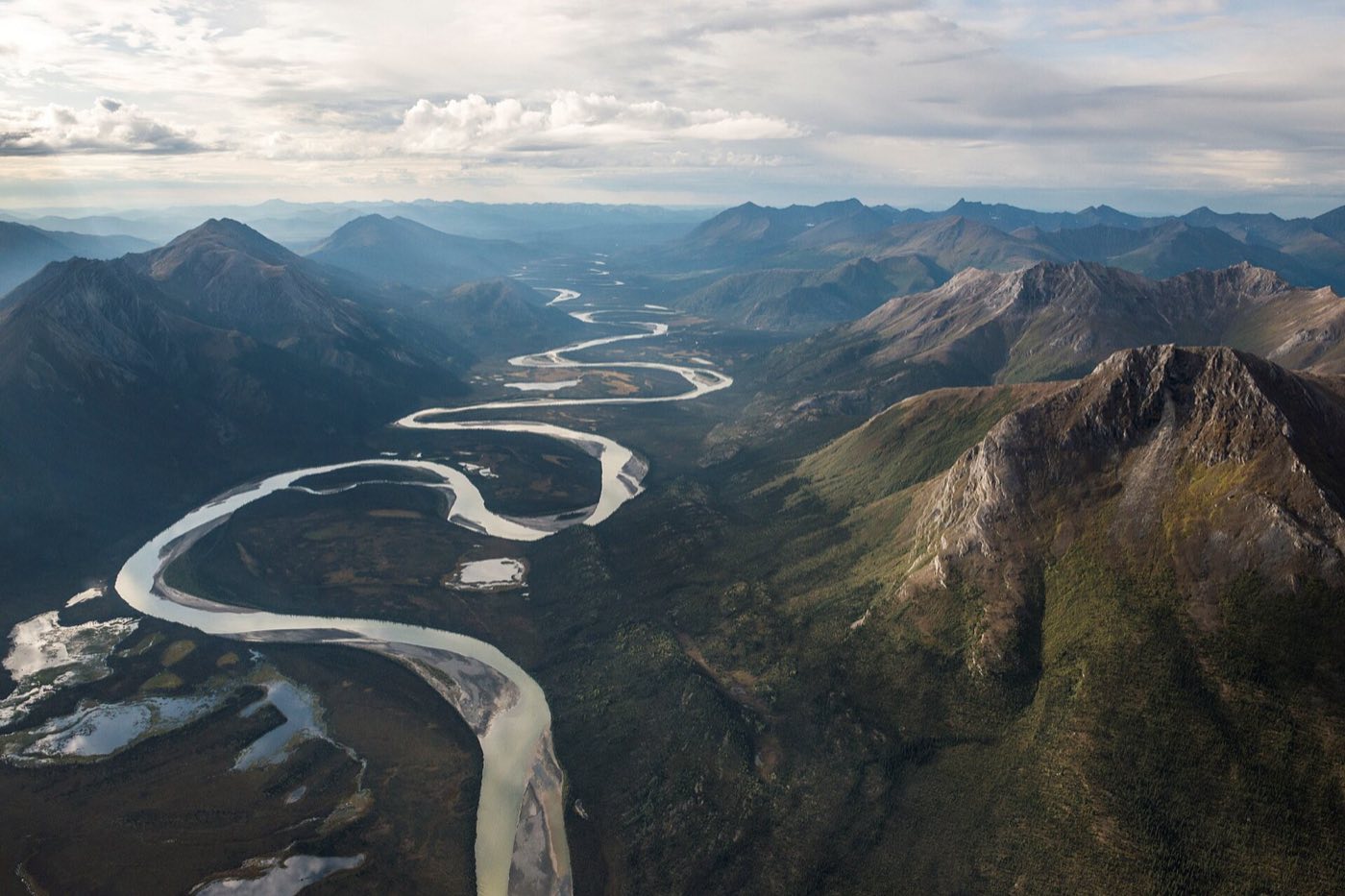
Gates of the Arctic is the furthest thing from a visitor park in the American system. There are no roads, no trails, no campgrounds, no signs, and no cell service in 8.4 million acres of wilderness sitting entirely above the Arctic Circle. To get in, you take a commercial flight to Fairbanks, a second flight to a gateway town like Bettles or Coldfoot, and then a bush plane that lands on gravel bars, tundra, or lakes. To get out, that plane has to come back for you on a day when weather allows — which some years it doesn't, for a while. What you get in return is a landscape that looks like nothing else. The Brooks Range runs east-west through the park as a rampart of dark, unvegetated peaks with caribou moving beneath them. The rivers — the Noatak, the Alatna, the Koyukuk's North Fork — run clear over gravel bars under 24-hour June daylight. Wolves, grizzlies, and Dall sheep all live here in numbers, and you will very possibly go a full week without seeing another human being. This is a park for people with strong wilderness skills, a realistic sense of risk, and the patience for weather delays. First-timers almost always go with an outfitter — and should. Budget two weeks door-to-door if you can: one week inside the park, plus buffer days on either end in Fairbanks and Bettles for weather-grounded flights.
What to See & Do
Bush plane flight into the Brooks Range backcountry
There is no other way in. Small operators out of Bettles, Coldfoot, and Anaktuvuk Pass fly Cessna 206s and De Havilland Beavers on floats or tundra tires, landing on lakes and gravel bars with no developed airstrip. Expect to pay $700 to $1,500 per person round-trip depending on destination and group size, and expect weather to shift the schedule by a day or more. Pack everything you need in soft duffels — rigid suitcases won't fit in the cargo hold. Fly with an outfit that has flown the specific drainage you're going into.
Floating the Noatak, Alatna, or North Fork Koyukuk rivers
The signature Gates of the Arctic trip is a 7 to 14-day packraft or canoe float on one of the park's wild rivers. The upper Noatak is the classic, starting above treeline and ending in a spruce forest nearly 400 miles downstream. The Alatna offers gentler water through the Arrigetch Peaks region. You'll need swiftwater skills, bear-safe food storage, and enough food and fuel to wait out a weather-grounded pickup. Guided trips through outfitters like Arctic Wild or Alaska Alpine Adventures handle logistics for first-timers.
Frigid Crags and Boreal Mountain — the "Gates" themselves
The two peaks that flank the upper Koyukuk's North Fork were named by wilderness advocate Bob Marshall in the 1930s, and they gave the park its name. You reach them by flying into the village of Anaktuvuk Pass or landing on a gravel bar nearby, then backpacking up-river. The walking is off-trail across tussocks and boulder fields and is much slower than it looks on a map — plan two to three miles a day, not ten. The view from camp between the Gates is one of the great wilderness horizons in North America.
Caribou migration through the Anaktuvuk Pass
The Western Arctic Caribou Herd — historically 200,000-plus animals — funnels through Anaktuvuk Pass in the central Brooks Range twice a year. Spring migration runs late April through May; fall is late August into September. The Nunamiut village of Anaktuvuk Pass (population about 300) sits directly on the migration corridor and has commercial flights from Fairbanks. Pick up a lodging permit at the village office and time your visit to the ranger-reported herd movements — they are unpredictable week to week.
Arctic midnight sun in late June
At 68° north, the sun doesn't set from about May 29 through July 15. You'll hike at 2 a.m. in warm orange light and struggle to sleep without a full blackout setup. Pack a sleep mask. The upside is that weather windows are long — a plane that couldn't land at 6 p.m. can often land at 11 p.m. on the same day — and you can make up ground after a cold morning. The low-angle light across the tundra at 1 a.m. is genuinely unlike anything further south.
Arrigetch Peaks granite spire backpacking
Arrigetch, a Nunamiut word meaning 'fingers of the outstretched hand,' is a cluster of sheer granite spires in the park's west. You fly into Circle Lake and hike roughly 10 miles up to the base camp in Arrigetch Creek. Expect alder-bashing, ankle-rolling boulder hopping, and three to five days at base camp scrambling into the various cirques. Technical routes reach the summits; most visitors are here for the base-camp views and the alpenglow on the walls. Bear canisters are required, and the mosquitoes in July can be brutal.
Northern Lights viewing in late August and September
The aurora isn't visible during peak summer because the sky never gets dark enough, but from mid-August onward, nights return and the park sits directly under the auroral oval. A cold, clear September night at a gravel-bar camp on the Koyukuk with the aurora overhead is one of the great sights in North America. Book with outfitters who run late-season trips and be ready for temperatures well below freezing and early snow — the season for any kind of paddling or hiking is closing by late September.
Getting There & When to Go
Fly commercial to Fairbanks, then charter onward to Bettles, Coldfoot, or Anaktuvuk Pass — each is a gateway for bush-plane drop-offs into different parts of the park. From there, expect a 30- to 90-minute flight in a small plane to your landing site. The practical season is late June through mid-August: snow-free tundra, passable river levels, and warm enough days (50s to 70s°F) to travel. Mosquitoes peak in late June and July and are aggressive enough to require head nets. September offers fall color and aurora viewing but rapidly shortening days and early snow. Weather-related flight delays of 24 to 72 hours are normal — build buffer days into every trip.
Where to Stay
There is no lodging inside the park itself — visitors camp wilderness-style wherever their bush plane drops them. For the night before and after, Bettles Lodge is the most common base with simple rooms and home-cooked meals, often bundled with flight packages. Coldfoot Camp on the Dalton Highway offers similar basic lodging with road access. The village of Anaktuvuk Pass has one small lodge and a handful of B&B-style rooms. Most trips are packaged through outfitters (Arctic Wild, Alaska Alpine Adventures, Brooks Range Aviation) who handle lodging, flights, food, and gear for weeklong trips — often the simplest way to get in for a first visit.
Frequently Asked Questions
- How do I actually get to Gates of the Arctic?
- You fly from Fairbanks to a gateway community — Bettles, Coldfoot, or Anaktuvuk Pass — and then charter a bush plane that drops you on a gravel bar, lake, or tundra pad inside the park. No roads enter the park, and there are no developed airstrips. Plan at least two flight legs each way.
- Can I visit without an outfitter or guide?
- Technically yes, but only if you have strong wilderness, bear safety, and swiftwater skills. First-time visitors overwhelmingly go with an outfitter. Guided trips run roughly $4,500 to $8,000 per person for a week including flights, food, guides, and gear.
- Are there any trails in the park?
- No. Gates of the Arctic is deliberately kept trail-free to preserve its wilderness character. You navigate off-trail by map, compass, GPS, and river-drainage reading. Progress is slow — two to three miles a day across tussocks is typical.
- When is the best time to visit?
- Late June through mid-August for warm temperatures, snow-free tundra, and full daylight. Early September adds fall color and possible aurora but brings shorter days and the first snows. Outside this window, rivers are frozen, bush plane landings are difficult, and temperatures drop hard.
Plan Your Visit
Book Nearby HotelsHave you visited Gates of the Arctic?
Track all 63 national parks on your map