National Park · FL · Est. 1992
Dry Tortugas
Overview
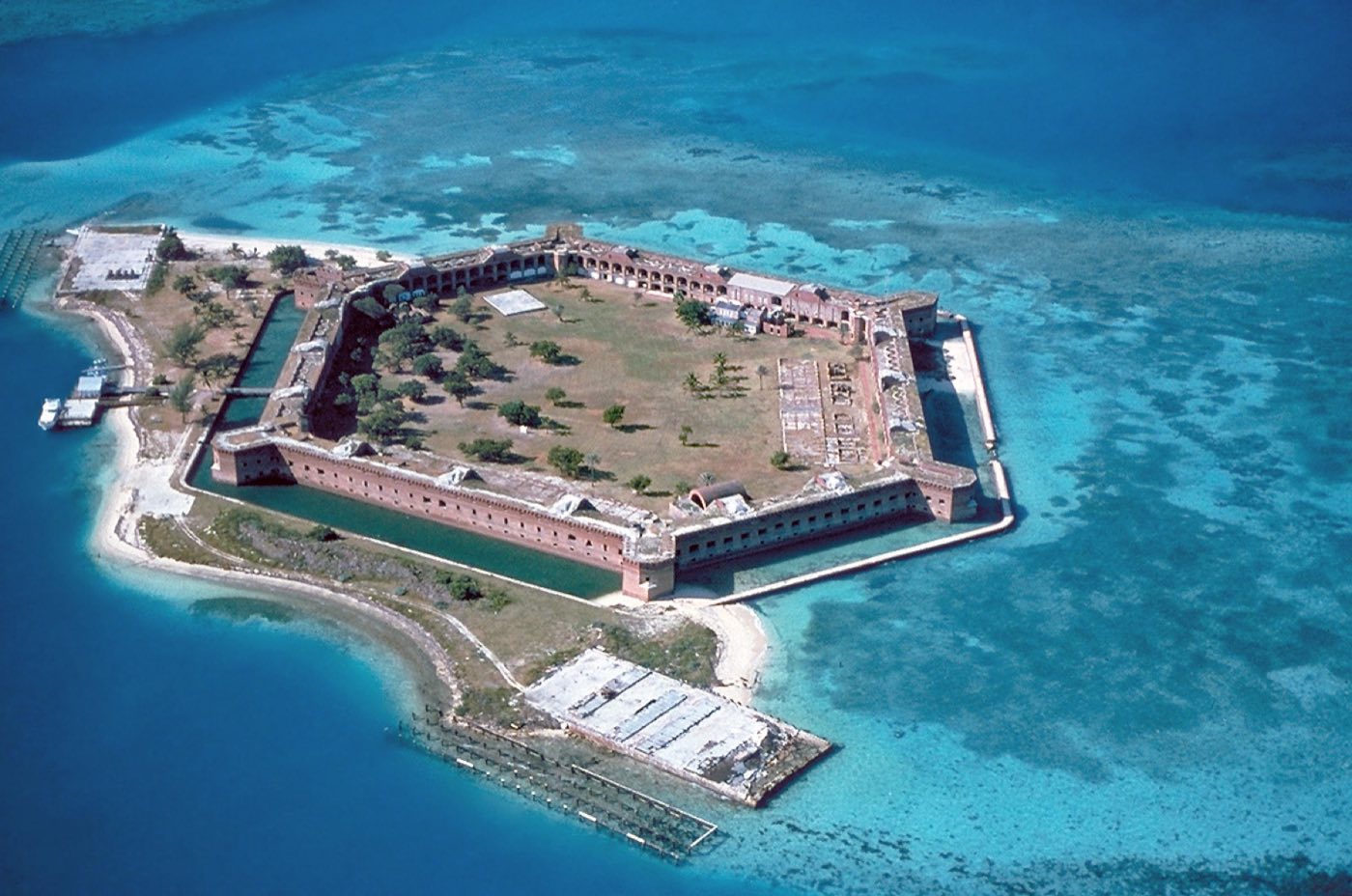
Seventy miles west of Key West, at the end of the Florida Keys chain, a cluster of seven small sand and coral islands sits in the middle of the Gulf of Mexico. There are no roads, no stores, and no running water — only a six-sided brick fort, a handful of campsites, and water so clear you can watch your shadow move across coral from the boat deck. Getting here takes commitment. The Yankee Freedom ferry leaves Key West at 8 a.m. and arrives around 10:30 a.m., giving you about four and a half hours on the island before the 3 p.m. return. A seaplane gets you there faster but costs roughly double. Once you step off, the day is essentially snorkeling, walking the walls of Fort Jefferson, and watching frigatebirds wheel overhead. What makes the park unusual in an American context is how little human infrastructure the water has had to deal with — the coral reef inside the moat and along the south wall is in better shape than most of the Florida Keys, and sea turtles and nurse sharks cruise the shallows in full view. Pack everything you need for the day and bring your own shade; there's almost none on Garden Key. The fort and its outer sandbar are ringed by a shallow moat reachable on foot from the ferry dock, and within 15 minutes of arriving you can already be in the water. Plan for sun exposure, salt, and no cell service — it is one of the last places in the continental United States where you genuinely cannot be reached.
What to See & Do
Fort Jefferson — the largest masonry structure in the Americas
Sixteen million bricks stacked into a hexagonal fortress rise straight out of the turquoise water on Garden Key. Construction started in 1846 and never finished — the fort was made obsolete by rifled cannons before its third tier was done. A self-guided tour takes about an hour; climb to the top tier for a full-horizon view of sandbars and reef patches, walk the dark brick casemates downstairs, and find the cell where Dr. Samuel Mudd was imprisoned for setting John Wilkes Booth's broken leg. Bring a flashlight for the deeper passageways.
Snorkeling the moat wall and coral reef right off the beach
Walk off the sand on the south side of Garden Key and you're immediately over living coral and a cast of parrotfish, yellowtail snapper, and barracuda. The moat wall on the fort's seaward side is the best single spot — structure plus coral plus calm water make for easy snorkeling in the three-to-eight-foot depth range. The ferry includes mask, snorkel, and fins in the fare. Go twice: once when you arrive, once after you tour the fort and the crowds thin.
Spring bird migration with hundreds of species passing through
Because the Dry Tortugas are the first dry land for birds crossing the Gulf from Central and South America, spring migration drops warblers, tanagers, and shorebirds onto the islands in exhausted waves. Peak is mid-April through early May. Sooty terns and brown noddies nest on Bush Key by the tens of thousands — you'll hear the colony long before you see it. Bring binoculars; the island is small enough that most birding happens on the fort walls and the small buttonwood grove on Garden Key.
Camping on Garden Key under brilliant star-filled skies
Eight primitive campsites sit just behind the beach, and an overnight here is the only way to have the park to yourself after the last ferry leaves. You pack in everything including water; there are composting toilets and nothing else. The trade-off is sunset and sunrise alone on the fort walls, phosphorescent plankton at the water's edge some nights, and a sky so dark the Milky Way throws a shadow. Sites book months ahead through the Yankee Freedom ferry and require you to reserve both outbound and return trips.
Seaplane flight over the turquoise Gulf waters
Key West Seaplane Adventures runs half-day and full-day trips that cut the travel time each way to about 40 minutes and give you a low, slow aerial pass over shipwrecks, sandbars, and the fort itself before landing on the water. The half-day option lands you on Garden Key for two and a half hours of snorkeling and touring — enough for a short visit. It costs roughly double the ferry but frees up a full day and shows you the reef geometry you can't see from sea level.
Nurse shark and sea turtle encounters while snorkeling
Nurse sharks tuck under the ledges of the moat wall and along the fort's coaling dock pilings during the day; four to six feet long, bottom-sleeping, and completely uninterested in you. Green and loggerhead sea turtles graze the seagrass flats west of the fort — drift quietly with the current and they'll often swim within a few feet. Keep your distance (at least 10 feet from turtles by NPS guidance), don't chase, and let them decide how close is comfortable.
Dr. Samuel Mudd's Civil War-era prison cell tour
After the Lincoln assassination, Dr. Samuel Mudd was sentenced to Fort Jefferson for setting John Wilkes Booth's broken leg, and his small brick cell is preserved on the ground floor. The ranger tour pairs his story with the fort's Civil War use as a Union prison and a yellow fever outbreak that killed the post surgeon and nearly killed Mudd, who took over the hospital and ultimately won a presidential pardon. The tour runs twice daily on ferry-day schedules.
Getting There & When to Go
The only ways in are the Yankee Freedom III ferry from Key West (about 2.5 hours each way, departs 8 a.m., returns 5:30 p.m.) and seaplane charters that cut the trip to roughly 40 minutes. The ferry books out weeks ahead in peak months; reserve as soon as you commit to a date. Best window is March through May — calm seas, peak bird migration in April, and comfortable temperatures in the 70s and low 80s. Summer brings heat, afternoon thunderstorms, and the start of hurricane season (June through November), when ferries can cancel with little warning. Winter is quieter but cold fronts kick up steep chop that makes the crossing rough enough to end a trip early.
Where to Stay
There is no lodging inside the park. The only overnight option on Garden Key is primitive tent camping at eight first-come, first-served-style sites reserved through Yankee Freedom — you carry in fresh water, food, and everything else. Everyone else stays in Key West and treats the park as a day trip. Old Town Key West has the full range from the 1924 Casa Marina resort to guesthouses on Duval Street side streets and vacation rentals in conch houses throughout the island. Stay within walking distance of the ferry terminal at the Historic Seaport, since the ferry loads at 7 a.m. and late arrivals don't get refunded.
Frequently Asked Questions
- How do I get to Dry Tortugas National Park?
- Only by boat or seaplane from Key West. The Yankee Freedom III ferry is the standard option at about 2.5 hours each way. Key West Seaplane Adventures flies there in roughly 40 minutes. Private boats can also reach the park but require advance permits for overnight anchoring.
- Can I visit Dry Tortugas as a day trip?
- Yes — almost everyone does. The Yankee Freedom gives you about 4.5 hours on Garden Key, which is enough time to tour Fort Jefferson, snorkel the moat wall, eat lunch on the boat, and walk the swim beach. Seaplane half-day trips give you about 2.5 hours on the island.
- Is there an entrance fee?
- Yes, $15 per person, typically bundled into the ferry or seaplane fare. The annual America the Beautiful pass also covers entry. Camping costs an additional $15 per night per site, paid through the ferry when you reserve.
- What should I bring for the day?
- Reef-safe sunscreen, a hat, extra water (the ferry provides some but not unlimited), a towel, a change of clothes, water shoes for the rocky parts, and a dry bag for anything you don't want salted. The ferry includes mask, snorkel, and fins, and serves breakfast and lunch onboard.
Plan Your Visit
Book Nearby HotelsHave you visited Dry Tortugas?
Track all 63 national parks on your map