National Park · ME · Est. 1919
Acadia
Overview
Acadia is the only national park in the northeastern United States, and it wears the accent — pink granite headlands tumbling into a cold Atlantic, spruce-fir forest dense enough to smell from the road, and working lobster boats chugging past the surf at dawn. Mount Desert Island holds most of the park, with smaller pieces on the Schoodic Peninsula and Isle au Haut for visitors who want quieter ground. What makes Acadia feel different from the western parks is the scale. You can drive the 27-mile Park Loop Road in a morning, see the coast, a summit, and a glacial pond inside of an hour, and still feel like you've gotten somewhere. The textures stack up fast: salt spray at Thunder Hole, warm pink stone underfoot on the Beehive, the crunch of crushed rock on the carriage roads John D. Rockefeller Jr. cut through the forest in the 1910s. Come with layers — the weather flips from sunny to sea-fog in under an hour, and the Atlantic stays cold even in August. The park charges a $35 per-vehicle fee good for seven days, and Cadillac Mountain summit road requires a separate timed-entry reservation in season.
What to See & Do
Cadillac Mountain sunrise — the first place sunlight hits the U.S. in autumn
From October 7 through March 6, Cadillac Mountain's 1,530-foot granite summit is the first ground in the continental United States to catch the sunrise. You'll need a vehicle reservation through recreation.gov for the summit road between late May and late October, bookable 90 days or two days in advance. Arrive 30 minutes before sunrise, bring a warm jacket even in summer — the wind at the top cuts through fleece — and walk the short paved loop to the eastern edge. The Porcupine Islands float out of the fog in silhouette as the light comes up.
Cycling the 45-mile network of John D. Rockefeller's carriage roads
Rockefeller Jr. spent 27 years and his own money building 45 miles of broken-stone carriage roads through the park's interior, with 17 hand-cut granite bridges and no automobiles allowed. Rent a hybrid bike in Bar Harbor, pick up the network at Jordan Pond or Eagle Lake, and ride a loop of your choosing — the grades never exceed 7%, and the surface is smooth enough for a beach cruiser. Allow a full morning for the Jordan Pond-to-Bubble Pond loop, about 12 miles, with pauses at the stone bridges.
Ocean Path coastal walk from Sand Beach to Otter Cliff
The Ocean Path parallels the Park Loop Road for 2 miles one-way between Sand Beach and Otter Cliff, and it's the easiest way to understand what Acadia's coast actually looks like. The trail stays on warm pink granite just above the surf, with short detours down to tidepools at low tide and photo-perfect benches at Monument Cove and Thunder Hole. It's flat, well-marked, and the free Island Explorer shuttle will pick you up at either end so you don't have to double back.
Thunder Hole's crashing wave spectacle at half-tide
Thunder Hole is a narrow inlet in the granite where, at the right tide and swell, an incoming wave gets compressed into the cavern and explodes out in a boom and a 40-foot spray. Time your visit for two hours before high tide, and check the NOAA forecast for swell direction — a big southeast swell is what you want. On flat-water days, you'll hear nothing and wonder what the fuss is about; on a good day, you'll get soaked and understand.
Jordan Pond House popovers with mountain views
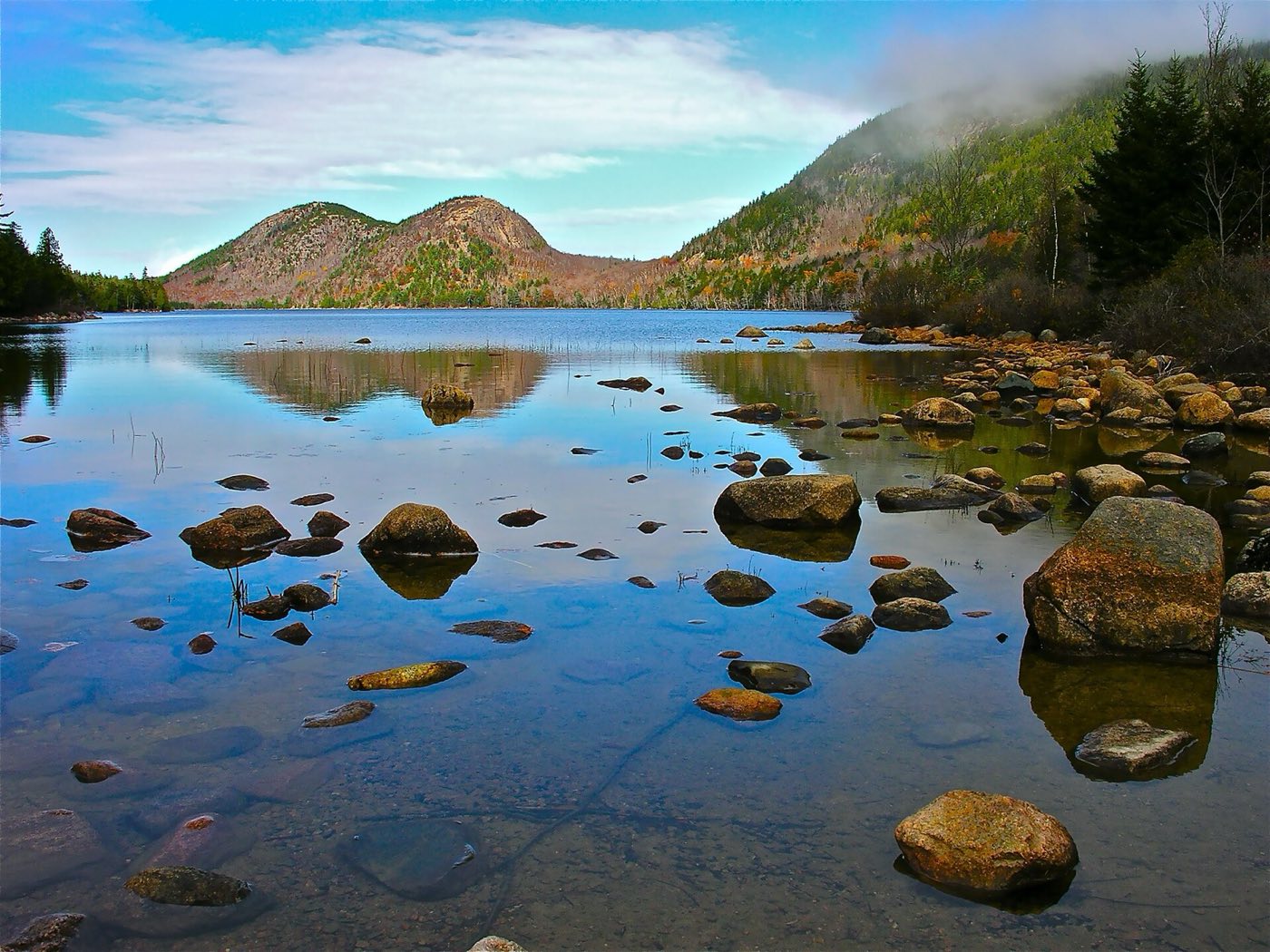
The Jordan Pond House has been serving popovers — hollow, buttery egg-puffs — on a lawn overlooking the Bubble Mountains since the 1890s. Reservations are essential in summer and bookable 30 days ahead; a table on the lawn for afternoon tea (popovers, strawberry jam, and tea or lemonade) is one of the park's most beloved traditions. If the wait feels ridiculous, order popovers to go and carry them down the shoreline path around Jordan Pond — the mountain view is the same, and the crowd is half the size.
Tide pooling at Bar Island during low tide
For about 90 minutes on either side of low tide, a gravel bar emerges from Frenchman Bay connecting downtown Bar Harbor to Bar Island. Walk across it and explore the rocky intertidal zone — green crabs, periwinkles, hermit crabs, and the occasional sea star in the deeper pools. Check the tide chart carefully and set a phone alarm; the water covers the bar fast, and people get stranded on Bar Island every summer and end up paying $100 for a water taxi back.
Getting There & When to Go
The closest airport is Bangor International, about an hour's drive north, with bigger connections through Portland Jetport (3 hours) or Boston (5 hours). Most visitors drive — Route 3 delivers you onto Mount Desert Island at Trenton. Acadia is a summer-shoulder park: the crowds and the full schedule of ranger programs run late June through early September, while late September through mid-October brings the best of both worlds — peak fall foliage, cooler days in the 60s, and far fewer people. Winter closes the Park Loop Road but opens the carriage roads to cross-country skiing and snowshoeing. Cadillac Summit Road requires a timed-entry vehicle reservation from late May to late October.
Where to Stay
There's no hotel lodging inside Acadia — only three campgrounds (Blackwoods, Seawall, and Schoodic Woods), all bookable 6 months ahead on recreation.gov. Most visitors stay in Bar Harbor, 10 minutes from the park entrance, where you'll find the full range from historic inns like the Bar Harbor Inn to budget motels and vacation rentals. Prices spike hard from July 4 through Labor Day; book by March for peak season. Quieter alternatives include Southwest Harbor and Northeast Harbor on the island's quiet side, and Winter Harbor near the Schoodic section — all put you inside the park in 20 to 40 minutes and cost 20 to 40 percent less than Bar Harbor in summer.
Frequently Asked Questions
- Do I need a reservation to enter Acadia?
- You don't need a reservation to enter the park itself — the $35 per-vehicle entry fee is first-come-first-served and good for seven days. However, driving Cadillac Summit Road requires a separate timed-entry vehicle reservation from late May through late October, bookable on recreation.gov 90 days out or two days out for any remaining slots. The sunrise slots sell out within minutes.
- When do the leaves peak for fall foliage?
- Peak color typically falls between October 10 and October 20, though the exact week shifts year to year. Early October brings the first reds in the maples, and by late October the oaks are still holding gold but most of the canopy has dropped. The Park Loop Road, carriage roads around Jordan Pond, and the summit of Cadillac all offer excellent vantage points.
- Can I visit Acadia without a car?
- Yes — the free Island Explorer shuttle runs from late June through mid-October, connecting Bar Harbor with all the major trailheads, campgrounds, and visitor centers on Mount Desert Island. You can fly into Bangor, take a shuttle or rideshare to Bar Harbor, and use the Island Explorer inside the park. Outside shuttle season, a car is essentially required.
- Are there bears or other dangerous wildlife in Acadia?
- Black bears exist but are rarely seen — the dense populations are further inland. The more common wildlife are red foxes, white-tailed deer, harbor seals, porcupines, and a lot of seabirds. The genuine hazards are tidal (people get cut off on Bar Island and swept off slippery rocks at Thunder Hole) and weather-related (cold Atlantic water, fast-changing fog, and unexpected thunderstorms on exposed summits).
Plan Your Visit
Book Nearby HotelsAcadia Planning Guides
Compare focused Acadia National Park lodging, itinerary, and activity guides before you book.
Where to stay
Where to Stay Near Acadia National Park
Compare where to stay near Acadia National Park, including Bar Harbor, inside-park campgrounds, Southwest Harbor, Northeast Harbor, and Ellsworth.
Itinerary
Acadia National Park Itinerary
Plan an Acadia National Park itinerary for one, two, or three days with Park Loop Road, Cadillac Mountain, Jordan Pond, carriage roads, and coastal hikes.
Things to do
Things to Do in Acadia National Park
Explore the best things to do in Acadia National Park, including Cadillac Mountain, the Ocean Path, carriage road cycling, and Jordan Pond.
Best time to visit
Best Time to Visit Acadia National Park
Compare the best time to visit Acadia National Park by weather, fall foliage, crowds, and carriage road access.
Have you visited Acadia?
Track all 63 national parks on your map