National Park · UT · Est. 1971
Arches
Overview
Arches preserves the densest concentration of natural sandstone arches on Earth — more than 2,000 documented openings in a 76,000-acre stretch of high desert just north of Moab, Utah. The arches are made of Entrada Sandstone deposited 180 million years ago, lifted by a salt dome underneath, and then eroded by water and frost into the fins, windows, and balanced rocks you see today. Delicate Arch — the one on the Utah license plate — is the most famous, but the park rewards visitors who go deeper. What the photos can't prepare you for is the color and the silence. The rock glows orange at sunrise and again at sunset, goes deep red-brown by midday, and cools to a dusty pink in the hour before dark. Between the developed sites, the Fiery Furnace and the backcountry reaches of Devils Garden hold an acoustic stillness that most of us never experience — no leaves, no insects, no water. Summer highs regularly break 100°F and the pavement bakes — plan early mornings and late evenings, carry more water than you think you need, and give yourself two or three days if you want to see more than the roadside highlights. NPS lifted the timed-entry reservation requirement in February 2026, so no reservation is needed to enter as of this writing — you'll still pay the standard entrance fee, and entry rules have shifted from year to year, so confirm current requirements on the NPS website before you go.
What to See & Do
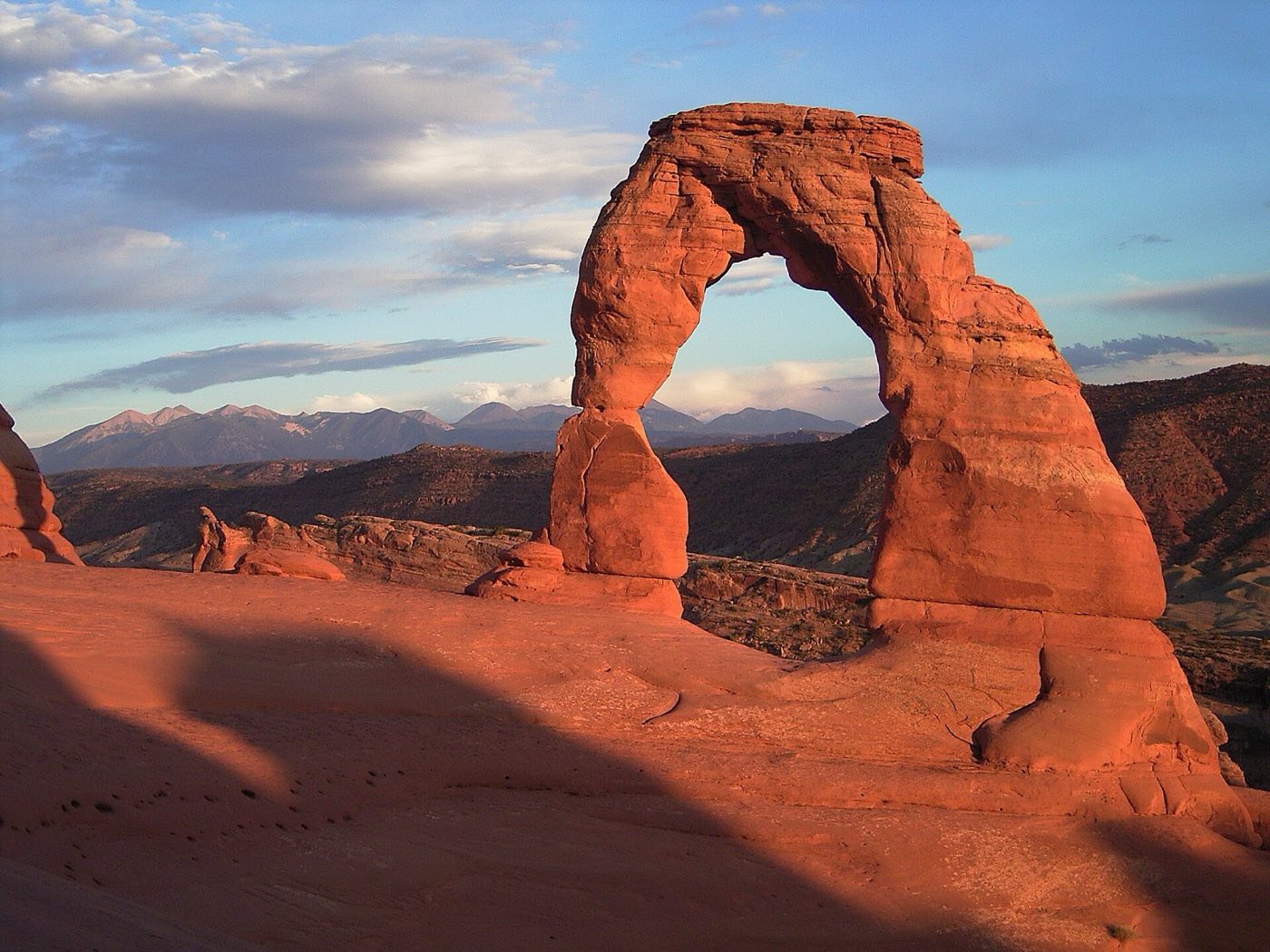
Delicate Arch at sunset — the 3-mile roundtrip hike is a rite of passage
The trail to Delicate Arch climbs 480 feet over slickrock in 1.5 miles one-way, with almost no shade — do not attempt it in the middle of a summer afternoon. Aim for the last 90 minutes before sunset, when the arch's 52-foot free-standing span catches direct gold light and the La Sal Mountains behind it turn purple. Bring a headlamp for the walk back in dusk, and expect crowds — a hundred other people will share the sunset with you. The photo opportunity that's unique to you is actually the walk up, when the first glimpse of the arch appears around the final rock bend.
Ranger-guided Fiery Furnace scramble through narrow fins and slots
The Fiery Furnace is a labyrinth of sandstone fins and hidden arches where the NPS runs small ranger-guided tours twice daily March through October — book 7 days ahead on recreation.gov, as they sell out within minutes. The 3-hour walk involves scrambling, narrow squeezes, and drop-offs that make it unsuitable for kids under 5 or anyone uncomfortable with heights. A self-guided permit is available for the experienced, but first-timers should take the ranger tour; the route is unmarked and easy to lose.
Landscape Arch, the longest natural arch in North America
Landscape Arch spans 306 feet across, making it the longest natural arch in North America and possibly the world, with some sections only 6 feet thick. It's a mile in on the Devils Garden Trail — easy, flat, and reachable inside an hour. The arch has been actively losing rock; a 60-foot slab fell off in 1991, and the trail directly beneath it is permanently closed. Catch the arch in early morning when the eastern light rakes across the fins behind it and the tourist crowds haven't arrived yet.
Double Arch's massive twin spans in the Windows section
Double Arch, in the Windows section about 10 miles in, is a pair of adjoining arches sharing one massive foundation — you can walk right underneath and look up at 100-foot-high ceilings curving overhead. The walk is a half-mile roundtrip on a flat path, wheelchair accessible with assistance. The sound inside the arches is startling: sandstone absorbs it all, so a group of 30 people standing beneath the spans sounds like a handful. Indiana Jones fans will recognize it from the opening of The Last Crusade.
Park Avenue trailhead's towering sandstone skyscrapers
Park Avenue is the first pullout past the visitor center and a 1-mile one-way walk through a corridor of 300-foot sandstone walls that actually do feel like a Manhattan street. It's a through-hike with a downhill drop, so the easiest approach is to arrange a shuttle with your group or hike it out-and-back. Midday light flattens the walls, but in early morning or late afternoon the relief is dramatic and you'll stop every few minutes to look up.
Dark-sky stargazing with the Milky Way framed by arches
Arches is an International Dark Sky Park with Bortle Class 2 skies on moonless nights, and the Milky Way reading is cleaner here than you'll see almost anywhere accessible by road. The classic composition is Delicate Arch silhouetted against the Milky Way core — photographable April through October when the galactic core is above the horizon after dark. If you don't want the hike, pull off at any trailhead along the main park road, let your eyes adjust for 20 minutes, and look up.
Getting There & When to Go
Arches sits 5 miles north of Moab, a 4-hour drive from Salt Lake City International or 6 hours from Denver. Canyonlands Field Airport near Moab takes regional flights but at a steep fare. March through May and September through November are the ideal hiking windows with daytime highs in the 60s and 70s; summer highs routinely exceed 100°F and trails bake. Winter is quiet and surprisingly lovely — snow on red rock is a rare sight — with cold overnight lows in the 20s. No timed-entry reservation is required to enter the park in 2026 after NPS dropped the requirement in February; you still need a standard entrance pass, and it's worth checking current NPS guidance before you go since the policy has changed in past years.
Where to Stay
There is no lodging inside Arches — only the Devils Garden Campground, a 51-site campground that books out 6 months in advance through recreation.gov. Most visitors stay in Moab, 10 minutes south, where the range runs from historic motels on Main Street to a handful of upscale resorts at Hoodoo and Sorrel River Ranch. Vacation rentals on VRBO and Airbnb fill in the middle. Prices double in March-April and September-October; book by January for peak seasons. If Moab is sold out, try Monticello (45 minutes south) or the BLM campgrounds along Highway 128 (Goose Island, Hal Canyon) for river-edge camping at $20 a night.
Frequently Asked Questions
- Do I need a reservation to enter Arches?
- No — NPS eliminated the timed-entry reservation requirement in February 2026, so a standard $30 entrance pass is all you need to drive in. Reservations are still required for the ranger-guided Fiery Furnace hike and for Devils Garden Campground, both bookable on recreation.gov. Entry rules have changed year to year at Arches, so confirm current requirements on the NPS website before your trip.
- Can I hike to Delicate Arch in summer?
- You can, but not in the middle of the day. The 3-mile roundtrip trail has almost no shade and climbs open slickrock that radiates heat — summer afternoon surface temperatures can exceed 150°F. Start at sunrise or go in the last two hours before sunset, carry at least 2 liters of water per person, and turn around if you feel dizzy or stop sweating. Heat-related rescues here are common.
- What's the difference between Arches and Canyonlands?
- Arches is smaller, more road-accessible, and focused specifically on sandstone arches and fins. Canyonlands, 45 minutes south, is much larger — four separate districts — and offers deeper canyon geography, four-wheel-drive backcountry, and whitewater rafting. Most first-time visitors do both from Moab, with Arches as a half-day to full-day stop and Canyonlands' Island in the Sky district as a separate day.
- Are dogs allowed in the park?
- Pets are allowed only on paved roads, in parking lots, and in the Devils Garden Campground — never on trails or in the backcountry. The combination of summer heat, sharp sandstone that cuts pads, and active wildlife makes it a genuinely dangerous place for pets off-leash. Most Moab kennels and pet-sitting services book fast in high season.
Plan Your Visit
Book Nearby HotelsArches Planning Guides
Compare focused Arches National Park lodging, itinerary, and activity guides before you book.
Where to stay
Where to Stay Near Arches National Park
Compare where to stay near Arches National Park, including Moab, Castle Valley, and nearby Canyonlands basing options.
Itinerary
Arches National Park Itinerary
Plan an Arches National Park itinerary with Delicate Arch, the Windows section, Devils Garden, and current entry requirements.
Things to do
Things to Do in Arches National Park
Explore the best things to do in Arches National Park, including Delicate Arch, the Windows, Devils Garden, and the Fiery Furnace.
Have you visited Arches?
Track all 63 national parks on your map