National Park · AZ · Est. 1919
Grand Canyon
Overview
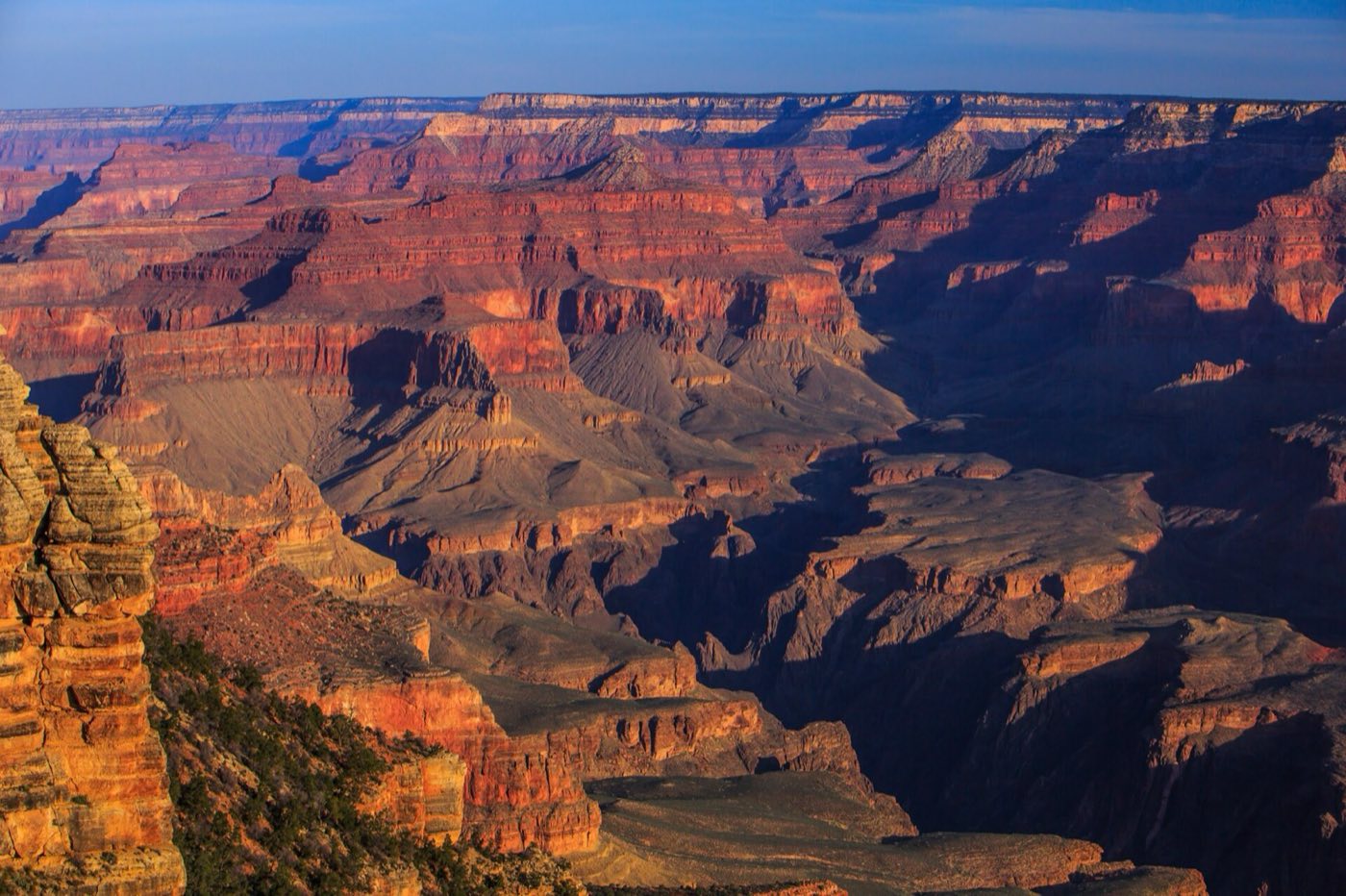
The Grand Canyon is one of those places that reduces even frequent visitors to silence the first time they walk up to the rim. A mile deep, 18 miles across at its widest, and 277 miles long, the canyon exposes nearly two billion years of geological history in layers of red, orange, cream, and black stone. The Colorado River still carves it, a thin green thread visible from the rim only in certain light. Most visitors see the park from the South Rim, open year-round and easily reached from Flagstaff or Williams. The North Rim, a thousand feet higher and colder, closes mid-October through mid-May and offers a completely different experience — lodgepole pine forests, aspen meadows, and perhaps 10 percent of the crowds. What everyone underestimates is the scale. Hiking into the canyon is not like hiking anywhere else: you go down when fresh and come back up exhausted, in heat that can climb past 110 degrees at the river. Rangers recommend against hiking to the river and back in a single day, and every summer people ignore them and get evacuated. Plan accordingly, carry more water than you think you need, and give the place the respect its scale demands.
What to See & Do
Bright Angel Trail day hike to Indian Garden oasis
Bright Angel is the classic South Rim day hike — a well-maintained corridor trail with water stations, rest houses, and mules sharing the path. A reasonable turnaround for day hikers is the 1.5-mile or 3-mile rest houses; Indian Garden (now Havasupai Gardens) at 4.5 miles in is achievable for strong hikers but means a 9-mile round trip with 3,000 feet of climbing back out. Start before dawn in summer and turn around by 10 a.m. to avoid the worst heat. The shaded cottonwoods at Havasupai Gardens feel improbably lush after the desert descent.
South Kaibab Trail to Ooh Aah Point and Cedar Ridge
South Kaibab gives you more drama faster than Bright Angel — the trail follows a ridgeline instead of a side canyon, so the views open immediately. Ooh Aah Point, at 0.9 miles down, lives up to its name; Cedar Ridge at 1.5 miles has a composting toilet and a flat spot to rest before turning around. There's no water on this trail, so carry everything you need. Take the free Hikers' Express shuttle from the Backcountry Information Center before sunrise to beat the heat.
Rim-to-rim backpacking via Phantom Ranch
The classic multi-day trip descends South Kaibab or Bright Angel to Phantom Ranch on the canyon floor, crosses the Colorado on a footbridge, and climbs the North Kaibab out. Phantom Ranch dorm beds and cabins book by lottery 15 months in advance; the adjacent Bright Angel Campground needs a backcountry permit, also competitive. Plan at least three days and train seriously before you go — most people find the climb out is the hardest thing they've ever done.
Colorado River whitewater rafting trip
A commercial river trip is the other great Grand Canyon experience, and it runs anywhere from three days (partial canyon by motor) to 18 days (full canyon by oar or paddle). You sleep on beaches, run named rapids like Lava and Crystal, and see side canyons — Havasu, Matkatamiba, Redwall Cavern — that you can't reach any other way. Book with a licensed outfitter a year or two ahead; the river is permitted by the NPS and trips fill fast.
Mather Point and Yavapai Geology Museum overlooks
If you only have a few hours, these are the two best South Rim stops. Mather Point is the first rim view most visitors see when they park at the main visitor center; walk the paved rim trail a few minutes in either direction and the crowds thin. Yavapai Geology Museum, about a mile west, has huge windows looking out at the canyon paired with a geological cross-section that tells you what you're looking at. Go at sunrise or late afternoon for the best light and the smallest crowds.
Desert View Watchtower and East Rim Drive
The 25-mile Desert View Drive east from Grand Canyon Village has six major overlooks and far fewer tour buses than the Hermit Road corridor. Desert View at the far end features Mary Colter's 1932 stone watchtower, decorated inside with murals by Hopi artist Fred Kabotie. Climb to the top for a wide view of the canyon's east end and the Painted Desert beyond. Lipan Point, one stop back, is often considered the best overall canyon view on the South Rim.
North Rim's Bright Angel Point and quieter solitude
The North Rim sits a thousand feet higher than the South and feels like a different park — cooler, greener, emptier. Bright Angel Point, a short walk from the Grand Canyon Lodge, is the classic overlook, with a narrow fin of rim jutting out into the canyon. Cape Royal and Point Imperial on the North Rim's scenic drive are some of the best overlooks in the whole park. The lodge, campground, and services open mid-May and close mid-October; book rooms a year ahead.
Getting There & When to Go
Most South Rim visitors fly into Phoenix (Sky Harbor, about 3.5 hours by car) or Las Vegas (4.5 hours); Flagstaff has a small regional airport an hour and 20 minutes south. The historic Grand Canyon Railway runs daily from Williams for a scenic alternative. The South Rim is open year-round; the North Rim is accessible mid-May through mid-October only. March through May and September through November are the best rim weather; summer rim highs are pleasant, but inner canyon temperatures above 110 degrees make hiking below the rim genuinely dangerous. No vehicle entry reservation is required, but backcountry permits, Phantom Ranch lodging, and river trips all require advance planning.
Where to Stay
Inside the South Rim, El Tovar is the 1905 stone-and-log hotel on the rim — the most coveted and most expensive option. Bright Angel Lodge, Kachina, Thunderbird, Maswik, and Yavapai are the other in-park lodges, all booked through Xanterra and filling 13 months ahead of peak season. Mather Campground takes reservations on recreation.gov. Tusayan, just outside the south entrance, has chain hotels within a free shuttle ride of the rim. Williams (an hour south) and Flagstaff (90 minutes) have more variety and lower prices. On the North Rim, Grand Canyon Lodge is the only in-park option, with a cabin and rim-view main building; book a year ahead.
Frequently Asked Questions
- Do I need a reservation to enter the Grand Canyon?
- No — unlike some parks, no timed-entry reservation is required for entry. The standard $35 per-vehicle pass (or an annual America the Beautiful pass) gets you in. Lodging inside the park, Phantom Ranch, and backcountry permits all require advance reservations that fill months to a year ahead.
- Can I hike to the river and back in one day?
- The National Park Service strongly advises against it, and they mean it. Every summer hikers require search-and-rescue evacuation or die attempting the round trip, which involves 9 to 16 miles of hiking and over 4,500 feet of elevation change in extreme heat. Plan an overnight at Phantom Ranch or Bright Angel Campground instead.
- What's the difference between the South Rim and the North Rim?
- The South Rim is lower elevation, drier, open year-round, and has the majority of visitor services — this is where most people go. The North Rim is a thousand feet higher, more forested, closes in winter, and sees about 10 percent of South Rim traffic. The two rims are only 10 miles apart by air but 220 miles by road.
- Is the Skywalk in the national park?
- No — the glass Skywalk is at Grand Canyon West on the Hualapai Reservation, about a four-hour drive from Grand Canyon Village and not part of the national park. It's a separate experience with separate fees. If you've come to see the classic canyon overlooks, you want the South Rim, not Grand Canyon West.
Plan Your Visit
Book Nearby HotelsGrand Canyon Planning Guides
Compare focused Grand Canyon National Park lodging, itinerary, and activity guides before you book.
Itinerary
Grand Canyon National Park Itinerary
Plan a Grand Canyon National Park itinerary for one, two, or three days with rim viewpoints, hikes, lodging bases, and planning tips.
Where to stay
Where to Stay Near Grand Canyon National Park
Compare where to stay near Grand Canyon National Park, including South Rim lodges, Tusayan, Williams, Flagstaff, and the North Rim.
Things to do
Things to Do in Grand Canyon National Park
Explore the best things to do in Grand Canyon National Park, including South Rim viewpoints, Bright Angel Trail, South Kaibab Trail, Hermit Road, and Desert View Drive.
Have you visited Grand Canyon?
Track all 63 national parks on your map