Turkmenistan
- Capital
- Ashgabat
- Population
- 6.5M
- Currency
- TMT
- Languages
- Turkmen
Overview
A Central Asian desert republic whose interior is nearly all Karakum sand and whose capital, Ashgabat, is a city of white-marble monuments and gold-leafed statues on a scale that has to be seen to be credited. Tourism is tightly regulated — most visitors come on a guided itinerary with a licensed operator — but the things you come to see are genuinely unlike anywhere else. The anchor of most trips is the Darvaza Gas Crater, a flaming hole in the desert that Soviet geologists set alight in 1971 to burn off methane and that has not stopped burning since. You drive out across the Karakum, stand at the rim as the sun sets, and watch orange flames throw shadows across the sand all night from a yurt or tented camp nearby. The Silk Road ruins of ancient Merv — once the largest city in the world — lie east of the capital, as do the earthquake-ruined mausoleums of Konye-Urgench in the north, where Mongol armies stopped briefly on the way to everywhere else. This is not easy or cheap travel. Visas are difficult, itineraries must usually be arranged and accompanied by a licensed Turkmen operator, and the weather is punishing from June through August. If those constraints don't put you off, Turkmenistan delivers scenes — the burning crater at midnight, the marble ghost city of Ashgabat at dawn, the red-and-pink cliffs of Yangykala — that no other country on the planet can offer.
Things to Do
Darvaza Gas Crater (Door to Hell)
A 70-meter-wide pit in the middle of the Karakum Desert, full of natural gas that Soviet geologists ignited in 1971 expecting it to burn out in a few weeks — it has now been burning for more than fifty years. You arrive by 4x4 across open sand, reach the rim as the sun goes down, and watch flames roar from the pit through the night. Camps a short walk away provide yurts or tents with simple dinners. Sunset and the first hour after full dark are when the fire looks most dramatic against the desert.
Ashgabat's surreal white marble cityscape
The national capital was rebuilt after the 1948 earthquake with enormous reserves of gas money and an authoritarian taste for monumental architecture, and the result is a city in the Guinness book for the highest concentration of white-marble buildings in the world. Walk past the Independence Monument, the Neutrality Arch with a rotating gold statue of the former president, the Wedding Palace, and the horse-themed Ministry of Defense. The streets are often near-empty, the effect disorienting. Local guides can explain the political backstory that produced it.
Ancient Merv UNESCO ruins
A short flight or long drive east of Ashgabat lies the Merv Oasis, where layered ruins span four successive cities across two thousand years — from Achaemenid Persian and Hellenistic foundations to the Seljuk capital that was the largest city on earth until the Mongols sacked it in 1221. You can wander the Great and Little Kyz Kala fortresses, climb the walls of Erk Kala, and enter the 12th-century Mausoleum of Sultan Sanjar, whose blue-tiled dome still dominates the plain. A serious guide turns an afternoon of sun-baked mud brick into a story.
Konye-Urgench Silk Road minarets and mausoleums
In the far north near the Uzbek border, Konye-Urgench was the capital of the Khwarazmian Empire and a major Silk Road stop until the Mongols destroyed it in 1221. What survived earthquakes and centuries of neglect is striking: the 60-meter Kutlug Timur Minaret (once one of the tallest in the world), the tiled mausoleums of Törebeg Khanym and Najm ad-Din al-Kubra, and windswept open ground where people from across Turkmenistan still come on pilgrimage. Reach it by domestic flight to Dashoguz plus an hour's drive.
Yangykala Canyon red and pink cliffs
A gorge system in western Turkmenistan near the Caspian Sea where eroded sedimentary cliffs are striped in bands of red, pink, and white — the result of an ancient seabed uplifted and carved by wind. Reaching it requires a 4x4 from Balkanabat or Türkmenbaşy, a long half-day of driving across stony desert, and there are almost no other visitors when you arrive. Sunset light turns the whole canyon system luminous. Camp overnight if your operator can arrange it; the night sky out there is unpolluted.
Nisa Parthian fortress ruins
Eighteen kilometers west of Ashgabat at the foot of the Kopet Dag mountains, Old Nisa was a royal Parthian residence and ceremonial fortress from the second century BCE, now a UNESCO site. The mud-brick ramparts and royal complex have eroded to their foundations, but a quiet afternoon walk through the enclosed compound with a good guide fills in what the Parthian world looked like before Rome pushed in. Pair it with a stop at the nearby Mausoleum of Turkmenbashi's father-in-law and a late lunch back in Ashgabat.
Tolkuchka Bazaar outside Ashgabat
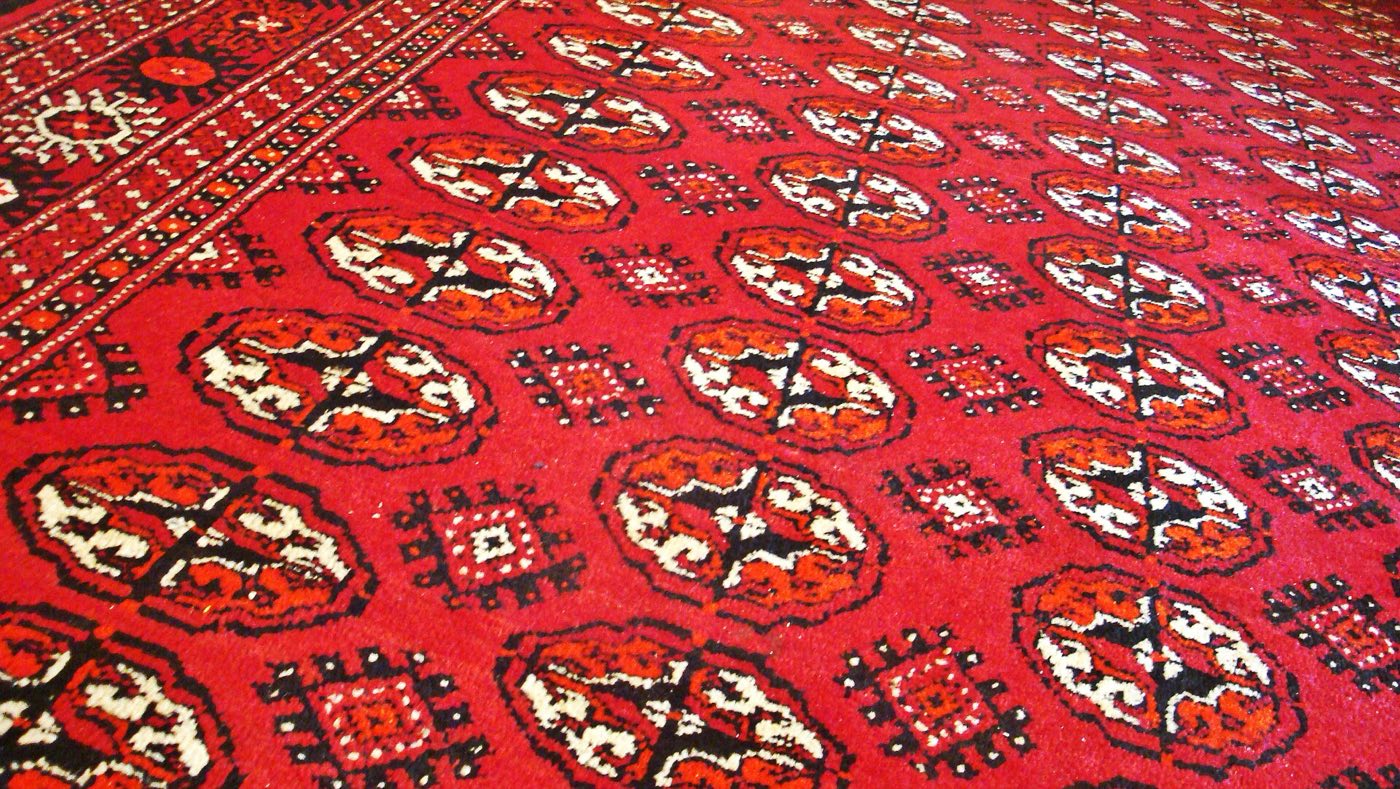
Now officially known as Altyn Asyr and relocated to the outskirts of the capital, the Sunday bazaar is where rural Turkmenistan comes to the city to trade. Carpets, livestock, copper, traditional dress, dried goods — rows and rows of stalls that still feel closer to the trading caravans of a century ago than to a modern city market. Go with a guide, go early, and bring small cash in manat. Carpets are the signature purchase; anything over a meter wide requires an export certificate, which the better vendors know how to arrange.
When to Go
April through May and September through October are the comfortable windows — warm days, cool nights, and the desert approachable without risk of heat injury. Summer temperatures in the Karakum routinely exceed 45 Celsius and can push past 50, making the Darvaza crater visit genuinely dangerous during the day. Winter (November through February) is cold and often windy but still workable for Ashgabat sightseeing and the crater at night, where the fire is actually more dramatic against cold air. Shoulder seasons also align with the best light at Yangykala and Merv.
Getting Around
Most foreign visitors travel on a guided itinerary with a licensed Turkmen tour operator, and the operator typically provides a driver, vehicle, and guide throughout — the logistics of independent travel are challenging given the entry rules and checkpoints. Domestic flights from Ashgabat reach Dashoguz (for Konye-Urgench), Mary (for Merv), and Türkmenbaşy (for Yangykala and the Caspian) in under ninety minutes each. Road travel across the Karakum to the Darvaza crater requires a 4x4 and a driver who knows the sand tracks. Within Ashgabat, official taxis and metered cars handle most short trips cheaply.
Cost & Currency
Turkmenistan uses the manat (TMT), with a significant gap between the official rate and the black-market rate — for practical purposes your tour operator usually handles exchanges. Guided tours are the primary expense, typically running 200–400 USD per person per day including vehicle, driver, guide, accommodation, and most meals. Solo supplements are substantial. Cash (USD and euros in crisp unmarked notes) is still king for tips, drinks, and shopping — cards work only at top Ashgabat hotels. Tipping guides and drivers at the end of a multi-day trip is standard and appreciated; 10–15 USD per day each is a reasonable benchmark.
Frequently Asked Questions
- Do I need a visa to visit Turkmenistan?
- Yes — almost all nationalities require a visa, and the process is not simple. Most travelers apply through a licensed Turkmen tour operator who provides a letter of invitation as part of a booked itinerary, then collect the visa on arrival at Ashgabat airport or at a land border. Transit visas are occasionally issued for three- to five-day independent crossings. Processing can take weeks; start at least two months before travel.
- Can I travel independently in Turkmenistan?
- Independent travel is possible on a transit visa but very limited in scope and time. For a full itinerary including Darvaza, Merv, and Konye-Urgench, most visitors book through a licensed Turkmen operator who arranges a tourist visa, vehicle, driver, and guide who accompanies you throughout. Budget for the accompanied format rather than fighting it; the operators know the checkpoints, permits, and local logistics that would otherwise consume the trip.
- Is the Darvaza Gas Crater still burning?
- Yes, as of 2026 — despite the government's stated intention to extinguish it to recover lost gas, the crater continues to burn and remains open to organized visits. Check with your operator close to your travel dates for the latest status. Even if the fire were to be reduced, the crater and desert camping experience would likely remain a featured stop on most itineraries.
- Is it safe to travel in Turkmenistan?
- Violent crime against foreigners is rare and the accompanied nature of most itineraries keeps logistics tightly controlled. The practical risks are more about heat injury in summer, road conditions on desert tracks, and rules you may not realize you are breaking — photography of government buildings, the presidential palace, and some monuments is restricted. Follow your guide's instructions, keep copies of your visa and registration, and avoid political conversations in public.
- What should I know about photography?
- Photography of military installations, the presidential palace, airports, and some government buildings is prohibited and can result in brief detention and wiped cards. In Ashgabat, ask your guide before photographing any official building or statue — the rules shift. Locals are generally happy to be photographed if you ask, particularly at markets, but always ask. Drones are essentially prohibited; do not bring one into the country.
Plan a Trip to Turkmenistan
Have you been to Turkmenistan?
Track 195 countries, 50 states & 63 national parks on your map