Bangladesh
- Capital
- Dhaka
- Population
- 170M
- Currency
- BDT
- Languages
- Bengali
Overview
A lush, river-laced delta nation where the mighty Ganges, Brahmaputra, and Meghna converge to form the world's largest river delta. Visitors come for the Sundarbans mangrove forest, the ancient mosque city of Bagerhat, and a warmly welcoming culture. The first thing that strikes you is how much of Bangladesh is water. Rivers braid across the country in a constantly shifting network of channels, chars, and oxbows, and even in the dry season most long-distance travel still involves a ferry at some point. Fly in over Dhaka and the land below looks more like a green mosaic dropped into silver water than a country with solid borders. At ground level you'll get used to waiting for the ferry, bargaining for a seat on a rocket-nosed passenger launch, and watching fishermen cast nets that have been cast the same way here for centuries. Bangladesh rewards travelers who are comfortable with chaos and curious about places that do not run on tourism. Dhaka is a city of roughly 22 million people where rickshaws and Toyotas and cycle-vans share the same lane without obvious rules, and yet strangers will invite you for tea on your first afternoon. Outside the capital the pace drops sharply — tea gardens climb the hills around Srimangal, Sundarbans rangers point out crocodiles from the bow of a small launch, and at Cox's Bazar a beach that runs 120 uninterrupted kilometers is usually far emptier than the number suggests. It is a demanding country to travel in, and an unusually rewarding one for travelers who put in the patience.
Things to Do
Sundarbans mangrove forest and Bengal tigers
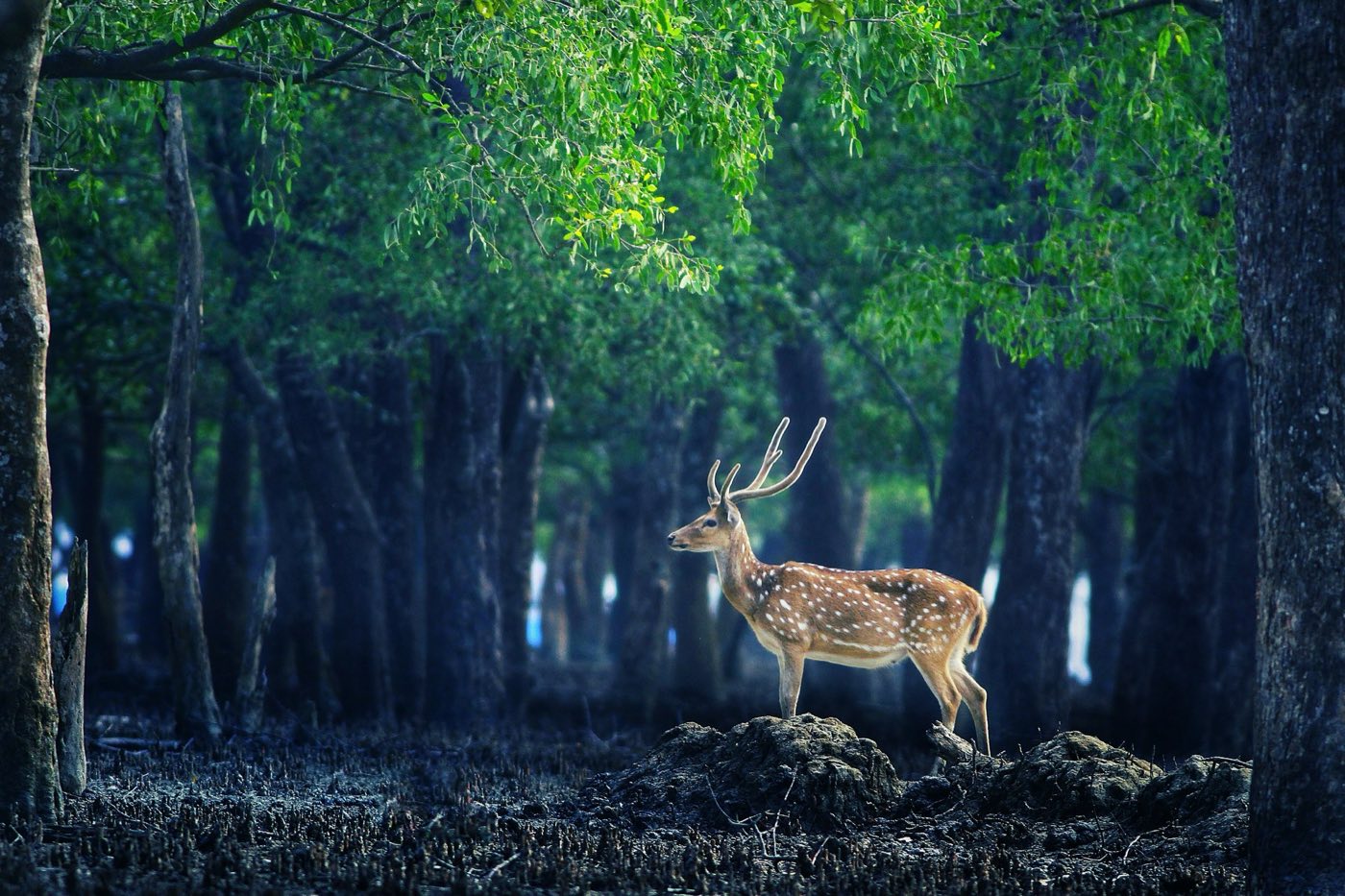
The world's largest contiguous mangrove forest sprawls across the Ganges delta, a UNESCO World Heritage site that shelters Bengal tigers, saltwater crocodiles, spotted deer, and a staggering density of birdlife. You visit on a two- to four-day launch cruise out of Khulna or Mongla, sleeping aboard and moving out in small skiffs at dawn. Tiger sightings are rare, tracks in the mud are common, and the forest at low tide is unforgettable.
Historic Mosque City of Bagerhat
A 15th-century walled city in the southwest, founded by the Turkish general Khan Jahan Ali, that once held sixty mosques and other monuments in the middle of what was then swamp. The Sixty Dome Mosque is the set piece — a low, dark brick hall with seventy-seven domes held up by stone columns — and the surrounding site rewards an unhurried afternoon. Pair it with a Sundarbans trip; Bagerhat sits on the route from Khulna.
Cox's Bazar — the world's longest natural beach
A 120-kilometer stretch of sand along the Bay of Bengal in southeastern Bangladesh, crowded near Cox's Bazar town and close to empty further south toward Inani and Teknaf. The development is mostly domestic hotels catering to Bangladeshi families, so expect a different scene from a Thai or Sri Lankan beach — conservative dress, long walks, and gentle surf. Sunrises from the northern end are reliably excellent.
Srimangal tea gardens
Low emerald hills carpeted with tea bushes in the northeastern Sylhet division, dotted with colonial-era bungalows and pickers moving in lines through the rows. You can tour a processing factory, taste the local seven-layer tea that has become a minor regional attraction, and hike short trails in Lawachara National Park where hoolock gibbons still call from the canopy. Stay in a restored planter's bungalow for the full effect.
Paharpur Buddhist monastery ruins
The Somapura Mahavihara at Paharpur was one of the largest Buddhist monastic complexes in the subcontinent when it was built in the eighth century, and its foundations still cover twenty-plus acres of the northwestern Rajshahi division. A central brick stupa rises in stepped terraces; the surrounding cells once housed hundreds of monks. It is a quiet, mostly visitor-free site that is worth the long drive from Dhaka.
Old Dhaka's Lalbagh Fort and rickshaw rides
Lalbagh is an unfinished 17th-century Mughal fort in the tangle of Old Dhaka — high red walls, a marble tomb, and formal gardens in the middle of a densely packed district. The pleasure of the area is the approach: hire a cycle rickshaw and let the rider thread through Chawkbazar's alleys, past spice shops and the Star Mosque with its mosaic ceramic façade. Keep your phone zipped up and your elbows in.
Rangamati and the Chittagong Hill Tracts
A region of green hills, river lakes, and indigenous Chakma, Marma, and Tripura communities in the southeast, distinctly different in culture and landscape from the rest of the country. Kaptai Lake — a hydro reservoir that flooded old villages — is crossed by small boats to tribal markets and hilltop monasteries. Foreign travelers currently need a permit and a registered guide; arrangements are straightforward through Dhaka operators.
When to Go
November through February offers cool, dry weather perfect for exploring the Sundarbans, tea country, and historic sites — daytime temperatures in the low-to-mid 20s Celsius and clear skies. The monsoon from June through September brings heavy rains, flooding across much of the delta, and cancelled ferry schedules, but also the greenest landscapes and the lowest prices. April and May are the hot, sticky pre-monsoon weeks when travel gets uncomfortable fast; Pahela Baishakh in mid-April celebrates Bengali New Year and is worth timing around if you can handle the heat.
Getting Around
Distances are short on the map but long on the ground in Bangladesh — traffic in and around Dhaka is among the worst in the world. Intercity trains run reasonably on time on the Dhaka–Chittagong and Dhaka–Sylhet corridors, and the overnight Rocket paddle steamers between Dhaka and Khulna are a memorable if slow way to reach the Sundarbans. Domestic flights on Novoair and US-Bangla cut days off long itineraries. For anything outside the main corridors, hire a car and driver — self-drive is impractical for foreign travelers given the road norms.
Cost & Currency
The Bangladeshi taka (BDT) is cheap by any international measure. Expect 100–200 taka for a filling lunch of dal, fish, and rice at a local restaurant, 300–500 for a sit-down meal at a mid-range place, and 3,000–6,000 taka a night for a comfortable mid-range hotel room in Dhaka or Chittagong. ATMs are reliable in cities and at major tourist areas; cards work in upscale hotels and some restaurants but carry plenty of cash for rickshaws, ferries, and rural travel. Tipping is not expected in small eateries; round up or leave 10% in nicer restaurants.
Frequently Asked Questions
- Do I need a visa for Bangladesh?
- Most foreign travelers need a visa in advance, obtained from a Bangladeshi embassy or through an e-visa program that is currently being expanded. Visa-on-arrival is available to citizens of a limited list of countries for tourism — check the current policy with your nearest mission before you fly, as rules shift periodically.
- Is Bangladesh safe for tourists?
- Most of the country is safe for ordinary tourism with the usual precautions around crowded areas and road travel. The Chittagong Hill Tracts require a permit and registered guide, and travelers should check advisories for political demonstrations around election periods. Women travelers should expect attention in public and dress conservatively.
- What should I wear?
- Bangladesh is a conservative Muslim-majority country and modest dress is strongly recommended. For men, long trousers and shirts that cover the shoulders. For women, long sleeves, long skirts or trousers, and a scarf that can cover the hair when entering mosques or rural areas will make the trip smoother.
- Can I drink the tap water?
- No — tap water in Bangladesh should not be consumed even in hotels. Stick to sealed bottled water, use a reliable filter or purification tablets, and be careful with ice, salads, and uncooked produce. Upmarket hotels provide filtered drinking water in the room.
- How do I see the Sundarbans?
- Almost every visitor joins a multi-day launch cruise booked through a Bangladeshi operator — trips typically leave from Khulna or Mongla and run two to four nights aboard a small boat with meals, ranger, and skiff excursions included. Independent access without a registered guide is not permitted in the tiger reserve.
Plan a Trip to Bangladesh
Have you been to Bangladesh?
Track 195 countries, 50 states & 63 national parks on your map