Armenia
- Capital
- Yerevan
- Population
- 3.0M
- Currency
- AMD
- Languages
- Armenian
Overview
One of the world's oldest Christian nations — Armenia adopted the faith in 301 CE, before Rome — and a highland country of ancient monasteries built into cliff faces, dramatic gorges, and a culture that has held together through centuries of hard history. Travelers come for the medieval churches carved straight into rock, cognac tastings in Yerevan, and the quiet blue expanse of Lake Sevan up at 6,200 feet. Yerevan is where most trips begin, and it is a surprise: a pink-tufa-stoned city laid out in concentric circles by Soviet planners, with cafes spilling onto wide boulevards, a serious wine and brandy scene, and Mount Ararat — technically across the Turkish border — dominating the southern skyline on clear mornings. The city feels more Mediterranean than Soviet once you spend an evening there. Head an hour in any direction and the country opens up into high steppe, volcanic plateaus, and river gorges that hide some of the most striking monastic architecture in the Christian world. Armenia rewards travelers interested in deep history, rugged landscapes, and a culture that is genuinely proud to be visited. English is growing quickly in Yerevan; Russian still works widely with older Armenians, and a few words of Armenian will earn you a long story and a glass of homemade wine before you finish the sentence. Ten days lets you build a loop through the major monasteries and still have time for a slow dinner or three.
Things to Do
Geghard Monastery carved into cliff rock
A 40-minute drive east of Yerevan up the Azat gorge, Geghard is a UNESCO-listed monastery partially hewn directly into the surrounding cliff — the rear chambers are not built but carved, their columns and cross-stones cut from the living rock. The acoustics in the inner rock-cut chapel are startling; if a local vocal group is practicing, you will hear sacred harmonies that vibrate through the stone floor. Pair it with Garni, 20 minutes down the road.
Garni Temple and Garni Gorge basalt columns
The only Greco-Roman colonnaded temple left standing anywhere in the former Soviet Union, a first-century structure perched at the edge of a cliff above the Azat river. Walk down into the gorge below and you reach the Symphony of the Stones — a natural formation of hexagonal basalt columns hanging from the cliff walls like a pipe organ, formed by cooling lava millions of years ago. An easy hour's visit combined with Geghard makes a full day from Yerevan.
Lake Sevan and Sevanavank monastery
The largest lake in the Caucasus sits at 6,200 feet above sea level and turns a deep, almost Mediterranean blue on summer days. On a peninsula jutting out from its northwestern shore, Sevanavank monastery — two ninth-century churches of dark tufa stone — looks down across the water from a short, steep climb. Stop for grilled trout (ishkhan) and crayfish at one of the lakeside shacks on the drive up from Yerevan, and go in the morning for the clearest water.
Tatev Monastery and Wings of Tatev cable car
In the country's far south, the ninth-century Tatev Monastery sits on a stone promontory above the Vorotan river gorge, one of the most dramatic settings of any Armenian church. The Wings of Tatev cable car — officially the world's longest reversible aerial tramway — runs three and a half miles over the gorge in about twelve minutes, and the ride itself is half the point. Allow a full day from Yerevan; the drive alone is four hours each way.
Yerevan's Cascade complex and Republic Square
The Cascade is a colossal flight of tufa-stone stairs rising through terraced gardens from Yerevan's cultural district up to a Soviet-era victory monument, now home to the Cafesjian Center for the Arts with open-air sculptures by Botero and other major names. Walk up at sunset for the view over the city toward Ararat. After dark, head down to Republic Square for the synchronized fountain show — the water runs to classical and Armenian music on summer evenings — and an ice cream at Mirzoyan Library.
Noravank Monastery in its red-rock canyon
Two hours south of Yerevan along the road to Tatev, Noravank sits at the end of a narrow canyon of oxide-red cliffs that glow nearly orange in late-afternoon light. The 13th-century two-story church has an external stone staircase climbing its facade — narrow, stepped, and without a railing — that lets you reach the upper chapel the way worshippers have for 800 years. The contrast of red stone, blue sky, and black tufa monastery is hard to forget.
Ararat cognac distillery tour
Armenian brandy has been made in Yerevan since 1887 and, legend has it, Winston Churchill drank it by the case through the Second World War. The Ararat distillery on the edge of the city runs tours that walk you through the cellars — barrels aging 3, 10, 20, 30 years — and end with a tasting flight in the old hall. Even if you are not a spirits drinker, the history is worth the hour, and the 20-year Nairi is a revelation next to most French cognacs.
When to Go
May through June and September through October are the prime windows — mild days in the 60s and 70s, long evenings, and the best monastery light without the summer heat of the Ararat plain. July and August can push past 95 degrees in Yerevan but stay pleasant at higher elevations around Lake Sevan, Dilijan, and Tatev, and the lake itself is warm enough to swim in. Winter from December through February brings real snow to the highland monasteries and world-class skiing at Tsaghkadzor, with Yerevan quieter but still lively. Spring wildflowers across the gorges in late April are a small annual miracle.
Getting Around
Armenia is small enough that most of the country fits inside a week-long loop by car, and renting a vehicle in Yerevan is the most flexible way to see the monasteries. Roads on the main corridors are good; a few mountain routes to Tatev and Dilijan are winding but paved. Marshrutka minibuses are the backbone of local transport — cheap, frequent between major towns, and departing when full from central stations. Within Yerevan, the small metro covers the main axis, taxis and Yandex rides are inexpensive (a cross-city trip rarely exceeds US$5), and the walkable center around Republic Square makes most of the city accessible on foot. Hiring a driver for a multi-day monastery loop is affordable and takes the navigation off your hands.
Cost & Currency
Armenia uses the dram (AMD), which trades at roughly 400 to the US dollar and holds steady. The country remains one of the best travel values in the region: expect around 500 AMD (about US$1.25) for an espresso, 2,500–5,000 AMD (US$6–$12) for a proper sit-down lunch with wine, and 25,000–45,000 AMD (US$60–$110) a night for a well-reviewed mid-range hotel room in central Yerevan. Cards are accepted at most city restaurants, hotels, and shops; carry cash for rural monasteries, marshrutkas, and small cafes outside the capital. ATMs are widely available in Yerevan and larger towns. Tipping is modest — round up a bill, leave 10% if service warrants.
Frequently Asked Questions
- Do I need a visa to visit Armenia?
- Citizens of the US, Canada, the UK, the EU, and many other countries can enter Armenia visa-free for stays of up to 180 days — only a valid passport is required. A handful of nationalities need an e-visa, which is issued online in a few days through the Ministry of Foreign Affairs website. Confirm your status before booking.
- Is Armenia safe for travelers?
- Armenia is one of the safer countries in the region, with very low violent crime and a culture genuinely welcoming to visitors. The main caution is around the border with Azerbaijan — the Nagorno-Karabakh conflict has reshaped the eastern frontier and some border areas remain off-limits or tense. Stick to the well-traveled monastery circuit and the main highway network and you will have no issues.
- Can I see Mount Ararat from Armenia?
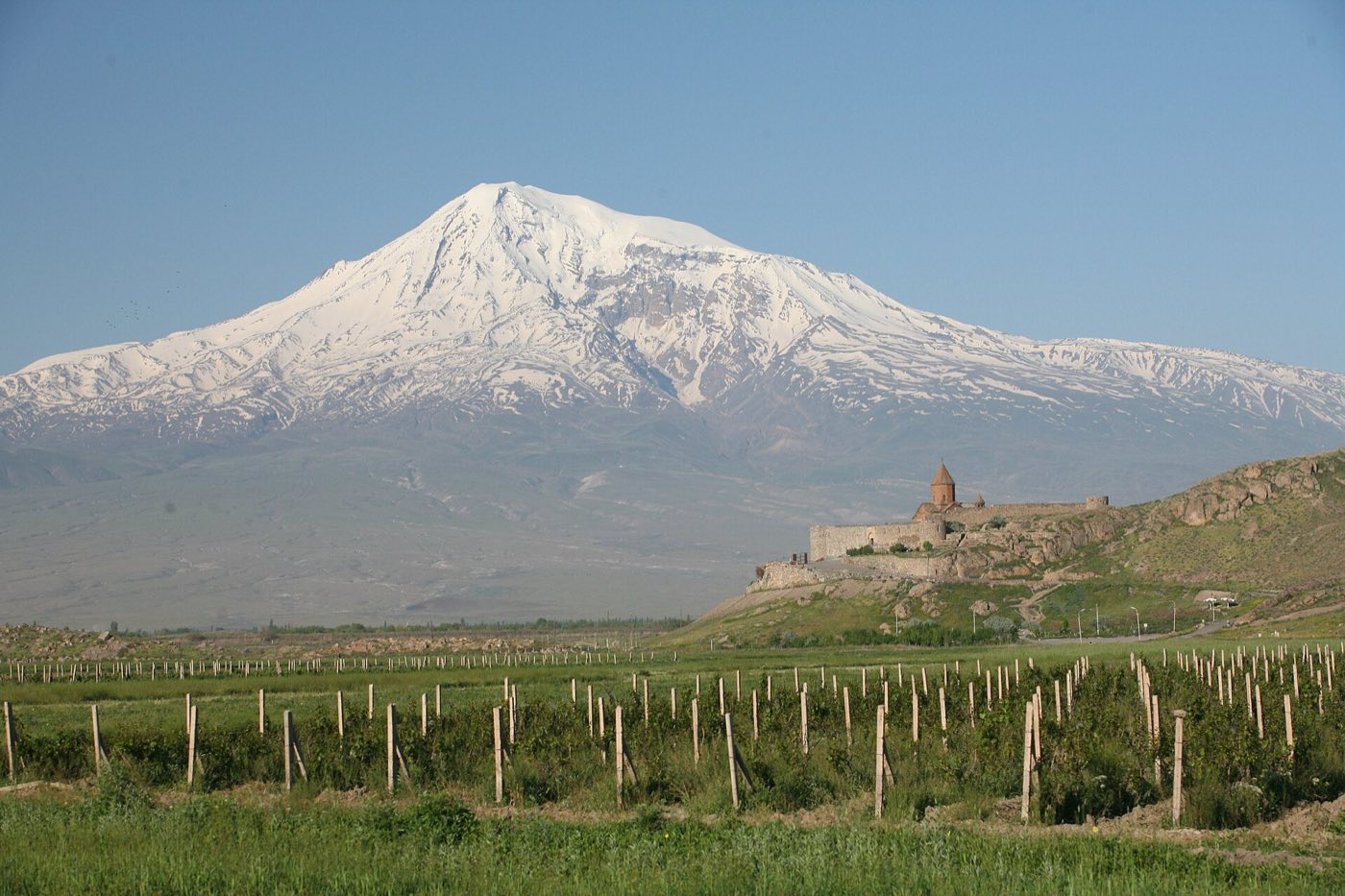
- Yes — on clear days, Mount Ararat dominates the southern skyline of Yerevan despite the peak itself sitting across the Turkish border. The twin cones of Greater and Lesser Ararat are central to Armenian national identity. The best views are from the Cascade complex at sunset and from the platform at Khor Virap monastery, less than an hour south of the capital.
- Do people speak English in Armenia?
- In Yerevan, English is widely spoken by younger Armenians, hotel staff, and most tourist-facing businesses. Outside the capital, Russian is often the bridge language with older generations, and pure Armenian predominates in rural areas. A translation app handles most gaps, and Armenians will typically go out of their way to help you even when there is no shared language.
- How long should I plan for a first trip?
- Seven to ten days is comfortable for a first visit — three or four nights in Yerevan using it as a base for day trips to Geghard, Garni, Khor Virap, and Lake Sevan, followed by three or four nights on a southern loop through Noravank, Tatev, and the Dilijan national park. Longer trips let you add Gyumri in the northwest and hiking in the Debed canyon.
Plan a Trip to Armenia
Have you been to Armenia?
Track 195 countries, 50 states & 63 national parks on your map