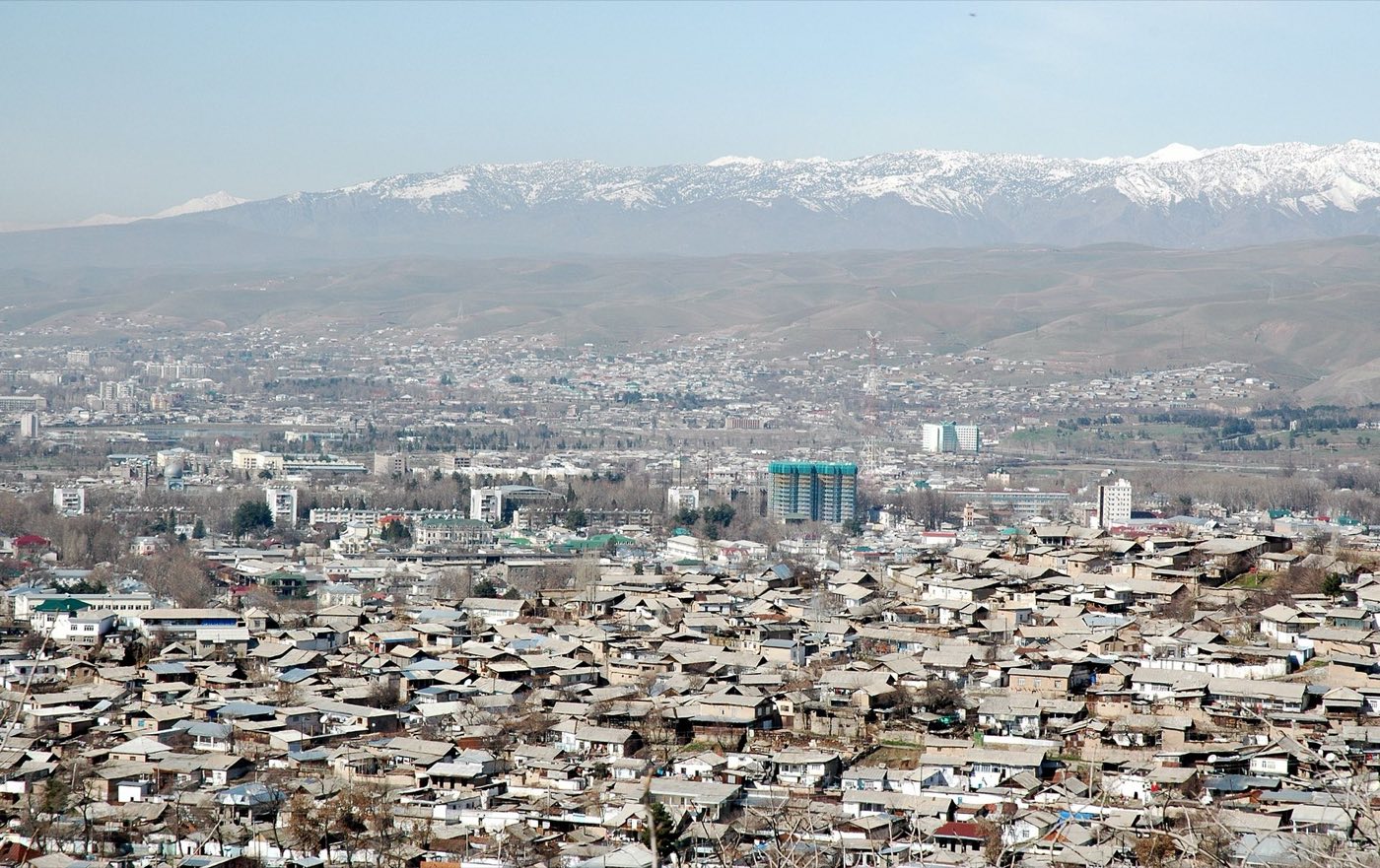
Tajikistan
- Capital
- Dushanbe
- Population
- 10.1M
- Currency
- TJS
- Languages
- Tajik
Overview
A Central Asian republic that is essentially mountain — the Pamirs cover more than half the country and climb past 7,000 meters, and the flat parts are almost an afterthought. Travelers come for the Pamir Highway, one of the highest motorable roads on Earth, for Silk Road forts above the Wakhan Valley, and for homestays with families who have kept the same yurts on the same pastures for generations. You feel the altitude before you see anything else. Drive out of Dushanbe and within a few hours the air thins, the trees disappear, and the road tips upward into a plateau that stays above 3,500 meters for days at a time. At the high passes your head pounds, your stomach turns, and then the landscape delivers the compensation: cobalt lakes, ochre-red massifs, herds of Marco Polo sheep on ridgelines, and villages that feel more Afghan or Kyrgyz than they do Soviet. This is not a country you come to for comfort or efficiency. Permits take time, GBAO paperwork is mandatory for the Pamirs, and vehicles break down in places with no garage for 200 kilometers. What you get in exchange is one of the last adventure-travel experiences in Asia that has barely been packaged — a country where a shared 4x4 with four strangers and a driver named Muzaffar is still the standard way to cross a region the size of Greece.
Things to Do
Pamir Highway road trip — one of the world's great drives
The M41 runs roughly 1,200 kilometers from Dushanbe through Khorog and up onto the Pamir Plateau before dropping into Kyrgyzstan at the Kyzyl-Art Pass at 4,280 meters. You do it in a shared Land Cruiser over seven to ten days, stopping at Bulunkul — supposedly Tajikistan's coldest inhabited village — and at Karakul, an impact-crater lake near the Chinese border. The road alternates between smooth Chinese-built asphalt and washboard track that will rearrange your internal organs. Go with a reputable Khorog-based outfit like PECTA or META, carry cash in small bills, and budget a full day's buffer for breakdowns.
Iskanderkul Lake turquoise alpine lake
Named for Alexander the Great, Iskanderkul sits at 2,195 meters in the Fann Mountains about four hours north of Dushanbe. The water is a mineral blue that changes shade through the day, and a short trail leads to a 38-meter waterfall everyone calls the Niagara. You can day-trip from Dushanbe with a hired driver, but staying a night at the state dacha or a homestay in Sarytag lets you hike one of the side valleys in the morning when the lake is still and empty.
Wakhan Corridor and Afghan border views
The Wakhan is a narrow valley where the Panj River separates Tajikistan from Afghanistan — so narrow in places that you can wave to farmers plowing fields on the other side. The road between Khorog and Langar threads through Ismaili villages, orchards, and Silk Road forts, and the sense of being on the edge of somewhere consequential is hard to shake. Afghan market day at Ishkashim was suspended after 2021 and has not restarted as of this writing; check current status with your guesthouse in Khorog.
Fann Mountains trekking
Between Dushanbe and Samarkand, the Fanns are Tajikistan's most accessible serious trekking — granite peaks to 5,500 meters, a string of turquoise lakes called the Kulikalon and Seven Lakes, and well-trodden routes that don't require a permit beyond the basic visa. You can do a four-day loop from Artuch base camp with a local guide and porters for a fraction of what an equivalent trip costs in Nepal. The season is short: late June through September, with August the safest bet for the passes.
Yamchun Fort ruins in the Wakhan
High on a shelf above the Panj River, Yamchun's stone walls and watchtowers have guarded the Wakhan route since at least the third century. The ruin itself is substantial — concentric walls, a keep, views down into Afghanistan that explain exactly why someone built a fort here. Combine it with the Bibi Fatima hot springs a kilometer further up the road, where a cave-fed bath complex has separate men's and women's hours and is the hottest clean water for days in any direction.
Khulma hot springs in the Pamirs
Known locally as Garm Chashma, these sulphur springs sit in a side valley above Khorog and are one of the old-Soviet-sanatorium experiences that still runs on its original logic — you pay a few somoni, you sit in mineral water that has carved orange-and-white travertine terraces, and a babushka brings you tea. Drive up from Khorog for the afternoon, or stay in the basic on-site guesthouse if you want the pre-dawn soak when the mountains above are pink.
Dushanbe's National Museum and Rudaki Park
The capital is the gentlest introduction to the country — wide Soviet boulevards, a flagpole that was briefly the world's tallest, and a National Museum whose star exhibit is the Sleeping Buddha of Ajina Tepa, a 13-meter reclining clay figure excavated from a Buddhist monastery destroyed in the eighth century. Rudaki Park, the long green spine through downtown, is where the city walks in the evening. Two days in Dushanbe is enough before and after your Pamir trip; use the time to arrange permits and buy warm layers at the Shohmansur bazaar.
When to Go
June through September is the realistic travel window, with July and August the only months when every Pamir pass is reliably clear and the high lakes are ice-free. May and late September are shoulder seasons that work for Dushanbe and the Fanns but not for the full M41. The Wakhan can be visited from late May if you avoid the highest side valleys. Winter closes most of the Pamirs entirely — passes snow in from November through April and the road between Khorog and Murghab becomes a serious undertaking. Dushanbe itself is comfortable year-round, cool in winter and hot but dry in July.
Getting Around
Tajikistan runs on shared 4x4s and long-distance marshrutkas. Dushanbe has regular shared-taxi departures to Khujand in the north and Khorog in the east — the Khorog route takes 14 to 18 hours on a road that cuts through a river gorge for much of it. Once you are in the Pamirs, a hired 4x4 with driver is effectively the only option for the high routes, and you should expect to pay USD 80–150 per day all-in, shared with other travelers where possible. A GBAO permit is required on top of your visa to enter the Pamir region — apply online with your e-visa at evisa.tj, and carry multiple printed copies for checkpoints. Internal flights from Dushanbe to Khorog are weather-dependent and often cancelled.
Cost & Currency
Tajikistan uses the somoni (TJS), and the country is very inexpensive by any regional standard. Budget roughly USD 40–60 a day for backpacker travel and USD 80–120 with a hired driver and mid-range guesthouses. A plov lunch in a chaikhana runs 25–40 TJS, a homestay bed with dinner and breakfast in the Pamirs is typically 200–300 TJS, and a shared 4x4 seat from Dushanbe to Khorog is around 400 TJS. ATMs work in Dushanbe and Khujand; outside of those cities assume cash-only and carry US dollars in small clean bills to change at guesthouses. Tipping is not expected but a few dollars at the end of a multi-day drive is appreciated.
Frequently Asked Questions
- Do I need a visa to visit Tajikistan?
- Most travelers need a visa and should apply online through the official e-visa portal at evisa.tj, which takes a few days. Add the GBAO permit to the same application if you plan to travel to the Pamirs — it costs a small extra fee and is mandatory east of Khorog. Print several copies of both documents for checkpoints.
- Is the Pamir Highway safe to travel?
- The route is generally safe from petty crime, but the hazards are altitude, weather, and vehicle reliability. Passes above 4,000 meters can cause serious acute mountain sickness — build in an acclimatization day in Khorog or the Wakhan before going higher, and carry Diamox. Always go with a driver who knows the road, and avoid the route in winter entirely.
- How should I handle altitude on the Pamir Plateau?
- The plateau sits above 3,500 meters for days and the highest pass is 4,655 meters, so treat it like serious mountain travel. Spend at least two nights at around 2,000 meters in Khorog before ascending, drink more water than feels reasonable, avoid alcohol for the first few days, and consider acetazolamide (Diamox) if you have been above 3,500m before and responded poorly.
- Can I travel Tajikistan independently or do I need a tour?
- You can do Dushanbe, the Fann Mountains, and the northern cities independently without much difficulty. For the Pamirs, hiring a 4x4 with driver is the realistic approach even for experienced independent travelers — shared-vehicle arrangements from Khorog guesthouses bring the cost down and let you meet other travelers heading the same way.
- What language is spoken and will English work?
- Tajik is the official language, and Russian is widely spoken as a second language across the country. English is rare outside Dushanbe hotels and tour operators. A few phrases in Tajik or Russian go a long way, especially in the Pamirs where Pamiri languages like Shughni and Wakhi are what you will actually hear in homes.
Plan a Trip to Tajikistan
Have you been to Tajikistan?
Track 195 countries, 50 states & 63 national parks on your map