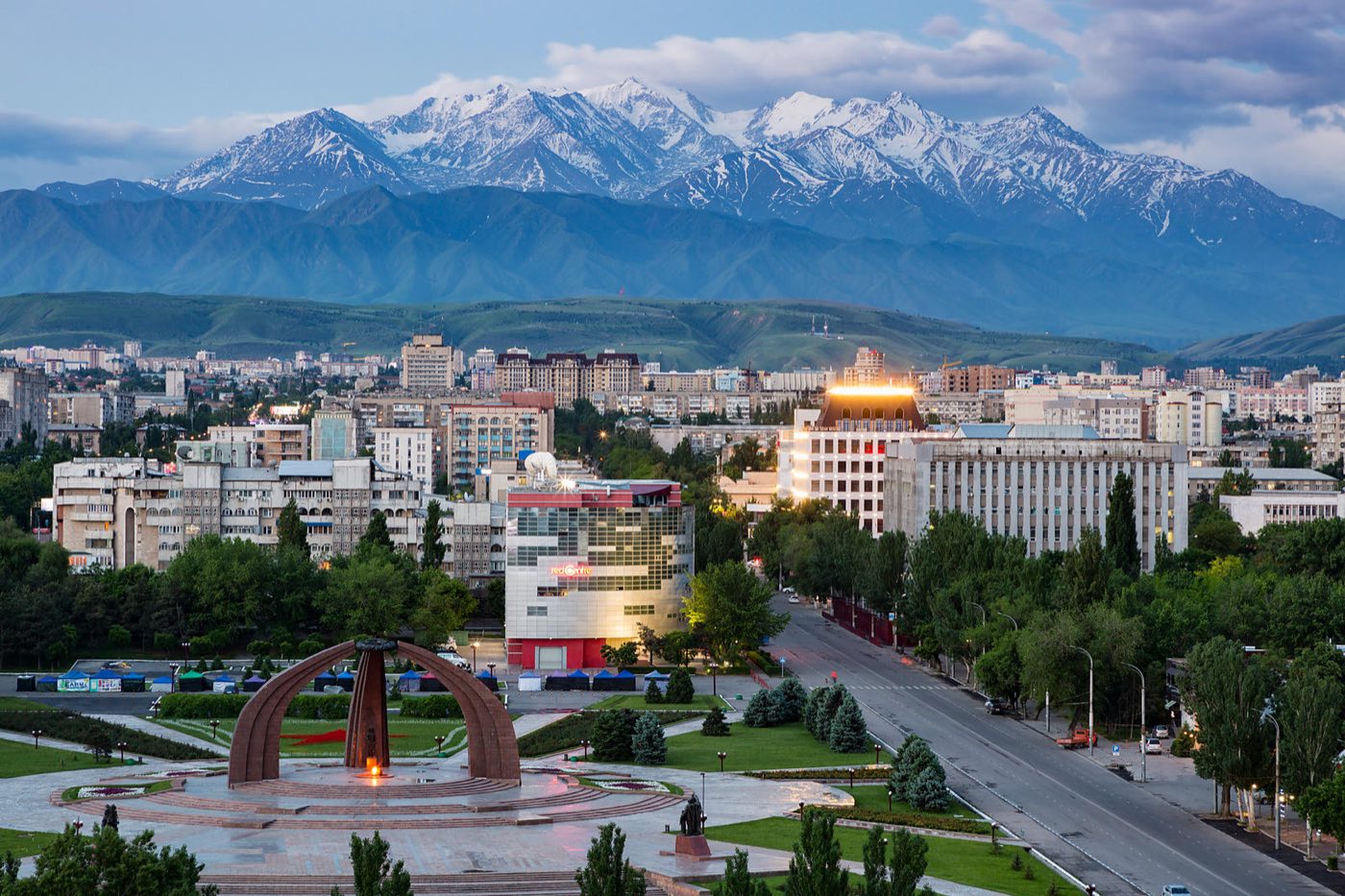
Kyrgyzstan
- Capital
- Bishkek
- Population
- 7M
- Currency
- KGS
- Languages
- Kyrgyz, Russian
Overview
A Central Asian mountain republic where more than ninety percent of the land sits above 1,500 meters, Kyrgyzstan is the easiest of the Silk Road countries for independent travelers to reach and the hardest to leave. The Tian Shan range fills the south and east with glaciers, red-rock canyons, and high alpine lakes that freeze solid through winter and turn a scorched turquoise by July. You feel the altitude first, and then the hospitality. Nomadic summer pastures called jailoos scatter the high country from June through September, and a well-organized network of community-based tourism offices will place you in a yurt with a Kyrgyz family for about twenty dollars a night, three meals included. The arrangement is not staged — these are working herding camps where you share kumis (fermented mare's milk), watch horses brought down at dusk, and sleep under the patterned felt of a real shepherd's home. Kyrgyzstan rewards travelers who like their adventures a little rough around the edges. Roads are variable, marshrutka minibuses are the standard long-distance option, and Russian still goes further than English outside Bishkek. In exchange you get week-long treks without permits, a forty-five-day visa-free stay for most Western passports, and some of the last genuinely intact nomadic culture in the world. Go with sturdy boots, a working phrasebook, and time.
Things to Do
Song-Kol Lake yurt camps with nomadic families
At just over 3,000 meters in the central Tian Shan, Song-Kol is a vast alpine lake ringed by summer pastures where herders bring their horses and sheep from June through early September. You reach it by jeep over one of three high passes, usually from Kochkor, and stay in yurt camps run by the families who have grazed here for generations. Days here are simple: ride a horse out across the pasture, watch eagles cross the ridges, eat lamb and homemade bread at a low table inside the yurt, and sleep under heavy felt as the temperature drops below freezing even in July. Come prepared for basic pit toilets and no electricity — that is the point.
Issyk-Kul Lake — the world's second-largest alpine lake
A 180-kilometer-long lake that never freezes despite sitting at 1,600 meters, Issyk-Kul was a Soviet holiday coast and still has the faded sanatoriums to prove it. The north shore around Cholpon-Ata has the beach resorts and the Soviet-era petroglyph field scattered across a rocky plain just inland. The south shore is wilder and more interesting — stop in Bokonbayevo for eagle hunter demonstrations, then head into the red-earth Skazka (Fairy Tale) Canyon where wind has carved the sandstone into ridges that glow at sunset. Swim if you are brave; the water stays cold even in August.
Ala-Archa National Park near Bishkek
Forty kilometers south of the capital, Ala-Archa rises from a grassy canyon mouth at 1,600 meters to glaciated peaks above 4,800 — an entire alpine range accessible as a day trip. The short walk to the Ak-Sai waterfall takes two or three hours round trip and gets you to a real glacier tongue with minimal effort. Serious hikers push on to Ratsek Hut at 3,300 meters, spend a night, and attempt Uchitel Peak the next morning. It is the easiest way to get a taste of Tian Shan high country without committing to a week on horseback.
Jeti-Ögüz red rock formations
The Seven Bulls are a line of red sandstone cliffs rising from a green valley near the south shore of Issyk-Kul, named for a Kyrgyz legend involving a grieving widow and seven transformed oxen. The geology alone would be worth the stop — the rocks glow almost crimson in afternoon light against the dark fir forests behind — but the valley upstream is also the jumping-off point for a three-day horseback trek to the Kok-Jailoo meadows and their summer yurt camps. Easy day visit or a week-long expedition; both work.
Tash Rabat caravanserai on the Silk Road
A fifteenth-century stone way-station sits at 3,200 meters in a remote valley a few hours' drive off the main road to the Torugart Pass and the Chinese border. The building is half-buried into the hillside, with dozens of small domed chambers where Silk Road traders once slept alongside their camels. Spend the night in one of the basic yurt camps nearby, walk up the ridge at dawn for the view down to the stone-walled building below, and you will have the place almost entirely to yourself. Combine it with an onward crossing into China or a loop back to Naryn.
Osh bazaar and Sulaiman-Too Sacred Mountain
The south's main city is older than Rome and feels it, with a sprawling Silk Road bazaar (the Jayma) that still works the way it has for centuries — spice piles, butchered carcasses, melon mountains in August, and Uzbek traders in their flat-crowned duppi caps. The city's shrine, Sulaiman-Too, is a five-peaked rock outcrop rising straight out of the urban fabric and Kyrgyzstan's only UNESCO cultural site. Climb it for the views across to the Fergana Valley and duck into the museum cave dug into its flank. Osh is also the logical gateway for the Pamir Highway into Tajikistan.
Eagle hunting demonstrations
Salbuurun — the Kyrgyz tradition of hunting with trained golden eagles, taigan dogs, and falcons — survives in the hills around Bokonbayevo on Issyk-Kul's south shore. A handful of working hunters welcome visitors for demonstrations most mornings in summer: the eagle on a gauntleted forearm, the release, the strike on a fox-fur lure dragged across the pasture. It is genuine rather than staged, and the birds are kept and fed as family members. Book through the local CBT (Community-Based Tourism) office to make sure your fee goes to the hunting families themselves.
When to Go
June through September is the clear main season, with yurt camps open, passes snow-free, and long days for trekking at altitude. July and August are peak for Song-Kol and Issyk-Kul; if you want the high pastures to yourself, go in the first half of June or the first week of September when the light is sharper and most of the tourists have gone home. Winter is genuinely harsh in the mountains — many regional roads close — but Karakol's ski base offers some of the cheapest powder in Asia from January through March. The World Nomad Games, held every two years in late summer, are a spectacle worth planning around if the dates align.
Getting Around
Marshrutka minibuses and shared taxis connect every town for a few hundred som, leaving when they fill rather than to a schedule; Bishkek's western bus station is the hub for most long-distance routes. Within Bishkek, Yandex Taxi works like Uber and keeps fares honest. For trekking regions — Song-Kol, Arslanbob, Jyrgalan, Sary-Chelek — hire a 4x4 with driver through the local CBT office in the nearest town; rates are around fifty to eighty dollars a day and usually include reaching trailheads that public transport will not. The road between Bishkek and Osh is a twelve-hour drive over two 3,000-meter passes and closes in heavy winter snow; a short internal flight is a worthwhile alternative. Carry cash — ATMs exist in every regional capital but not in villages.
Cost & Currency
Kyrgyzstan uses the som (KGS), trading around 85 to the US dollar. It is one of the cheapest countries in Asia: a plate of laghman noodles or plov in a local cafe runs 200–300 som (around three dollars), a bed in a Bishkek hostel 600–900 som, and a full yurt stay including three meals about 1,500–2,000 som a person. A 4x4 with driver to Song-Kol for two days runs roughly 15,000 som split between passengers. Cards work in Bishkek hotels and supermarkets; outside the capital carry som in small denominations. Tipping is not customary — round up at nicer restaurants, pay drivers and guides a small extra at the end of a multi-day trip if the service was good.
Frequently Asked Questions
- Do I need a visa to visit Kyrgyzstan?
- Citizens of the United States, United Kingdom, European Union, Canada, Australia, and dozens of other countries can enter Kyrgyzstan visa-free for up to 60 days, and the entry stamp is issued on arrival at Manas Airport in Bishkek or at the land borders. Bring a passport valid for at least six months beyond your planned exit date. If you are crossing overland from China via the Torugart or Irkeshtam passes, check the opening calendar before you go — both are closed on Chinese public holidays.
- Is Kyrgyzstan safe for independent travelers?
- Yes, by the standards of Central Asia it is straightforward and welcoming, with violent crime rare and nomadic hospitality a genuine thing. Petty theft can happen on crowded marshrutkas in Bishkek and around Osh bazaar, so keep valuables close. Women travel solo regularly, though you will get more attention than in Western Europe and some cultural adjustments (modest dress in rural areas, polite but firm refusals at yurt vodka sessions) go a long way. Check border-region advisories if you plan to approach the Tajik or Uzbek frontiers in the Fergana Valley.
- Do I need to book a trek in advance?
- For the classic routes — Song-Kol, Jyrgalan, Ala-Kul — walk-in bookings the day before through CBT offices in Kochkor, Karakol, or Jyrgalan work reliably from late June through early September. Horses, guides, and yurt stays are arranged in twenty-four hours. For more remote expeditions like the south Inylchek glacier base camp or Khan Tengri, book two to three months ahead through a Bishkek-based operator who handles permits, helicopters, and acclimatization.
- What is a yurt stay actually like?
- Basic and warm. You sleep on thick felt mats and shyrdak carpets on the ground, wrapped in wool blankets, with a wood or dung stove in the center that gets lit at night. Meals are shared at a low table — typically bread, butter, cream, homemade jam, and tea in the mornings, mutton or beef stew in the evenings. Toilets are pit outhouses a short walk from the yurts; there are no showers and no Wi-Fi. Bring a headlamp, wet wipes, your own sleeping bag liner if you are particular, and warm layers even in July.
- Can I combine Kyrgyzstan with other Central Asian countries?
- Easily. Kazakhstan is three hours north of Bishkek by road and shares a visa-free regime with most Western passports; Almaty pairs naturally with a Kyrgyz trip. Uzbekistan is the richer cultural counterpart and reachable via the Dostyk border crossing from Osh. Tajikistan's Pamir Highway begins at Sary-Tash, three hours south of Osh, and is one of the world's great high-altitude drives. A three-week loop that takes in Bishkek, Issyk-Kul, Song-Kol, Osh, and onward into the Pamirs is a classic Central Asia itinerary.
Plan a Trip to Kyrgyzstan
Have you been to Kyrgyzstan?
Track 195 countries, 50 states & 63 national parks on your map