Syria
- Capital
- Damascus
- Population
- 22.1M
- Currency
- SYP
- Languages
- Arabic
Overview
One of the longest continuously inhabited regions on earth, Syria holds some of the ancient world's most important archaeological sites — the Umayyad Mosque, Palmyra's desert colonnades, the Crac des Chevaliers, and Aleppo's covered souqs. The country endured more than a decade of civil war that ended with the fall of the Assad government in December 2024, and what has followed is a cautious and uneven reopening to outside travel. Arrivals in 2025 and 2026 have been small but steady, nearly all on operator-led itineraries with close ties to Syrian authorities. This is not a country to visit independently. Major governments including the US, UK, Canada, and Australia continue to advise against all travel at time of writing, and travel insurance is effectively impossible to arrange for ordinary tourism. The security picture is improving but highly variable between governorates, and former conflict zones contain unexploded ordnance. Entry requires a visa arranged in advance through a licensed operator, and movement inside the country is limited to approved routes and sites. For those who go — and some do, responsibly, with an eye toward supporting Syrian-led reconstruction — the encounter is with a people of extraordinary warmth and with monuments that carry a different weight now. Damascus's old city is largely intact and functioning. Aleppo's souqs are slowly rebuilding. Palmyra, heavily damaged by ISIS in 2015–17, is stabilizing under UNESCO-supervised work. Go only with a reputable specialist operator, follow every instruction, check advisories the week of travel, and understand that itineraries change on short notice.
Things to Do
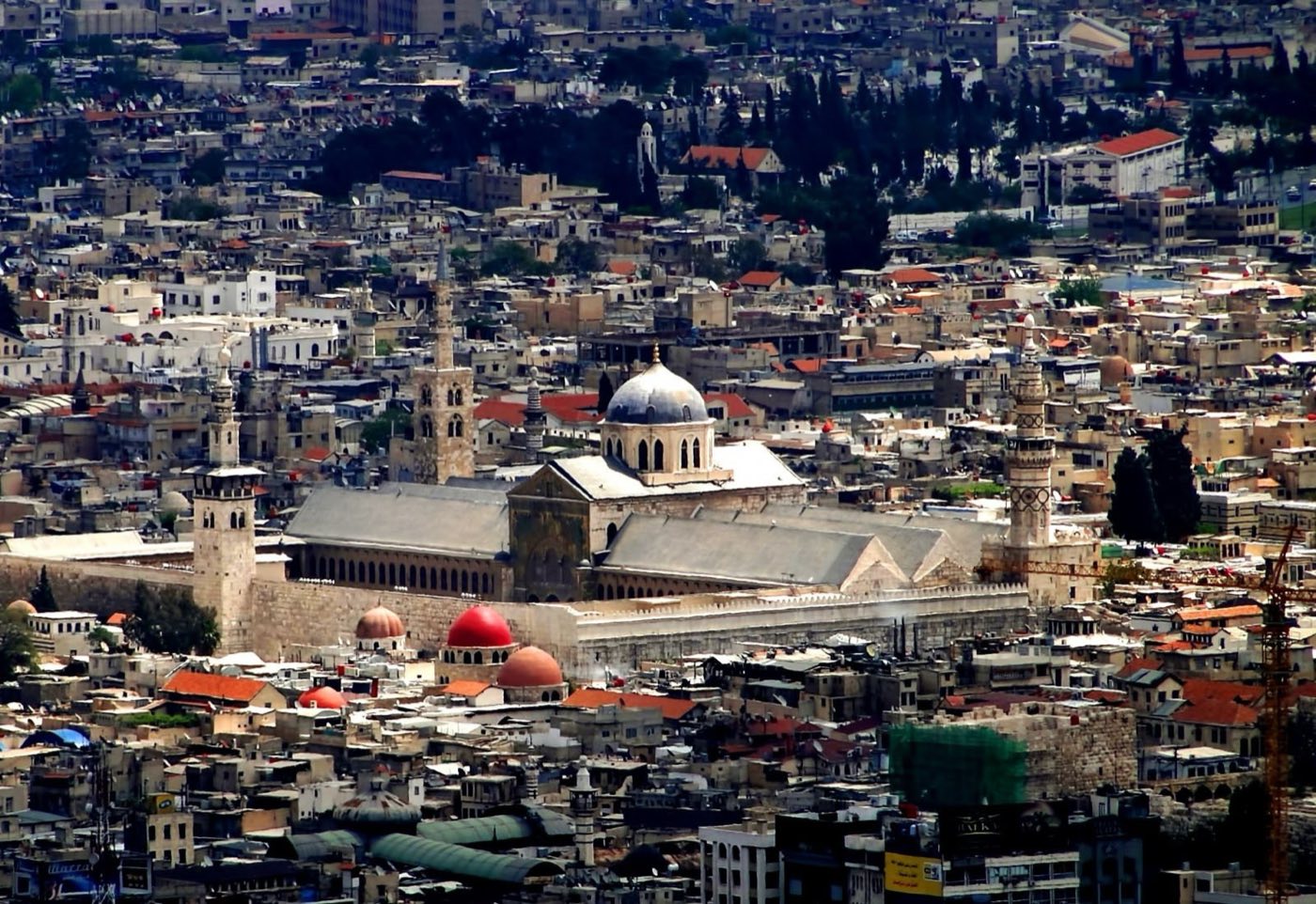
Umayyad Mosque in Damascus
One of Islam's oldest and most significant mosques, built in 705 CE on the site of a Roman temple and a Byzantine church. The vast marble courtyard opens onto a prayer hall whose gold mosaics — preserved through 1,300 years and multiple restorations — depict an idealized paradise of rivers and gardens. A small shrine inside houses a relic reputed to be the head of John the Baptist, venerated in both Islam and Christianity. Remove shoes, dress modestly, and allow an hour for the courtyard alone at golden hour.
Palmyra's ancient colonnaded ruins
The desert oasis city of Queen Zenobia, 215 kilometers northeast of Damascus, was a caravan hub on the trade route between the Mediterranean and Mesopotamia. Its great colonnaded avenue, Temple of Bel, and honeycomb tower-tombs stood largely intact until ISIS demolished portions between 2015 and 2017. Substantial sections survive or have been stabilized, and UNESCO and Syrian archaeologists continue reconstruction. Visits require special permits and are currently day trips under escort from Damascus with the tour operator arranging all approvals.
Crac des Chevaliers Crusader castle
T.E. Lawrence called it the finest castle in the world, and it still is — a 12th-century Hospitaller Knights fortress on a hilltop near the Lebanese border, with concentric walls, a moat, vaulted stables, and Gothic cloisters almost fully intact. The Crac saw shelling in 2014 and some damage was done, but the main structure is sound and has reopened to supervised visitors. A two-hour drive from Damascus or a closer stop from Homs, usually combined with the nearby St. George Monastery.
Damascus's Al-Hamidiyah Souq
The main covered market of the old city runs half a kilometer from the Citadel to the Umayyad Mosque under an arched iron roof pierced by bullet holes from French mandate-era clashes, which now throw starlight-like patterns onto the stalls at midday. You pass spice sellers, textile merchants, the 140-year-old Bakdash ice cream parlor famous for its pistachio-topped booza, and the scent of cardamom coffee. Follow your guide, dress modestly, and take photographs only where they are permitted.
Aleppo's Citadel and historic souqs
The massive hilltop citadel dominates Syria's second city and dates in parts to the 10th century BCE, with Mamluk and Ayyubid fortifications added over centuries. The surrounding covered souqs of Aleppo — some of the oldest and largest in the world and a UNESCO site since 1986 — were severely damaged in 2012–16 fighting, but restoration has been underway since 2017 with UNESCO coordination and international funding. Large portions have reopened, though others remain cordoned off. A visit here now is also witness to active reconstruction.
Bosra's Roman amphitheater
The 2nd-century CE black-basalt Roman theater in southern Syria, 140 kilometers south of Damascus, is one of the best-preserved of its kind anywhere — a 15,000-seat semicircle that sits inside a medieval Ayyubid citadel later built around it. The acoustics are famously sharp, and a coin dropped on the orchestra floor can be heard in the upper tiers. The region saw combat during the war and the site now requires a permit for visits, typically arranged as part of a southern Syria extension from Damascus.
Dead Cities of northern Syria
A cluster of hundreds of Byzantine-era towns between Aleppo and Idlib, abandoned between the 8th and 10th centuries and preserved by the dry limestone uplands as roofless shells of churches, villas, and olive presses. Serjilla and Al Bara are the most-visited and most complete, and the drive through the surrounding countryside is itself part of the experience. Some sites saw fighting and access is irregular — the operator's fixer confirms which are open a day or two before the visit.
When to Go
March through May and September through November have always offered the most workable temperatures for archaeological sites — spring brings wildflowers across the Dead Cities and the Hauran, and autumn brings golden late-afternoon light to Damascus's old city and to Palmyra. Summer in the desert is brutal, with Palmyra regularly above 40°C in July and August, and winter in the north can bring snow to Aleppo and serious cold to inland sites. Practical timing, though, is less about seasons than about advisories — operators typically announce travel windows a few months out and adjust itineraries as the security picture shifts. Ramadan dates also matter: many restaurants close during daylight hours, and evening iftar gatherings can be memorable if your guide connects you.
Getting Around
Travel is by road with a licensed local driver arranged by your operator, full stop. Independent driving is not permitted for foreign visitors and independent travel between governorates is not feasible in the current security environment. The main Damascus–Homs–Aleppo corridor is the safest and most reliable route, with side trips to Crac des Chevaliers, Maaloula, Palmyra, and Bosra added as approvals allow. Domestic flights connect Damascus to Aleppo on Syrian Air but most operator itineraries stay on the ground. Checkpoints remain in place across the country; carry your passport, visa printout, and operator letter at all times, and follow your guide's instructions on photography, which is forbidden at military positions, checkpoints, and many government buildings.
Cost & Currency
Syria uses the Syrian pound (SYP), which has been extremely volatile and is not convertible outside the country — bring US dollars or euros in clean, unmarked notes for all expenses, and your operator will handle currency exchange on the ground. Operator-led trips are the only realistic way to travel and run US$300–US$600 per person per day all-inclusive, covering guide, driver, permits, accommodation, and most meals. Cards do not work for foreign visitors in almost any context, and ATMs are not reliably accessible to international cards. Tipping is significant culturally — budget US$10–US$20 per day for your guide and driver, more for exceptional service, and small notes for mosque caretakers, site attendants, and restaurant staff.
Frequently Asked Questions
- Is it legal and safe to visit Syria in 2026?
- Legally, yes, with a visa arranged through a licensed operator — the post-2024 transitional government has welcomed supervised tourism. Safety is another matter: the US, UK, and most Western governments continue to advise against all travel, travel insurance is not available for standard tourism, and former conflict zones retain unexploded ordnance. Go only with a specialist operator and after reading your government's current advisory carefully.
- How do I get a visa?
- Through the operator you book with — they submit your details to the Syrian Ministry of Tourism and Ministry of Foreign Affairs, and the visa is issued on arrival or as a pre-approval letter depending on nationality. US, UK, and Canadian passport holders face additional scrutiny and longer lead times. Apply at least eight to twelve weeks ahead and do not attempt to arrange a visa independently.
- Can I travel to Syria without a tour operator?
- Not practically. Independent visas are not being issued to most nationalities, movement between governorates requires permits that individuals cannot obtain, and checkpoints will turn back travelers without operator paperwork. Reputable specialist operators handle all approvals, routes, and on-the-ground logistics. Attempting independent travel risks detention, deportation, or worse.
- What should I bring?
- Clean US dollars or euros in small and mid-size denominations for all payments and tips, a printed copy of your visa and operator letter, modest clothing for mosques and conservative neighborhoods, a basic first-aid kit, and any prescription medications in original packaging with a copy of the prescription. Leave sensitive electronics and anything that signals a journalistic or research purpose unless your operator has specifically cleared it.
- Is photography restricted?
- Yes, and the restrictions are serious. Military positions, checkpoints, bridges, government buildings, and many sensitive sites are strictly off-limits, and violations can lead to detention. Ask your guide before every photograph in public space outside obvious tourist contexts. Inside mosques and churches follow the caretakers' instructions, and always ask before photographing people, especially women.
Plan a Trip to Syria
Have you been to Syria?
Track 195 countries, 50 states & 63 national parks on your map