Israel
- Capital
- Jerusalem
- Population
- 9.8M
- Currency
- ILS
- Languages
- Hebrew, Arabic
Overview
A small Mediterranean country the size of New Jersey where three world religions share a single limestone hill, and where the modern state has compressed Roman ruins, crusader ports, kibbutz fields, and tech-office skylines into a four-hour drive. Travelers come for the Old City of Jerusalem, the buoyancy of the Dead Sea, the sunrise hike up Masada, and Tel Aviv's beach promenade and restaurant scene. You should know before you go that Israel is shaped by an active and ongoing conflict. Western governments continue to issue heightened travel advisories; Gaza remains closed to visitors; the overland crossings into the West Bank and into Jordan via the Allenby Bridge open and close on short notice; and rocket fire from Gaza, Lebanon, or further afield can trigger Iron Dome intercepts and short shelter-in-place sirens in almost any part of the country. Most days in Tel Aviv and Jerusalem feel entirely ordinary. Some days do not. Check your government's current guidance, buy insurance that explicitly covers conflict zones, and download the Home Front Command app before you land. What you get for accepting the complexity is a country of unusual density and intensity. Friday afternoons empty the streets as Shabbat begins; the muezzin's call threads across the Old City five times a day; and dinners stretch long over mezze, arak, and arguments. Come with curiosity, a willingness to hold contradiction, and respect for a place where every stone has been claimed by more than one story.
Things to Do
Jerusalem's Old City and Western Wall
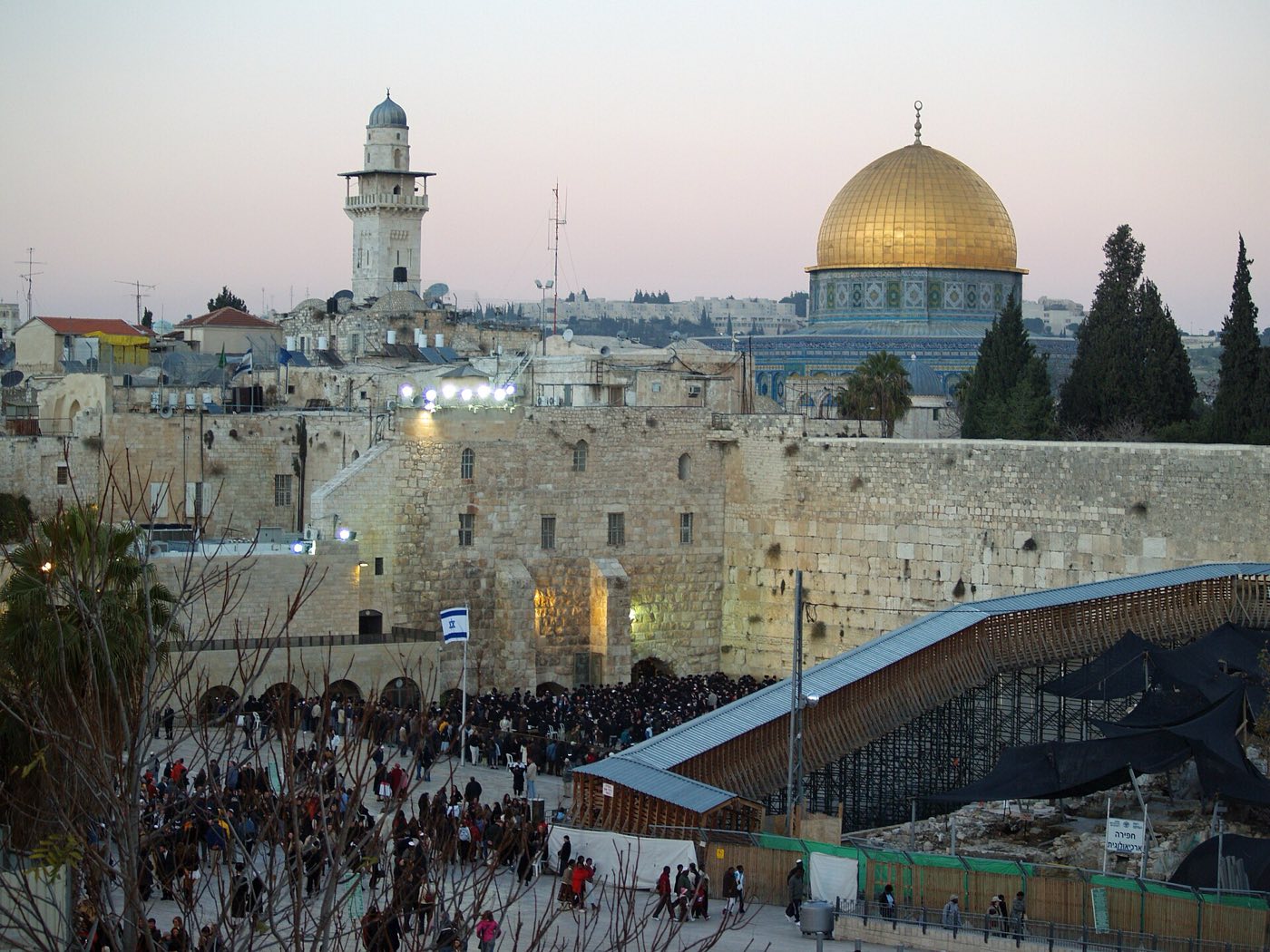
Within a one-kilometer square of walled stone sit the Church of the Holy Sepulchre, the Western Wall, the Temple Mount / Haram al-Sharif, and four quarters — Jewish, Muslim, Christian, Armenian — that each feel like a different country. Start early at Jaffa Gate, walk the Stations of the Cross along the Via Dolorosa, and time your visit to the Temple Mount carefully: non-Muslim visiting hours are limited and the entrance at the Mughrabi Bridge closes with little warning. Cover your shoulders and knees. Save at least two mornings for this.
Dead Sea floating experience
The lowest point on Earth's land surface sits 430 meters below sea level, and its 34% salinity lets you lie back on the water reading a newspaper, the cliché photograph everyone takes and nobody regrets. Most travelers base at Ein Bokek on the southern basin, where the public beaches are free and the resort hotels pipe the water into sulphur-smelling spa tubs. Do not shave the day before. Do not open your eyes underwater. Do not stay in longer than fifteen minutes — the brine is genuinely corrosive.
Masada sunrise hike
Herod's clifftop fortress above the Dead Sea was the site of the Jewish rebels' final stand against Rome in 73 CE, and climbing the Snake Path before dawn to watch the sun break over the Moab mountains is an Israeli rite of passage. Start from the eastern gate by 4:30 a.m. in summer, earlier in winter, and bring a liter of water per person — the return descent happens after sunrise and the heat climbs quickly. A cable car runs if you prefer the ruins without the climb.
Tel Aviv's beaches and Carmel Market
Fourteen kilometers of Mediterranean sand run from the old port of Jaffa to Tel Baruch, with a wide paved promenade the length of it for walking, running, and the city's peculiarly good people-watching. Spend mornings at Gordon or Frishman beach, afternoons wandering the Bauhaus-era White City UNESCO district, and evenings at Carmel Market, where the food stalls stay open late and the bars along Nahalat Binyamin overflow onto the pavement. Fridays wind down early for Shabbat; Saturdays come back to life at sundown.
Bahá'í Gardens in Haifa
A series of nineteen perfectly manicured terraces cascade down the slopes of Mount Carmel around the golden-domed Shrine of the Báb, the second holiest site in the Bahá'í faith. The upper and lower gardens are open free to the public daily, and guided tours of the full central axis run in English most mornings. The view from the top terrace over Haifa's harbor and the Mediterranean is one of the finest in the country. Dress modestly and remove hats inside the shrine.
Sea of Galilee and Nazareth
The freshwater lake where the Gospels locate much of Jesus' ministry is ringed by churches marking the Sermon on the Mount, the loaves and fishes, and Capernaum. Rent a car for a day, drive the full thirty-mile loop, swim off the quieter eastern shore, and stop in Tiberias for St. Peter's fish lunch. An hour west, Nazareth holds the Basilica of the Annunciation and an Arab old city where the food — musakhan, knafeh, fresh falafel — is arguably the best in the country.
Negev Desert and Ramon Crater
Israel's southern half is desert, and the Makhtesh Ramon is its most dramatic feature: a forty-kilometer erosion crater you can drive across, hike the rim of, or sleep beside in a Bedouin-style tented camp at Mitzpe Ramon. Sunset from the promenade at Mitzpe Ramon turns the crater walls the color of old copper, and the night skies are among the darkest in the country — an official International Dark Sky Reserve. Stop at the ibex colony on the way down Route 40.
When to Go
March to May and September to November are the two windows to aim for, with warm days, cool evenings, and neither the winter rains nor the summer furnace. April brings wildflowers through the Negev and manageable temperatures at Masada and the Dead Sea. September and October are warm enough to swim on the Mediterranean and mild enough to hike. July and August are brutal everywhere south of Haifa — 40°C at the Dead Sea and Eilat is routine — while December through February can be cold and wet in Jerusalem, which sits at elevation and occasionally sees snow.
Getting Around
A small country rewards renting a car, and roads are excellent — Tel Aviv to Jerusalem is an hour, Jerusalem to Eilat four. Signage runs in Hebrew, Arabic, and English. The Israel Railways network connects Tel Aviv to Jerusalem, Haifa, and Be'er Sheva; intercity Egged and Metropoline buses cover almost everywhere else cheaply. Public transport does not run on Shabbat, roughly Friday two hours before sundown to Saturday sundown, with the exception of Sherut shared taxis and transport in Arab-majority areas. Checkpoints between Israel proper and the West Bank move; the Allenby Bridge crossing into Jordan and the northern crossings open and close on short notice, so check before you go.
Cost & Currency
Israel uses the new shekel (ILS), and costs sit close to Western European levels — higher than many visitors expect. A decent dinner in Tel Aviv runs 120–220 ILS a head, a hummus lunch at Abu Hassan in Jaffa around 40–60 ILS, and a mid-range Tel Aviv hotel 600–1,200 ILS a night. Coffee at a café runs 14–18 ILS. Cards are accepted essentially everywhere except small market stalls and a handful of old-city shops; keep 200–300 ILS in cash for those. Tipping runs 12–15% at sit-down restaurants and is often not included — check the receipt. ATMs are widespread and dispense shekels with no fuss.
Frequently Asked Questions
- Is it currently safe to travel to Israel?
- It depends on the week and the region. Tel Aviv, Jerusalem, Haifa, and the Galilee are generally functioning normally, but active conflict means rocket fire, Iron Dome intercepts, and short shelter-in-place sirens remain possible. Gaza is closed. The West Bank and the northern border with Lebanon have heightened advisories. Check your government's travel advice in the week before you fly and confirm your insurance covers conflict zones.
- Do I need a visa to visit Israel?
- Most Western passport holders — US, UK, EU, Canada, Australia — receive a free 90-day tourist entry on arrival and do not need a visa in advance. Note that as of 2025 Israel began rolling out an ETA-IL electronic authorization system similar to the US ESTA; check whether it applies to your nationality before booking. Passport stamps are usually issued on a separate slip of paper, useful for onward travel to some Muslim-majority countries.
- Can I still visit the West Bank or cross into Jordan?
- Bethlehem and Jericho remain accessible to foreign tourists by organized tour or private taxi through Israeli-controlled checkpoints when the situation permits, but conditions change week to week. The Allenby Bridge crossing to Jordan opens and closes on short notice; the Yitzhak Rabin crossing near Eilat is generally more reliable. Check the status with your hotel or a reputable tour operator on the day, and do not attempt the crossings without confirmed current information.
- What should I do if I hear an air-raid siren?
- You have between 15 seconds (near Gaza) and 90 seconds (Tel Aviv, Jerusalem) to reach a reinforced room or stairwell. Every Israeli hotel and apartment has one — ask where it is when you check in. If you are in the street, enter any building and go to an interior stairwell, away from windows. Wait ten minutes after the all-clear. Download the Home Front Command app before you arrive; it sirens push notifications in English for your exact location.
- Is Israel welcoming to solo female travelers?
- Generally yes — violent crime is low and Tel Aviv in particular has a relaxed, liberal atmosphere. Dress conservatively when visiting religious sites, particularly the Western Wall, the Temple Mount / Haram al-Sharif, Mea Shearim in Jerusalem, and mosques or churches (covered shoulders and knees, head covering for the Western Wall women's section). In ultra-Orthodox neighborhoods, avoid the area on Shabbat. The rest of the time, the country is as easy for solo women as anywhere in Southern Europe.
Plan a Trip to Israel
Have you been to Israel?
Track 195 countries, 50 states & 63 national parks on your map