Jordan
- Capital
- Amman
- Population
- 11.4M
- Currency
- JOD
- Languages
- Arabic
Overview
A Middle Eastern kingdom of sandstone canyons, desert plateaus, and one of the great archaeological sites on Earth — the rose-red Nabataean city of Petra, carved into cliff faces two thousand years ago and rediscovered by the West in 1812. Travelers come to walk the mile-long Siq to the Treasury at dawn, float in the Dead Sea, sleep under Wadi Rum's open sky, stand among Jerash's Roman colonnades, and experience a welcome that has not yet been worn thin by mass tourism. The country is small, safe, and easily self-driven. Amman to Petra is three hours; Petra to Wadi Rum another ninety minutes; Wadi Rum to Aqaba an hour, and Aqaba back up the Dead Sea highway to Amman closes the loop in a day. The geography is concentrated enough that ten days covers everything without rushing. The culture is warm enough that you will be invited for tea by strangers, and the tea — small glass cups of cardamom-scented black tea with too much sugar — is worth accepting. Jordan shares borders with Syria, Iraq, Saudi Arabia, Israel, and the West Bank, and regional tensions periodically affect tourism numbers. The country itself is consistently stable and Western governments have kept it on their comfortable-for-tourism lists through the region's harder years. The Jordan Pass, bought online before arrival, waives the visa fee and includes entry to Petra and 40 other sites; buying it before you land saves 40 JOD and a queue at Amman airport. Pack modestly, learn shukran and marhaba, and come.
Things to Do
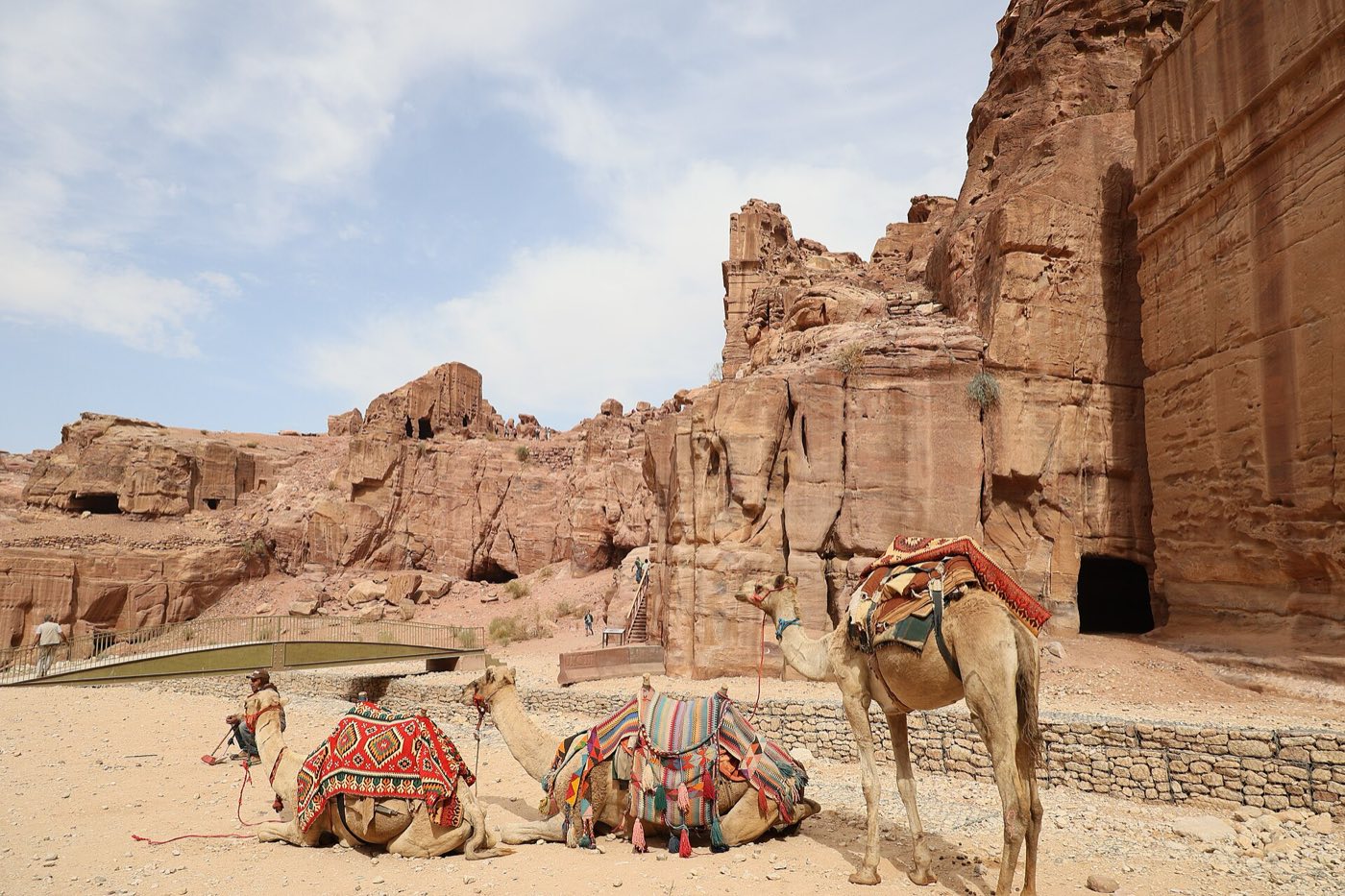
Petra's Treasury and Monastery
A Nabataean trading city carved into sandstone cliffs in the 2nd century BCE, reached by a 1.2-kilometer walk through the Siq — a narrow slot canyon whose walls rise 80 meters overhead. The Treasury (Al-Khazneh) at the end is the famous shot, but the site extends for kilometers beyond it: the Royal Tombs, the Roman Theater, the Colonnaded Street, and the 800-step climb up to the Monastery (Ad Deir), which is less crowded and arguably more impressive than the Treasury itself. Buy the two-day ticket via the Jordan Pass, arrive at 6 a.m. both mornings, and pack real water.
Wadi Rum desert camping and jeep tours
A protected desert wilderness of red sand and towering sandstone mountains that T.E. Lawrence wrote about in Seven Pillars of Wisdom and where The Martian, Dune, and Rogue One were filmed. Overnight Bedouin camps range from simple (shared domed tents, group dinners cooked in a zarb underground oven) to high-end (private bubble tents with glass ceilings for the stars). A half-day 4x4 tour covers the main sights — Khazali Canyon petroglyphs, the Seven Pillars, Lawrence's Spring. Sunrise balloon rides lift off on calm mornings. Book the camp and the jeep together through one operator.
Dead Sea floating and spa resorts
The lowest point on Earth's land surface sits 430 meters below sea level, its water ten times saltier than the ocean, and floating on it with a newspaper is a cliché that survives because the photograph is genuinely that strange. The Jordanian side runs from Sweimeh (the main resort strip with Mövenpick, Kempinski, and Marriott) down to the Dead Sea Panoramic Complex. Coat yourself in the dark mineral mud from the shore, rinse under the freshwater showers every resort provides, and limit your time in the water to fifteen minutes — the salt is corrosive. Do not shave the day before.
Jerash Roman ruins
One of the best-preserved Roman provincial cities in the world, forty minutes north of Amman. The Oval Plaza, the Colonnaded Street still rutted from 2,000 years of chariot wheels, and the twin theaters where bagpipe-playing Jordanian Legionnaires (yes, really) perform daily — the legacy of British military training — are the set pieces. Arrive by 9 a.m. and give it three to four hours. Pair with a visit to Ajloun Castle on the drive back, a 12th-century Ayyubid fortress on a hilltop with sweeping views across the Jordan Valley.
Amman's Citadel and Rainbow Street
The Citadel (Jabal al-Qal'a) crowns the highest hill in central Amman with Roman, Byzantine, and early Islamic ruins layered on top of one another, including the columns of the Temple of Hercules and an Umayyad palace. The view over the white-stone city and its 19 hills is worth the climb alone. Afterward, walk down to Rainbow Street in the Jabal Amman neighborhood for coffee at Books@Cafe, mansaf (lamb in jameed yogurt, Jordan's national dish) at Sufra, and a wander through the Friday souq al-juma'a flea market.
Dana Nature Reserve hiking
A 320-square-kilometer reserve that drops from 1,500-meter highlands to 50 meters below sea level in the Wadi Araba valley, running through four different ecosystems in a day's walk. The Dana to Feynan trek (14 kilometers, six hours, mostly downhill) ends at the Feynan EcoLodge, a candle-lit, solar-powered inn with no electricity in the rooms and Bedouin dinners on the roof. Arrange a jeep transfer back the next morning. Shorter trails from Dana Village work for half-day walkers. Bring real hiking boots; the footing is rough.
Aqaba's Red Sea coral reef diving
Jordan's only coastline is 27 kilometers long and shares some of the best reefs in the Red Sea with Egypt and Israel across the gulf. Warm water (22–28°C year round), visibility over 30 meters, and a half-dozen wreck dives including the Cedar Pride and a crashed Lockheed Tristar deliberately sunk as a reef project. Shore diving is the norm; most dive centers are clustered at the South Beach marine park. A PADI Open Water course runs three to four days and about 300 JOD. Aqaba also has a duty-free special economic zone — alcohol and electronics are cheaper here than elsewhere in the country.
When to Go
March through May and September through November are the two shoulder stretches that suit most of the country — warm days, cool nights, manageable temperatures at Petra and Wadi Rum. Spring brings wildflowers to Dana and the northern hills. Summer (June to August) turns the Jordan Valley and Wadi Rum into a furnace at 40–45°C; mornings and evenings are still feasible but midday is punishing. Winter (December to February) is cold in Amman and Petra — snow is possible at 800m elevation — but Aqaba and the Dead Sea stay mild at 18–22°C, and the desert sleeps under clear, cold, star-dense nights.
Getting Around
Renting a car is the right call for Jordan — roads are good, signage is bilingual Arabic and English, the classic King's Highway loop and Desert Highway shortcut are both well marked, and the main tourist sites are all within three hours of Amman. International car rental agencies (Hertz, Avis, Sixt) operate at the airport and in the capital; budget 25–40 JOD a day. Petrol is cheap. The JETT bus runs air-conditioned intercity service from Amman to Petra, Aqaba, and the Dead Sea for travelers who don't want to drive. Taxis within Amman use meters (demand the meter, al-adad, be on). Uber and Careem both operate in Amman and are often easier than street-hailing.
Cost & Currency
Jordan uses the Jordanian dinar (JOD), pegged at roughly 0.71 JOD to the US dollar, making it one of the stronger currencies in the region. Costs are moderate by Middle Eastern standards — higher than Egypt, lower than Israel. Expect 2–4 JOD for a mansaf or shawarma lunch, 15–25 JOD for a sit-down dinner with juice, and 60–150 JOD a night for a comfortable mid-range hotel in Amman or near Petra. Petra entry alone is 50 JOD for a single day, 55 for two days — which is why the Jordan Pass (70–80 JOD including the visa waiver and 40+ sites) pays back instantly. Cards are widely accepted in cities and major hotels; carry 50–100 JOD cash for Bedouin camps, smaller restaurants, and rural areas. Tipping 10% at sit-down restaurants and rounding up taxis is standard.
Frequently Asked Questions
- Is it safe to travel to Jordan?
- Yes — Jordan is one of the safer countries in the Middle East, with strong internal security, effective policing, and a long track record of protecting tourism. Western governments typically advise normal precautions across the main tourist areas (Amman, Petra, Wadi Rum, Aqaba, the Dead Sea), with caution near the Syrian and Iraqi borders in the north and east. Check your government's travel advice before you go, but the main circuit is consistently considered safe for travelers.
- Should I buy the Jordan Pass?
- Almost certainly yes. The pass costs 70, 75, or 80 JOD depending on how many days at Petra you want, includes the 40 JOD visa fee as long as you stay at least three nights, and covers entry to Petra, Wadi Rum, Jerash, the Citadel, and 40 other sites. Buy it online before you land and show the QR code at the Amman airport immigration desk. For almost any itinerary that includes Petra plus one or two other sites, it saves money.
- How long do I need at Petra?
- Two full days is the right answer. Day one: arrive at 6 a.m., walk the Siq to the Treasury before the crowds, continue to the Royal Tombs and the Roman Theater, stop for lunch, then climb to the Monastery in the afternoon. Day two: climb to the High Place of Sacrifice, explore the Wadi Farasa trail down the back, and see the Little Petra site six kilometers up the road. One day shows you only the first kilometer and leaves you exhausted.
- What should women wear?
- Jordan is more relaxed than its neighbors, but modest dress is appreciated and makes interactions warmer. Covered shoulders and knees work everywhere; long trousers or a long skirt plus a t-shirt is the standard kit. Bring a scarf for mosque visits (a few mosques welcome non-Muslim visitors — King Abdullah I Mosque in Amman is one). Swimwear is fine at hotel pools and Dead Sea resort beaches. Amman's trendier cafés and Aqaba are noticeably more relaxed than rural areas.
- Can I combine Jordan with Israel or Egypt?
- Yes — the Wadi Araba / Yitzhak Rabin crossing near Aqaba to Eilat is the most straightforward land border and is usually open, though conditions change with regional events. The Sheikh Hussein crossing in the north connects to Beit She'an in Israel. The Allenby Bridge (King Hussein Bridge) to the West Bank is heavily used but opens and closes on short notice. Ferries run from Aqaba to Nuweiba in Egypt for Sinai trips. Confirm current status with your hotel or a reputable operator on the day of crossing.
Plan a Trip to Jordan
Have you been to Jordan?
Track 195 countries, 50 states & 63 national parks on your map