Iraq
- Capital
- Baghdad
- Population
- 44.5M
- Currency
- IQD
- Languages
- Arabic, Kurdish
Overview
The land between the Tigris and Euphrates is where cities, writing, law, and the wheel were first invented — a reasonable claim to being the single most important patch of ground in human history. Iraq holds the ziggurat of Ur, the ruins of Babylon, the marshes that some scholars place at the source of the Eden story, and the shrine cities of Najaf and Karbala. For most of the last two decades it has also been off-limits to travelers. That has changed. There are really two Iraqs for a visitor. The Kurdistan Region in the north (KRG) — Erbil, Sulaymaniyah, Duhok — has been functionally autonomous since 1991, runs its own visa-on-arrival regime, and has been a comfortable and safe destination for independent travelers for a decade. Federal Iraq — Baghdad, Babylon, Ur, the southern marshes, and the holy cities — reopened to tourist visas on arrival in 2021 and is now accessible, though it is still a destination for experienced, culturally prepared travelers rather than a first international trip. Part of what makes Iraq an extraordinary trip right now is that you can walk Babylon with no other tourists on the site, visit 4,000-year-old Ur largely alone, and drink tea with strangers in Baghdad who are genuinely delighted that foreigners are coming back. The infrastructure is basic, the heat from May to October is punishing, and you should absolutely go with a reputable local operator for any travel south of Kurdistan. What you get back is one of the most rewarding archaeological and cultural trips in the world.
Things to Do
Ziggurat of Ur near Nasiriyah
The partially restored Sumerian ziggurat at Ur dates to around 2100 BC and is among the oldest monumental buildings on earth, built for the moon god Nanna by King Ur-Nammu. You can climb the restored front staircase for a view over the surrounding ruin field, with the foundations of the royal tombs and the reputed house of Abraham — the patriarch's traditional birthplace — within easy walking distance. An hour's drive from Nasiriyah, best visited early morning before the heat and typically combined with a marshes trip.
Babylon archaeological site
Saddam Hussein's 1980s reconstruction of Babylon on top of the original site is controversial archaeology, but the scale of what survives — the Ishtar Gate replicas, the processional way, the foundations of Nebuchadnezzar's palace — is extraordinary to walk in person. Go with a guide who can separate the 6th-century-BC foundations from the 1980s walls and point out the original cuneiform bricks still in place. The original Ishtar Gate is in Berlin's Pergamon Museum, but the site itself is the best way to feel the scale of the city.
Erbil Citadel in Kurdistan
The oldest continuously inhabited site on earth sits at the heart of Erbil, a circular mound of ancient settlement layers rising above the modern city. Walk the restored UNESCO citadel at dusk when the walls glow honey-colored, visit the carpet museum inside, and head down into the surrounding Qaysari Bazaar for tea at Machko Chai Khana, the century-old teahouse that has been the meeting point for Kurdish intellectuals for generations. Erbil is the easiest-to-reach introduction to Iraq for most travelers.
Mesopotamian Marshes (Ahwar) UNESCO site
The wetlands where the Tigris and Euphrates meet are home to the Marsh Arabs (Ma'dan), whose reed houses, water buffalo herding, and boat-based life have continued for five thousand years despite Saddam's attempt to drain the marshes in the 1990s. A day on a mashoof canoe with a local guide — typically arranged out of Chibayish — takes you through reed channels past floating buffalo platforms and into one of the great ecosystems and cultures of the Middle East. Go in winter or spring; summer is unbearable.
Imam Hussein Shrine in Karbala
One of the holiest sites in Shia Islam, the Imam Hussein Shrine marks the burial place of the Prophet Muhammad's grandson, killed at the Battle of Karbala in 680 AD. The gold-domed shrine complex is architecturally remarkable and a profound place to visit, particularly outside the mass pilgrimage of Arbaeen — when 20 million people walk to Karbala from Najaf, the largest annual human gathering on earth. Non-Muslims are welcome inside the courtyard but not the inner shrine; dress is conservative and women cover head and body completely.
Baghdad's Al-Mutanabbi Street book market
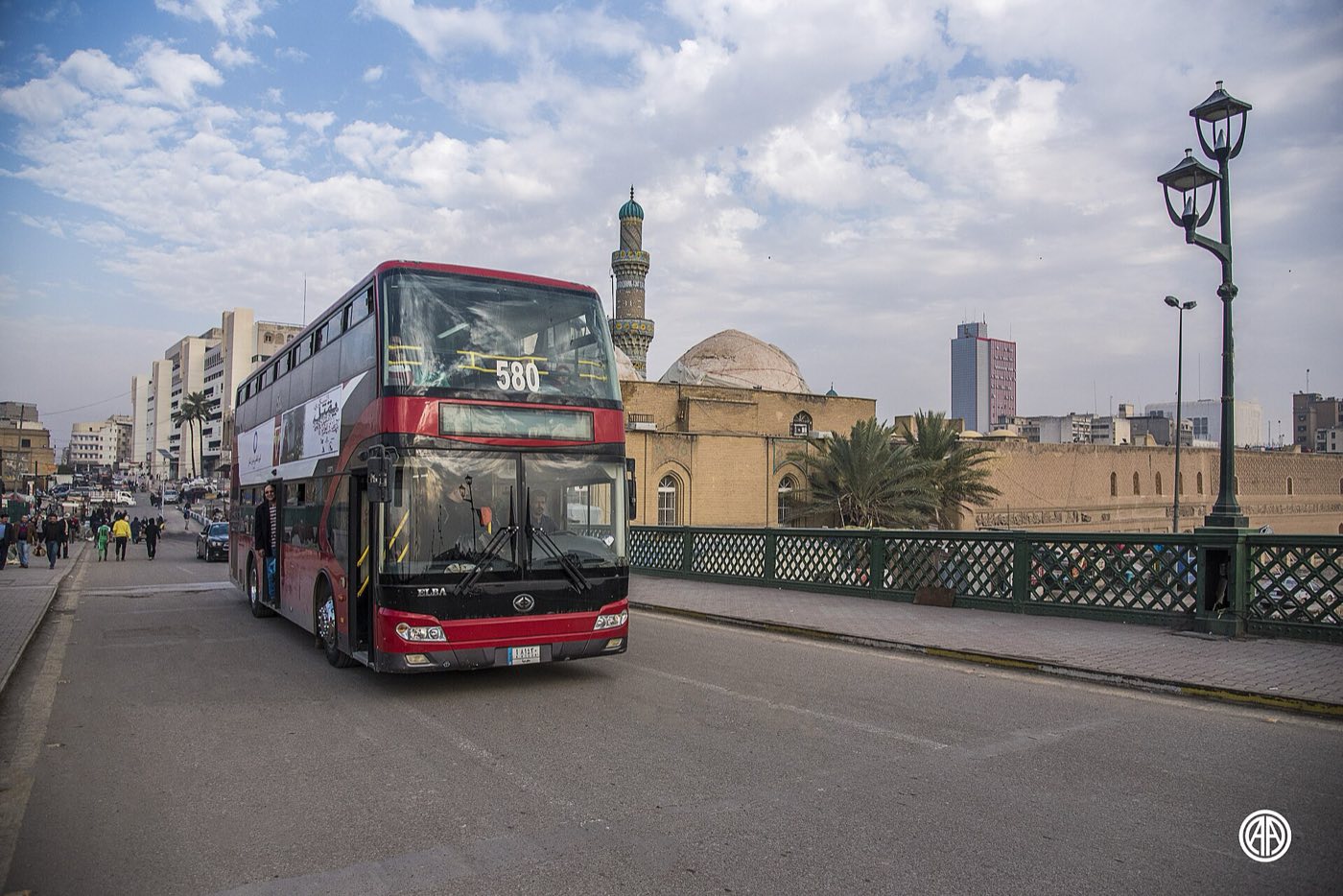
The old book street of Baghdad runs along the Tigris in the Rusafa district and is the traditional heart of the city's intellectual life, where Fridays still bring out dozens of stalls selling everything from 19th-century Arabic literature to pirated bestsellers. Spend a Friday morning browsing, stop at the 16th-century Shabandar Café for sweet tea among writers and students, and finish with lunch at a tigris fish grill on the Karrada side of the river. This is the Baghdad that survives all the news cycles.
Lalish temple of the Yazidis
The holiest site of the Yazidi religion sits in a green valley north of Mosul in the Nineveh Plains, with conical spires rising from a complex of shrines, springs, and olive groves where Yazidi pilgrims remove their shoes at the entrance and walk barefoot through the sanctuary. A modest, quiet place of enormous significance to a community that has faced genocide twice in a century, it is best visited with a guide who can explain the rituals and respect the community's cultural sensitivities. Women cover their heads; no one steps on thresholds.
When to Go
October to April is the only reasonable window for most of Iraq. Summers from May to September are genuinely dangerous in Baghdad and the south, where temperatures regularly exceed 50°C and the air is thick with dust. The marshes and the southern archaeological sites are at their best from November to March. Kurdistan in the north is a two-season destination: mild and green from March to May, then again from September to November, with snow in the highlands from December to February that closes some mountain roads. Ramadan (shifting by about 11 days each year) affects the rhythm of federal Iraq more than Kurdistan — restaurants may only open after sunset, and schedules slow.
Getting Around
Flights are the practical way to move between Kurdistan and the south — Iraqi Airways and a few regional carriers connect Erbil and Sulaymaniyah to Baghdad, Basra, and Najaf in about an hour. Overland movement between the KRG and federal Iraq is possible but involves checkpoints that are slow and occasionally unpredictable for foreigners; most travelers fly. Within Kurdistan, a rental car with driver or ride-hailing app Careem works well. In federal Iraq, all travel south of Baghdad should be done with a licensed local tour operator's driver — this is both practical and, for US/UK passport holders especially, the standard arrangement. Distances look small on a map and are longer in practice because of checkpoints; budget extra time.
Cost & Currency
Iraq uses the Iraqi dinar (IQD), which trades around 1,300–1,450 to the US dollar. US dollars are widely accepted in parallel at hotels, tour operators, and many restaurants — bring clean bills, since torn or marked notes are refused. ATMs exist in Erbil, Baghdad, and Basra but are not universally reliable for foreign cards; plan to bring most of your budget in cash and top up from bank counters as needed. Mid-range hotels in Erbil or Baghdad run $60–$120 a night; a good meal at a kebab or masgouf fish restaurant is $8–$15; a full-day driver-guide in the south costs $100–$150. A licensed ten-day federal Iraq tour typically runs $2,500–$4,000 per person all-in. Tipping 10% at restaurants and rounding up taxi fares is standard.
Frequently Asked Questions
- Is it safe to travel to Iraq right now?
- Kurdistan (the KRG — Erbil, Sulaymaniyah, Duhok) has been safe for independent travelers for a decade and feels much like any mid-sized Middle Eastern city. Federal Iraq (Baghdad, Babylon, Ur, the marshes, Karbala, Najaf) reopened to tourist visas in 2021 and is now generally safe for travelers using a reputable local operator, though conditions can shift quickly. Avoid the Syrian border areas, Anbar province away from the main highway, and any areas your operator advises against. Check your government's travel advisory before booking.
- Do I need a visa for Iraq?
- Most Western nationals can now get a tourist visa on arrival in federal Iraq for $75 at Baghdad, Najaf, Basra, and Erbil airports, valid 60 days. The Kurdistan Region (KRG) has run its own visa-on-arrival system for years — same passport, different stamp, and stamps from one side do not automatically grant entry to the other. If you plan to cross the internal boundary into federal Iraq, confirm your visa covers both with your tour operator before booking.
- Can I visit Baghdad as an independent traveler?
- Technically yes, practically no. Baghdad is accessible to tourists now and the city itself is calmer than it has been in twenty years, but the checkpoints, bureaucracy around archaeological sites, and language barrier make independent travel impractical for almost everyone. Every experienced traveler recommends going with a licensed Iraqi tour operator for Baghdad, Babylon, Karbala, and the south — even a fixer-driver for a few days makes the trip substantially smoother and safer.
- Is Kurdistan the same country as Iraq?
- Legally yes, practically not quite. The Kurdistan Regional Government (KRG) runs its own parliament, flag, army (the Peshmerga), and visa-on-arrival policy from its capital in Erbil, and has been functionally autonomous since 1991. You move between Kurdistan and federal Iraq through an internal border with checkpoints. For travelers the two feel like different countries — Kurdistan is easier, more relaxed, and more Western-traveled; federal Iraq is harder, richer in archaeology, and much more of an adventure.
- What should women wear in Iraq?
- Kurdistan is relatively relaxed — long trousers or a long skirt and a loose long-sleeved top are fine, and headscarves are not required except when entering mosques. Federal Iraq and especially the holy cities (Najaf, Karbala, Samarra) require a headscarf for women outdoors, and an abaya-style loose over-robe is expected when entering shrines. Men should wear long trousers everywhere; shorts are rare and out of place for men and women alike.
Plan a Trip to Iraq
Have you been to Iraq?
Track 195 countries, 50 states & 63 national parks on your map