Sudan
- Capital
- Khartoum
- Population
- 47.9M
- Currency
- SDG
- Languages
- Arabic, English
Overview
Sudan holds more ancient pyramids than Egypt — roughly 200 sandstone tombs at Meroe alone, built by the Kushite pharaohs who ruled Egypt as the 25th Dynasty and whose Nubian civilization flourished along the Nile for nearly a thousand years after the last Egyptian pyramids were built. In better times, travelers came to this country for the archaeological wonders of Meroe, Napata, and Kerma, the Friday Sufi dervish ceremony at Omdurman, and Nubian villages along the Nile where the hospitality was unlike anything elsewhere in the region. As of writing, Sudan is not a country you can visit. Civil war broke out in April 2023 between the Sudanese Armed Forces (SAF) and the paramilitary Rapid Support Forces (RSF), and the fighting has since displaced more than ten million people — the world's largest displacement crisis — devastated Khartoum, and triggered famine conditions across multiple regions. Every major Western government advises against all travel. Commercial flights to Khartoum remain suspended, embassies have withdrawn most staff, and the archaeological sites that drew the few hundred visitors a year before the war are currently inaccessible or actively at risk from looting. This page exists to preserve what made Sudan a remarkable destination and to be ready when the country reopens to travel. If and when the war ends and conditions stabilize, the Meroe pyramids will still be standing on the desert ridge they've occupied for 2,500 years, and the Friday ceremony at the Hamed al-Nil mosque — in better times one of the most moving hours in East Africa — will start again at sunset. For now, follow credible advisories and Sudan-focused humanitarian reporting, and plan nothing on the ground.
Things to Do
Meroe Pyramids and Royal City ruins
Roughly 200 kilometers north of Khartoum, the necropolis of Meroe holds close to 200 steeply-pitched sandstone pyramids — tombs of the Kushite kings and queens who ruled from the fourth century BCE to the fourth century CE. Italian explorer Giuseppe Ferlini blew the tops off many of them in the 1830s hunting for gold, which is why the ones you see photographed are often truncated. In better times, you arrived by 4x4 from Khartoum, walked the dunes at sunrise with almost no one else around, and stayed overnight at the nearby Meroe Camp. Currently inaccessible.
Omdurman Sufi Dervish whirling ceremony
Every Friday afternoon before sunset at the Hamed al-Nil mosque in Omdurman, a Qadiriyya Sufi brotherhood gathered for a hadra — an ecstatic devotional ceremony of drumming, chanting, and whirling in green and white robes. It was one of the easiest and most affecting cultural experiences a visitor to Khartoum could have, open to onlookers, welcoming of photography at the edges, and entirely free. The ceremony is reportedly still taking place intermittently during the war, but Omdurman has seen active fighting and the mosque is not safely accessible to visitors.
Nubian villages along the Nile near Dongola
North of Dongola toward the Egyptian border, the Nile bends through a belt of Nubian villages painted in blue, green, and ochre, with carved door-frames and courtyards of date palm and lemon tree. Nubian hospitality — strong cardamom tea, dates, home-baked kisra bread, insistence that you stay longer — was consistently named by returning travelers as the single best thing about Sudan. Tour operators ran three- to five-day trips along this stretch before the war. Currently not accessible; the region's stability has fluctuated with the conflict's northern front.
Jebel Barkal and temples of Napata
Jebel Barkal is a 98-meter flat-topped mountain near Karima that the ancient Egyptians and later Kushite kings considered sacred to Amun, and the complex of temples and royal pyramids around its base is a UNESCO World Heritage Site. You could climb the back of the mountain in about 30 minutes for sweeping views across the Nile valley, then walk down through the Temple of Amun ruins at the foot. It was a highlight of any northern Sudan itinerary. Currently inaccessible.
Khartoum's confluence of the Blue and White Nile
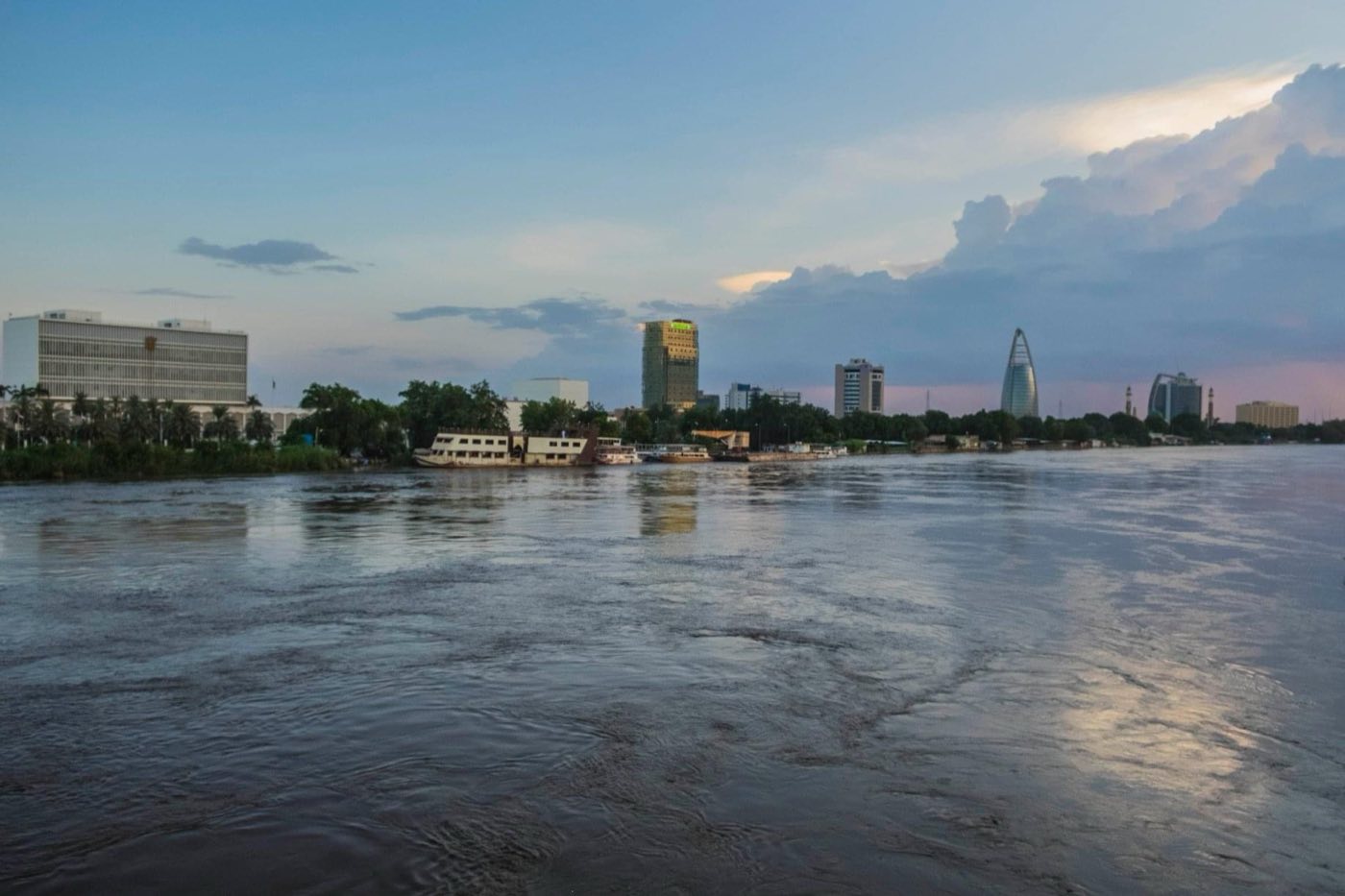
The Blue Nile from the Ethiopian highlands and the White Nile from Lake Victoria meet at Khartoum, and you used to watch the clear meeting of the two different-colored waters from Tuti Island or the Corinthia Hotel tower. Pre-war Khartoum had a modest but real traveler's rhythm: tea at the National Museum's cafe, fuul (fava bean stew) for breakfast in a small cafe near Souk Arabi, the ferry to Omdurman. The city has been one of the hardest-hit urban areas of the war and much of its infrastructure has been damaged or destroyed.
Soleb Temple and Kerma archaeological site
Two exceptional archaeological sites in the far north: the Temple of Soleb — built by the Egyptian pharaoh Amenhotep III in the 14th century BCE and considered one of the finest New Kingdom temples anywhere — and the ancient Kushite capital of Kerma with its massive mud-brick deffufa structures. These were accessible via multi-day expedition trips from Khartoum or Dongola before the war. Currently not visitable; the region falls within the active theater of conflict.
Port Sudan Red Sea diving
The Sudanese Red Sea was one of the least-dived coastlines in the region and held spectacular reefs — Sanganeb atoll, Sha'ab Rumi (where Jacques Cousteau's 1963 Conshelf II experiment was sited), hammerhead schools, and mantas — with almost no boats on the water. Liveaboards ran out of Port Sudan for week-long trips. The Port Sudan area has remained more stable than Khartoum during the war and has hosted large displaced populations and aid operations, but it is not open to leisure tourism and diving operators have suspended operations.
When to Go
Not currently — Sudan is not a safe destination. In better times, November through February was the travel window: cool desert temperatures (20–30°C in the day, cool nights), clear skies, and the Sufi ceremony at Omdurman bearable in the late afternoon heat. March to May and October brought punishing 40°C+ temperatures that made archaeological-site visits uncomfortable by mid-morning. The rains in June through September were short and sparse in the north and more significant in the south, but the country's heat through summer limited practical travel to the cooler months. Revisit this section only when and if credible advisories lift.
Getting Around
Not applicable during the current conflict. Historically, the main road north from Khartoum along the Nile to Dongola and on toward the Egyptian border was paved, in reasonable shape, and the standard route for visiting the archaeological sites. Almost all visitors traveled with a tour operator using 4x4 vehicles with a driver-guide. Internal flights operated between Khartoum, Port Sudan, and a few regional capitals. Today, Khartoum International Airport has been heavily damaged and is closed to commercial traffic; Port Sudan airport is handling some humanitarian and diplomatic flights but is not open to tourism. When the country reopens, expect a rebuilt and somewhat different travel infrastructure, and plan only through an operator with current ground knowledge.
Cost & Currency
Sudan uses the Sudanese pound (SDG), which has collapsed during the war — the black-market rate has moved by orders of magnitude since 2023 and cash dollars are now the de facto currency for any remaining transactions. Before the war, a specialist archaeology-focused trip (flights, fixer, 4x4, permits, hotels) ran $300–$600 per person per day through operators like Italian Tourism in Sudan or the handful of Khartoum-based agencies. Cards were already almost unusable before the war due to US sanctions on Sudan's banking system, and travelers carried clean USD in cash for everything. None of this is currently relevant — the country is not accepting leisure visitors. Check again when conditions allow and treat any pre-war pricing as a baseline only.
Frequently Asked Questions
- Can I travel to Sudan right now?
- No. A civil war has raged between SAF and RSF forces since April 2023, causing the world's largest displacement crisis. All major Western governments advise against all travel. Commercial flights to Khartoum are suspended, most embassies have drawn down, and the archaeological sites that drew visitors are inaccessible. Revisit only when a durable ceasefire holds and credible advisories change.
- Are the Meroe pyramids still standing?
- As of the most recent satellite and on-the-ground reporting, the pyramids themselves appear structurally intact — the main threat has been looting at smaller and less-guarded sites elsewhere in the country. UNESCO and archaeological monitoring groups have flagged concerns about protection during the conflict. The site's long-term condition depends heavily on how the war ends and how quickly site security can be re-established.
- What's the difference between Sudan and South Sudan?
- South Sudan seceded from Sudan in July 2011 after decades of civil war, becoming the world's youngest country. Sudan is now the northern state with Khartoum as its capital, primarily Arab and Muslim with a predominantly desert landscape and the ancient Nubian archaeological sites. South Sudan, to the south, is Christian-majority, wetter, and holds the Sudd wetlands and Boma wildlife migration.
- Did American travelers previously need a visa?
- Yes, and it was historically one of the harder tourist visas to obtain. The process required a letter of invitation from a licensed Sudanese operator, registration with police on arrival, and restrictions on photography. The US also maintained sanctions that limited banking and complicated logistics. If and when tourism resumes, assume the visa process will be rebuilt from scratch and may differ substantially from pre-war procedures.
- How can I help people affected by the war?
- The UN's OCHA, UNHCR, World Food Programme, Médecins Sans Frontières, and Sudan-focused organizations like the Sudanese American Physicians Association run active appeals. The conflict is severely underfunded relative to its scale — one of the largest humanitarian emergencies in the world with far less international attention than many others. Donations to any of these reputable organizations go further than most travelers realize.
Plan a Trip to Sudan
Have you been to Sudan?
Track 195 countries, 50 states & 63 national parks on your map