Chad
- Capital
- N'Djamena
- Population
- 17.7M
- Currency
- XAF
- Languages
- French, Arabic
Overview
A landlocked Saharan nation the size of Peru, Chad stretches from the shrinking waters of Lake Chad in the west to the volcanic Tibesti range in the far north and the sandstone arches of the Ennedi Plateau in the east. Travelers who make it here come for some of the most dramatic and least-visited desert landscapes on Earth — a country where you can spend two weeks crossing ancient caravan routes and see more camels than cars. Getting to the good parts takes commitment. Chad has almost no tourism infrastructure outside N'Djamena, the capital, and trips to the Ennedi Plateau or Tibesti Mountains mean 4x4 convoys with experienced local operators, camping every night, and driving for days across open desert with no marked roads. You come out the other side having seen rock arches two hundred feet high, camel caravans pulling salt out of ancient lake beds, and crocodiles that somehow survive in a single guelta deep in the Sahara. Chad rewards the traveler who treats a trip as an expedition rather than a holiday. The country's security situation is complicated — the north and east have risks, the Lake Chad basin has had Boko Haram activity, and you need operators who know how to navigate the permits and checkpoints. Zakouma National Park in the south has been transformed by African Parks since 2010 and now offers the best safari in the Sahel. Budget two weeks minimum, come through a specialist operator, and prepare for the trip to rearrange what you thought a desert looked like.
Things to Do
Ennedi Plateau rock arches and ancient paintings
The Ennedi is a 40,000-square-kilometer sandstone massif in the eastern Sahara, UNESCO-listed since 2016 for its geological formations and its thousands of rock paintings that span 7,000 years of human occupation. Aloba Arch is the tallest in Africa at 120 meters, and the Guelta d'Archei with its resident crocodiles is the single most-photographed spot in the country. You reach the plateau by a multi-day 4x4 convoy from N'Djamena or Abéché, camping wild beneath the arches each night.
Zakouma National Park wildlife
A 3,000-square-kilometer park in southern Chad that has made one of the great conservation comebacks of the 21st century — elephant numbers have recovered from 450 in 2010 to over 600 today, and lion, buffalo, and giraffe populations are strong. Tinga Camp and the higher-end Camp Nomade, run by African Parks, offer game drives through acacia savanna that feels like East Africa without the vehicles. The season is narrow: January through April only, before the rains return.
Lakes of Ounianga UNESCO site
Eighteen interconnected lakes in the heart of the Sahara — a relic of a wetter era ten thousand years ago — that somehow persist today thanks to fossil aquifers. Four of the lakes are freshwater, fourteen are hypersaline, and they sit against a backdrop of sandstone cliffs and dunes that make them look alien. Ounianga Kebir and Ounianga Serir are the two main stops on any Ennedi itinerary, and a camp night at Lake Katam is one of the strangest and most rewarding stays in Chad.
Lake Chad shoreline communities
Lake Chad has shrunk to a tenth of its 1960s size and now forms a patchwork of channels, reed beds, and seasonally flooded islands where Kanembu and Buduma fishermen live in ways that have barely changed for centuries. A day trip from N'Djamena to Bol on the lake's southern shore lets you visit a floating market by pirogue and see communities adapting to a disappearing ecosystem. Security around the lake can shift quickly — always check current conditions with your operator.
Tibesti Mountains volcanic landscapes
The Tibesti is a range of black volcanic mountains in the far north where Emi Koussi rises to 3,445 meters, the highest point in the Sahara. The landscapes — collapsed calderas, natural hot springs at Soborom, basalt plateaus — rival anything in northern Chile or Ethiopia, but reaching them requires a serious 10-to-14-day expedition and permission that is not always granted. Access fluctuates with the political situation; when it opens, specialist operators organize small groups.
Guelta d'Archei crocodile pool
A permanent pool of water hidden in a narrow sandstone canyon deep in the Ennedi, Guelta d'Archei supports a relict population of Nile crocodiles — the last of their kind in the Sahara, left stranded as the desert dried up. Camel caravans still bring their herds here to drink, and watching a hundred dromedaries descend the canyon in the late afternoon light, with crocodiles basking at the water's edge, is the kind of scene the Sahara rarely still offers. You camp nearby for a night.
N'Djamena Grand Mosque and markets
The capital sits on the Chari River across from Cameroon and most trips spend a day or two here at either end to handle logistics. The Grand Mosque with its twin minarets is the city's defining landmark, and the central market in the Grand Marché district sells everything from kola nuts to spices to hand-loomed cloth. The National Museum is modest but worth an hour for its collection of prehistoric fossils — Chad produced the oldest known hominid skull, Toumaï, at around 7 million years old.
When to Go
November through February is the cool dry season and the only realistic window for Sahara expeditions — nights in the desert drop to 5–10 C and days sit at a pleasant 25 C. Zakouma runs from mid-January through mid-April, with March and April offering the densest wildlife concentrations as waterholes shrink and temperatures climb. The hot season from March through May brings sustained 40+ C temperatures across most of the country and limits feasible travel. The rains from June through September flood southern roads, make the Sahara impassable by vehicle, and close Zakouma entirely. Plan a trip for January or February if you want to combine Ennedi with Zakouma on a single itinerary.
Getting Around
Within N'Djamena, taxis and shared vans handle short trips and a hired car with driver is the practical option for half-day tours. For anything beyond the capital — and that is most of the point of coming to Chad — you travel with a specialist operator running 4x4 convoys. Trips to the Ennedi, Tibesti, or Zakouma typically involve two Land Cruisers with drivers, a support truck carrying fuel and camping gear, and multi-day drives across open desert with GPS navigation. Domestic flights exist between N'Djamena and Moundou or Abéché but schedules are erratic. Do not attempt to rent a vehicle and drive yourself into the interior — the permits, checkpoints, and navigation requirements make this impractical for visitors.
Cost & Currency
Chad uses the Central African CFA franc (XAF), pegged to the euro at 655.957 to 1. A Chad expedition is not a cheap trip — specialist Ennedi tours run EUR 4,500–7,000 per person for a 10-to-12-day itinerary including 4x4s, drivers, cook, camping gear, park fees, and all meals. Zakouma National Park is separately priced through African Parks and Camp Nomade at USD 800–1,500 per person per night. In N'Djamena, a mid-range hotel is XAF 60,000–120,000 (EUR 90–180) and a sit-down dinner XAF 8,000–15,000. Cards work at major N'Djamena hotels only; carry USD or EUR cash and change to CFA at a bank on arrival. Tipping the crew at the end of a desert trip is standard — budget EUR 50–100 per day to be split among drivers, guides, and cook.
Frequently Asked Questions
- Is Chad safe for travelers?
- It depends sharply on where you go. Organized expeditions with experienced operators to the Ennedi Plateau, Ounianga Lakes, and Zakouma National Park have operated safely. The Lake Chad basin (Boko Haram activity), the border with Sudan (refugee crisis and insecurity), and parts of the north near Libya have serious risks. Check current advisories, travel only with a reputable operator, and keep paperwork in order for checkpoints.
- Do I need a visa to visit Chad?
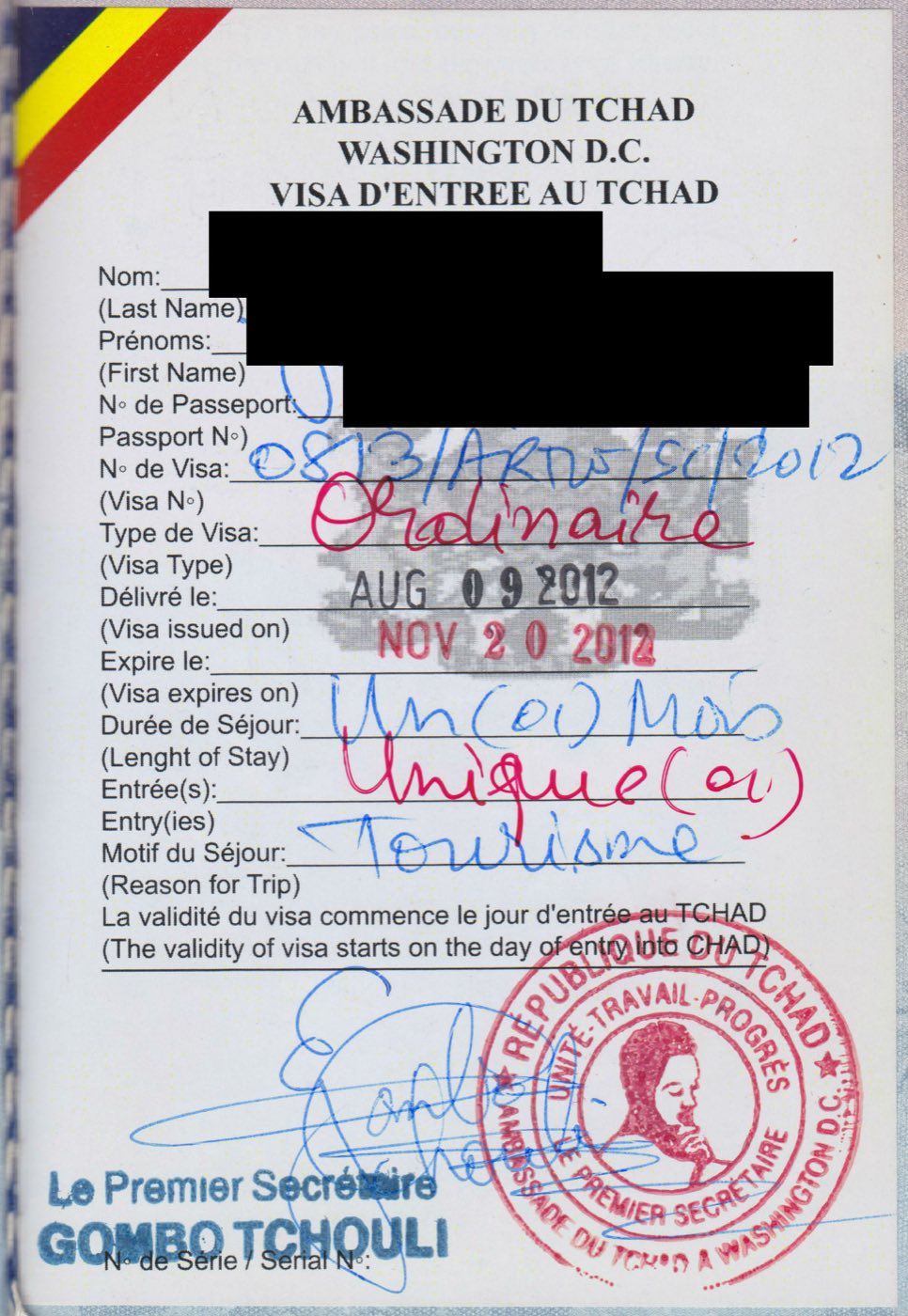
- Yes — nearly all visitors require a visa, arranged in advance at a Chad embassy or through the e-visa portal that has been trialed intermittently. Expect to submit an itinerary, proof of onward travel, yellow fever certificate, and a letter of invitation from your tour operator. Processing takes two to four weeks; do not leave this to the last minute.
- Can I visit Chad independently?
- Not realistically. The permits for the Ennedi and Tibesti, the 4x4 logistics across the Sahara, the security checkpoints, and the language barrier (French and Arabic dominate; English is rare) all make independent travel impractical for almost everyone. Book through a specialist operator such as Spazi d'Avventura, Wild Frontiers, or African Parks for Zakouma.
- What should I pack for the Sahara?
- Layers for extreme temperature swings — warm fleece and down jacket for desert nights at 5 C, lightweight cotton for 30 C days — plus serious sun protection (hat, buff, sunglasses, SPF 50), sturdy walking sandals, and a decent headlamp. Bring your own sleeping bag unless your operator provides one; dust-proof dry bags for electronics; and a power bank since vehicle charging is intermittent.
- What languages are spoken?
- French and Arabic are both official languages and widely spoken, with more than 120 ethnic languages used locally. English is rare outside a handful of N'Djamena hotels and some NGO staff. Functional French will make the trip significantly easier, particularly at checkpoints and in smaller towns — brush up before you go or bring a good phrasebook.
Plan a Trip to Chad
Have you been to Chad?
Track 195 countries, 50 states & 63 national parks on your map