Eritrea
- Capital
- Asmara
- Population
- 3.7M
- Currency
- ERN
- Languages
- Tigrinya, Arabic
Overview
Eritrea is one of the least-visited countries in Africa and, for travelers who make it in, one of the most memorable. The capital, Asmara, sits at 2,300 meters on a highland plateau and holds the most intact collection of early-twentieth-century Italian Modernist and Art Deco architecture anywhere in the world — a UNESCO World Heritage site awarded in 2017. Coffee is taken in cafés with original chrome fittings, vintage Fiat 500s still rattle through the streets, and the evening passeggiata down Harnet Avenue feels like a postcard from 1938. Outside the capital, the country drops dramatically from the cool highlands to the baking Red Sea coast, where Massawa's coral-stone old town crumbles at the edge of the water and the Dahlak Archipelago offers some of the most undiscovered dive sites left on the planet. The landscapes shift fast — terraced highland farms, volcanic lava fields, empty desert horizons — and distances feel longer than they look on the map because of the mountain roads and the paperwork. This is not easy travel. Eritrea operates a restrictive entry regime, and independent travel outside Asmara requires a travel permit for every single region, applied for at the Ministry of Tourism with at least 24 to 48 hours of lead time. Visas themselves are difficult and typically require an invitation letter from a licensed in-country tour operator. Internet is heavily restricted, ATMs do not work for foreign cards, and cash dollars or euros are essential. Go with a patient operator, a flexible itinerary, and the understanding that you will not be ticking off a checklist.
Things to Do
Asmara's Art Deco and Modernist architecture UNESCO site
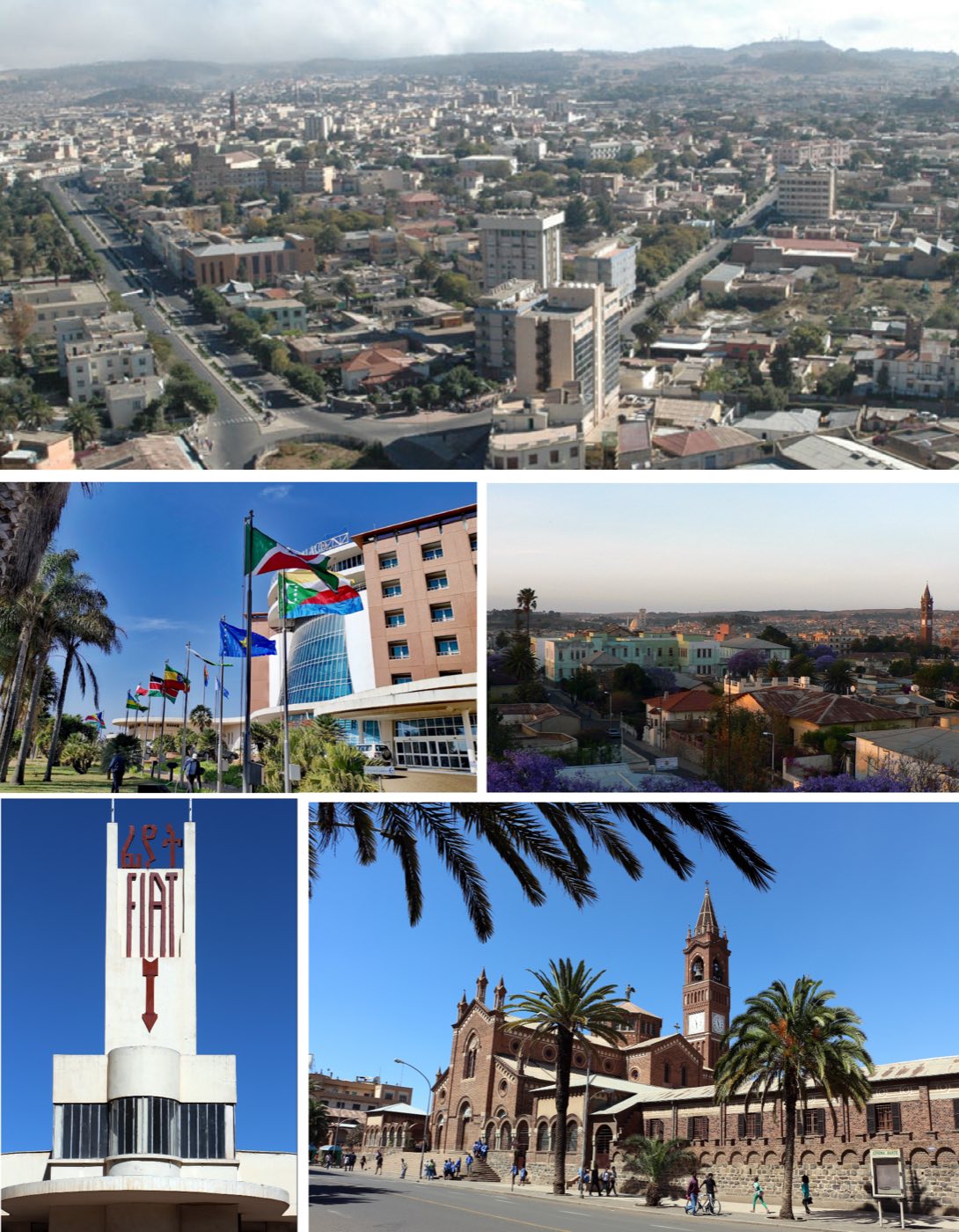
Asmara's Italian colonial quarter is the reason most travelers come — a near-intact city built between 1935 and 1941 as a laboratory for Italian Modernist and Rationalist architecture, preserved almost by accident through decades of isolation. Walk Harnet Avenue from the Cathedral to Piazza Roma, detour to the Cinema Impero with its original interior, and stop at Bar Zilli or Café Asmara for a cappuccino in a setting that hasn't been renovated since the 1940s. The architect Guido Ferrazza's master plan is still legible in every block. Two or three days of slow walking here is the heart of the trip.
Fiat Tagliero Building futurist architecture
On a small traffic island in central Asmara, the 1938 Fiat Tagliero service station is the most photographed building in the country and one of the great surviving monuments of Italian Futurist architecture. Designed by Giuseppe Pettazzi to resemble an airplane, its two thirty-meter cantilevered concrete wings extend into empty space with no visible supports — an engineering stunt that scandalized colonial authorities at the time. The station is no longer operational but remains standing, weathered and slightly tilted, as a working symbol of the capital's architectural heritage.
Dahlak Archipelago diving and snorkeling
Off the Red Sea coast near Massawa, the Dahlak Archipelago spreads 350-plus small islands into some of the least-dived water on the planet. Coral is pristine, fish life is dense, and there are Ottoman and Italian wrecks in shallow enough water for snorkelers. A handful of liveaboards and day boats operate out of Massawa's port when fuel and permits align; expect rustic conditions rather than luxury. The Green Island and Dissei sites are standout snorkel stops. You need both a visa extension and a separate Dahlak travel permit to go — arrange through your tour operator well ahead.
Massawa's Ottoman and Italian old town
Three and a half hours by road from Asmara, the Red Sea port of Massawa drops you 2,300 meters down the escarpment into salt-flat heat. The old town on Taulud Island is a half-ruined treasury of Ottoman coral-stone merchant houses, Italian Art Deco hotels, and the shell of the Imperial Palace damaged in the independence war. It's slowly being restored, and walking the quiet streets in the late afternoon is one of the more atmospheric experiences on the continent. Stay a night at the Grand Dahlak Hotel or the restored Central Hotel for period character.
Asmara Railway and vintage Italian trains
The narrow-gauge railway built by Italian engineers between Asmara and Massawa between 1887 and 1911 remains one of the great feats of mountain railway engineering — 117 kilometers of track with dozens of tunnels and bridges across a near-vertical drop to the coast. A restored section still runs for tourists with original steam locomotives and 1930s carriages, departing Asmara's station on scheduled charter days arranged through local operators. A short run to Nefasit and back is the standard offering and one of the most unusual rail experiences available anywhere.
Qohaito archaeological ruins
About 120 kilometers south of Asmara on the escarpment edge, the pre-Aksumite ruins at Qohaito include a well-preserved temple, rock-cut tombs, and ancient rock art thought to date back more than 2,000 years. The site sits at 2,700 meters and the escarpment views alone would justify the drive. The site is remote and requires a travel permit and a local guide arranged through Asmara; expect a long day trip or a one-night stop at nearby Adi Keyh. Aksumite-era scholars will get the most out of it.
Filfil tropical forest
An hour and a half northeast of Asmara, the Filfil Solomona area is the surprise on the drive down to Massawa — a remnant patch of Afromontane cloud forest that Eritrea still protects as its last substantial tropical woodland. The descent through the escarpment takes you through mist-wrapped juniper, strangler figs, and endemic birdlife in a few kilometers. Most travelers pass through on the way to the coast and stop for an hour; with a good naturalist guide it's worth half a day for the birding alone.
When to Go
October through March is the comfortable window for the highlands around Asmara, with daytime temperatures around 20°C and cool, clear nights. This is also the best stretch for the Red Sea coast and Dahlak diving, when water conditions are calm and visibility is strong. The rains arrive in the highlands from June through September and can make rural roads difficult, though Asmara itself remains pleasantly cool during this stretch. The coast at Massawa stays brutally hot from May through September, with temperatures well above 40°C — avoid it then unless you're diving and plan your time on land accordingly.
Getting Around
Independent movement inside Eritrea is heavily regulated. Travelers must apply for a travel permit at the Ministry of Tourism in Asmara for any trip outside the capital, including Massawa, Keren, and the Dahlak Archipelago, with 24 to 48 hours of lead time and no guarantees of approval. Almost everyone uses an in-country tour operator to handle the paperwork, the drivers, and the checkpoints. Roads to Massawa and Keren are paved and reasonable; backcountry routes require a 4x4. There are no functioning passenger railways for regular transport, and domestic flights are essentially nonexistent. Within Asmara, taxis are cheap and plentiful; the city itself is small and walkable.
Cost & Currency
Eritrea uses the nakfa (ERN), a currency closely managed by the central bank and not freely convertible — you cannot import or export it, and all foreign exchange is done inside the country at official rates. ATMs do not work for foreign cards, credit cards are essentially not accepted outside a few Asmara hotels, and you should plan on paying for the entire trip in US dollars or euros cash, declared on arrival. Prices inside Eritrea are low — a café meal runs ERN 200–400, a midrange Asmara hotel ERN 2,500–5,000 a night — but tour-operator packages in hard currency are the real budget line and typically run USD 200–350 per day for full-service arrangements. Tipping is modest; a few hundred nakfa for drivers and guides is appropriate.
Frequently Asked Questions
- Do I need a visa and travel permits to visit Eritrea?
- Yes to both. Tourist visas require an invitation letter from a licensed Eritrean tour operator and take several weeks to process at an embassy. Once in the country, a separate travel permit is required for every region outside Asmara — applied for at the Ministry of Tourism with at least 24 to 48 hours of lead time — and you must carry the permit at checkpoints. Plan on using an in-country operator to handle both.
- Is Eritrea safe for travelers?
- Within Asmara and the main permitted corridors, yes — violent crime is genuinely rare and the streets feel calm by regional standards. The real risks are bureaucratic rather than criminal: missed permits, expired documents, restricted zones near the borders with Ethiopia, Sudan, and Djibouti. Check your government's current advisory, follow your operator's guidance, and never attempt to travel to areas that are not on your approved permit.
- Can I access the internet and use my phone?
- Internet in Eritrea is limited and slow, routed through the state-owned provider. Wi-Fi exists at a handful of Asmara hotels and a few cafés, but expect intermittent access and no social media without a VPN, which itself may or may not work. International roaming is generally not available; pick up a local SIM for voice calls only. Plan on being genuinely offline for the duration of the trip.
- How do I pay for things on the ground?
- Cash, in nakfa, exchanged inside the country from US dollars or euros you bring with you. ATMs do not accept foreign cards and credit cards are essentially unusable outside two or three upscale Asmara hotels. Declare your foreign cash on the arrival form, keep exchange receipts, and budget carefully because you cannot top up from abroad. Your tour operator will usually handle major expenses and you pay them in dollars in advance.
- What language is spoken in Eritrea?
- Tigrinya is the most widely spoken language in the highlands and Asmara, with Arabic common along the Red Sea coast. Italian is still understood by older residents of Asmara as a legacy of the colonial period. English is taught in schools and spoken at hotels, tour operators, and government offices, so getting by in English is entirely workable for travelers; a few Tigrinya or Arabic greetings will be warmly received.
Plan a Trip to Eritrea
Have you been to Eritrea?
Track 195 countries, 50 states & 63 national parks on your map