Benin
- Capital
- Porto-Novo
- Population
- 13.4M
- Currency
- XOF
- Languages
- French
Overview
The West African birthplace of Vodun — what the world knows as Voodoo — Benin is a country of living spiritual traditions and significant history. Travelers come for the royal palaces of Abomey, the stilt village of Ganvié, and authentic cultural ceremonies. Arriving in Cotonou, the commercial capital, you are met first by the heat and the sound — zemidjan motorcycle taxis weaving through traffic with a passenger on the back of each, sometimes two, horns constant. You move slower once you are off the main roads. Palm plantations thin into savanna as you head north, and the further you get from the coast the more the country opens up into something older and quieter, with Songhai and Dendi towns that feel unchanged by the capital two hundred miles south. Benin rewards travelers interested in living religious tradition, serious history, and the slower rhythms of francophone West Africa. This is not easy travel — roads are variable, a yellow fever certificate is required, malaria prophylaxis is essential, and English speakers are thin on the ground outside hotels. Go with a French phrasebook, a local fixer for the north, and the patience for afternoons that do not unfold to plan. What you get in return is a country genuinely outside the usual circuit.
Things to Do
Royal Palaces of Abomey UNESCO site
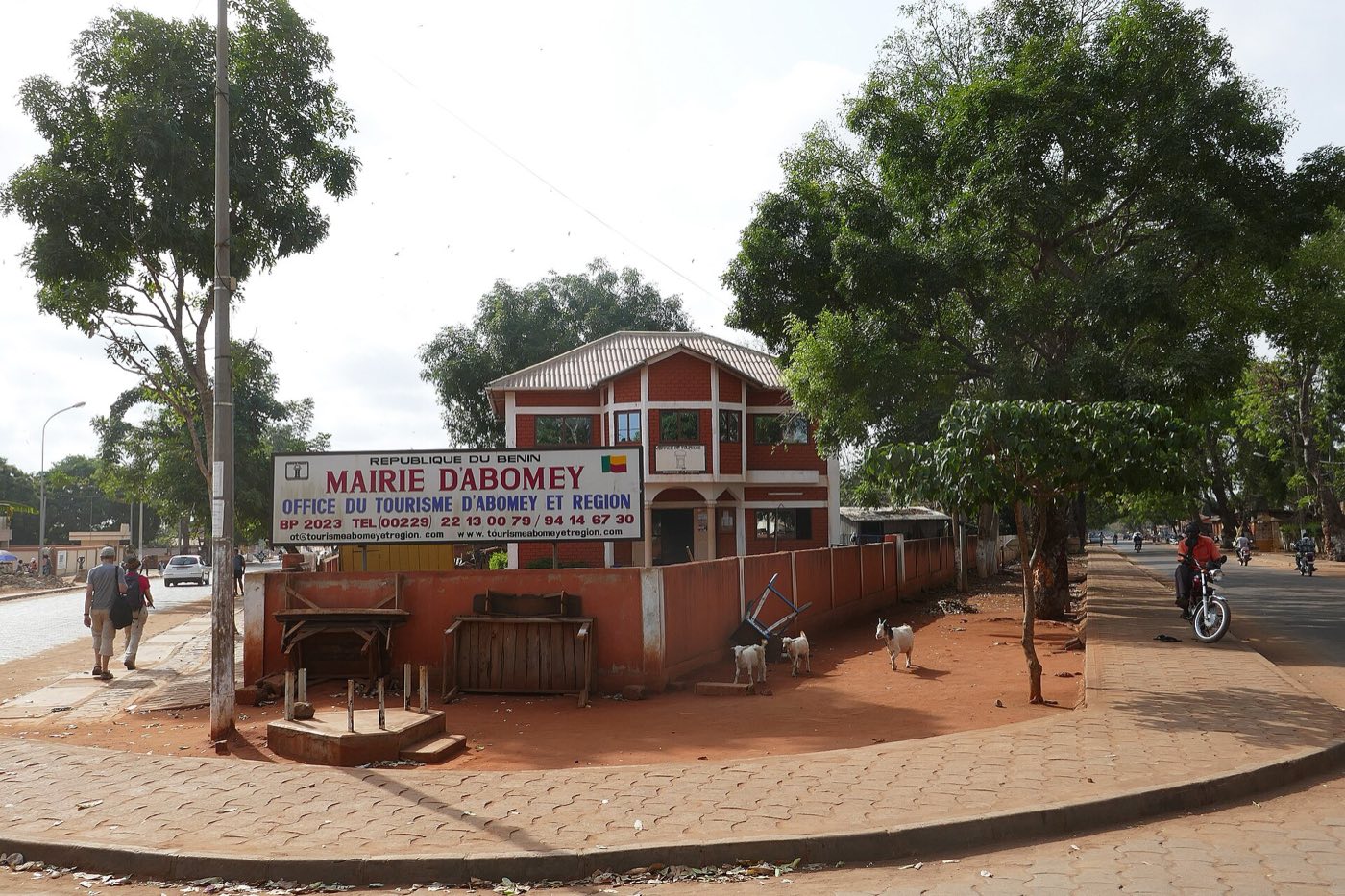
The compound of the Dahomey kings in Abomey, ruled by twelve successive monarchs from 1625 to 1900, is a series of earthen-walled palaces with bas-reliefs that tell the history of the kingdom in pictures. A museum now occupies part of the site with royal thrones, Amazon warrior artifacts, and altars still used in ceremonies. Come with a French-speaking guide or one of the English-speaking guides the site sometimes has on hand — the stories are the point.
Ganvié stilt village on Lake Nokoué
Fifteen thousand Tofinu people live in houses built on wooden stilts in the middle of Lake Nokoué, a community founded in the seventeenth century when the Fon kings' enforcement against capturing Tofinu for the slave trade did not extend onto open water. You reach the village by a pirogue from Abomey-Calavi, about an hour from Cotonou, and glide through floating markets where women sell fish and produce from boat to boat.
Ouidah's Route des Esclaves and Python Temple
The coastal town of Ouidah was one of the main embarkation points of the transatlantic slave trade, and the four-kilometer Route des Esclaves runs from the old auction square through the Tree of Forgetting and the Tree of Return to the Gate of No Return on the beach. It is a heavy walk and an important one. A short distance away, the Temple of Pythons holds dozens of live royal pythons that are sacred to the Vodun priesthood — a working religious site, not a zoo.
Pendjari National Park safari
Benin's one major wildlife park sits in the far north near the Burkina Faso border and protects one of West Africa's last viable lion and elephant populations, along with cheetahs, hippos, and hundreds of bird species across a dry savanna landscape. African Parks has managed it since 2017 and visitor infrastructure — gates, roads, Pendjari Lodge — has improved substantially. Security advisories for the region shift, so check your government's guidance close to travel.
Annual Vodun Festival in January
Every January 10 in Ouidah, the national Vodun festival draws practitioners, pilgrims, and visitors to the beach for ceremonies that include drumming, possession dances, animal sacrifices, and processions in elaborate raffia costumes. It is the single most extraordinary thing you can witness in Benin and one of the genuine cultural events of West Africa. Book accommodation months in advance — Ouidah is a small town and the festival fills it.
Cotonou's Dantokpa Market
One of the largest open-air markets in West Africa, spread over twenty hectares on the bank of the lagoon — fabric, produce, fetishes, motorcycle parts, and everything in between. The fetish section, where ingredients for Vodun practice are sold (animal skulls, dried roots, figurines), is striking and should be approached with respect and no cameras unless explicitly permitted. Go with a guide your first time and agree a price for anything you want to buy before handing over cash.
Grand Popo beach and colonial relics
An hour west of Cotonou on the Togolese border, Grand Popo is a long stretch of palm-lined Atlantic beach with a handful of modest guesthouses and the remains of a colonial French settlement half-taken by the sea. Swimming is strong-currented and local advice matters, but the walks are long and empty and the seafood is excellent. A quiet two-night stop between Ouidah and a northward move.
When to Go
November to February for dry Harmattan season with comfortable temperatures. The Vodun Festival in January is the cultural highlight, while the long rains from April to July make travel challenging in rural areas. The Harmattan wind in December and January brings dust from the Sahara that hazes the sky and cools the nights, especially in the north. Pendjari National Park is officially open from December through May, with the best wildlife viewing as waterholes shrink in March and April, and essentially closes during the heaviest rains.
Getting Around
Movement in Benin is mostly by road, and the quality varies sharply: the coastal highway from Cotonou to Ouidah and Grand Popo is paved and fast, the route north to Abomey and Parakou is serviceable, and the tracks to Pendjari in the far north require a 4x4. Shared bush taxis and minibuses serve every route for a few thousand CFA each, though foreigners are usually quoted higher prices. Within Cotonou, zemidjan motorcycle taxis are the fastest and cheapest option for short hops — agree the fare before you get on. Hiring a car with driver for multi-day itineraries is the realistic choice for most visitors and worth budgeting for.
Cost & Currency
Benin uses the West African CFA franc (XOF), a stable currency pegged to the euro at 655.957 to 1 — useful to remember when Europeans are calculating in their heads. Prices are low: a sit-down plat du jour lunch of poulet bicyclette with rice runs 2,000–4,000 CFA (€3–€6), a mid-range hotel room in Cotonou 30,000–60,000 CFA, and zemidjan rides rarely exceed 1,000 CFA. Cards are accepted at larger Cotonou hotels but essentially nowhere else; change euros or dollars at banks in Cotonou and carry cash in small denominations. Tipping is modest — round up at restaurants and a few thousand CFA to drivers at the end of a day is appropriate.
Frequently Asked Questions
- Do I need a visa to visit Benin?
- Most travelers need a visa, but Benin offers a convenient e-visa (e-Visa Benin) that can be applied for online in about 48 hours and granted for up to 30 days. Bring a printout on arrival, along with a yellow fever vaccination certificate, which is required for entry.
- Is it safe to travel in Benin?
- Southern Benin — Cotonou, Ouidah, Abomey, Porto-Novo, and Grand Popo — is generally safe, with petty theft the main concern in crowded markets and transit hubs. The northern border regions near Burkina Faso and Niger have been affected by Sahelian insecurity and most governments advise against travel to the far north; check Pendjari status before traveling.
- What vaccinations do I need?
- A yellow fever vaccination is legally required and you will be asked for the certificate on arrival. Routine boosters plus typhoid and hepatitis A are strongly recommended, and malaria prophylaxis is essential year-round — Benin is a high-transmission country and you should budget for antimalarials from a travel clinic.
- Is it possible to visit a Vodun ceremony?
- Yes — ceremonies happen throughout the year and a local guide or fixer can arrange attendance, sometimes with a small contribution to the community. The January 10 national festival in Ouidah is the easiest entry point for visitors. Dress modestly, follow your guide's instructions about photography, and treat what you are seeing as a religious practice rather than a performance.
- Do people speak English in Benin?
- French is the official language and you should expect to need it — English is rare outside hotels in Cotonou and a handful of tour operators. A phrasebook and a basic working French vocabulary will make the trip considerably smoother and more rewarding, especially once you head into the countryside.
Plan a Trip to Benin
Have you been to Benin?
Track 195 countries, 50 states & 63 national parks on your map