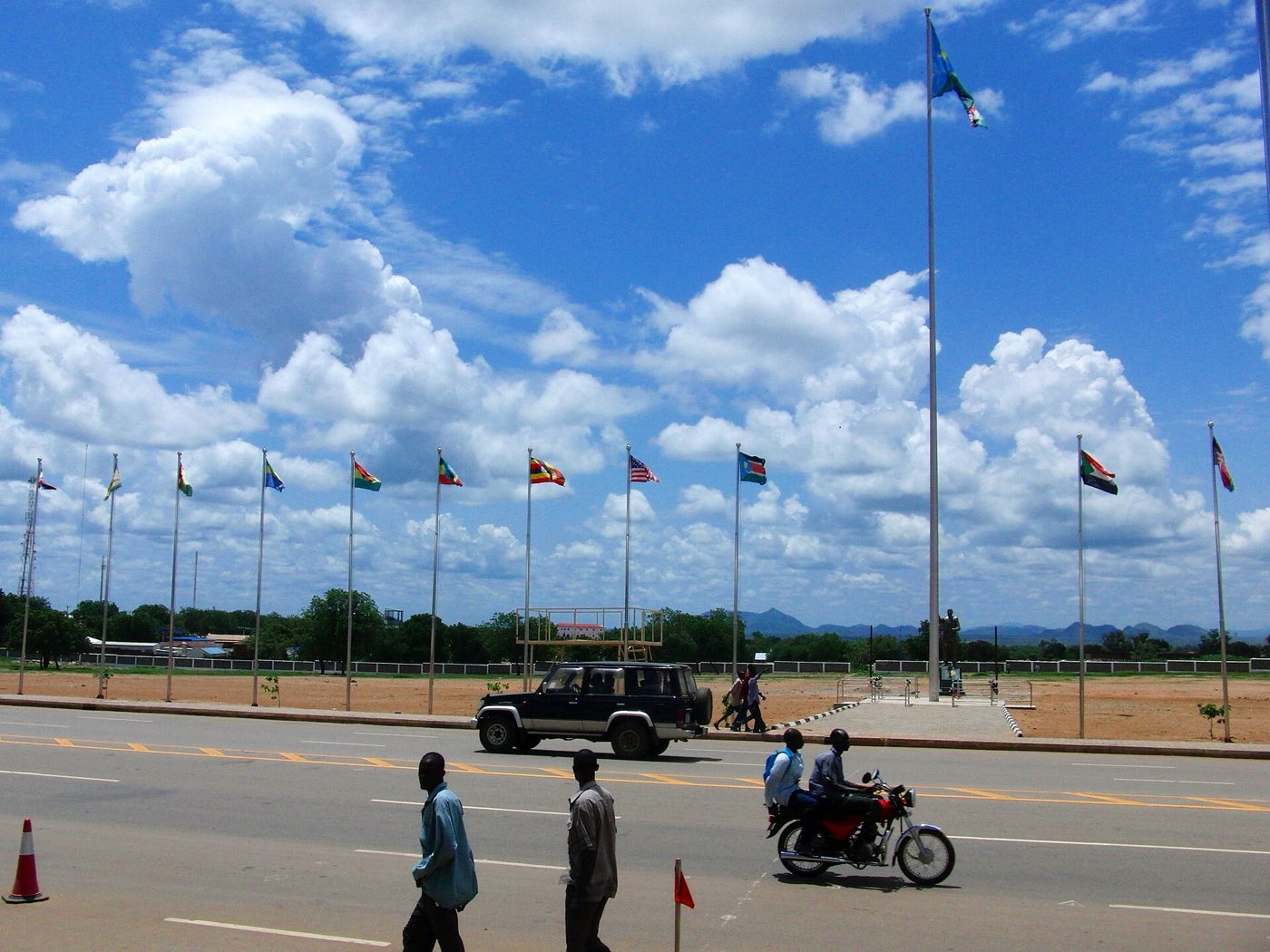
South Sudan
- Capital
- Juba
- Population
- 11.1M
- Currency
- SSP
- Languages
- English
Overview
The world's youngest country — independent from Sudan since July 2011 — South Sudan holds some of the least-visited wilderness on earth, including the Sudd, a tropical wetland the size of England, and the Boma-Jonglei landscape, which hosts a wildlife migration second only to the Serengeti. Travelers who reach it are a thin trickle of NGO staff, diplomats, photojournalists, and a small number of specialist operators running expeditions to see the Mundari cattle camps or the Nimule hippos. This is not a country you drop into. A devastating civil war from 2013 to 2018 displaced roughly four million people, a fragile 2018 peace agreement has held unevenly, and most Western governments currently advise against all but essential travel. The UN peacekeeping mission (UNMISS) remains one of the largest in the world, and NGO vehicles outnumber private cars in Juba by a wide margin. Practical access for visitors is effectively limited to the capital and a handful of guarded sites reachable by charter flight or supervised road convoy. Go only with a reputable operator who handles permits, vehicles, fixers, and security briefings, and check your government's travel advisory the week before departure. For the traveler with the patience and the framework to make it work, South Sudan delivers encounters — with Mundari herders at dawn, with the sheer scale of the White Nile at Juba, with people rebuilding after a war most of the world has forgotten — that nowhere else does.
Things to Do
Boma National Park wildlife migration
In the vast grasslands of the country's east, hundreds of thousands of white-eared kob, tiang, and Mongalla gazelle make an annual migration that was documented by aerial surveys in the 2000s as comparable in scale to the Serengeti's. Conflict and insecurity have disrupted conservation work for years, but African Parks took over management in 2022 and basic access is slowly returning. Visits are fly-in, tented, and require pre-arranged permits through an operator.
The Sudd wetland ecosystem
The White Nile spreads across central South Sudan into one of the largest tropical wetlands on earth — a shifting mosaic of papyrus swamp, seasonal lake, and flooded grassland that covers up to 130,000 square kilometers in the wet season. It is a critical stopover on the Palearctic migratory bird flyway and home to the shoebill stork, Nile lechwe, and some of the densest concentrations of waterbirds in Africa. Access is by light aircraft and small boat with a specialist operator.
Imatong Mountains hiking
In the far south near the Ugandan border, the Imatongs rise to over 3,000 meters at Mount Kinyeti — the country's highest peak — through montane forest and bamboo thickets. The range holds South Sudan's largest remaining forest cover and supports a small population of colobus monkey, bushbuck, and a few elephant that cross from Uganda. Trekking here is logistically demanding and currently restricted for security reasons; confirm status with your operator and embassy before committing.
Juba's Konyo Konyo market
The capital's main open-air market sprawls along the western edge of downtown Juba and is the best single place to see everyday commercial life — stacked vegetables from the Nile-bank farms, imported fabrics from Uganda and Kenya, secondhand clothing from Europe and Asia, live chickens and goats, and spiced tea brewed in small pots. Go with a local fixer, dress conservatively, ask before photographing anyone, and carry small-denomination South Sudanese pound notes for anything you buy.
Nimule National Park on the Uganda border
Three to four hours' drive south of Juba along the paved road to the Ugandan border, Nimule sits where the White Nile thunders over a series of rapids. A small population of hippo and crocodile live in the river here, and the park supports elephant, waterbuck, and Uganda kob in the surrounding savanna. A local ranger escort is mandatory, accommodation is basic, and visits are currently day-trips from Juba arranged through an operator or a mission office.
Bahr el Ghazal River region
The northwest of the country, drained by the Bahr el Ghazal tributary system, is Dinka cattle country — wide floodplain grassland dotted with homesteads and rotating cattle camps. The regional hub of Wau has an old colonial cathedral and a small market, and has historically been a starting point for travelers wanting to see Dinka pastoralist culture. Access is by UN-shared flight from Juba; road travel through the region is not advised given banditry and residual insecurity in several counties.
Mundari cattle camp cultural visits
Forty kilometers north of Juba along the Terekeka road, the Mundari people keep their long-horned Ankole cattle in camps arranged in concentric circles around smoldering dung fires. The smoke repels flies, coats the herd in pale ash, and defines one of the most photographed scenes in East Africa. Visits are typically arranged as overnight trips with a fixer, chief permission, and a community contribution — respectful behavior, no intrusive photography, and patience with protocol are essential.
When to Go
December to February is the dry season and the only sensible travel window for most of the country — roads are usable, mosquito pressure eases slightly, and the Boma migration is most reliably viewable. March heats up quickly into 40°C+ days before the long rains start in April and run through October, during which most overland travel becomes impossible and the Sudd swells to its full extent. The shorter break in July or August is not long enough to plan around. Build slack into any itinerary — flights cancel, permits arrive late, and plans shift on short notice here more than almost anywhere else.
Getting Around
Road conditions are the single hardest variable. The paved Juba–Nimule highway south to Uganda is the country's best road and usable year-round; almost every other route outside the capital turns to clay mud in the April-to-October rains and is impassable for weeks at a time. UNHAS (the UN humanitarian air service) runs shared flights between Juba and the state capitals and will sell seats to travelers with NGO or operator backing. Private charter planes are the realistic way to reach Boma, the Sudd, or Wau. Within Juba, arrange a driver through your hotel or operator — boda-boda (motorcycle taxis) are cheap but not recommended for visitors.
Cost & Currency
South Sudan uses the South Sudanese pound (SSP), but the currency has hyperinflated badly and the de facto reserve currency for travelers is the US dollar. Bring clean, large-denomination USD bills ($50 and $100, post-2009 series) and exchange small amounts locally as needed — cards are essentially useless outside two or three international hotels in Juba. A bed at the Pyramid Continental or Palm Africa Hotel in Juba runs $150–$250 a night. A full-service specialist trip covering flights, fixers, permits, vehicles, and security runs $600–$1,200 per person per day and up. Tip drivers and fixers in USD; tipping in local restaurants is not expected.
Frequently Asked Questions
- Is it actually safe to travel to South Sudan?
- Not in the conventional sense. Most Western governments advise against all but essential travel, and the US State Department lists South Sudan at Level 4 (Do Not Travel). The country is post-civil-war, with ongoing localized violence, cash-economy fragility, and very limited emergency medical infrastructure. Any trip should be arranged with a specialist operator, full evacuation insurance, and continuous advisory monitoring.
- Do I need a visa?
- Yes — visas are required for all foreign nationals and must be obtained in advance from a South Sudanese embassy or consulate. Applications typically need an invitation letter from a registered operator, NGO, or host organization, plus a yellow fever certificate. Processing is slow and inconsistent; start at least six weeks before travel.
- Can I visit without a tour operator?
- In practice no. Independent travel is very difficult due to permit requirements, road conditions, security checkpoints, and the absence of tourist infrastructure outside Juba. A specialist operator handles letters of invitation, internal flights, permissions for protected areas, fixers, and security briefings. Solo overland attempts are strongly discouraged by embassies and long-term residents alike.
- What vaccinations and medications do I need?
- A yellow fever vaccination certificate is mandatory for entry and will be checked on arrival. Routine boosters plus typhoid, hepatitis A and B, rabies, and meningococcal (ACWY) are all strongly recommended, and malaria prophylaxis is essential year-round. Bring a personal medical kit including broad-spectrum antibiotics and rehydration salts — pharmacy access outside Juba is very limited.
- Is photography allowed?
- Generally yes in private and community settings with permission, but not of government buildings, bridges, checkpoints, airports, military personnel, or UN vehicles. A photography permit issued by the Ministry of Information is technically required and your operator should handle it. Always ask before photographing individuals, expect occasional pushback even with a permit, and put the camera down immediately if asked.
Plan a Trip to South Sudan
Have you been to South Sudan?
Track 195 countries, 50 states & 63 national parks on your map