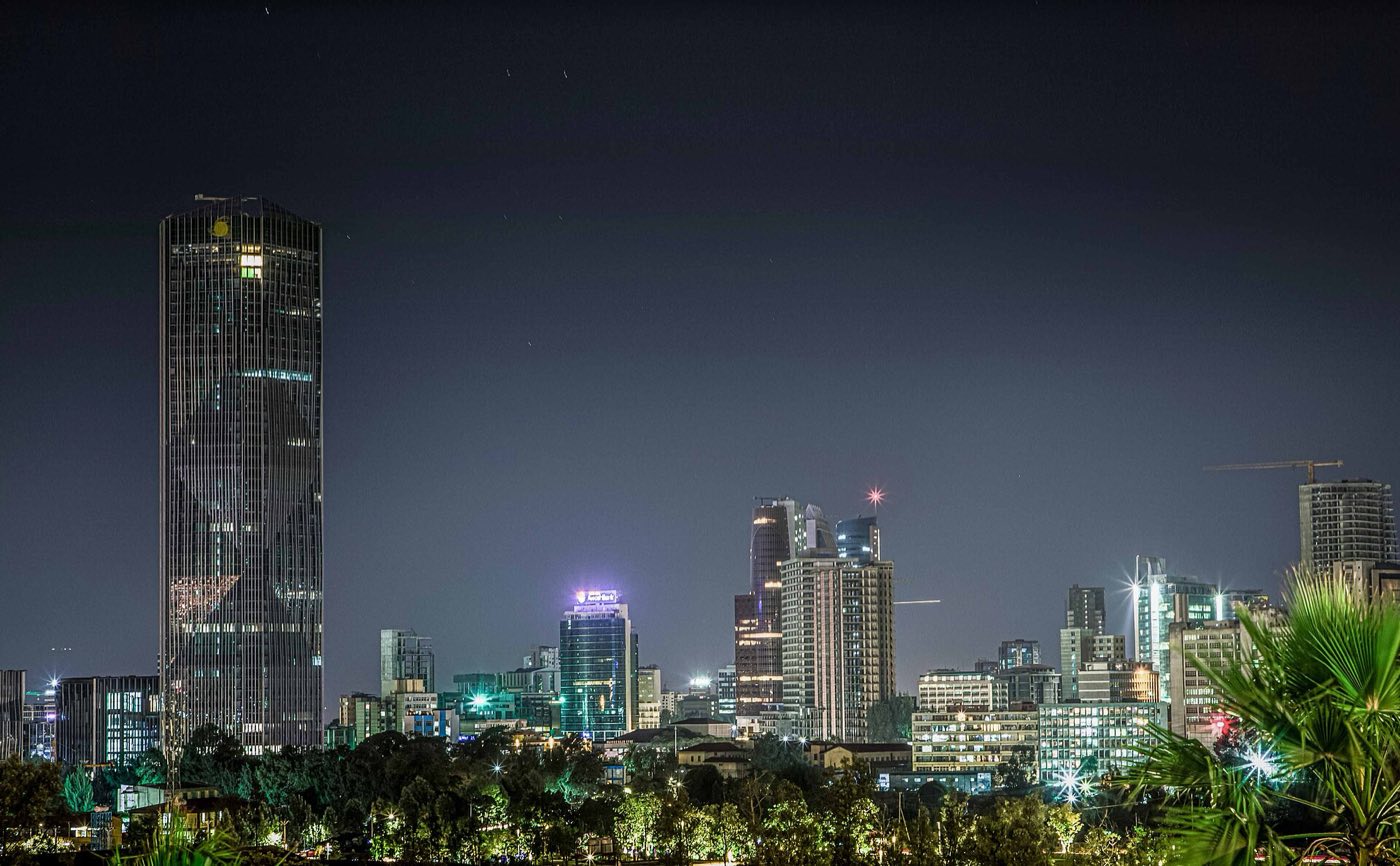
Ethiopia
- Capital
- Addis Ababa
- Population
- 126M
- Currency
- ETB
- Languages
- Amharic
Overview
One of the oldest continuous civilizations on earth, Ethiopia is a highland empire of rock-hewn churches, ancient obelisks, and an Orthodox Christian tradition that predates most of Europe's. Travelers come for the monolithic churches of Lalibela, the stone castles of Gondar, the tribal cultures of the Omo Valley, and the birthplace of coffee. The first thing that surprises you is the altitude. Addis Ababa sits at 2,400 meters, most of the historic north is higher still, and the air has that thin, dry clarity you usually associate with the Andes. Mornings are cool, afternoons are bright, and the light on the Simien escarpment — where gelada baboons graze on grass at 4,000 meters — is unlike anywhere else in Africa. This is not a safari country in the Kenyan sense. It is a country of history, endemic highlands, and a calendar and alphabet that run parallel to the rest of the world. Ethiopia rewards slow, curious travelers. The classic northern historic circuit — Bahir Dar, Gondar, Simiens, Axum, Lalibela — takes ten days to two weeks and involves short flights between towns; add the Omo Valley or the Danakil for a fuller picture. The coffee ceremony you will be offered in homes and small cafes is not a tourist ritual but the country's daily rhythm, and it is worth every one of the three rounds. Security conditions in the north and east have shifted in recent years, so check current advisories and work with a reputable local operator.
Things to Do
Rock-hewn churches of Lalibela
Eleven churches carved downward into solid volcanic rock in the twelfth and thirteenth centuries, linked by tunnels and trenches, and still in daily use by the Ethiopian Orthodox Church. You walk the complex at dawn when pilgrims in white shemmas line the trenches and priests chant the early liturgy inside Bete Medhane Alem. The most photographed, Bete Giyorgis, is cut as a perfect cross and you approach it from above, looking down into the carved courtyard. Take two mornings here — one for the northern group, one for the southern — and expect to be deeply moved.
Simien Mountains National Park trekking
A UNESCO-listed range of basalt cliffs, lobelia-dotted plateaus, and 4,500-meter peaks that drops off in sheer escarpments into the lowlands below. Guided treks from the park gate at Debark run from half-day viewpoints to ten-day traverses ending at Ras Dashen, the fourth-highest peak in Africa. The real draw is the wildlife — gelada baboons in troops of hundreds, Ethiopian wolves if you are lucky, walia ibex on the cliff faces. Mule-supported treks with community camps are comfortable and the scouts who accompany every group are a legal requirement.
Axum's ancient obelisks and Ark of the Covenant church
In the far north, Axum was the capital of a trading empire that stretched across the Red Sea to Arabia from roughly the first to the seventh century. The stelae field holds huge carved granite obelisks — one still standing, one fallen in pieces, one returned from Rome — that mark the tombs of pre-Christian kings. The nearby Church of Our Lady Mary of Zion is where Ethiopian Orthodoxy claims the Ark of the Covenant itself is kept, guarded by a single monk who never leaves the compound.
Omo Valley tribal cultures
In the far south, the Omo River runs through a valley that is home to more than a dozen distinct ethnic groups — Hamar, Mursi, Karo, Dassanech — whose traditions have remained largely outside the orbit of the highland state. A well-organized trip from Arba Minch gets you to the Saturday market at Key Afer and the Hamar bull-jumping ceremonies that are the key rite of passage for young men. Photography etiquette is fraught and commercial, so go with a guide who knows the community leaders and negotiate a framework before cameras come out.
Gondar's Royal Enclosure castles
The seventeenth-century imperial capital sits on a ridge above the plain, and the walled compound of Fasil Ghebbi holds six castles built by successive emperors. It is unlike anything else in Africa — stone towers with Portuguese, Indian, and Moorish influences all visible — and walking the grounds at opening time before the tour groups arrive is one of the quieter pleasures of the northern circuit. Pair it with Fasilides' Bath on the edge of town, where the Timkat Epiphany festival fills the pool with thousands of the faithful each January.
Danakil Depression and Erta Ale lava lake
One of the hottest inhabited places on earth, the Danakil is a salt desert of yellow sulfur springs, acid pools, and the active lava lake at the summit of Erta Ale volcano. Trips run four to five days out of Mekele with a convoy of 4x4s, armed escorts, and a camel caravan for the final ascent to the crater rim where you sleep on volcanic rock above a boiling lake. It is the most extraordinary landscape in Ethiopia, and security conditions here have fluctuated — confirm access with a specialist operator close to travel.
Addis Ababa's National Museum and coffee ceremony
The capital holds the fossilized bones of Lucy — the 3.2-million-year-old Australopithecus whose discovery rewrote human origins — at the National Museum, along with imperial thrones, ecclesiastical art, and contemporary Ethiopian painting. Combine the museum with lunch at an Addis cultural restaurant where a full three-round coffee ceremony will be brewed at your table: green beans roasted over coals, ground by hand, brewed in a clay jebena, and served with popcorn and frankincense smoke.
Blue Nile Falls at Tis Abay
Thirty kilometers downstream from Bahir Dar, the Blue Nile drops forty meters over a basalt shelf in a broad curtain that the Amharic call Tis Abay — smoking water. Hydroelectric diversion has reduced the flow outside rainy season, but from July through October the falls recover their full scale. Reach them by boat along Lake Tana — visiting the island monasteries with frescoed interiors en route — or by a short drive and a thirty-minute walk across the seventeenth-century Portuguese stone bridge to the viewpoint.
When to Go
October through March is the long dry season and the stretch most travelers should aim for. The Simien Mountains are at their best from late October through December, after the rains and before the coldest weather. The Timkat Epiphany festival in January is one of the great cultural events of the world, with Gondar and Lalibela the two best places to witness it. Meskel, the finding of the True Cross, falls on September 27 and fills Addis with bonfires and yellow meskel daisies. The main rains from June through September make roads difficult in the north and close some trekking routes.
Getting Around
Domestic flights on Ethiopian Airlines are the practical backbone of the northern historic circuit — Addis to Bahir Dar, Gondar, Axum, and Lalibela — because road distances across the highlands are enormous and slow. Book the domestic legs through a travel agent at the same time as your international ticket for a substantial discount. On the ground, hiring a vehicle with a driver-guide is the realistic choice for most visitors; self-drive is legal but traffic, livestock on roads, and limited signage make it inadvisable. In Addis, the light rail and ride-hailing apps like Ride and Feres are cheap and easy for getting around the capital.
Cost & Currency
Ethiopia uses the birr (ETB), which has weakened substantially in recent years and now makes the country genuinely inexpensive for foreign visitors. A full Ethiopian meal of injera with multiple wots at a local restaurant runs 300–500 birr (roughly US$2–4), a mid-range hotel room in Addis or the historic circuit runs 2,500–5,000 birr a night, and a guided day trek in the Simiens with vehicle and scout runs 3,500–5,000 birr per person. Cards are accepted at international hotels and a few restaurants in Addis; everywhere else is cash, and ATMs in smaller towns are unreliable. Change money at banks in Addis before flying north and tip guides and drivers at the end of multi-day trips.
Frequently Asked Questions
- Is Ethiopia safe to visit right now?
- Security varies sharply by region. The northern historic circuit — Addis, Bahir Dar, Gondar, Simiens, Lalibela, Axum — has been accessible to travelers through most of 2025 and 2026 but conditions can shift. The Tigray region, parts of Amhara, and areas near the Eritrean and Somali borders have been affected by conflict. Check your government's advisory and work with a reputable Ethiopian operator who has real-time information.
- Do I need a visa?
- Most visitors can apply for an e-visa online in advance through the official Ethiopian immigration portal — 30-day tourist visas are issued within a few business days and cost around US$82. Visas on arrival at Addis Ababa Bole International are also available for citizens of most Western countries, though the e-visa is faster on arrival. Your passport must have at least six months of validity.
- Will I get altitude sickness?
- Possibly. Addis Ababa sits at 2,400 meters and much of the historic circuit runs between 2,000 and 3,500 meters, with trekking in the Simiens going higher still. Most visitors experience mild headaches or breathlessness in the first day or two that pass on their own. Drink plenty of water, avoid heavy alcohol for the first 48 hours, and take it easy on your first day of trekking. Consult a doctor before travel if you have heart or lung conditions.
- What should I know about the Ethiopian calendar and time?
- Ethiopia follows its own calendar — about seven to eight years behind the Gregorian — and its own clock, which starts counting hours from sunrise. Locals will often tell you it is three o'clock when your watch says nine. Flight tickets, hotel bookings, and international appointments all use the Gregorian system, but if a local says to meet at one o'clock, confirm whether that is Ethiopian or European time to avoid confusion.
- Can I visit the churches if I'm not religious?
- Yes — all of the major rock-hewn churches, monasteries, and imperial sites welcome visitors regardless of faith. Dress modestly with shoulders and knees covered, remove shoes at the entrance to active churches, and follow your guide's lead on photography rules, which vary by site. Women are not permitted on certain Lake Tana island monasteries that maintain monastic tradition; your guide will know which ones and can suggest alternatives.
Plan a Trip to Ethiopia
Have you been to Ethiopia?
Track 195 countries, 50 states & 63 national parks on your map