South Africa
- Capital
- Pretoria
- Population
- 60.4M
- Currency
- ZAR
- Languages
- English, Zulu, Xhosa, Afrikaans
Overview
A country at the southern tip of Africa that delivers Big Five safaris, a thousand miles of coastline, world-class wine, and the still-unfolding legacy of the 1994 transition from apartheid. Travelers come for Kruger National Park game drives, the Cape Winelands' mountain-flanked vineyards, Table Mountain views over Cape Town, and the penguin colony at Boulders Beach. South Africa is not one trip. A week will barely dent it. In a single country you can spend the morning walking a township in Soweto with a guide who grew up there, the afternoon tasting chenin blanc at a 300-year-old Cape Dutch wine estate, and the next dawn watching a pride of lions kill a wildebeest on an open floodplain in Kruger. The landscapes shift hard — the fynbos-covered Cape Peninsula looks nothing like the subtropical lowveld, which looks nothing like the Drakensberg's escarpment-rim amphitheaters in KwaZulu-Natal. The country rewards travelers who want safari plus city plus coast in one itinerary, and who are willing to drive — distances are real and the best experiences are spread out. Johannesburg and Cape Town are modern cities with world-standard restaurants, arts, and architecture; they also carry the economic inequality the country has not yet solved, and which travelers should understand before they arrive rather than discover at street level. Come with some reading done, drive carefully, and South Africa will show you more than almost any other country can in two weeks.
Things to Do
Kruger National Park Big Five safari
Kruger is nearly the size of Israel and holds more large mammal species than any other African park — lion, leopard, rhino, elephant, buffalo, plus cheetah, wild dog, giraffe, and hundreds of bird species. You can self-drive the sealed roads in a rental car (a genuinely good budget option), stay in rest camps that run from basic chalets to luxury lodges, and see the Big Five in a week with some patience. Private reserves bordering the park — Sabi Sands, Timbavati, Klaserie — share the fenceless boundary and offer guided off-road game drives at a considerably higher price.
Table Mountain and Cape Town waterfront
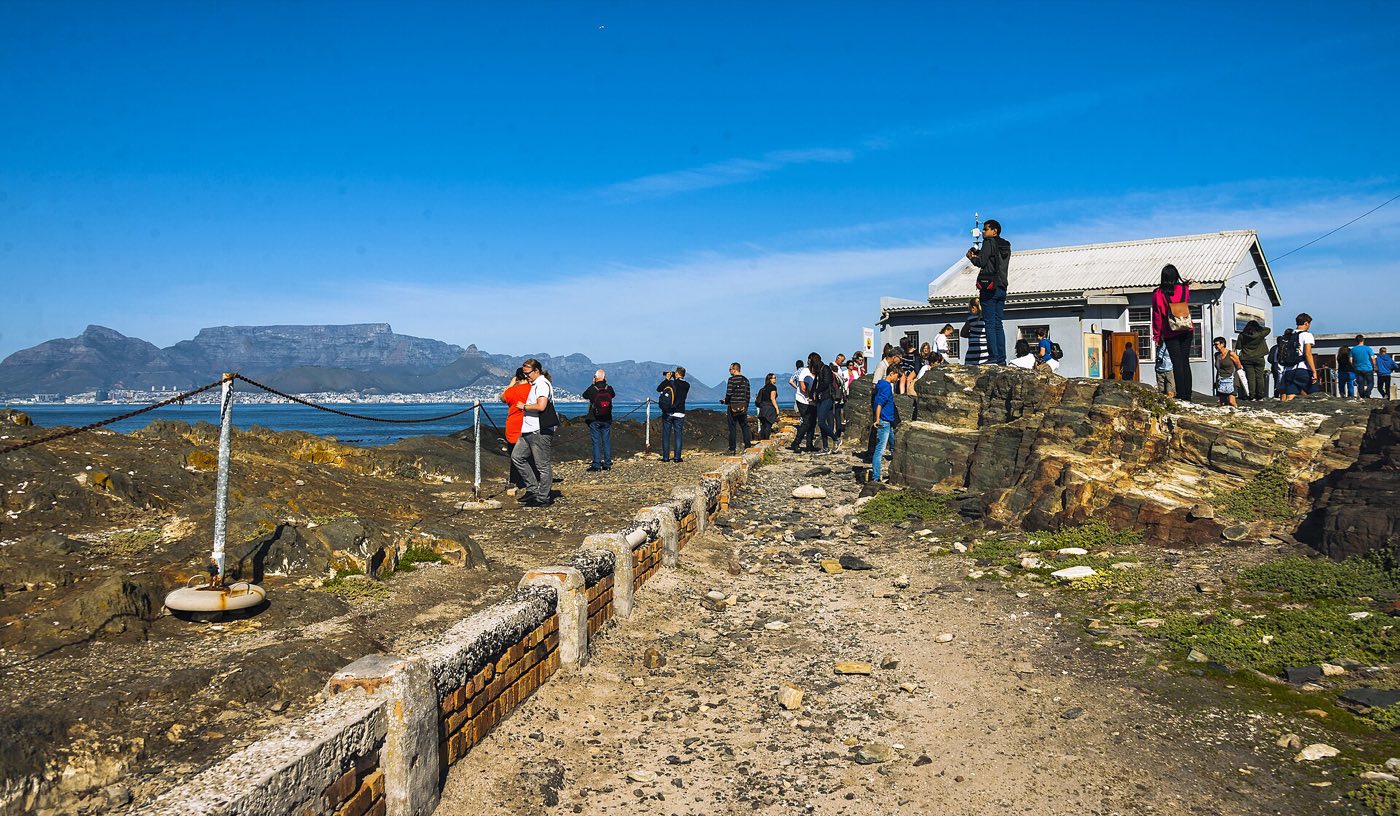
The flat-topped sandstone massif that rises 1,086 meters directly above central Cape Town is the city's geographic and emotional anchor. Take the rotating cable car up for the easy option or hike Platteklip Gorge for three hours of unshaded switchbacks and the earned version of the summit. The V&A Waterfront below holds markets, restaurants, and ferry departures for Robben Island. Time the summit for late afternoon when the light hits the Twelve Apostles ridge to the south and the bay turns deep blue.
Cape Winelands (Stellenbosch and Franschhoek)
Forty minutes from Cape Town, the Cape Winelands set some of the world's best chenin blanc, pinotage, and Cape Bordeaux blends against a backdrop of jagged granite peaks. Stellenbosch is the university-town hub, with Cape Dutch architecture from the 1690s and walkable tasting rooms. Franschhoek leans luxurious, with a tram linking a dozen estates for a hop-on day of tastings and long lunches. Base for two nights at a guest farm, hire a driver for wine days, and build in a morning for the Boschendal or Babylonstoren estate gardens.
Garden Route scenic drive
The 300-kilometer stretch of N2 highway from Mossel Bay to Storms River threads along the south coast between the Outeniqua Mountains and the Indian Ocean. Stops include the ostrich-farming town of Oudtshoorn and the Cango Caves inland, the forest-wrapped village of Knysna with its famous lagoon heads, Plettenberg Bay for whales and beaches, and the Tsitsikamma suspension bridge in the national park at the eastern end. Allow four to five days — you can do it faster, but the pace is the point.
Robben Island and Apartheid Museum
Two essential stops for understanding the country's recent past. Robben Island, a 30-minute ferry from Cape Town's V&A Waterfront, is the prison where Nelson Mandela spent 18 of his 27 years; tours are led by former political prisoners themselves. The Apartheid Museum in Johannesburg is the comprehensive counterpart, a structurally heavy building that separates visitors by race at entry (the tickets randomize you) and walks through the system's rise and dismantling over three hours. Do both; neither is complete without the other.
Boulders Beach penguin colony
A colony of roughly 3,000 African penguins lives on a sheltered stretch of granite-boulder beach in Simon's Town, about 40 minutes south of central Cape Town. Boardwalks keep you at respectful distance from the nesting birds, while Foxy Beach next door lets you swim in the same warm, granite-sheltered water the penguins use. Combine with a drive to Cape Point at the southwestern tip of the peninsula — not the southernmost point of Africa (that is Cape Agulhas two hours east) but a genuinely dramatic meeting of two oceans.
Drakensberg Mountains hiking
The basalt escarpment that forms the border between KwaZulu-Natal and Lesotho rises to over 3,400 meters and holds some of Africa's most dramatic mountain scenery — the Amphitheater, Cathedral Peak, the Tugela Falls (the world's second-highest at 948m). Day hikes and multi-day trails are equally accessible; base yourself at Champagne Valley or the Royal Natal National Park area and pick your level. Evenings are cool even in summer, and the San rock art in caves across the range is some of the finest in Africa.
Blyde River Canyon panoramic route
Between Johannesburg and Kruger, the Panorama Route runs along the Drakensberg escarpment past the third-largest canyon in the world. God's Window, the Three Rondavels viewpoint, Bourke's Luck Potholes, and the Pinnacle are the essential stops, strung together along about 80 kilometers of two-lane tar. Drive it in a full day from a base at Graskop or Hazyview, or build it into an itinerary that continues into the northern gates of Kruger at Phalaborwa or Paul Kruger. Best in clear winter months when the haze lifts.
When to Go
May through September is the dry winter season and the best time for Kruger and the eastern game reserves — grass is short, waterholes concentrate the game, and malaria risk drops. The Western Cape flips the calendar: November through March is the warm, dry summer with long beach days in Cape Town and the Garden Route, while Cape Town's winter brings rain and windy stretches. The Garden Route itself is pleasant essentially year-round. Whale watching off Hermanus peaks from July through November. School holidays — especially mid-December through mid-January — push prices up sharply, particularly along the coast.
Getting Around
A car is the only practical way to see South Africa at any real depth — distances are long and the best experiences are spread across the country. Rental cars are cheap by international standards, roads are generally good, and driving is on the left. Speeding and drunk driving are both real issues on the roads, and you should avoid night driving outside cities. Domestic flights between Cape Town, Johannesburg, and Durban are cheap and plentiful; FlySafair and Airlink are the main carriers. Within cities, Uber is reliable and cheap in Cape Town and Johannesburg; public transport is limited and not generally recommended for visitors. The Gautrain between Joburg and Pretoria is an exception — fast, safe, and well run.
Cost & Currency
South Africa uses the rand (ZAR), currently around 18–19 to 1 USD, and remains one of the best-value mid-range travel destinations on earth. Expect ZAR 30–50 for an espresso, ZAR 150–300 for a sit-down restaurant dinner with wine, and ZAR 1,500–3,500 a night for a good mid-range hotel or guesthouse. Self-catering in Kruger rest camps runs ZAR 1,000–2,500 per chalet; private lodges in Sabi Sands and similar are in a different category entirely at ZAR 10,000–40,000 per person per night all-inclusive. Cards are accepted almost everywhere, including rural petrol stations. Tipping is meaningful: 10–15% at restaurants, ZAR 20–30 for car guards at parking lots, and ZAR 200–500 per day for safari guides at the end of a stay.
Frequently Asked Questions
- Is South Africa safe for travelers?
- Mixed — violent crime is a real issue, particularly in parts of Johannesburg and Cape Town's townships, and you need to travel with awareness. That said, millions of visitors come every year without incident by sticking to common precautions: don't walk at night outside central tourist areas, keep valuables out of sight in cars, use Uber rather than walking after dark in most cities, and take guided tours into townships rather than exploring alone. Kruger, the Winelands, the Garden Route, and most rural areas are low-risk.
- Do I need a visa?
- Most Western passport holders (US, UK, EU, Australia, Canada, New Zealand) get a free 90-day visitor permit on arrival. Your passport must be valid for at least 30 days beyond your departure and have two blank pages. Travelers from many other countries do need a pre-arranged visa — check the Department of Home Affairs site close to travel for current requirements.
- Is malaria a concern?
- Only in a few regions — principally the lowveld including Kruger National Park, parts of KwaZulu-Natal, and the Limpopo river valley — and only during the warmer wet months (roughly September through May). Talk to a travel clinic about prophylaxis if your itinerary includes those areas in that window. Cape Town, the Winelands, the Garden Route, and the Drakensberg are all malaria-free year-round.
- Can I self-drive a safari in Kruger?
- Yes, and it is one of the great travel experiences available anywhere. Kruger's main roads are sealed, the park provides a daily sightings map at every gate, and the rest camps offer chalets from around ZAR 1,500 per night. You are not allowed out of your vehicle except at designated picnic sites and camps, and gates open at dawn and close at dusk. Guided drives are available from every major camp if you want expert eyes on the land.
- How many days do I need for a first trip?
- Two weeks is the comfortable minimum: four or five days in Cape Town and the Winelands, a day or two on the Garden Route if you are driving east, four days in Kruger or the surrounding private reserves, and a day in Johannesburg for the Apartheid Museum and Soweto. Three weeks lets you add the Drakensberg or the northern Panorama Route without cutting anything close.
Plan a Trip to South Africa
Have you been to South Africa?
Track 195 countries, 50 states & 63 national parks on your map