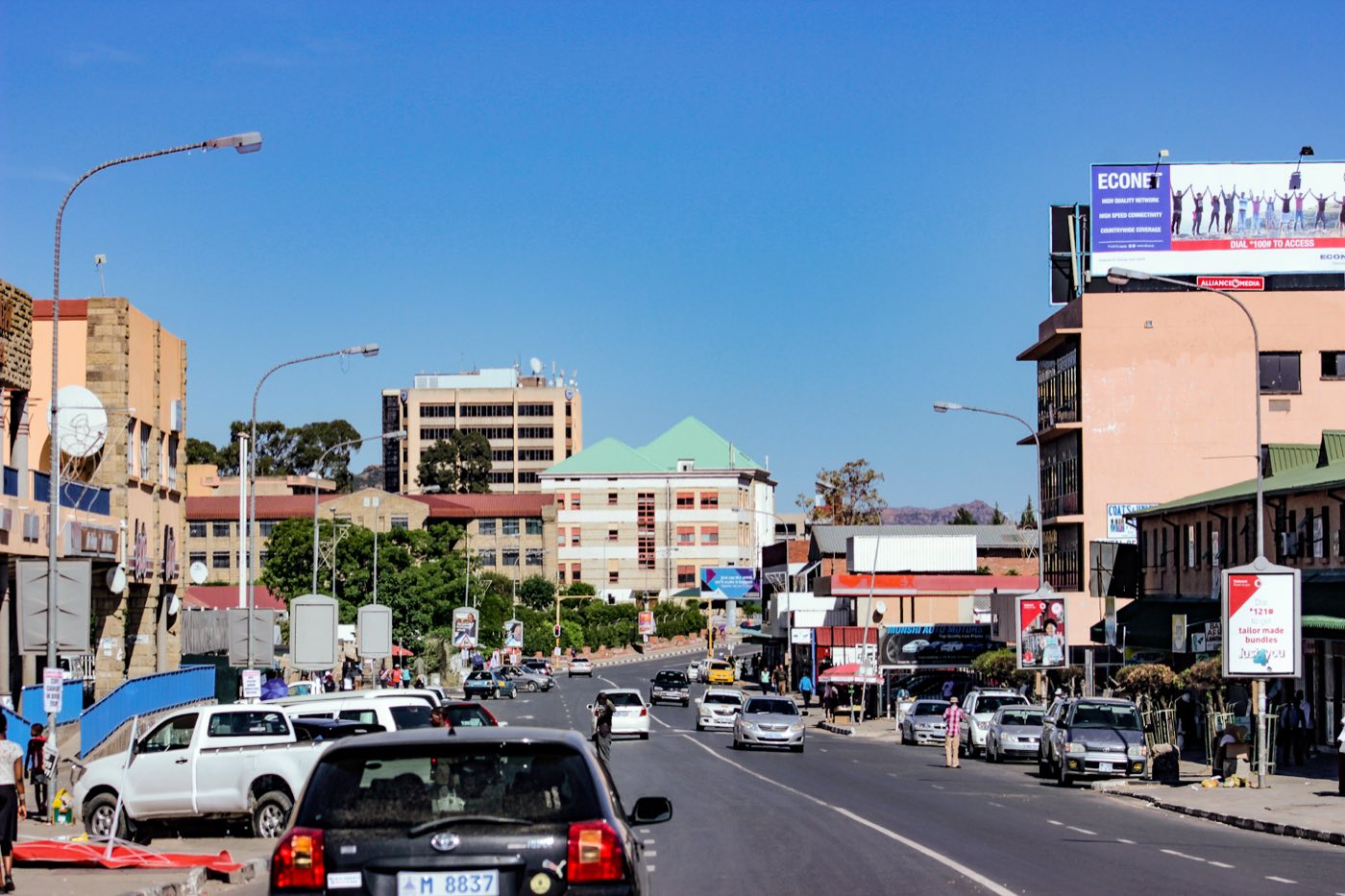
Lesotho
- Capital
- Maseru
- Population
- 2.3M
- Currency
- LSL
- Languages
- Sesotho, English
Overview
The Kingdom of Lesotho is a mountain country completely surrounded by South Africa, small enough to drive across in a day and high enough that its lowest point — 1,400 meters — is higher than the summit of most peaks in Britain. The nickname is the Kingdom in the Sky and it earns it: the entire country sits above a thousand meters, and the central highlands reach above 3,400 across a plateau of stark basalt ridges, thin alpine grasslands, and deep gorges cut by the headwaters of the Orange River. The Basotho people have been here since the early 19th century, when King Moshoeshoe I founded the nation on the flat-topped mountain fortress of Thaba-Bosiu to resist Boer expansion and later negotiated British protection that kept Lesotho independent of South Africa through the apartheid era. That independence is still felt — the horse and the woolen Basotho blanket are genuine everyday items rather than cultural performances, and most of the country's rural population lives in traditional stone-walled rondavels scattered across the slopes. English is an official language alongside Sesotho, which makes travel considerably easier than in most of Africa. Lesotho rewards travelers willing to go high and rough. Roads beyond the capital and the Northern Lowlands run as dirt tracks through the highlands, pony trekking is the traditional local transport and the best way to see the country, and winter here means actual snow on the passes. Come for a three- or four-day detour off a South African trip — Sani Pass from the KwaZulu-Natal side, or across the Caledonspoort border from the Free State — and budget a night or two in the high country. It is the most genuine mountain culture left on the continent.
Things to Do
Sani Pass border crossing from South Africa
The Sani Pass is a dramatic 1,332-meter gravel switchback that climbs from the KwaZulu-Natal side in South Africa up into Lesotho at 2,876 meters, topping out at a border post and a high-country pub — the Sani Mountain Lodge, which claims the title of highest pub in Africa. The pass road is being gradually paved on the Lesotho side but remains a 4x4-only route from the South African base; organized day trips run from Underberg and Himeville with a hot lunch at the top. For the full effect, stay a night at the lodge and walk out onto the escarpment at dawn, where the Drakensberg drops two kilometers beneath your feet into the morning haze.
Maletsunyane Falls — one of Africa's highest single drops
Near the mountain town of Semonkong, 120 kilometers southeast of Maseru, the Maletsunyane River plunges 192 meters in a single drop into a deep gorge — one of the tallest single-plunge waterfalls on the continent. You can walk to a viewpoint at the rim in an hour from the main road, or take the longer trail down to the pool at the base (two to three hours each way, steep on the return). The Semonkong Lodge runs the commercial abseil operation that descends the full 204 meters alongside the falls, currently listed by Guinness as the world's longest commercial abseil and a genuinely terrifying way to spend an afternoon.
Ts'ehlanyane National Park hiking
In the northern Maluti Mountains, Ts'ehlanyane protects one of the country's few indigenous forests — a patch of che-che woodland at 2,000 meters in a deep valley — along with high-altitude heathlands above. The park's Maliba Mountain Lodge is the only upmarket accommodation inside Lesotho and the base for most visits: trails range from a gentle two-hour forest walk to a full-day ridge traverse to Bokong Nature Reserve via the high plateau, which can be combined as a two-day crossing with an overnight stay between. Expect to see rock hyraxes and a surprising number of raptors; the bearded vulture (lammergeier) still nests on these cliffs.
Sehlabathebe National Park UNESCO site
Tucked against the Drakensberg escarpment in the southeastern corner of the country, Sehlabathebe is Lesotho's oldest national park and was inscribed as part of the transboundary Maloti-Drakensberg UNESCO site in 2013. The landscape is classic high-altitude Lesotho — sandstone outcrops, natural rock arches, tarns at 2,400 meters, and prehistoric San rock art painted under overhangs across the plateau. Access is genuinely remote: a full day's drive from Maseru on rough roads, or a hike over from the KwaZulu-Natal Drakensberg trail system. The lodge inside the park has about a dozen beds and books up months ahead in season.
Basotho pony trekking through mountain villages
The Basotho pony is a small, surefooted mountain breed developed locally over the past two centuries and still the real transport of choice for rural Lesotho — you will see men in grey wool blankets riding at a trot across high passes and narrow gorges where no 4x4 could go. Pony trekking is the closest you can get to the country as it actually functions: three- or four-day trips from Malealea Lodge or Semonkong Lodge take you between villages, sleeping in traditional rondavel huts with host families, eating papa and stew around the fire. You do not need to be a strong rider — these ponies are patient and the pace is walking — but you do need to cope with altitude and cold.
AfriSki mountain resort
In the Maluti Mountains near the Mahlasela Pass at 3,050 meters, AfriSki runs the main ski operation in southern Africa from June through mid-August — a modest 1-kilometer main slope with snowmaking, a ski school, and the novelty of skiing on the same latitude as South American wine country. It is not a European or North American-scale resort, but a weekend up here is one of the more unlikely things you can do in Africa, and the main lodge and ski hotel are comfortable. Off-season (November to April) the same slopes become mountain biking and hiking trails, with the high-altitude training camp used by long-distance runners.
Thaba-Bosiu cultural village — birthplace of the Basotho nation
Twenty-four kilometers east of Maseru, Thaba-Bosiu is the flat-topped sandstone mountain that King Moshoeshoe I fortified in 1824 as the capital of the newly consolidated Basotho nation — the defensive stronghold that allowed Lesotho to survive Boer, British, and Zulu pressure through the 19th century. You can walk up with a guide in about an hour and see the original village site, the royal graves, and the viewpoints used to spot approaching raids. The cultural village at the base runs demonstrations of traditional music, dance, and Basotho food, and is a practical half-day out from Maseru before heading into the highlands.
When to Go
September through April is the warmer half of the year and the most practical travel window, with temperatures pleasant at mid-altitude and the mountain roads reliably open. November through March brings afternoon thunderstorms across the highlands — dramatic, short, and rarely a real obstacle, but they can make dirt roads slick for a few hours. May through August is winter and means cold: daytime temperatures at 2,500 meters stay in single digits Celsius and overnight lows drop well below freezing, with snow on the passes from June to August. AfriSki runs its ski season in that window. Pony trekking is offered year-round but most comfortable from September to November and March to May.
Getting Around
Maseru, the capital, is the only real urban center and sits on the western border with South Africa — most visitors arrive overland through one of the fourteen border posts with South Africa (Caledonspoort, Maseru Bridge, and Sani Pass are the main ones) rather than by air. The paved road network covers the Northern Lowlands around Maseru, Leribe, and Butha-Buthe, and a partly-paved ring road loops through the highlands via Thaba-Tseka and Semonkong — but most of the real mountain roads are gravel, steep, and require a 4x4 with decent clearance. Shared taxis (called kombis or four-plus-ones) connect every town for a handful of maloti, though schedules are informal. For the highlands, hiring a driver-guide from Maseru for a three- or four-day loop is the most practical choice. Fuel stations are scarce in the mountains — fill up in every town.
Cost & Currency
Lesotho uses the loti (LSL, plural maloti), which is pegged 1:1 with the South African rand and trades at around 18 to the US dollar. South African rand is accepted everywhere in Lesotho at par with the loti — a useful convenience if you are crossing over from South Africa with existing rand. Prices are modest: a local meal of papa and stew runs 60–100 maloti, a room at a mid-range highland lodge 800–1,500 maloti (45–85 US dollars), a 4x4 with driver about 1,500 maloti a day. ATMs work in Maseru and the main towns — Leribe, Mafeteng, Butha-Buthe — but rarely in mountain villages; carry cash in small denominations for rural travel. Cards are accepted at the main lodges and urban hotels but not at small guesthouses or village stops. Tipping 10 percent at restaurants and a few hundred maloti a day to drivers and pony guides is appropriate.
Frequently Asked Questions
- Do I need a visa to visit Lesotho?
- Citizens of the United States, United Kingdom, European Union, Canada, Australia, and most SADC (Southern African Development Community) countries can enter Lesotho visa-free for up to 14 days, extendable at immigration in Maseru. The entry stamp is issued free at any land border or at Moshoeshoe I International Airport. Your passport should have at least two blank pages and six months validity. If you are entering from South Africa, make sure the South African side of the border exit is stamped as well — overlanders occasionally miss this and run into trouble on re-entry.
- Is Lesotho safe for travelers?
- Yes, for the standard mountain circuits Lesotho is generally safe, with violent crime against tourists rare and a welcoming culture in rural areas. Urban Maseru has the petty crime patterns of any southern African capital — pickpocketing, bag snatching, and car break-ins in unattended parking — so use normal city caution and avoid walking alone at night. The bigger risks are practical rather than criminal: high altitude, unpredictable mountain weather, rough roads, and cold-weather exposure if you are caught out in the highlands unprepared. Self-drive requires a 4x4 and real care on dirt switchbacks. Check road conditions with your lodge before setting out in winter.
- How many days should I plan for Lesotho?
- Three to five days is the standard first visit and pairs naturally with a South African trip. A classic itinerary enters via Sani Pass, spends a night at the Sani Mountain Lodge at the top, drives west through the highlands with a night at Maliba Lodge in Ts'ehlanyane, ends with a pony trek out of Malealea or Semonkong, and exits via the Caledonspoort border back into the Free State. A full week opens up Sehlabathebe, Thaba-Bosiu, and Maletsunyane Falls properly. Serious hikers and riders can spend two weeks in the highlands without repeating themselves.
- What is pony trekking actually like?
- Slow, cold, and one of the best ways to see the country. Basotho ponies are small (about 14 hands), sure-footed on steep paths, and trained to walk rather than run — trips are paced at about four to six hours of riding a day with regular stops. You sleep in rondavel huts in mountain villages, eat papa (maize porridge) with moroho (wild greens) and stew cooked over a wood fire, and cover ground that no 4x4 can reach. Bring warm layers even in summer — the nights at 2,500 meters are cold year-round — plus sunblock, a brimmed hat, and comfortable trousers. Previous riding experience helps but is not strictly required.
- Do I need a 4x4 to drive in Lesotho?
- For the main paved roads between Maseru, Leribe, and Butha-Buthe, a regular car is fine. For everywhere else — Sani Pass on the eastern side, the highland loop to Thaba-Tseka, Sehlabathebe access, and any mountain road leaving the paved network — a 4x4 with real ground clearance is necessary, and in winter you will want chains as well. South African rental companies generally do not allow their vehicles into Lesotho without explicit cross-border permission arranged at pickup. If you are not confident with 4x4 driving on steep gravel switchbacks at altitude, hiring a driver-guide in Maseru is a better plan.
Plan a Trip to Lesotho
Have you been to Lesotho?
Track 195 countries, 50 states & 63 national parks on your map