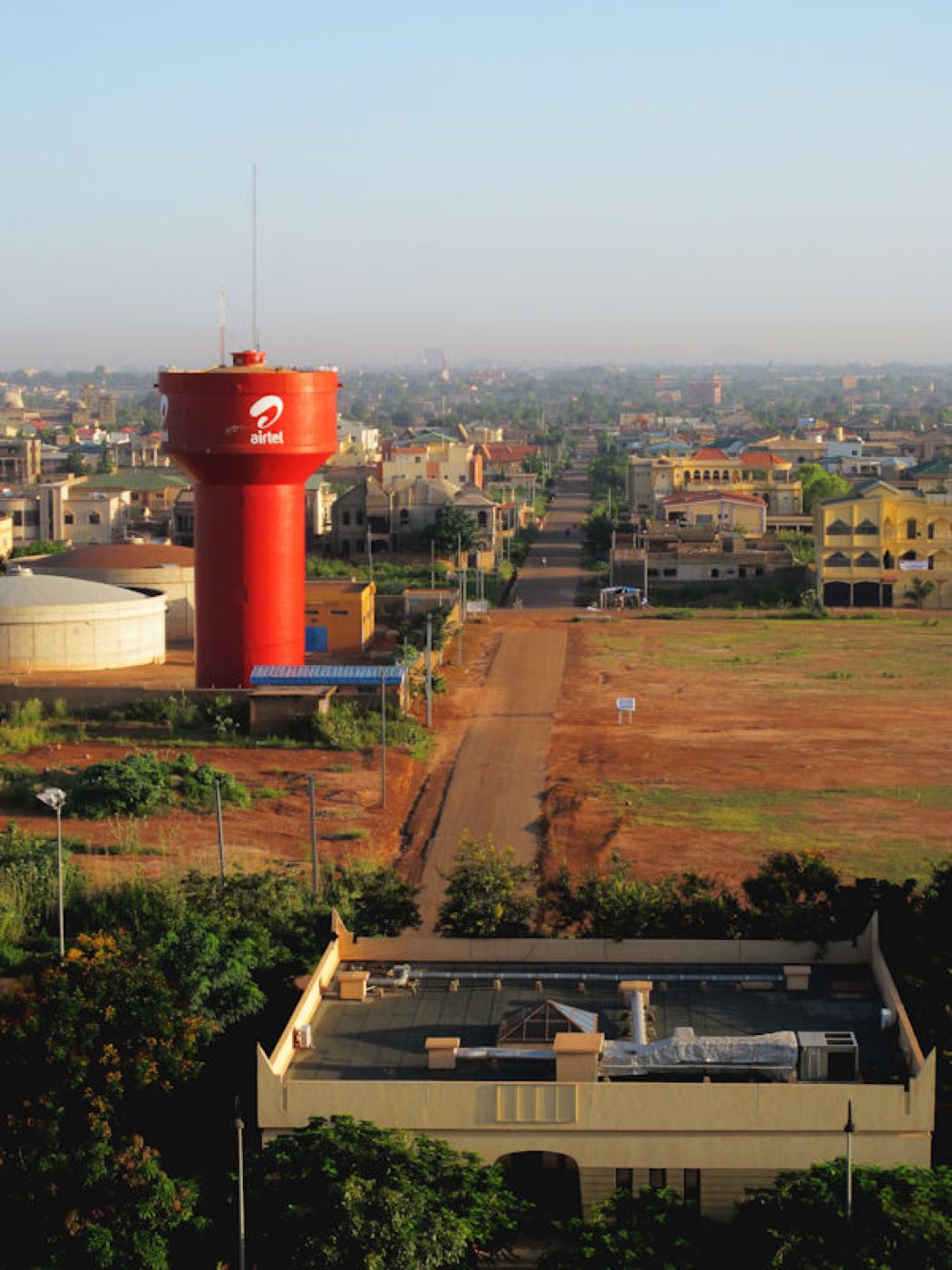
Burkina Faso
- Capital
- Ouagadougou
- Population
- 22.7M
- Currency
- XOF
- Languages
- French
Overview
A landlocked West African nation of mud-brick mosques, red-earth markets, and one of the continent's strongest traditions in cinema, music, and mask carving. Travelers come for the Grand Mosque of Bobo-Dioulasso, the sandstone fins of the Sindou Peaks, and the biennial FESPACO film festival — the largest cultural event of any kind in francophone Africa. The harder truth sits on top of the country like a weather system: since 2015, large parts of northern and eastern Burkina Faso have been contested by Sahelian jihadist groups, and most Western governments now advise against all travel to those regions. Practical tourism has narrowed to the southwest — Bobo-Dioulasso, Banfora, Gaoua, and Loropéni — and to Ouagadougou itself during festival weeks. The north, including the once-popular sites around Gorom-Gorom and the Aribinda region, is effectively closed to independent travelers and has been for years. Go with local operators who know where their lines are, and be willing to adapt. What you get in exchange for the patience is a country that still feels like itself. The southwest is green and forested, the Karfiguéla waterfalls and Banfora sugar-cane plains cool the afternoons, and Bobo-Dioulasso — the old commercial capital — has a rhythm that a week will not exhaust. Mossi, Bobo, Senufo, Fulani, and Lobi cultures live alongside each other here, the mask festivals are genuine rather than staged, and the balafon music you hear from open compounds at dusk is some of the finest in the region.
Things to Do
Grand Mosque of Bobo-Dioulasso
Built in 1880 in the Sudano-Sahelian style — mud-and-timber walls bristling with wooden scaffolding poles that double as permanent maintenance ladders — the Grand Mosque is the defining image of Bobo and of West African religious architecture. Non-Muslims cannot enter the prayer hall, but a small donation to the caretaker gets you a tour of the exterior and the old Kibidwe quarter around it, where dyers still work indigo vats in the open and griots sing family histories in the evening.
Sindou Peaks rock formations
An hour northwest of Banfora, the Sindou cones rise in a narrow ridge of weathered sandstone fins that look like a petrified forest — thin, tall, smoothed to a dull orange by the Harmattan wind. You hike in with a local guide past baobabs and Senufo villages, and the full traverse takes three or four unhurried hours. Come at the golden hour before sunset when the stone turns copper and the Peul herders are bringing their cattle home across the plain below.
Ruins of Loropéni UNESCO site
The laterite-stone ruins at Loropéni, in the far southwest near the Ghanaian and Ivorian borders, were once part of a network of gold-trading fortresses that drew merchants from as far as Mali and the Ashanti kingdom from the 11th to the 17th century. The 11-hectare enclosure, Burkina Faso's only UNESCO World Heritage site, sits half-claimed by forest, and the small visitors' center is run by descendants of the Kulango people who occupied the last phase of the settlement.
FESPACO pan-African film festival
For one week every other February, Ouagadougou becomes the cinematic capital of Africa. FESPACO — the Panafrican Festival of Cinema and Television — has run since 1969 and remains the continent's premier showcase for African-made film, with outdoor screenings in the city's squares, industry panels in sweaty auditoriums, and a Grand Prize (the Étalon d'Or de Yennenga) that launches careers. Book accommodation months in advance; prices double and hotels sell out early.
Nazinga Game Ranch wildlife
In the south near Pô, Nazinga is a 940-square-kilometer reserve where reintroduced populations of elephants, antelope, and baboons have rebuilt over four decades. It is not the Serengeti — expect two or three herds per game drive in the right season — but the elephant density around the artificial waterholes in March and April is genuinely impressive, and you can stay in basic bungalows on the edge of a hippo-filled dam. Check current security advisories before booking; the area has generally remained accessible but situations shift.
Ouagadougou's markets and artisan villages
The capital's Grand Marché and the smaller Rood Woko markets are chaotic, friendly, and the best place in the country to buy bronze masks, Bogolan mud cloth, leather, and woven baskets. Prices are negotiated in stages and over at least one round of tea; expect to pay roughly a third of the opening ask. Out in the suburb of Koulouba, the bronze-casters still use the lost-wax technique for Mossi-style figurines, and a morning watching a foundry at work is worth the taxi fare.
Banfora waterfalls and sugar-cane fields
Southwest of Banfora town, the Karfiguéla falls cascade over sandstone shelves into shallow pools that locals swim in on weekends — the water is cold and clear and the forest around the falls is thick with butterflies. Nearby, Lake Tengrela is home to a small population of hippos you can visit by pirogue at dawn, and the sugar-cane plantations that stretch to the horizon keep the whole area greener and cooler than the rest of the country, even at the end of the dry season.
When to Go
November through February is the season most visitors aim for — the cool, dry stretch of the Harmattan, when nights drop to almost chilly and daytime temperatures stay manageable. FESPACO takes place in late February every odd-numbered year and is the single best cultural reason to visit Ouagadougou. March and April are hot and dry and not much fun in the cities, though they are the best months for elephant viewing at Nazinga as animals concentrate on waterholes. The rainy season from June to September greens the southwest dramatically but makes secondary roads slow and some crossings impassable; FESTIMA, the festival of masks in Dédougou, falls in late February or early March and is worth planning around.
Getting Around
Travel moves by road, and conditions vary sharply: the paved highway from Ouagadougou west to Bobo-Dioulasso and Banfora is fast and generally safe, the southbound route to Pô and the Ghana border is reliable, and anywhere north or east of Ouaga should be treated as off-limits without specialist advice. Shared taxis and company buses (STMB, Rakieta, TCV) connect the main cities at low cost. Hiring a 4x4 with a driver is the standard choice for multi-day trips into the southwest and is worth the cost — local drivers know which roads have military checkpoints on which days and will keep you out of trouble. Within Ouagadougou and Bobo, green shared taxis and motorcycle taxis handle short hops for a few hundred CFA.
Cost & Currency
Burkina Faso uses the West African CFA franc (XOF), pegged to the euro at 655.957 to 1. Prices are low by Western standards but not rock-bottom: expect a sit-down plat du jour — riz gras, poulet bicyclette, or tô with okra sauce — to cost 2,000–4,000 CFA (€3–€6), a mid-range hotel room in Ouagadougou or Bobo 25,000–50,000 CFA, and a hired 4x4 with driver for a multi-day trip around 70,000–100,000 CFA per day including fuel. Cards are accepted at a handful of Ouagadougou hotels and essentially nowhere else; change euros at a bank in the capital and carry cash in small denominations. Tipping is modest — round up at restaurants, a few thousand CFA to drivers, and a contribution to mosque or mask-festival caretakers where invited.
Frequently Asked Questions
- Is it safe to travel to Burkina Faso right now?
- The southwest around Bobo-Dioulasso, Banfora, and Loropéni remains broadly accessible, and Ouagadougou is generally safe during the day with normal urban precautions. The north, east, and border regions with Mali and Niger are under active security threat and most Western governments advise against all travel there. Check your foreign-office guidance within a week of departure, travel with a reputable local operator, and avoid road moves at night.
- Do I need a visa?
- Yes — most travelers need a visa to enter Burkina Faso. An e-visa system is available online for many nationalities and typically processes in 3–5 working days; otherwise apply at the nearest embassy or consulate before you travel. A yellow fever certificate is required on arrival and will be checked at the airport.
- What vaccinations do I need?
- A yellow fever vaccination is legally required and the certificate is checked on entry. Routine boosters plus typhoid, hepatitis A, and meningococcal are strongly recommended, and malaria prophylaxis is essential year-round — Burkina Faso is a high-transmission country. Visit a travel clinic at least six weeks before you fly to allow time for the full vaccination schedule.
- Do I need to speak French?
- French is the working language and you should expect to need it — English is rare outside a handful of Ouagadougou hotels and international tour operators. In rural areas, local languages like Mooré, Dioula, and Fulfulde are the first tongue, with French as a lingua franca. A phrasebook and basic working French will make the trip considerably smoother, and a few Mooré greetings earn visible warmth from elders.
- Can I photograph people and ceremonies freely?
- Always ask first, and never assume a yes. In markets, at mask festivals, and around religious sites, a guide can broker permission and sometimes a small gift or tip is expected in return. Photographing military, government buildings, and checkpoints is strictly forbidden and will end badly. Mask dances in particular are religious events; behave accordingly and put the camera away if asked.
Plan a Trip to Burkina Faso
Have you been to Burkina Faso?
Track 195 countries, 50 states & 63 national parks on your map