Eswatini
- Capital
- Mbabane
- Population
- 1.2M
- Currency
- SZL
- Languages
- Swazi, English
Overview
A small landlocked kingdom tucked between South Africa and Mozambique, Eswatini is one of the last absolute monarchies on the continent and one of the easiest introductions to traditional southern African culture you can have. Travelers come for rhino tracking on foot at Hlane, the annual Umhlanga Reed Dance, and the craft studios of the Malkerns Valley. You enter from South Africa and the change is immediate — the road narrows, the hills fold closer together, and you start passing homesteads with rondavel huts and cattle kraals that haven't moved in generations. Ezulwini Valley, where most travelers base themselves, runs between green ridgelines and puts you within an hour of almost everything worth seeing: the craft markets, two major game parks, and the royal residence at Lobamba where the kingdom's big ceremonies unfold. Eswatini rewards a slower visit than most itineraries give it. Three or four nights gets you real contact with the place — a morning walking among rhinos at Hlane, an afternoon in the craft studios buying candles and mohair from the people who made them, an evening around a fire with marula beer and someone's uncle explaining the succession rules. It slots neatly into a Kruger-and-Maputo overland loop and holds its own as a quietly confident stop in its own right.
Things to Do
Umhlanga Reed Dance ceremony
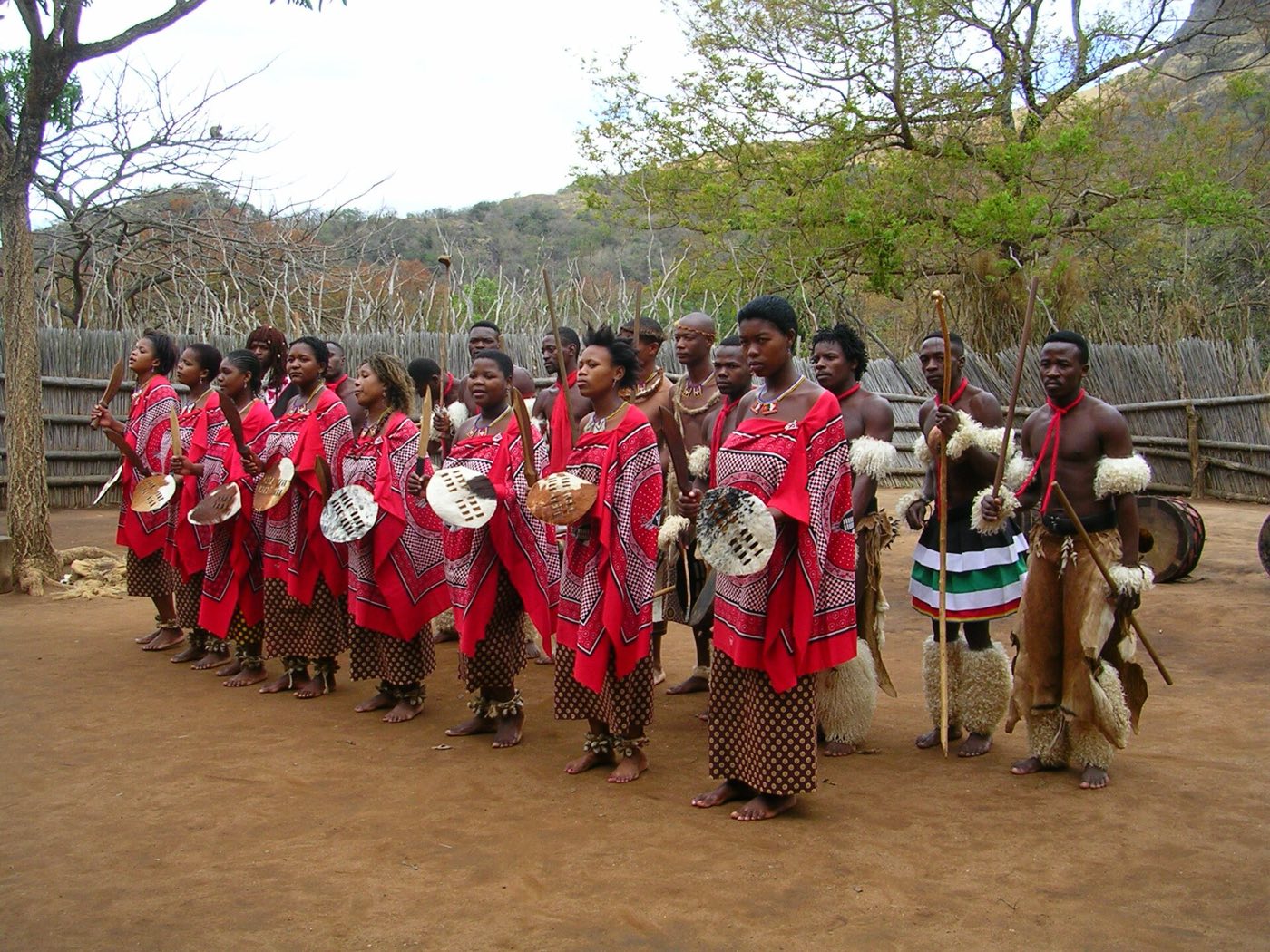
Every August or September, tens of thousands of unmarried Swazi women travel to the royal village at Ludzidzini to cut reeds, present them to the Queen Mother, and dance for the king in traditional dress across several days. It is the single biggest cultural event on the Eswatini calendar and one of the more remarkable ceremonies you can witness in southern Africa. Foreign visitors are welcome at the public dance days; dress respectfully, bring a long lens if you want photos, and follow the guidance of your host or guide about when filming is appropriate and when it is not.
Hlane Royal National Park rhino tracking
Hlane in the country's dry eastern lowveld is the kingdom's flagship park and the place to see white rhino at close range, often on foot with an armed ranger. The guided rhino walks leave early morning from the main camp at Ndlovu and move quietly through the bush until you are within twenty or thirty yards of grazing animals. The park also has lion and elephant in separate enclosures and the accommodation at Ndlovu Camp is rustic — no electricity in the rondavels, paraffin lanterns at night — which adds rather than subtracts.
Mlilwane Wildlife Sanctuary mountain biking
The oldest protected area in the country sits in the heart of Ezulwini Valley and has no dangerous predators, which means you can cycle, hike, or ride horseback through it without a guide. Zebra, warthog, nyala, and impala graze around the main rest camp, often strolling between the huts at breakfast. Rent a mountain bike at reception and take the Hippo Trail loop for an easy morning; the sanctuary's long, gentle grasslands and low hills make it one of the most accessible safari experiences you will find anywhere.
Malkerns Valley craft studios and Swazi candles
A ten-minute drive from Ezulwini, Malkerns Valley is the country's craft heartland and the place to pick up things you'll actually use at home. Swazi Candles is the best-known stop — you can watch artisans shape the wax over open flames into animals and abstract forms — and the surrounding cluster includes Baobab Batik, Gone Rural's grass-weaving collective, and glass-blowing at Ngwenya Glass. Most studios open their workshops to visitors, so you can see the work being made before you buy.
Mantenga Cultural Village and waterfall
A living museum in Ezulwini Valley reconstructs a traditional Swazi homestead of the 1850s, with sixteen beehive huts arranged around a central kraal. Twice-daily performances of sibhaca dancing and a guided walk through the homestead give you an hour or two of structured context that pays off across the rest of your visit. The Mantenga Falls at the back of the reserve are a short downhill walk from the village and make a quiet place to sit with sandwiches after the tour.
Sibebe Rock — the world's largest granite dome
Just outside Mbabane, Sibebe is a 350-meter exfoliation dome — the second-largest monolith in the world after Uluru — and climbing it makes a strenuous half-day. The hike is steep, unshaded, and rewarded with views that run across half the kingdom. Go with a local guide from the community trust at the base; the price is modest, the navigation is genuinely useful on an unmarked granite face, and the money stays with the village that manages the site.
Malolotja Nature Reserve hiking
In the northwestern highveld, Malolotja protects one of the finest stretches of untouched montane grassland in southern Africa — rolling hills, waterfalls, and a canopy walkway with long views over the valleys. The multi-day backpacking trails, with basic caves and shelters along the way, are the real draw for hikers who want a wilderness that is almost entirely their own. Day visitors can drive the main loop and stop at the Malolotja Falls viewpoint for one of the country's best panoramas.
When to Go
May through September is the dry winter and the best window for nearly everything: rhino and wildlife viewing at Hlane when the bush is thinned out, comfortable daytime temperatures, and cool nights that sometimes dip to freezing at higher elevations. The Umhlanga Reed Dance, typically in late August or early September, is the cultural event of the year and worth planning around. Summer from November through March is green, warm, and dramatic with afternoon thunderstorms — the hiking and birding is spectacular, though the grass at Hlane grows tall enough to obscure game.
Getting Around
A compact country where distances rarely exceed two hours behind the wheel, Eswatini is best explored by rental car picked up in Johannesburg or Nelspruit and driven across the border at Ngwenya or Oshoek. Roads on the main circuit through Ezulwini, Manzini, and up to Hlane are paved and well signed; tracks into Malolotja and the far northwest are rougher but passable in a regular car in the dry season. Public minibus kombis run between every town for a handful of emalangeni but are crowded and slow for visitors. Hotels and lodges routinely arrange airport transfers and day tours, and the country's Uber-equivalent apps now work in the main valley. Carry rand — it is accepted everywhere at parity.
Cost & Currency
Eswatini uses the lilangeni (SZL), pegged one-to-one with the South African rand, and both currencies circulate interchangeably. Prices sit roughly on par with rural South Africa and well below most safari destinations: a hearty lunch at a valley lodge runs E120–E180 (about US$7–10), a comfortable mid-range room at places like Summerfield or Mlilwane's Reilly's Rock runs E1,200–E2,200 a night, and a guided rhino walk at Hlane is around E300. Cards are accepted at hotels, larger restaurants, and park gates; keep cash in small notes for craft studios, market stalls, and roadside stops. Tipping 10 percent at sit-down meals and E50–E100 for guides at the end of a walk is appropriate.
Frequently Asked Questions
- Do I need a visa to visit Eswatini?
- Most Western travelers — US, UK, EU, Canadian, Australian, and New Zealand passport holders — do not need a visa and receive a free 30-day entry stamp on arrival. Your passport should be valid for at least six months beyond your planned departure, and land border crossings from South Africa are generally quick and straightforward.
- Is Eswatini safe for travelers?
- Yes — Eswatini is one of the calmer and more visitor-friendly countries in the region, with low violent crime and very little street harassment by southern African standards. Standard precautions still apply: lock your rental car, don't leave valuables visible, and use taxis or ride-hailing after dark in Mbabane and Manzini rather than walking unfamiliar streets.
- What's the best way to combine Eswatini with other destinations?
- It slots naturally into a Kruger National Park itinerary. Fly into Johannesburg or Nelspruit (Kruger Mpumalanga), spend three or four nights in Kruger, cross into Eswatini at Jeppe's Reef, spend three nights in Ezulwini and at Hlane, then continue east to the Indian Ocean coast of Mozambique or loop back to South Africa.
- Is malaria a concern?
- The western highveld around Mbabane and Ezulwini is malaria-free, while the eastern lowveld where Hlane and Mkhaya sit is a low-to-seasonal risk area. Most travelers take prophylaxis if spending nights in the east between November and May, and use repellent year-round. Confirm the current guidance with a travel clinic before you go.
- Do I need a local guide?
- Not for most of the country — roads are signed, lodges are easy to find, and self-drive works well. You do want guides for three specific things: the foot rhino walks at Hlane and Mkhaya, the climb up Sibebe Rock, and any visit to a traditional homestead or cultural ceremony where local protocol matters. Your lodge can arrange all three on a day's notice.
Plan a Trip to Eswatini
Have you been to Eswatini?
Track 195 countries, 50 states & 63 national parks on your map