Saudi Arabia
- Capital
- Riyadh
- Population
- 36.9M
- Currency
- SAR
- Languages
- Arabic
Overview
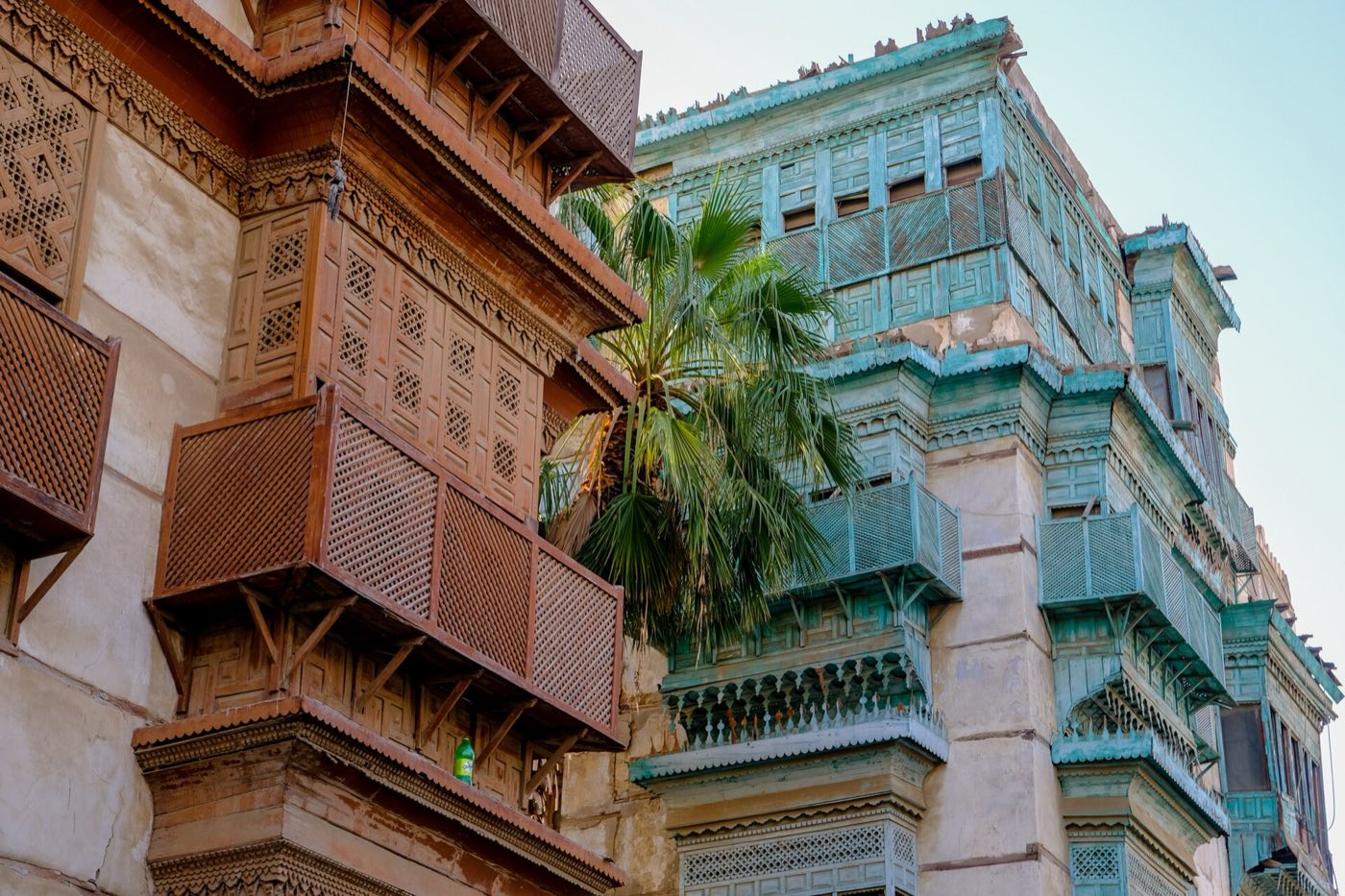
A desert kingdom that covers most of the Arabian Peninsula, guardian of Mecca and Medina — Islam's two holiest cities — and, since a landmark 2019 policy shift, genuinely open to international tourism for the first time. Before 2019 you came as a pilgrim, a business traveler, or a worker; now an e-visa lands in your inbox in hours, and the country has moved fast to build the infrastructure and attractions to match. The headline experience is Al-Ula, a 200-kilometer valley in the northwest where the Nabataeans — the same civilization that built Petra — carved 111 monumental tombs into sandstone outcrops at Hegra, now the country's first UNESCO site. Roughly a thousand years of history layer together here: Nabataean, Dadanite, Lihyanite, early Islamic. Riyadh, the capital, has rebuilt the historic At-Turaif district at Diriyah into a walkable UNESCO site, and Jeddah's Al-Balad old town is a maze of coral-block houses with wooden roshan balconies that have stood since the Ottoman era. The Empty Quarter, the world's largest sand desert, is reachable from the eastern oases. Practically, travel here still requires preparation. Mecca and Medina are closed to non-Muslims, and Hajj and Umrah require specific pilgrimage visas. A modest dress code applies everywhere — long sleeves and long trousers for men, covered shoulders and knees for women, with abayas no longer legally required for foreign women but still a common-sense choice in conservative areas. Alcohol is banned nationwide; expect Arabic coffee with cardamom instead. Inside that frame, the country is safer, easier, and more welcoming than most first-time visitors expect.
Things to Do
Al-Ula and Hegra (Madain Saleh) Nabataean tombs
Hegra is the southern sister city of Petra, built by the same Nabataean hands between the 1st century BC and 1st century AD, and it is the country's single most important cultural site. You enter through the official Al-Ula experience (timed tickets, shuttle buses) and walk between 111 rock-cut tombs with carved facades, inscriptions, and empty burial chambers you can step inside. The broader Al-Ula valley adds Elephant Rock, the old mud-brick village, and the Dadan archaeological site — give it three full days.
Edge of the World escarpment near Riyadh
A dramatic 300-meter cliff of the Tuwaiq escarpment about 90 minutes' drive northwest of Riyadh, where the desert plateau ends abruptly and a broad valley stretches below to the horizon. You can drive close to the edge in a 4x4, then walk along the rim at sunset as the light turns the rock bands gold and orange. Organized day trips from Riyadh include transport, a guide, and dinner at a Bedouin-style camp; independent drivers need a capable vehicle and GPS — the track is unmarked.
Diriyah UNESCO historic district
On the northwestern edge of Riyadh, the mud-brick district of At-Turaif was the first capital of the Saudi state in the 18th century and has been rebuilt as a pedestrian heritage zone with museums, galleries, Najdi-style architecture, and evening light-and-sound shows. The neighboring Bujairi Terrace lines a dry wadi with restaurants serving regional cuisine — Najdi stews, Hejazi seafood, international fare — and sits at the center of the Saudi government's showpiece cultural development. Go in the evening, when the temperature drops and the lights come on.
Jeddah's Al-Balad old town
The historic heart of Jeddah is a UNESCO-listed quarter of coral-block houses, their wooden roshan balconies screening interior rooms from the Red Sea sun. It was the traditional gateway for pilgrims arriving by sea to reach Mecca, and the architecture reflects five centuries of Indian Ocean trade — Ottoman stone, Yemeni woodwork, Egyptian screen windows. Walk it in the late afternoon, stop at Nassif House Museum, and eat foul and tamiya (fava-bean and falafel staples) for breakfast at one of the old cafes.
Red Sea diving and NEOM coastal development
The Red Sea coast north of Jeddah offers some of the least-visited world-class diving on the planet — corals largely untouched by mass tourism, good visibility year-round, and sharks and manta rays in season. Yanbu and the waters around the Farasan Islands are the classic bases. The Saudi government is building NEOM and the Red Sea Project along the same coast, so infrastructure is changing fast. Liveaboard dive boats from Jeddah are currently the most reliable way to access the better reefs.
Empty Quarter (Rub' al Khali) dune camping
The largest continuous sand desert on earth straddles the south of the country into Oman and the UAE, with dunes reaching 250 meters and the kind of emptiness that resets your sense of scale. Access is typically from Al-Ahsa oasis or Najran through organized operators running 4x4 camping trips of two to four nights — meals over a fire, Bedouin-style tents, star-heavy skies. It is a serious logistical undertaking; do not attempt it independently without experience and support vehicles.
Elephant Rock at Al-Ula
A 52-meter sandstone formation outside the Al-Ula valley that looks convincingly like an elephant in profile, its trunk grounded in the desert floor. The site has been developed with a cafe, fire pits, and seating areas tucked into the rocks, and it's a popular sunset stop — grab a coffee, watch the color turn, and hang around into the evening for the cooler air and darker skies. Combine with a stargazing experience at the nearby AlUla Gharameel site for some of the clearest night skies in the Middle East.
When to Go
October through March is the comfortable window for most of the country — daytime highs in the 20s Celsius, cool evenings, and the Al-Ula cultural season running full programming of concerts, festivals, and exhibitions. April and May are warm but manageable in the interior and hot on the coasts. June through September is brutal — daytime temperatures routinely over 45 degrees Celsius — and best avoided outside indoor Riyadh and Jeddah museums. Ramadan (dates shift annually on the lunar calendar) changes the rhythm noticeably: restaurants close during daylight hours, and public eating and drinking are prohibited for everyone out of respect.
Getting Around
Domestic flights on Saudia and flynas connect Riyadh, Jeddah, Dammam, Al-Ula, and other regional hubs quickly and cheaply — distances between major cities are long and flying usually makes more sense than driving. Within cities, ride-hailing apps (Uber and Careem) work everywhere and are the default for visitors; metered taxis are less reliable. The Haramain high-speed train links Jeddah, Medina, and the Red Sea coast at up to 300 km/h, with onward connections for Umrah pilgrims. Renting a car is straightforward for self-drive trips to the Edge of the World or desert areas; roads are well-maintained, fuel is cheap, and an International Driving Permit is accepted. Women can drive legally since 2018.
Cost & Currency
The Saudi riyal (SAR) is pegged to the US dollar at 3.75 to 1. Costs run higher than neighboring Jordan or Egypt but lower than the UAE: expect SAR 400–800 (US$110–US$215) per night for a comfortable mid-range hotel in Riyadh or Jeddah, SAR 60–120 for a meal at a sit-down restaurant, and SAR 15–25 for a shawarma or casual lunch. Al-Ula runs more expensive due to limited accommodation — SAR 1,200–3,000+ per night at the handful of hotels and heritage camps. Cards are accepted almost everywhere; keep SAR 200–300 in cash for small vendors, markets, and taxis in smaller towns. Tipping of 10% is increasingly common at sit-down restaurants; round up elsewhere.
Frequently Asked Questions
- Do I need a visa to visit Saudi Arabia?
- Most travelers from the US, EU, UK, and about 50 other countries can get a Saudi e-visa online in a few hours for tourism stays of up to 90 days per visit and 180 days per year. It's valid for multiple entries. Hajj and Umrah pilgrimages use a separate pilgrimage visa system and are only available to Muslims. Business travelers may need a separate business visa. Apply at visa.visitsaudi.com before booking.
- What should I wear?
- Modest dress is expected everywhere and required at mosques and religious sites. Men should wear long trousers and shirts covering the shoulders; shorts are acceptable only at private beach resorts. Women should cover shoulders and knees, with loose clothing recommended; an abaya is no longer legally required for foreign women since 2019 but is still a common and sensible choice in conservative areas and smaller towns. Carry a headscarf for mosque visits.
- Can non-Muslims visit Saudi Arabia?
- Yes, tourist visas are open to all nationalities and faiths, and non-Muslims are welcome across the country with one major exception: Mecca and the central areas of Medina are closed to non-Muslims and entry is strictly enforced. Hajj and Umrah pilgrimages are Muslim-only. Non-Muslim tourists can visit the outer parts of Medina and the Prophet's Mosque square, but not the mosque interior.
- Is alcohol available anywhere?
- No. Saudi Arabia maintains a strict nationwide ban on alcohol — it is illegal to import, produce, sell, or consume, with no exceptions for tourists, hotels, restaurants, or airlines landing at Saudi airports. Penalties include fines, deportation, and potentially jail time. Expect fresh juices, mocktails, and excellent Arabic coffee and cardamom tea as the social equivalents; restaurants have strong non-alcoholic programs.
- Is Saudi Arabia safe for solo and women travelers?
- Yes. Violent crime is very low, the country is well-policed, and solo travelers including women report feeling safe in cities and at tourist sites. Women can now travel, drive, stay in hotels, and enter most spaces independently since 2019 reforms — you do not need a male guardian. Stick to the dress code, be aware that attention in smaller towns is usually curiosity rather than hostility, and the practical experience is straightforward and welcoming.
Plan a Trip to Saudi Arabia
Have you been to Saudi Arabia?
Track 195 countries, 50 states & 63 national parks on your map