Kuwait
- Capital
- Kuwait City
- Population
- 4.3M
- Currency
- KWD
- Languages
- Arabic
Overview
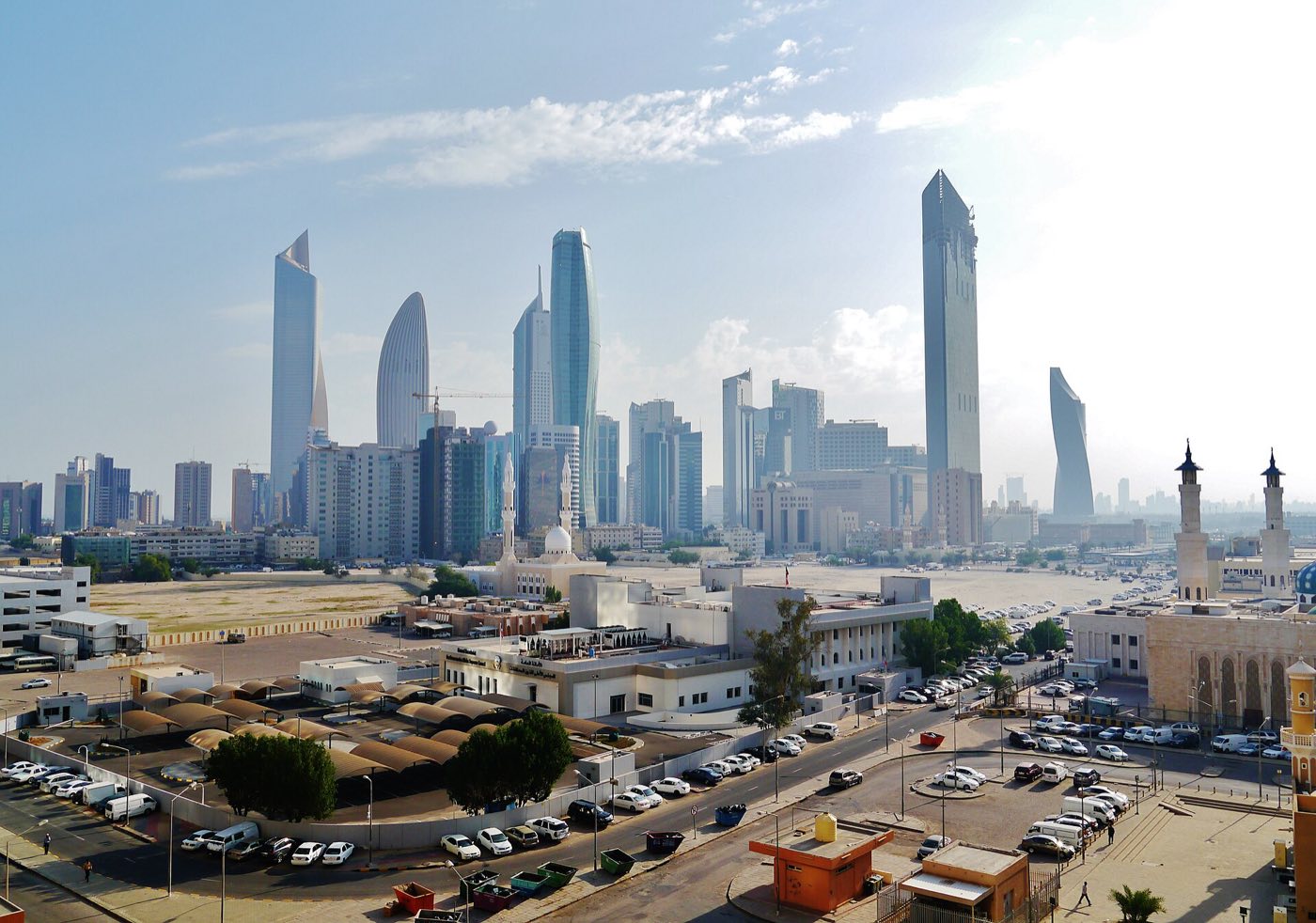
A small Gulf state at the head of the Persian Gulf, Kuwait packs the world's sixth-largest proven oil reserves, one of the planet's highest standards of living, and a proud Bedouin cultural heritage into a country smaller than New Jersey. Its coastline runs a few hundred kilometers along warm, shallow water; its interior is flat desert that ripples briefly into low ridges near the Iraqi and Saudi borders. Almost the entire 4-million population lives within sight of the sea. Kuwait City is the country — more than 90% of the population lives in the capital and its suburbs. The skyline along the Gulf Road is a neat row of glass towers and the unmistakable blue-and-green Kuwait Towers, with the older coral-stone quarters of Sharq and Mirqab sitting behind them. You will notice quickly how much of life happens indoors: The Avenues mall is practically a city in itself, and from May through September the heat outside regularly pushes past 50°C, making air-conditioning less a comfort than a survival tool. Come in the cool months and the country reveals another side — winter camping in the desert, dhow cruises in the Gulf, and the long, lazy weekends in beachside chalets that Kuwaitis consider essential. Kuwait rewards travelers interested in Gulf history, the Iraqi invasion of 1990 and the liberation that followed, and contemporary Gulf urbanism on a quieter and more navigable scale than Dubai or Doha. It is conservative but not austere — alcohol is prohibited, dress is modest in public (especially outside hotels and malls), and Fridays are genuinely a religious day. English is widely spoken. Three or four days covers the city and its essential sites; a week with a rental car opens up the desert, Failaka Island, and a proper taste of the cooking, which is one of the finest in the Gulf.
Things to Do
Kuwait Towers observation deck
The country's most recognizable landmark, completed in 1979 and pockmarked with restoration scars from Iraqi shelling in 1991, the three towers rise 187 meters over the Gulf at the northern end of the Corniche. The largest tower holds a rotating restaurant at 123 meters and a viewing deck 60 meters above that — a full 360 over Kuwait City, the bay, and (on clear days) the outline of Failaka Island. Go at sunset when the light does most of the work, and have the buffet or a drink in the rotating room if you have an hour to spare.
Grand Mosque of Kuwait
The largest mosque in the country can hold 10,000 worshippers in its main prayer hall under a 26-meter dome lined with carved Arabic calligraphy. Non-Muslim visitors are welcome on the free guided tours that run Sunday through Thursday mornings — an hour that takes you through the main hall, the women's section, and the central courtyard with unhurried explanation of architecture, ritual, and the role of the mosque in Kuwaiti public life. Dress conservatively; abayas and head coverings are provided at the entrance for women who need them.
The Avenues mega-mall
At over 1.2 million square meters across nine themed districts, The Avenues is one of the largest shopping malls on earth and a genuine cultural phenomenon in Kuwait — this is where families spend Thursday evenings and Friday afternoons, where restaurants open outposts, where the summer heat is dodged. The Grand Avenue district is designed to mimic a European street. International brands and Kuwaiti designers are side by side, and the restaurant scene is better than the shopping — try Khyber (Indian), Burger Boutique (Kuwaiti-founded), or a sit-down Arabic coffee at one of the Gahwah houses.
Souk Al-Mubarakiya traditional market
The oldest market in Kuwait City, parts of which date to before oil, Souk Al-Mubarakiya sells spices, textiles, gold, dates, incense, and the sweets and savories Kuwaitis have eaten for generations. Go in the late afternoon when the heat drops and the market fills with locals. The food court area on the southern side is the real draw — grilled fish, harees (a wheat-and-meat porridge that is a Ramadan staple), sweet luqaimat dumplings, and cardamom coffee served from long-spouted dallah pots. A proper dinner for two runs under 10 KWD.
Kuwait National Museum
Partially burned and looted during the Iraqi occupation of 1990–91 and slowly rebuilt since, the National Museum houses the extraordinary Al-Sabah Collection of Islamic art — ceramics, metalwork, textiles, and calligraphy spanning the Islamic world from Spain to China. The building itself bears scars from the invasion that are part of the story. The adjacent planetarium is worth combining on the same ticket, and the small boat harbor outside holds replica Kuwaiti dhows and pearling vessels that were the economic backbone of the country before oil was discovered in 1938.
Failaka Island archaeological ruins
A ferry from Salmiya harbor gets you to Failaka Island in the Gulf in about 90 minutes — an excursion that takes in the ruins of a Greek settlement (Ikaros, founded by Alexander the Great's fleet), a Bronze Age Dilmun temple, and the ghost-town remains of the Kuwaiti village abandoned during the 1990 invasion and never resettled. The island is part open-air museum, part memorial, and part beach day. Guided tours are available at weekends; self-directed visits work with a rental buggy and a few hours. Bring sun cover and water — shade is limited.
Al Shaheed Park and memorial
Opened in 2015, Al Shaheed Park is the largest urban park in Kuwait and an elegant modern public space built over what had been derelict land at the edge of the old city walls. Two museums on site handle the 1990 invasion and liberation history with sophistication — the Memorial Museum uses recreated scenes and oral-history audio to walk you through the seven months of occupation. The park itself is a pleasant cool-weather walk, especially at sunset, with a lake, running paths, and several small cafés along its length.
When to Go
November through March is the realistic travel window — comfortable outdoor temperatures in the low 20s°C, cool evenings, and clear blue skies over the Gulf. December and January are the coolest months, perfect for desert camping, beach chalets, and exploring Failaka Island. April and October are shoulder months with manageable heat in the high 20s to mid-30s. May through September is dangerously hot, with daytime highs regularly over 45°C and occasional peaks above 50°C in July; visiting then is viable but means living indoors between early morning and late evening. Ramadan (which shifts annually) changes restaurant hours and public eating rules significantly.
Getting Around
Kuwait's compact size makes travel easy — nowhere in the country is more than a 90-minute drive from the capital. Renting a car is the most practical option for getting beyond the city; roads are wide, well-signed, and modern, though local driving styles skew aggressive. Careem and Uber both operate in Kuwait City and are reliable and cheap for short trips — a ride across town costs 1–3 KWD. Public buses run by KPTC cover the capital at very low fares, but stops are sparse and service is geared to expat workers rather than visitors. There is no metro or passenger rail. Taxis are everywhere; agree a fare before getting in or insist on the meter.
Cost & Currency
Kuwait uses the dinar (KWD), one of the world's highest-value currencies at roughly 3.25 US dollars to the dinar — so mental arithmetic matters. Kuwait is expensive by regional standards but cheaper than Dubai or Doha for hotels and dining. Expect 30–80 KWD ($100–$260) a night for a mid-range hotel, 5–15 KWD for a proper lunch at a casual restaurant, and 20–40 KWD for a good dinner for two. Cards are accepted everywhere; cash is useful at Souk Al-Mubarakiya and for taxis. Tipping is not traditional but has become common in tourist-facing venues — round up or leave 10% for good service. Alcohol is prohibited and not available anywhere in the country.
Frequently Asked Questions
- Do I need a visa to visit Kuwait?
- Citizens of the US, UK, EU, Canada, Australia, and about 50 other countries can obtain an e-visa online before travel, typically valid for 90 days and approved within a few days. A handful of nationalities can get visas on arrival. Check the official evisa.moi.gov.kw portal for the current list and fees.
- Is Kuwait safe for travelers?
- Yes — Kuwait has very low violent crime, a stable government, and a visible police presence in the capital. Solo female travelers report few issues beyond occasional staring; dressing modestly in public reduces attention. Road accidents are the genuine risk — driving standards are fast and the rate of serious crashes is high by international norms.
- Can I drink alcohol in Kuwait?
- No — Kuwait is fully dry. Alcohol is prohibited nationwide, not sold anywhere (no hotels, no restaurants, no airport duty-free arrivals hall), and importing it is illegal with serious penalties. Visitors expecting a beer with dinner need to adjust. Coffee and tea culture is strong and forms the social lubricant instead.
- What should I wear?
- Dress modestly in public — shoulders and knees covered for both men and women is the baseline, and women should carry a light scarf for mosque visits. Malls, hotels, and beach clubs are more relaxed; swimwear is fine at private beach clubs and hotel pools. Outside these contexts, conservative dress is respectful and avoids drawing attention.
- How many days do I need in Kuwait?
- Three full days is enough for the essential city — Kuwait Towers, the Grand Mosque, Souk Al-Mubarakiya, the National Museum, and an evening at The Avenues. A fourth day lets you add Failaka Island, and a week opens up desert camping and a proper exploration of Kuwaiti food. Many visitors combine Kuwait with a few days in Bahrain, Doha, or Dubai.
Plan a Trip to Kuwait
Have you been to Kuwait?
Track 195 countries, 50 states & 63 national parks on your map