North Korea
- Capital
- Pyongyang
- Population
- 26.1M
- Currency
- KPW
- Languages
- Korean
Overview
The Democratic People's Republic of Korea is the most tightly controlled country a foreign visitor can enter, and a trip there bears almost no resemblance to travel anywhere else on earth. You do not book flights, hotels, or routes yourself. You book a tour — typically 4 to 10 days, almost always through one of a handful of operators based in Beijing — and your itinerary is set by the DPRK's state tourism authority months in advance. Two Korean guides accompany your group everywhere, you stay in a small number of approved hotels, and you photograph only what you are told you can photograph. What you see is Pyongyang and a handful of set-piece destinations: the Juche Tower and Kim Il-sung Square, the Mansudae Grand Monument bronzes of the Kim leaders, the Kumsusan Palace of the Sun where the bodies of Kim Il-sung and Kim Jong-il lie in state, the DMZ at Panmunjom from the northern side. In autumn you may see the Mass Games — 100,000 performers executing synchronized card displays in Rungrado May Day Stadium. You will visit the Pyongyang Metro, tour a state-run farm, eat at restaurants where other tourists eat, and drink Taedonggang beer at the Yanggakdo Hotel bar. A few things to understand clearly before you consider this. Since 2017, US passport holders have been banned from traveling to the DPRK under a State Department restriction — the ban has been renewed annually and remains in force. Even travelers from other countries should weigh the 2016 detention and death of Otto Warmbier, and accept that you are funding a regime with one of the worst human rights records in the world. The country has also been closed to foreign tourism for most of the period since early 2020 owing to COVID border controls; check whether tours are currently operating before planning anything.
Things to Do
Pyongyang's Juche Tower and Kim Il-sung Square
The 170-meter Juche Tower stands on the east bank of the Taedong River, topped by a red metal flame and built in 1982 for Kim Il-sung's 70th birthday. Your guides will take you to the top for the panorama over Pyongyang — the May Day Stadium, the Ryugyong Hotel pyramid, the ordered blocks of pastel apartment buildings. Across the river is Kim Il-sung Square, the vast ceremonial plaza where military parades and mass rallies are held, bordered by the Grand People's Study House and the ministry buildings that form the political center of the country.
Mass Games performance (seasonal)
When the Mass Games are running — typically in specific windows between August and October, though the schedule has been intermittent since the late 2010s — it is unlike any performance you will see anywhere else. Somewhere around 100,000 performers execute synchronized gymnastics, dance, and card displays in the Rungrado May Day Stadium, the flip-card backdrop forming enormous moving murals that narrate DPRK history. Tickets are tiered by section and sold through your tour operator. Confirm current year status before building a trip around them.
DMZ and Joint Security Area at Panmunjom
From the north side, the Korean Demilitarized Zone feels entirely different than from the south. You ride a bus from Kaesong through checkpoints, receive a briefing from a KPA officer in front of a large map, and walk out to the blue huts on the Military Demarcation Line — the same huts visitors from Seoul will be looking at from their side the same week. You are in theory meters from American and ROK soldiers. The north's version of the Korean War narrative is delivered with considerable emphasis.
Kumsusan Palace of the Sun
The former presidential palace, now the mausoleum where the embalmed bodies of Kim Il-sung and Kim Jong-il lie in state, is the most solemn stop on any itinerary. You walk through airlock doors, rides on moving walkways past exhibits of their medals and personal effects, and file through marble halls to pay respects. Dress code is strictly enforced — formal wear, no cameras, no backpacks — and guides will brief you in detail on the required bows. It is intense and not optional for most tours.
Mansudae Grand Monument
The 22-meter bronze statues of Kim Il-sung and Kim Jong-il overlooking central Pyongyang are the symbolic heart of the regime's personality cult, and most tours begin here on the first morning. Your group will be asked to buy flowers from a state-run vendor at the foot of the hill and lay them at the base of the statues, then line up and bow together. Photographs are permitted only of the full statues — cropping either leader mid-body is a serious offense.
Mount Myohyang and International Friendship Exhibition
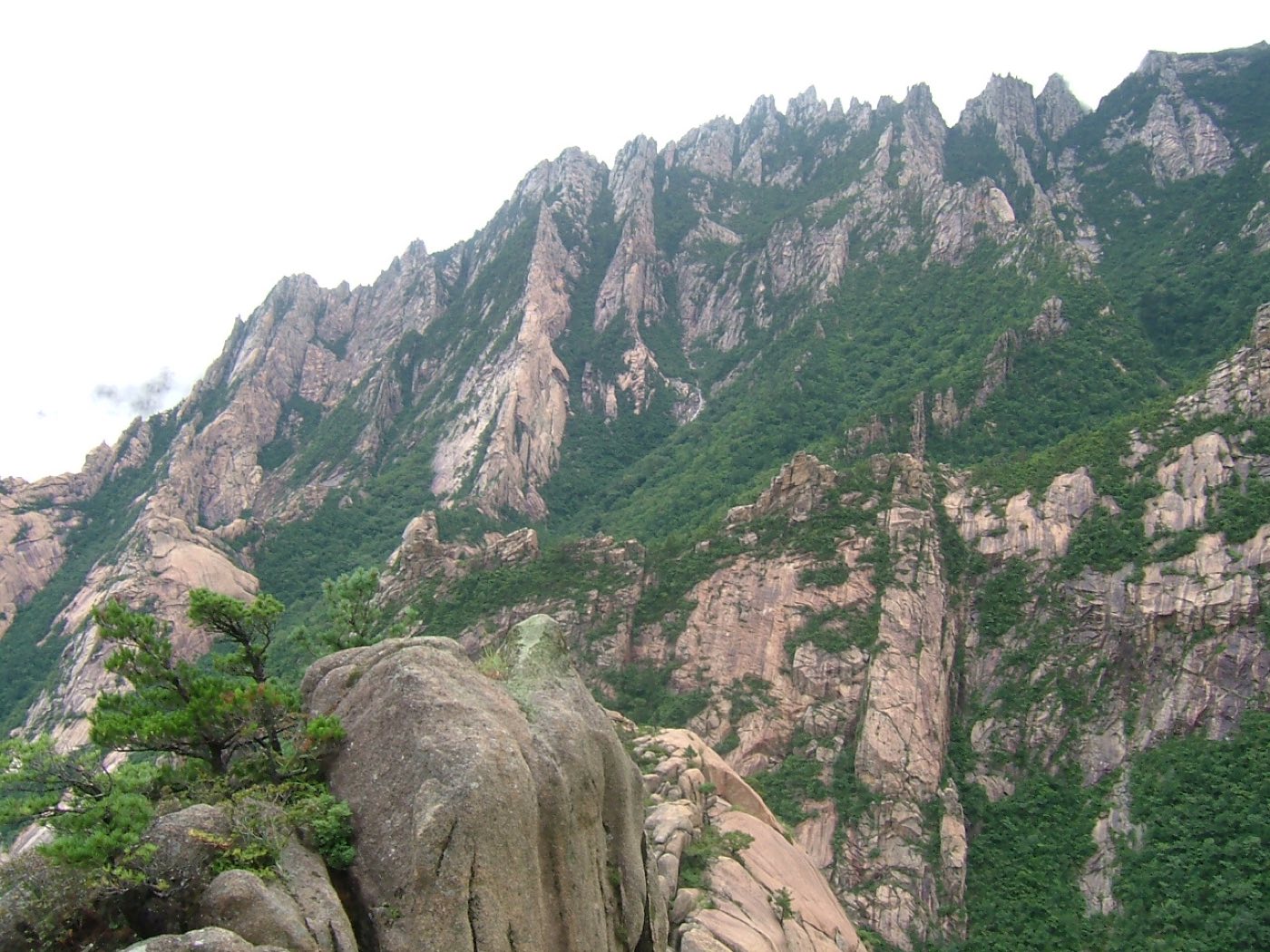
Two hours north of Pyongyang, Mount Myohyang is a genuinely beautiful forested range and the site of the International Friendship Exhibition — two enormous museum complexes built into the mountainside holding the gifts foreign leaders and groups have presented to the Kim family since 1948. You slip on overshoes and walk through hall after hall of armored limousines, jeweled swords, stuffed animals, and the signed basketball from Madeleine Albright. It is strange and worth seeing for the sheer scale of it.
Kaesong old town and border area
Kaesong, the old capital of the Koryo dynasty from 918 to 1392, sits right up against the DMZ and is the one place you will see something that resembles a historic Korean town — traditional tiled-roof courtyards, a Confucian academy, royal tombs. You usually stop here for lunch en route to or from Panmunjom, and overnight stays in a restored hanok-style guesthouse are possible on longer itineraries. It is the quietest and most human-scaled stop on a typical tour.
When to Go
September and October are the best months — cool, clear, and aligning with the anniversary of the regime's founding on September 9 when Pyongyang is at its most ceremonial, and with the historical Mass Games season. April and May bring pleasant spring weather around Kim Il-sung's April 15 birthday (the Day of the Sun), when celebrations peak. Summer is hot, humid, and thunderstormy. Winter is brutally cold — Pyongyang routinely drops below -10°C and many outdoor sites become uncomfortable. Always verify the country is currently open to foreign tourism before planning anything; it has been closed for much of the period since early 2020.
Getting Around
You do not get yourself around in North Korea. From the moment you cross the border from China — by Air Koryo flight or the Beijing-Pyongyang train — you are with your group, your two guides, and a bus driver, and that configuration does not change until you leave. Itineraries move you between Pyongyang, Kaesong, Mount Myohyang, and occasionally Wonsan or Mount Kumgang on a fixed schedule. Independent movement outside the hotel is not permitted, including short walks. Guides are with you at meals. Photography rules are strict — no construction sites, no military personnel, no leader statues from the waist up only — and your phone and camera may be checked on entry and exit.
Cost & Currency
Tourists do not handle North Korean won. Everything on your tour is pre-paid in euros, US dollars (from non-US travelers), or Chinese yuan through your Beijing-based operator, and incidental spending at hotel shops and restaurants is taken in the same currencies. Tours themselves are expensive for what you get: budget around €1,500–€2,500 per person for a standard 5-day group tour including train in and flight out of Pyongyang, plus Chinese visas and accommodation in Beijing at either end. Tipping guides and drivers in cash at the end of the tour is expected — your operator will advise amounts, typically €5–€10 per guide per day per traveler. Keep small euro notes for the Paradise Department Store and hotel bars.
Frequently Asked Questions
- Can Americans travel to North Korea?
- Not legally on a US passport. The US State Department imposed a geographic travel restriction on North Korea in September 2017 following the death of Otto Warmbier, and that restriction has been renewed every year since — US passports are not valid for travel to, in, or through the DPRK without a special validation that is essentially never granted. The ban remains in force. Travelers from most other countries are not subject to the same restriction.
- How do I actually book a trip to North Korea?
- Through a specialist tour operator based in Beijing — Koryo Tours, Young Pioneer Tours, and Uri Tours are the best known. You book a tour, not a flight or hotel, and the operator handles the DPRK visa (issued as a separate paper document you do not keep), the itinerary, the guides, and transport. You are responsible for getting yourself to Beijing and back. Confirm current operating status, as border closures have been common since 2020.
- Is it safe to visit North Korea?
- Physical crime risk is very low — the country is tightly policed and foreign tourists are closely monitored. The real risk is legal: laws are broad, vaguely defined, and enforced at the discretion of the state, and minor acts like folding a newspaper with a leader's photo have led to detentions. Follow your guides' instructions exactly, photograph only what they say you can, and do not take anything printed with a leader's image. Otto Warmbier's case is the worst-known example of what can go wrong.
- Will I get a DPRK stamp in my passport?
- No, by default — the DPRK visa is issued on a separate paper that is collected at exit, and no stamp is placed in your passport. This is by design so that future travel to South Korea, the US, and other countries is not complicated. If you specifically want a stamp as a souvenir, your guides can sometimes arrange it, but most travelers decline given the downstream visa headaches it can create.
- What can I photograph in North Korea?
- Ask your guide before you point the camera at anything. Permitted: official monuments, approved tourist sites, your group. Not permitted: construction, military personnel or vehicles, soldiers at the DMZ, portraits of the leaders from anything other than a full frontal angle (no cropping, no back of the head), checkpoints, airports beyond the terminal. Guides will check your camera and phone on departure and you may be asked to delete images. When in doubt, do not shoot.
Plan a Trip to North Korea
Have you been to North Korea?
Track 195 countries, 50 states & 63 national parks on your map