Russia
- Capital
- Moscow
- Population
- 144M
- Currency
- RUB
- Languages
- Russian
Overview
The world's largest country spans eleven time zones, from the Baltic to the Pacific, and holds within its borders Lake Baikal, the Trans-Siberian Railway, Kamchatka's volcanic frontier, and one of the greatest art collections ever assembled. Travelers who make it come for the Hermitage's astonishing trove in St. Petersburg, Red Square at snowfall, and the sheer scale of crossing a continent by train. The travel reality since 2022 is complicated. Western sanctions mean American and European payment cards do not work inside Russia — no Visa, no Mastercard, no Apple Pay — and you will need to bring cash euros or dollars to exchange, or work with a guide who handles payments. Direct flights from most Western countries no longer run; routes now go through Istanbul, Dubai, Yerevan, or Belgrade. The war in Ukraine has closed the regions bordering it to civilian travel, and US, UK, and Schengen citizens face a slower, more expensive visa process than before, typically requiring a letter of invitation and an in-person appointment at an embassy. For travelers who do go, the experience is quieter than it was pre-2022. Moscow and St. Petersburg function normally and remain remarkable, the Trans-Siberian still runs, and prices in dollar terms are actually lower than they have been in years. Check your own government's travel advisory carefully — advice for US and UK citizens in particular warns against travel — and understand the insurance, consular, and financial limits before you commit.
Things to Do
Hermitage Museum in St. Petersburg
Catherine the Great's winter palace turned museum holds more than three million objects across six connected buildings — you could spend a full day and see perhaps two percent of the collection. Aim first for the Rembrandt rooms, the Italian Renaissance galleries, and the French Impressionist and early 20th-century wing on the top floor, which includes major Matisse and Picasso canvases. Buy tickets online in advance and enter as early as possible; by afternoon the tour groups stack up in the Jordan Staircase.
Red Square and the Kremlin in Moscow
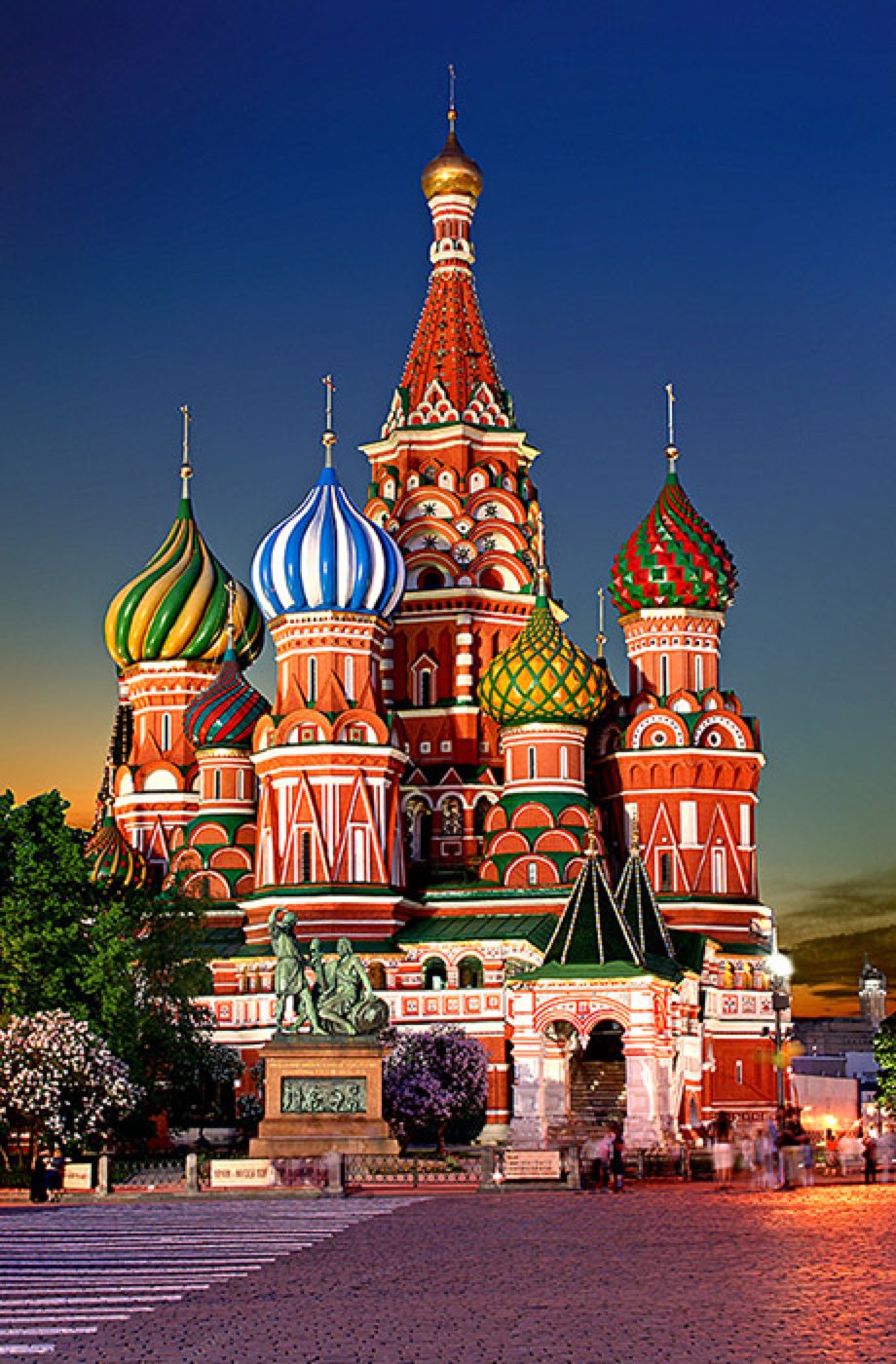
The cobbled expanse at Moscow's center is flanked by St. Basil's candy-striped domes, the red-brick walls of the Kremlin, Lenin's mausoleum, and the GUM department store's Belle Époque glass roof. The Kremlin itself is a walled complex of cathedrals, palaces, and armories that functioned as the seat of tsars and now houses Russia's government — separate tickets get you into the Armoury Chamber (regalia and Fabergé eggs) and the Diamond Fund. Go at dusk for the best light on St. Basil's.
Trans-Siberian Railway journey
The classic route from Moscow to Vladivostok covers 9,289 kilometers in seven days; most travelers break it into stages with stops at Yekaterinburg, Irkutsk (for Lake Baikal), and Ulan-Ude. Second-class kupe compartments sleep four and are the realistic choice — you'll share them with Russian families, soldiers, and businesspeople, drink tea from the samovar at the end of the carriage, and watch birch forests replace steppe replace taiga outside the window. Book via RZD's official website; it takes foreign cards at purchase even while domestic ones don't.
Lake Baikal — the world's deepest lake
A 636-kilometer crescent in southeastern Siberia that holds about 20% of the planet's unfrozen freshwater, reaches 1,642 meters deep, and freezes solid from January through April. In summer you'll visit from Listvyanka or Olkhon Island by minibus, hike stretches of the Great Baikal Trail, and eat smoked omul fish from lakeside stalls. In winter you can drive and walk on the ice, see the turquoise pressure cracks, and ride ekranoplan-style hovercraft across to the islands.
St. Basil's Cathedral in Moscow
Ivan the Terrible's 1561 cathedral on the southern end of Red Square is actually nine separate chapels joined around a central tower, each with its own onion dome painted in different patterns and colors. The interior is cramped, dim, and a surprise after the carnival exterior — narrow passageways connect small chambers covered in 16th- and 17th-century iconography. Go early on a weekday to avoid the tour groups; the cathedral is compact and fills quickly.
Peterhof Palace fountains near St. Petersburg
Peter the Great's answer to Versailles sits on the Gulf of Finland 30 kilometers west of St. Petersburg, with a cascade of gilded fountains running down to the sea from the Grand Palace. The fountains work by gravity alone, fed from springs 20 kilometers inland, and are switched on with a daily ceremony at 11 AM from May through October. Take the hydrofoil from near the Hermitage for the best approach — the palace emerges from the gulf as you come in.
Kamchatka Peninsula volcanoes and bears
A 1,250-kilometer peninsula on Russia's Pacific edge with more than 160 volcanoes, 29 of them active, plus the largest brown bear population in Eurasia and the salmon runs that feed them. This is serious expedition territory — you fly in from Moscow (nine hours), base yourself in Petropavlovsk-Kamchatsky, and reach the good stuff by helicopter, including the Valley of the Geysers and Kurile Lake for bear watching. Summer (July–August) is the only realistic window.
Golden Ring historic towns
A loop of medieval towns northeast of Moscow — Sergiev Posad, Rostov Veliky, Yaroslavl, Suzdal, and Vladimir among them — preserving Russia's pre-Petrine architectural heritage in whitewashed kremlins and onion-domed cathedrals. Suzdal is the most picturesque, a UNESCO-listed village where wooden cottages and thirty churches share a gentle river valley. You can do a two-day driving circuit from Moscow or an easier train-based trip to Vladimir and Suzdal in 36 hours.
When to Go
May through September is the main travel season, with long daylight and the White Nights in St. Petersburg peaking around June 21 — the city stays light until nearly midnight and hosts a festival of concerts and drawbridge openings. July and August are warmest and busiest, particularly for the Trans-Siberian and Baikal. Winter has its own case: Moscow and St. Petersburg under snow are genuinely cinematic, Lake Baikal's ice is one of the great natural spectacles from February to early April, and prices and crowds are at their lowest. Avoid November and April — they're grey, slushy, and neither fully winter nor summer.
Getting Around
Russia's rail network is the backbone of long-distance travel — fast Sapsan trains cover Moscow to St. Petersburg in about four hours, and overnight sleepers reach anywhere on the European side comfortably. Book through RZD's official website, which accepts foreign cards at purchase even though most Russian sites no longer do. Moscow and St. Petersburg have excellent metros — clean, deep, frequent, and famous for their Stalin-era station architecture. Domestic flights on Aeroflot, S7, and Utair cover the longer jumps to Kamchatka or Vladivostok. Ride-hailing works through Yandex Go, which still accepts foreign cards booked via its international web interface.
Cost & Currency
Russia uses the ruble (RUB), and since 2022 Western Visa, Mastercard, American Express, Apple Pay, and Google Pay do not work inside the country — this is the single most important practical fact. Bring cash euros or US dollars (crisp, post-2013 bills) and exchange at banks in Moscow or St. Petersburg; carry enough for your whole trip plus a buffer. Chinese UnionPay cards sometimes work at major banks. Prices in dollar terms are low: a metro ride costs about 50 cents, a sit-down lunch of borscht and pelmeni runs 600–1,200 rubles (roughly $6–$13), and a comfortable mid-range hotel room is 4,000–8,000 rubles. Tipping is modest, 10% at sit-down restaurants if service isn't already included.
Frequently Asked Questions
- Can I still travel to Russia as a tourist in 2026?
- Yes, but the process is harder than before 2022. US, UK, and Schengen citizens need a full tourist visa with a letter of invitation and usually an in-person embassy appointment, and direct flights from most Western countries no longer operate — you'll route through Istanbul, Dubai, Yerevan, or Belgrade. Check your own government's travel advisory before booking, as several advise against travel.
- Do Western credit cards work in Russia?
- No. Since 2022, Visa, Mastercard, American Express, Apple Pay, and Google Pay issued outside Russia do not work anywhere in the country — ATMs, hotels, restaurants, or online. Bring enough cash in euros or US dollars for your whole trip and exchange at major banks. Chinese UnionPay cards sometimes work at Sberbank and VTB, which is worth knowing if you can get one.
- Is Russia safe for tourists?
- Moscow and St. Petersburg have low violent crime and function normally for visitors, and petty crime is no worse than other major European capitals. The regions bordering Ukraine — Belgorod, Kursk, Bryansk, Rostov, and all of Crimea — are off-limits and have seen direct attacks. Several Western governments advise against all travel to Russia; check your own advisory and be aware your consular support and insurance coverage may be limited.
- What's the best way to start a Russia trip?
- Spend your first nights in St. Petersburg to adjust, then take the Sapsan high-speed train to Moscow (about four hours, frequent service). A week split between the two cities is the classic introduction. If you want to add the Trans-Siberian or Lake Baikal, budget another ten days minimum and book a trusted local agency to arrange tickets and accommodation, given the payment complications.
- Do people speak English in Russia?
- In tourist-facing hotels, restaurants, and museums in Moscow and St. Petersburg, yes — often quite well. Outside those bubbles, English is rare and Cyrillic-only signage is the norm. Download an offline translation app, learn the Cyrillic alphabet well enough to read metro stations and menus, and consider hiring a guide for the Trans-Siberian and anywhere east of the Urals.
Plan a Trip to Russia
Have you been to Russia?
Track 195 countries, 50 states & 63 national parks on your map