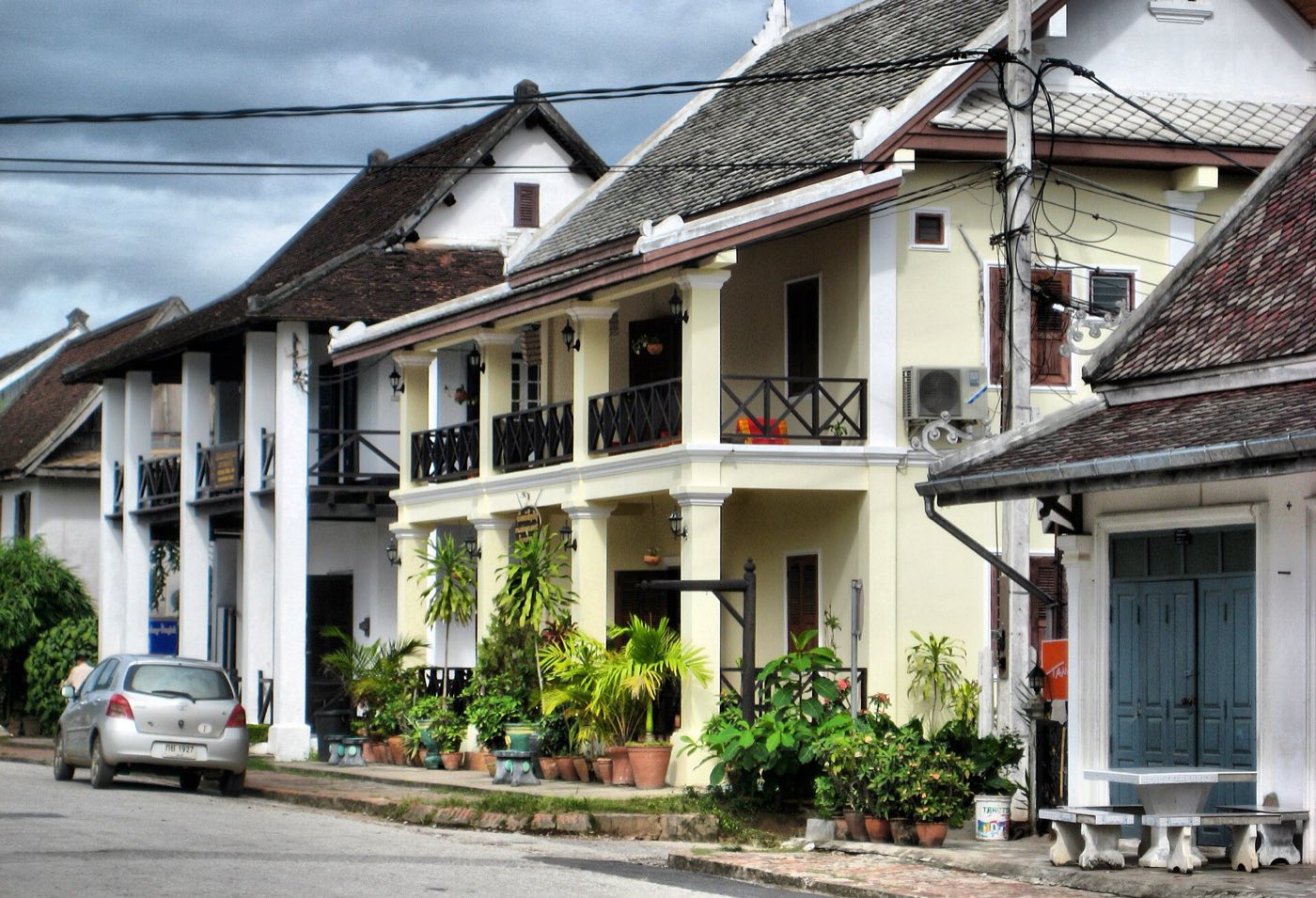
Laos
- Capital
- Vientiane
- Population
- 7.6M
- Currency
- LAK
- Languages
- Lao
Overview
Landlocked between Thailand, Vietnam, China, Myanmar, and Cambodia, Laos is the quietest country in Southeast Asia and the one that most stubbornly keeps its own pace. The Mekong runs the length of it, carving a low corridor between jungled limestone ridges, and for most travelers the river is the thread that holds the trip together — Luang Prabang in the middle north, Vientiane's low-rise riverfront capital, the southern rapids at the four-thousand-islands delta. The feel of the country is what gets you. Mornings in Luang Prabang begin before dawn with barefoot monks in saffron robes walking the streets to receive sticky rice from kneeling townspeople; evenings end with Beerlao on a wooden deck above the river as the sun drops behind the Thai hills across the water. In between, the schedule softens — banks close at four, temples open to anyone who wanders in, and the national attitude toward hurry is politely skeptical. Laos rewards travelers willing to slow down. Distances are short on a map but long on the ground, roads are often mountain switchbacks, and overnight buses are a tradition rather than a last resort. The reward is a country still finding its footing as a destination, where a week-long Mekong cruise, a motorbike loop on the Bolaven Plateau, or a few days doing nothing in Luang Prabang all deliver the same essential thing: the last unhurried corner of mainland Southeast Asia.
Things to Do
Luang Prabang's morning alms-giving ceremony
Every morning at around 5:30, several hundred Theravada Buddhist monks from the city's working monasteries walk silent routes through the old town to receive sticky rice and small gifts from kneeling laypeople along the curbs. The ceremony (tak bat) has been photographed to death and commercialized at the margins, but it remains a genuine daily religious practice for the sangha and the townspeople, not a show. If you participate, do it through your guesthouse or a temple contact rather than buying rice from street vendors — and stay quiet, keep your distance, and do not block the monks' path. Afterwards walk across to the morning market for coffee and grilled bananas.
Kuang Si Waterfalls turquoise pools
Thirty kilometers south of Luang Prabang, the Kuang Si cascade falls in tiers over limestone terraces into a series of pools the color of jade — travertine mineral deposits producing that unreal blue. The main drop is about fifty meters; smaller pools below it are open for swimming, with wooden platforms and ropes to jump in from. The adjacent bear rescue sanctuary cares for moon bears confiscated from bile farms and is worth fifteen minutes. Go early, before the tuk-tuk convoys arrive from town — you will have the upper pools mostly to yourself until about ten in the morning.
Plain of Jars archaeological site
On the Xiengkhuang plateau near Phonsavan, thousands of hewn stone jars — some over two meters tall, most at least a thousand years old — lie scattered across several sites in what is one of Southeast Asia's strangest archaeological puzzles. Theories involve funerary urns, lao-lao rice wine brewing vats, and megalithic trade markers; no one has conclusively proved any of them. The same plateau was among the most heavily bombed regions on earth during the Second Indochina War, and visible craters still mark the hillsides. Guides walk you along marked safe paths, because unexploded ordnance is a real concern off-trail. Allow a day to see Sites 1, 2, and 3.
Vang Vieng kayaking and karst scenery
Between Vientiane and Luang Prabang, Vang Vieng sits in a valley surrounded by towering karst limestone, the kind of ridge-fingered landscape that belongs in a Chinese scroll painting. The town went through a rowdy tubing phase in the 2000s and has recovered into a mellower base for kayaking the Nam Song River, cycling through rice paddies to the Blue Lagoon swimming holes, and hot-air ballooning at sunrise. Allow two nights — one for the activity day, one for a long dinner on a riverside deck watching the karsts turn copper at dusk.
Pak Ou Caves on the Mekong
A two-hour longtail boat ride upstream from Luang Prabang brings you to two caves in the face of a limestone cliff at the mouth of the Ou River, stacked with more than four thousand Buddha figurines left as offerings over the centuries by pilgrims. The lower cave is lit by daylight through its wide mouth; the upper cave needs a torch and is the more atmospheric of the two. Most trips combine the caves with a stop at Ban Xang Hai, the village where traditional lao-lao rice whiskey is distilled in open-air stills. It is a half-day out and a worthwhile one.
Bolaven Plateau coffee plantations and waterfalls
In southern Laos above Pakse, the Bolaven Plateau rises to about 1,300 meters — cool, green, and covered in arabica coffee farms alongside thundering waterfalls that drop off the plateau's edge. The classic way to see it is on a three-day motorbike loop from Pakse taking in Tad Fane (a twin cascade over 120 meters high), Tad Yuang, the coffee-producing villages around Paksong, and the ethnic minority market at Sekong. Rent a semi-automatic through a reputable shop, bring an international driving permit, and budget for one waterfall swim a day.
4,000 Islands (Si Phan Don) in the Mekong
Near the Cambodian border the Mekong splays into a thirteen-kilometer-wide braided channel of islands, sandbars, and rapids — the four thousand islands of Si Phan Don. Travelers base themselves on Don Det or the slightly quieter Don Khon: wooden bungalows over the river, hammocks, no traffic beyond bicycles, and longtail trips out to see the Khone Phapheng Falls (Southeast Asia's largest by volume) or the handful of Irrawaddy dolphins that still work the pool near the Cambodian border. Two or three nights is the sweet spot before the hammock absorbs you.
When to Go
November through February is the clear main season, with cool mornings, dry days, and low humidity — perfect for temple wandering in Luang Prabang and river travel on the Mekong. Temperatures climb sharply through March and April, and by mid-April the smoke from regional agricultural burning hazes much of the north; if visibility matters, avoid those weeks. The southwest monsoon from May through October greens the country spectacularly and drops prices, but mountain roads wash out and waterfalls become opaque with silt. The Pi Mai Lao New Year in mid-April is the single biggest festival — a three-day water fight that brings the country to a standstill.
Getting Around
The new China-Laos high-speed railway has transformed domestic travel — Vientiane to Luang Prabang used to take ten hours by road and now takes two by train, with onward service to Boten on the Chinese border. Book a day or two ahead through the LCR Ticket app or a guesthouse. Beyond the rail line, distances are covered by long-distance bus and by shared minivan (sawngthaew in the countryside); night buses between the main cities are a Laos institution and the berths are surprisingly comfortable. Domestic flights on Lao Airlines connect Vientiane, Luang Prabang, and Pakse in about an hour. For the Bolaven Plateau loop or the north's rural circuits, a rented 125cc semi-automatic motorbike is the standard approach — bring your international driving permit.
Cost & Currency
Laos uses the kip (LAK), which has been volatile in recent years — check the current rate before you arrive. Budget travelers get by on 300,000–400,000 kip a day (roughly fifteen to twenty dollars): a bowl of khao soi or laap at a local restaurant is 25,000–40,000 kip, a Beerlao draft about 15,000, and a river-view bungalow in Don Det 80,000–150,000. Mid-range travel runs 80–120 US dollars a day with better hotels, private transport, and sit-down dinners at French-influenced restaurants. US dollars and Thai baht are accepted in tourist areas but always at worse rates than kip; withdraw kip from ATMs in Vientiane, Luang Prabang, Vang Vieng, or Pakse. Cards work in upper-tier hotels; cash is the norm everywhere else. Tipping is not traditional — round up at sit-down restaurants and leave a few dollars a day for drivers and guides.
Frequently Asked Questions
- Do I need a visa to visit Laos?
- Most Western passport holders can get a visa on arrival at Vientiane's Wattay Airport, Luang Prabang airport, Pakse airport, and the main land borders from Thailand, Vietnam, and China. The fee is thirty to forty-five US dollars depending on nationality, paid in cash (USD preferred) with two passport photos; the visa is valid for thirty days and extendable at immigration offices. An e-visa is also available through the official Lao government portal and saves you the queue at the border.
- Is Laos safe for travelers?
- Yes, for the standard traveler routes Laos is among the safest countries in Southeast Asia, with low violent crime and a generally mellow atmosphere. The major concern is unexploded ordnance in rural areas that saw heavy US bombing during the Second Indochina War — in Xiengkhuang province around the Plain of Jars especially, stay on marked paths and never pick up or dig up unfamiliar metal. Motorbike accidents on the Bolaven loop or the northern mountain roads are the most common serious injury for visitors; wear a helmet and do not drink and ride.
- How many days do I need in Laos?
- A tight first trip can do Luang Prabang and Vang Vieng in five days; a better one adds Vientiane and stretches to seven or eight. For a proper look — including the Plain of Jars in the north and either the Bolaven Plateau or the 4,000 Islands in the south — budget two full weeks and plan for long travel days between regions. Overland travel eats time in Laos and the best memories come from not rushing.
- Can I take a Mekong slow boat from Thailand?
- Yes, the two-day Mekong slow boat from Huay Xai (at the Thai border crossing from Chiang Khong) downriver to Luang Prabang is a classic arrival. You spend two full days on a wooden cargo boat watching the Mekong banks drift by, with an overnight stop in the river town of Pakbeng. Buy tickets directly at the Huay Xai pier for about twenty-five US dollars; there is a pricier tourist version run by Luang Say Cruises if you want more comfort. Fast boats on the same route exist and are dangerous — avoid them.
- Is the food spicy in Laos?
- It can be. Laap, the national dish of minced meat with lime juice, herbs, roasted rice powder, and chili, is typically served with fresh bird's-eye chilies on the side — adjust to taste. Tam maak hoong (green papaya salad) comes in a Lao version that is usually hotter than its Thai cousin. The cooling counterweights are sticky rice (eaten by hand, rolled into balls), khao soi noodle soup in the north, and the strong French-influenced baguette sandwiches from any morning market. Ask for mai phet if you want it mild.
Plan a Trip to Laos
Have you been to Laos?
Track 195 countries, 50 states & 63 national parks on your map