Djibouti
- Capital
- Djibouti
- Population
- 1.1M
- Currency
- DJF
- Languages
- French, Arabic
Overview
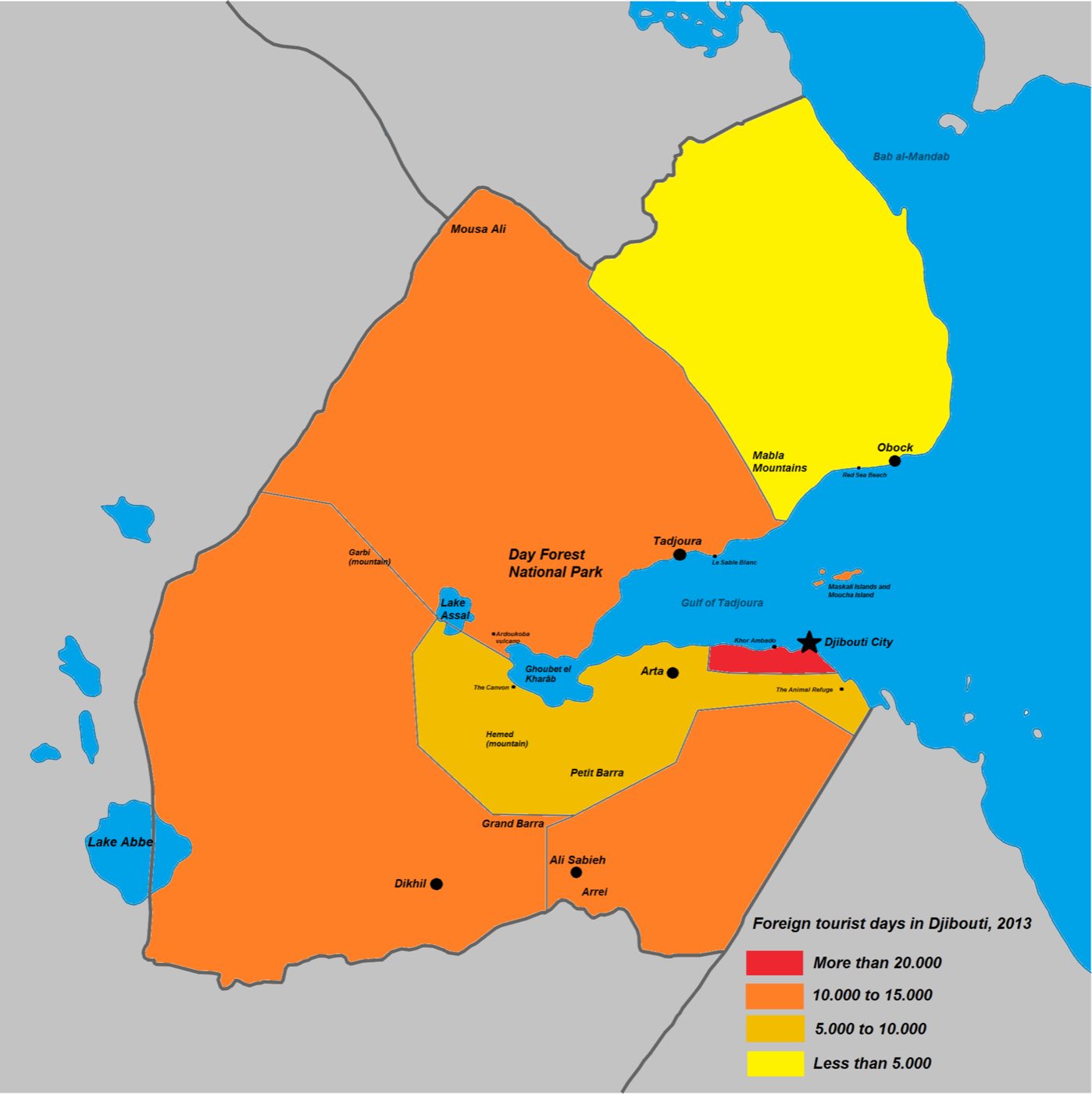
A small country wedged between Ethiopia, Somalia, and Eritrea at the mouth of the Red Sea, Djibouti runs on volcanic rock, salt plains, and hot wind. It is one of the least-visited nations in Africa and one of the strangest to look at — whole landscapes here feel closer to Mars than to the rest of the continent. You arrive at the capital, which shares the country's name, and the first thing you notice is the heat. For much of the year it sits in the high thirties by mid-morning, and a proper afternoon in July or August will push past forty-five. Most travelers come for two things: whale shark season in the Gulf of Tadjoura from November through January, when juveniles gather to feed just off the coast, and the otherworldly terrain of Lake Assal and Lake Abbé inland — salt pans, limestone chimneys venting steam, flamingos on shallow water that turns pink at sunset. Djibouti works as a short, deliberate detour more than a primary destination. Four to six days covers what most visitors come for, often as a tack-on from Ethiopia or a Red Sea sailing itinerary. Infrastructure outside the capital is thin, roads run on one or two paved routes, and 4x4 with a driver is the norm for anything past Tadjoura. What you get in return is coastline without crowds and scenery that does not look like anywhere else you have been.
Things to Do
Whale shark snorkeling in the Gulf of Tadjoura
Between November and January, juvenile whale sharks gather in the shallow waters of the gulf to feed on plankton blooms, and boat tours from Djibouti City run you out for the day to drop in and swim alongside them. The animals are typically 4 to 8 meters long — the largest fish on earth — and in this feeding mode they move slowly enough that you can hold position next to them with fins and a mask. No scuba required; the action happens in the top five meters of water. Book with an operator that enforces responsible-encounter guidelines: no touching, no flash, reasonable boat numbers.
Lake Assal — Africa's lowest point and saltiest lake
A two-hour drive west of the capital drops you 155 meters below sea level to the edge of Lake Assal — a turquoise crater lake surrounded by a blinding white ring of salt, ten times saltier than the ocean. You can walk on the salt crust, pick up hand-sized crystal formations, and float effortlessly in the water the way people do at the Dead Sea. The drive itself crosses the Grand Bara desert and the Ardoukôba volcanic zone, a reminder that the African and Arabian plates are actively pulling apart beneath you. Go early — by mid-morning the glare off the salt is punishing.
Lake Abbé's limestone chimney formations
Deep in the southwest near the Ethiopian border, Lake Abbé is a shallow saline lake ringed by hundreds of limestone chimneys — some of them twenty meters tall — venting steam and hot water from the geothermally active ground. The landscape was used to film parts of the original Planet of the Apes. Flamingos gather in the shallow water by the thousand at sunrise and sunset, and the Afar nomads who herd camels and goats across this terrain still live much as they have for centuries. Plan an overnight in a simple traditional camp at Campement d'Asboley to catch dawn and dusk.
Moucha Island diving and snorkeling
A half-hour boat ride from Djibouti City, Moucha Island sits in the middle of the Gulf of Tadjoura with clear water, a healthy coral fringe, and reliable sightings of reef sharks, rays, and the occasional dolphin pod. The island itself is tiny, with a couple of simple beach bungalows and a restaurant that serves grilled fish and cold beer. You can come for the day or stay a night to catch sunrise — the combination of empty beach, clear water, and zero phone signal is the main draw.
Day Forest National Park
Up in the Goda Mountains northwest of Tadjoura, the Day Forest is a relict cloud-forest ecosystem — a small island of mist-cooled juniper and olive trees a thousand meters above the desert that surrounds it. It is one of the last refuges of the critically endangered Djibouti francolin, a ground bird found nowhere else on earth. Trails are short and unmarked; you go with a local guide from the village of Day. The drive up from Tadjoura alone is worth the trip, climbing from sea level through dry wadis into genuine mountain air.
Djibouti City's central market
The Marché Central is the commercial heart of the capital — crowded, loud, and the best place to get a feel for the mix of Afar, Issa, Yemeni, Ethiopian, and French influences that shape daily life here. You will find khat vendors (a legal stimulant leaf chewed throughout the Horn), gold merchants, textiles, dates, and whole live goats. Go in the morning before the heat takes hold, keep valuables close, and bring cash in small denominations. The neighborhoods around the market hold the best cheap Yemeni restaurants in the city.
Arta Beach and coral reefs
About forty minutes south of the capital, Arta Plage is the easiest real beach day in Djibouti — a stretch of protected sand with shallow warm water, a small coral reef just offshore, and a few simple beach restaurants serving grilled fish and cold drinks. The water stays warm year-round and visibility off the reef is usually excellent. Weekends bring Djiboutian families down from the city; weekdays you may have long stretches of beach largely to yourself.
When to Go
November through March is the only sensible window for most visitors — temperatures drop into the high twenties and low thirties, the humidity eases, and whale shark season runs from November through January in the Gulf of Tadjoura. By April the heat starts climbing, and June through September is brutal, with daily highs routinely above 40°C and the khamsin wind pushing fine dust through everything. The cool months are also high season, so book operators and lodges in advance, especially for whale shark trips, which sell out on weekends.
Getting Around
Most visitors base in Djibouti City and take day or overnight trips out by 4x4 — the roads to Lake Assal and Tadjoura are paved and fast, but Lake Abbé and anything off the main routes requires a proper vehicle and a driver who knows the tracks. Hiring a car with driver for two to five days is the standard approach and runs US$100–180 per day depending on the vehicle and fuel. Within the capital, blue-and-white taxis are everywhere and cheap for short hops; agree the fare before you get in. The one real train service, the Ethio-Djibouti Railway, connects Djibouti to Addis Ababa and is a slow but interesting overland option if you have a full day to spare.
Cost & Currency
Djibouti uses the Djiboutian franc (DJF), pegged to the US dollar at roughly 178 to 1, and US dollars are widely accepted at hotels and with operators. Prices are high for the region — the French military and UN presence props up the mid-range market. Expect US$120–220 per night for a solid mid-range hotel in the capital, US$15–30 for a sit-down meal, and US$30–50 for a whale shark half-day tour not counting transfers. A day-trip to Lake Assal with driver runs US$150–250 depending on vehicle and group size. ATMs in the capital are reliable for Visa; cards are taken at hotels but rarely elsewhere. Carry cash for fuel, markets, and anything outside Djibouti City.
Frequently Asked Questions
- Do I need a visa to visit Djibouti?
- Most travelers need a visa, but Djibouti offers an e-visa that is straightforward to apply for online and typically issued within a few days. A yellow fever vaccination certificate is required if you are arriving from a country with risk of yellow fever transmission. Bring printouts of both the e-visa and any required vaccination documentation.
- Is Djibouti safe for travelers?
- Djibouti City and the main tourist routes to Tadjoura, Lake Assal, and Lake Abbé are generally safe, with petty theft the main concern in crowded markets. The border regions with Eritrea in the north and with Somalia in the southeast are sensitive — most governments advise against non-essential travel to these areas. Check current guidance before any trip outside the standard circuit.
- When is the best time to swim with whale sharks?
- The season runs roughly from November through January, when juvenile whale sharks gather in the shallow waters of the Gulf of Tadjoura to feed on plankton. December is typically the most reliable month for sightings. Book with an operator that follows responsible encounter practices and limits boat numbers at any one aggregation.
- How hot does it really get?
- Djibouti is one of the hottest inhabited countries on earth. From June through September, daily highs in the capital routinely exceed 40°C and inland areas near Lake Assal can push 50°C. November through March is much more tolerable, with daytime highs in the high twenties to low thirties. Plan most outdoor activity for early morning and late afternoon year-round.
- Do people speak English in Djibouti?
- French is the official language alongside Arabic, and French will carry you almost everywhere — hotels, restaurants, operators, checkpoints. English is spoken at larger international hotels, by some operators, and by staff connected to the foreign military presence, but it is not widely understood on the street or outside the capital. A basic working French vocabulary makes a real difference.
Plan a Trip to Djibouti
Have you been to Djibouti?
Track 195 countries, 50 states & 63 national parks on your map