Cameroon
- Capital
- Yaoundé
- Population
- 28M
- Currency
- XAF
- Languages
- French, English
Overview
Called "Africa in miniature" for good reason — Cameroon compresses tropical rainforest, volcanic highlands, Sahelian savanna, Atlantic beaches, and more than 250 ethnic groups into a single country. Travelers come for the 4,040-meter climb up Mount Cameroon, the elephants and giraffes of Waza, the cascading Lobé Falls that drop straight into the ocean near Kribi, and the artisan palaces of the Bamiléké highlands around Foumban and Bafoussam. The country is split linguistically and politically in a way that shapes every trip. French is the dominant tongue in eight of the ten regions, and English is official in the two Northwest and Southwest regions — the old British Cameroons. Since 2017, those two English-speaking regions have been affected by the Anglophone crisis, a separatist insurgency that has made travel to Bamenda and parts of the Ring Road genuinely unsafe. The far north around Waza has also seen Boko Haram activity spill over from Nigeria. Check government advisories close to departure and plan around the affected zones rather than through them. What remains — the south, the center, the volcanic western highlands, and the Atlantic coast — is plenty. Douala is a working Atlantic port, not a tourist city, but Yaoundé spreads green across seven hills and serves as a comfortable base. Mount Cameroon's annual Race of Hope draws international runners up a volcano that still occasionally erupts. Kribi's palm-fringed beaches and the neighboring Pygmy forest communities around Lolodorf open onto a part of Central Africa that very few visitors ever see. Go with a French-speaking fixer, give yourself time, and the country will reward you.
Things to Do
Mount Cameroon trekking
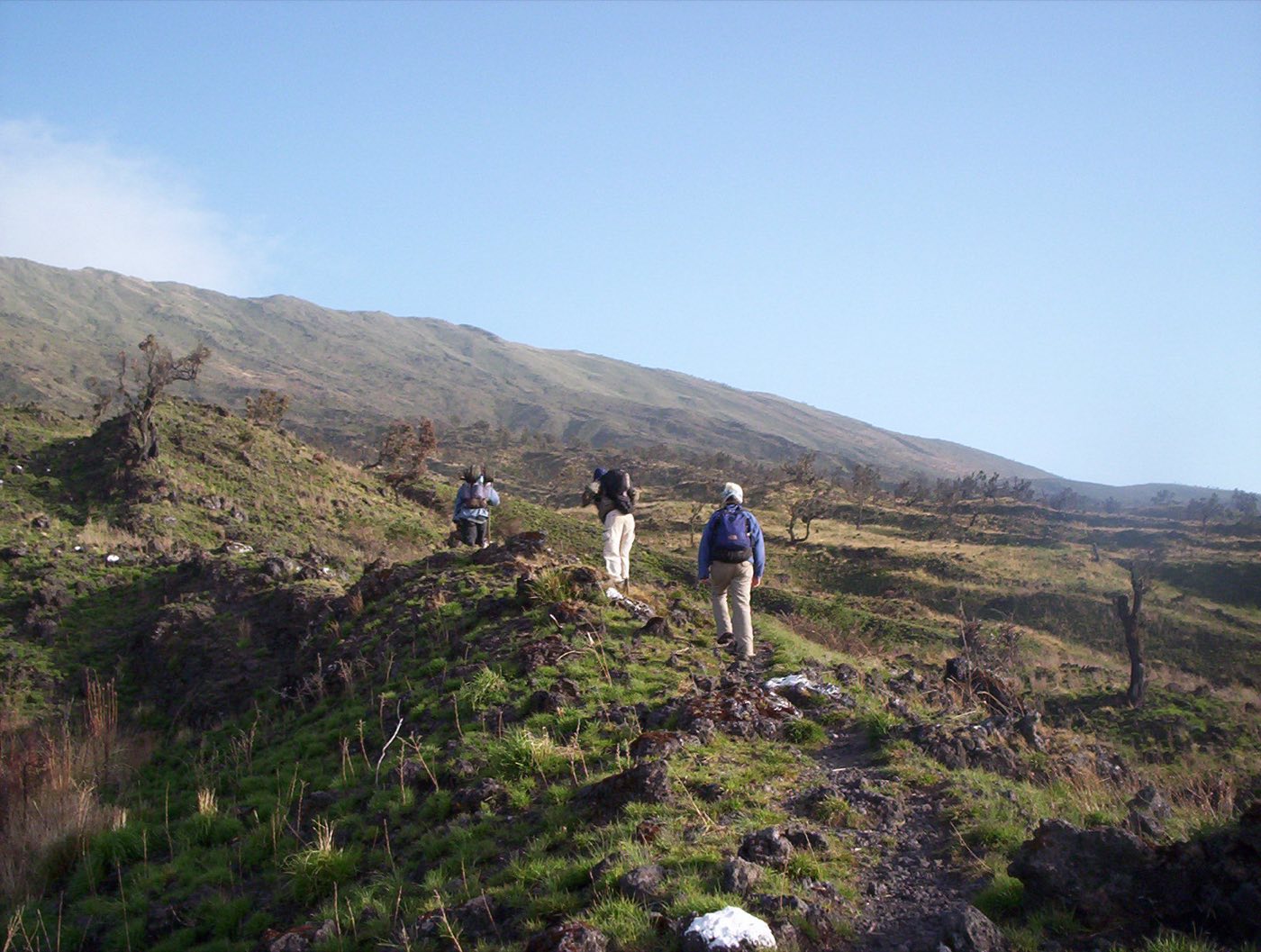
West Africa's highest peak rises 4,040 meters straight out of the Atlantic coastal plain at Buea, and it is an active volcano with eruptions as recent as 2000 and 2012. The standard ascent takes three days — a hard grind up through cloud forest to the summit crater, a night at Hut 3 with Pygmy goats nosing your tent, and a long descent past the newest lava fields. Hire a certified guide through the Mount Cameroon Ecotourism Organisation in Buea; February's Race of Hope sees elite Cameroonian runners do the whole ascent and descent in under five hours.
Waza National Park wildlife
In the far north on the edge of the Sahel, Waza is Cameroon's best-known wildlife park, protecting elephant, giraffe, roan antelope, and a small remnant population of lions across 1,700 square kilometers of dry thorn woodland. Access has been significantly affected by regional security since 2014 — Boko Haram activity in the Lake Chad basin has intermittently closed the park. Check current advisories before committing to the trip, and travel with a local operator who will know whether the park is open and safe on the dates you are considering.
Limbe Wildlife Centre and black sand beaches
The coastal town of Limbe, an hour south of Buea, sits below Mount Cameroon on beaches of volcanic black sand where the Atlantic rolls in cold and dramatic. The Limbe Wildlife Centre rescues and rehabilitates chimpanzees, gorillas, mandrills, and drills confiscated from the bushmeat trade — it is a working sanctuary rather than a zoo, run in partnership with the Pandrillus Foundation. Pair a morning visit with an afternoon at Mile 11 or Seme Beach, and an evening of grilled fish at the town's open-air fish market.
Kribi's Lobe Waterfalls flowing into the ocean
South of Kribi on the Atlantic coast, the Lobé River tumbles over a 20-meter basalt shelf and empties directly into the sea — one of the few waterfalls in the world to do so. You can wade in at the base, hire a pirogue upstream to visit Bakola Pygmy settlements in the forest, or just sit at one of the palm-shaded bars that line the beach drinking a cold 33 Export as the spray drifts across the table. Kribi town itself has the best stretch of tourist beach in Cameroon — wide, clean, and never crowded outside the local summer holidays.
Foumban Royal Palace and artisan market
The Bamoun sultanate's capital at Foumban holds one of the most interesting small museums in Central Africa — the royal palace displays throne beadwork, royal pipes, and artifacts covering six centuries of the Bamoun dynasty. The adjacent artisan quarter, the Village des Artisans, is the country's major center for bronze casting, mask carving, and embroidered indigo cloth, and prices are reasonable if you are patient with the negotiation. Pair with nearby Bafoussam and the Bamiléké chieftaincy palaces at Bandjoun and Bafut.
Dja Faunal Reserve UNESCO site
In the southeastern rainforest, Dja is one of Africa's largest and best-preserved tropical forest reserves, inscribed as UNESCO World Heritage for its intact biodiversity — forest elephant, western lowland gorilla, chimpanzee, bongo, and mandrill still occur here, though sightings take work. Access is through the village of Somalomo and requires a dedicated multi-day expedition with a licensed operator. This is not a drive-through park; it is for travelers who want a serious forest experience and have four or five days to give it.
Ring Road highland chiefdoms near Bamenda
The 367-kilometer Ring Road loop through the Northwest region was once one of the great cultural drives of West Africa, threading through the grassfields chiefdoms at Bafut, Kom, Nso, and Oku — each with a fon's palace, a sacred forest, and a distinctive mask tradition. Since 2017, the Anglophone crisis has made independent travel in this region genuinely dangerous, with regular road closures and ghost-town strikes. The loop will return to the traveler itinerary when conditions allow; for now, the Bafut palace just outside Bamenda is the one sometimes-accessible site — always check current security before committing.
When to Go
November to February is the cool dry stretch in the north and the best time for a trip combining Yaoundé, the western highlands, and the far north — dust low, temperatures manageable, and roads dependable. March to June gets progressively wetter and hotter; the southern rainforest regions around Dja are most accessible in the drier stretches of December–February and July–August, though rain falls in some form year-round. Mount Cameroon treks are best from November through March when the summit is clearest; the Race of Hope is held in late February and is worth witnessing even if you do not run. Avoid the heaviest rains from August to October, when northern roads can wash out entirely.
Getting Around
Travel moves by road, and quality varies dramatically. The paved axis from Douala to Yaoundé is fast and generally reliable — about 3.5 hours by hired car, longer by bus. The route south to Kribi and northwest to Buea and Limbe is in good condition. The north takes serious time: the paved road to Ngaoundéré is the rail endpoint, after which you continue by road to Maroua and Waza on slower surfaces, or fly. The Yaoundé-Ngaoundéré train — Camrail's overnight sleeper — is the classic way to cover that distance and is generally reliable. Within cities, share taxis (painted yellow) handle short hops; agree a price in advance, or opt for rare but safer ride-hailing in Douala. Hiring a car with driver is the standard choice for multi-region itineraries.
Cost & Currency
Cameroon uses the Central African CFA franc (XAF), pegged to the euro at 655.957 to 1 — not to be confused with the West African CFA (XOF), which is a separate currency at the same rate. Prices run modest but not rock-bottom: a plat du jour of poulet DG or ndolé with plantains costs 2,500–5,000 CFA (€4–€8), a comfortable mid-range hotel in Yaoundé or Douala runs 40,000–80,000 CFA, and a hired 4x4 with driver for multi-day travel around 80,000–120,000 CFA per day. Cards are accepted at international hotels in Yaoundé and Douala and essentially nowhere else; change euros at banks on arrival and carry cash in a mix of denominations. Tipping is modest — round up at restaurants, a few thousand CFA to drivers, a small gift or cash to village hosts where appropriate.
Frequently Asked Questions
- Is it safe to travel to Cameroon?
- The south, center, Littoral, and West regions — including Yaoundé, Douala, Kribi, Limbe, Buea, Bafoussam, and Foumban — are generally safe with normal precautions. The Northwest and Southwest (English-speaking) regions have been affected by the Anglophone crisis since 2017 and are not currently recommended. The Far North around Waza has intermittent Boko Haram activity spilling from Nigeria and Chad. Check your foreign-office travel advice close to departure and work with a local operator.
- Do I need a visa?
- Most travelers need a visa to enter Cameroon. An e-visa is now available through the official portal and typically processes within a week. You will need a passport valid for six months beyond entry, proof of onward travel, a hotel booking, and a yellow fever vaccination certificate, which is required on arrival. Apply well in advance — Cameroonian consulates can be slow.
- What vaccinations do I need?
- Yellow fever is legally required and the certificate is checked on entry. Routine boosters plus typhoid, hepatitis A, and meningococcal are strongly recommended, and malaria prophylaxis is essential year-round across the country. Rabies pre-exposure is worth considering if you will be trekking in forested areas or spending time in rural villages. Visit a travel clinic six weeks before departure to allow the full schedule.
- Do I need to speak French?
- French is the dominant language in Yaoundé, Douala, Kribi, Foumban, and most tourist areas, and you should expect to need it. English is the first language in the Northwest and Southwest regions (currently less safe to visit). A phrasebook, working French, and patience for Cameroonian French — which has its own rhythm and vocabulary — will carry you through. A few words of Ewondo in Yaoundé or Duala in Douala will earn instant goodwill.
- Can I climb Mount Cameroon independently?
- No — all Mount Cameroon ascents must be made with a licensed guide registered with the Mount Cameroon Ecotourism Organisation in Buea, and porters are usually recommended. The mountain is an active volcano with unpredictable weather above the tree line and periodic volcanic activity, and independent climbing has led to deaths in the past. Three-day guided packages with porters and hut nights run around US$200–400 per person depending on group size.
Plan a Trip to Cameroon
Have you been to Cameroon?
Track 195 countries, 50 states & 63 national parks on your map