Equatorial Guinea
- Capital
- Malabo
- Population
- 1.7M
- Currency
- XAF
- Languages
- Spanish, French, Portuguese
Overview
Equatorial Guinea is one of the hardest countries in Africa to visit and one of the most unusual to arrive in. Split between a mainland wedge of rainforest between Cameroon and Gabon and a handful of volcanic islands off the coast, the country speaks Spanish as its first official language — the only one in sub-Saharan Africa that does — and the capital sits on the rim of a dormant volcano, looking out over the Gulf of Guinea. You come here for what few places in Central Africa still offer: primate-dense primary rainforest at Monte Alén, empty black-sand turtle-nesting beaches on Bioko's southern coast, and a capital whose crumbling Spanish colonial buildings sit next to glass oil-money towers with no one in between. The contrasts are sharp and the country makes few concessions to tourism. This is not a place that rewards the under-prepared. Travel here requires patience and paperwork. Visas are genuinely difficult for most nationalities and often require a letter of invitation from a licensed tour operator. Infrastructure outside Malabo and Bata is thin, and you'll need a fixer for anything beyond the capital. Yellow fever vaccination is mandatory, malaria prophylaxis is essential, and Spanish is the language that will open doors. Go with a proper tour operator, low expectations about logistics, and the willingness to be surprised by landscapes that most travelers will never see.
Things to Do
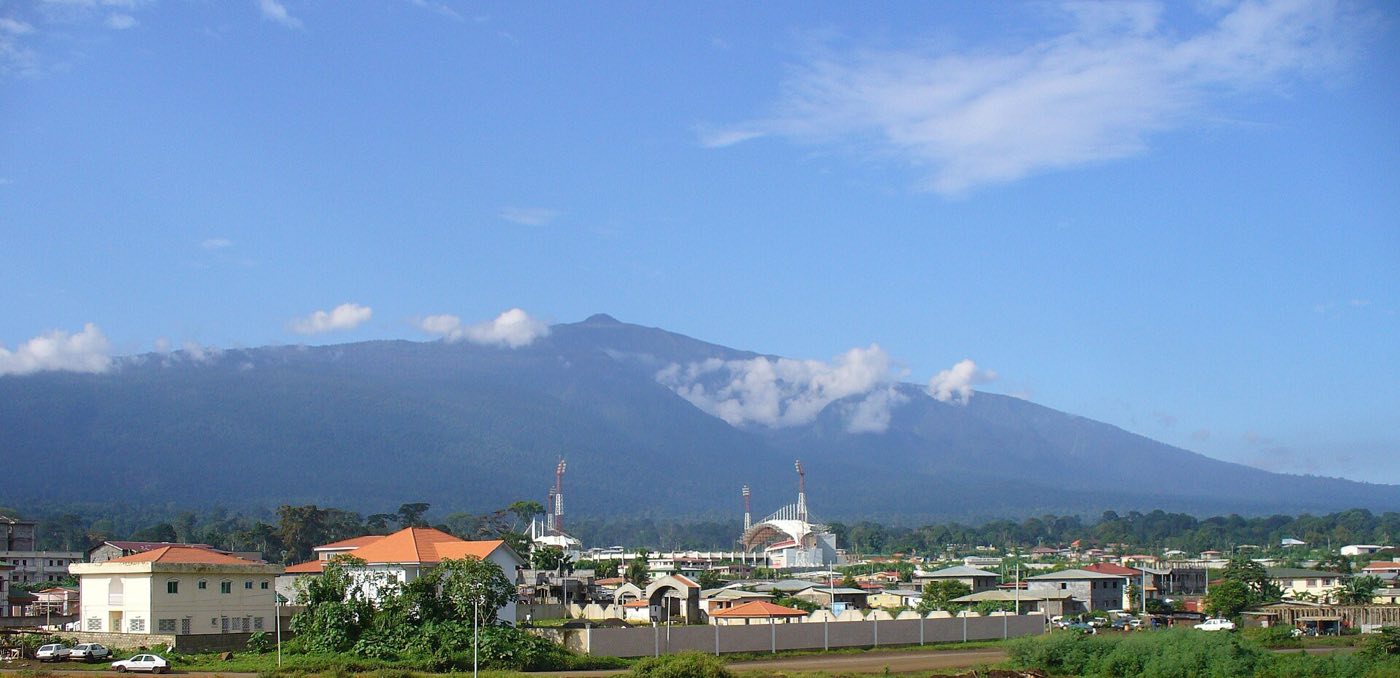
Pico Basilé volcano on Bioko Island
Bioko Island is the rim of a dormant volcano and Pico Basilé is its 3,011-meter summit — the highest point in the country and a strenuous but worthwhile climb. The upper slopes require a permit because of a military communications installation, so the climb is done with a licensed guide arranged in advance through a Malabo tour operator. The forest zones on the way up shift from tropical lowland to cloud forest to montane heath, with a chance of seeing drill monkeys and Preuss's guenons along the way. Expect mud, a full day on your feet, and a summit often wrapped in cloud.
Monte Alén National Park rainforest
The country's flagship wildlife reserve covers 2,000 square kilometers of primary Central African rainforest on the mainland, about five hours by road from Bata. Forest elephants, western lowland gorillas, chimpanzees, mandrills, and dozens of endemic bird species move through landscapes that see almost no outside visitors. Infrastructure is basic — a few ranger stations, limited lodging at Monte Alén Lodge when it's operating — and sightings require patience and a skilled local tracker. This is serious rainforest trekking rather than safari in the East African sense; go for the forest itself as much as the animals.
Arena Blanca beach on Bioko
A small crescent of pale sand backed by coconut palms on Bioko's eastern coast, Arena Blanca is the island's closest thing to a classic tropical beach. It's a forty-five-minute drive from Malabo past fishing villages and oil-company housing compounds, and once you're there you may well have it to yourself on a weekday. A few simple restaurants serve grilled fish and cold beers at the edge of the sand. The water is warm, clear, and calm enough to swim year-round — one of the easiest escapes from the capital.
Malabo's colonial cathedral and waterfront
The capital's old quarter, laid out by Spanish colonial authorities in the nineteenth century, runs along the volcanic crater that forms the city's harbor. The Cathedral of Santa Isabel, a neo-Gothic twin-towered building from 1916, anchors the historic center, and the surrounding blocks hold the best surviving colonial architecture — balconied wooden shopfronts slowly giving way to the humid air. Walk the malecón at sunset for views across the harbor to the forested volcanic slopes behind, and stop for fresh fish at one of the waterfront restaurants. Photography of government buildings and any official uniform is restricted.
Ureka turtle nesting beaches
The remote southern coast of Bioko at Ureka is one of the most important sea-turtle nesting sites in the Gulf of Guinea, with leatherback, green, olive ridley, and hawksbill turtles hauling up to lay eggs from November through February. Reaching it is a serious undertaking — a four-wheel-drive expedition from Malabo across the interior, ending in a hike down to the beach and a night in a basic camp run by the Bioko Biodiversity Protection Program. You go with one of their research teams; tourists are not welcome on their own. For wildlife travelers it is a genuinely rare experience.
Moca Valley waterfalls
In the highlands of southern Bioko, the Moca Valley is the island's cool-climate interior — a rolling landscape of small farms, pine plantations, and tumbling cascades at Ilachi, Botamo, and Biao. The drive up from Malabo takes about two hours on a paved road, and several guides in Malabo run day trips that include short hikes to the main falls and lunch in Moca town. Bring a jacket; at 1,400 meters the valley is markedly cooler than the coast.
Bata's central market on the mainland
Bata, the mainland's principal city, feels less polished and more genuinely lived-in than Malabo. Its central market is the heart of the city — fish hauled up from the Atlantic that morning, bitter-leaf and smoked bushmeat, bundles of Fang herbs — and a useful first stop for anyone heading inland toward Monte Alén. Photography is not welcome here either; keep your camera away and ask permission before any portraits. Afterward, the Paseo Marítimo seafront promenade is a pleasant evening walk with street food vendors and views of the Atlantic.
When to Go
December through February is the best window for Bioko, with less rain and clearer conditions for volcano hikes and turtle-nesting visits on the southern coast. The mainland's drier stretch runs June through August and is the window for Monte Alén National Park, when forest trails are more passable. The rest of the year is the wet season, with heavy rainfall possible in any month given the equatorial climate. Humidity is high year-round and temperatures on the coast stay between 24°C and 32°C; the highlands of Moca and Monte Alén are noticeably cooler.
Getting Around
Movement within the country is complicated by its split geography. Malabo on Bioko Island and Bata on the mainland are connected by frequent short flights on the local carrier Ceiba Intercontinental, and flying between the two is the only sensible option for travelers. Within Malabo and Bata, shared taxis run fixed routes cheaply and hired taxis are inexpensive by the hour. For Monte Alén and anything off the main road network on the mainland, you need a 4x4 and a driver — most visitors arrange this through a tour operator in Malabo as part of a package. Road checkpoints are common; carry your passport and visa at all times, and expect delays.
Cost & Currency
Equatorial Guinea uses the Central African CFA franc (XAF), pegged to the euro at 655.957 to 1, same as neighboring Gabon and Cameroon. Prices, however, are high by regional standards because of oil-industry demand — expect XAF 15,000–35,000 (€23–€53) for a midrange restaurant meal in Malabo, XAF 60,000–150,000 for a hotel room at international-standard properties, and tour-operator rates that reflect the difficulty of logistics. Credit cards are accepted at top hotels and a few restaurants in Malabo but cash is essential everywhere else. Change euros at Malabo or Bata banks; ATMs are unreliable for foreign cards. Tipping is not deeply established but rounding up in restaurants and a few thousand CFA to drivers is appreciated.
Frequently Asked Questions
- Do I need a visa to visit Equatorial Guinea?
- Almost all travelers do, and it is one of the hardest visas to obtain in Africa. Applications typically require a letter of invitation from a licensed in-country tour operator or business contact, a detailed itinerary, proof of yellow fever vaccination, and submission to a physical embassy. US passport holders have visa-free entry for up to 90 days, which is the rare exception; everyone else should budget weeks of lead time.
- Is Equatorial Guinea safe for travelers?
- Malabo and Bata are generally safe for visitors taking normal precautions, with petty theft the main concern and violent crime against foreigners rare. Political sensitivity is high — photographing government buildings, military, or the presidential palace is prohibited, and checkpoints should be approached cooperatively. Most incidents travelers encounter involve paperwork rather than danger.
- What vaccinations and health precautions do I need?
- Yellow fever vaccination is legally required and your certificate will be checked on arrival. Malaria is present year-round across the country and prophylaxis from a travel clinic is essential. Typhoid, hepatitis A and B, and routine boosters are strongly recommended. Food and water precautions — bottled water, avoid street salads — apply throughout, and medical facilities are limited enough that serious comprehensive travel insurance with evacuation is a priority.
- What language should I speak?
- Spanish is the primary working language and by far the most useful one for travelers — it's the language of government, business, and most signage. French and Portuguese are also official but less widely spoken in daily life. English is thin even at higher-end hotels, so a working Spanish vocabulary is strongly recommended, particularly outside Malabo.
- Can I travel independently or do I need a tour operator?
- Practically speaking, most visitors use an in-country operator to handle the visa invitation, logistics, and permits for places like Monte Alén and Pico Basilé. Independent travel is legally possible but complicated by checkpoints, limited public transport, restricted-access zones, and language barriers outside the main cities. A licensed operator in Malabo will typically pay for itself in avoided friction.
Plan a Trip to Equatorial Guinea
Have you been to Equatorial Guinea?
Track 195 countries, 50 states & 63 national parks on your map