National Park · CO · Est. 2004
Great Sand Dunes
Overview
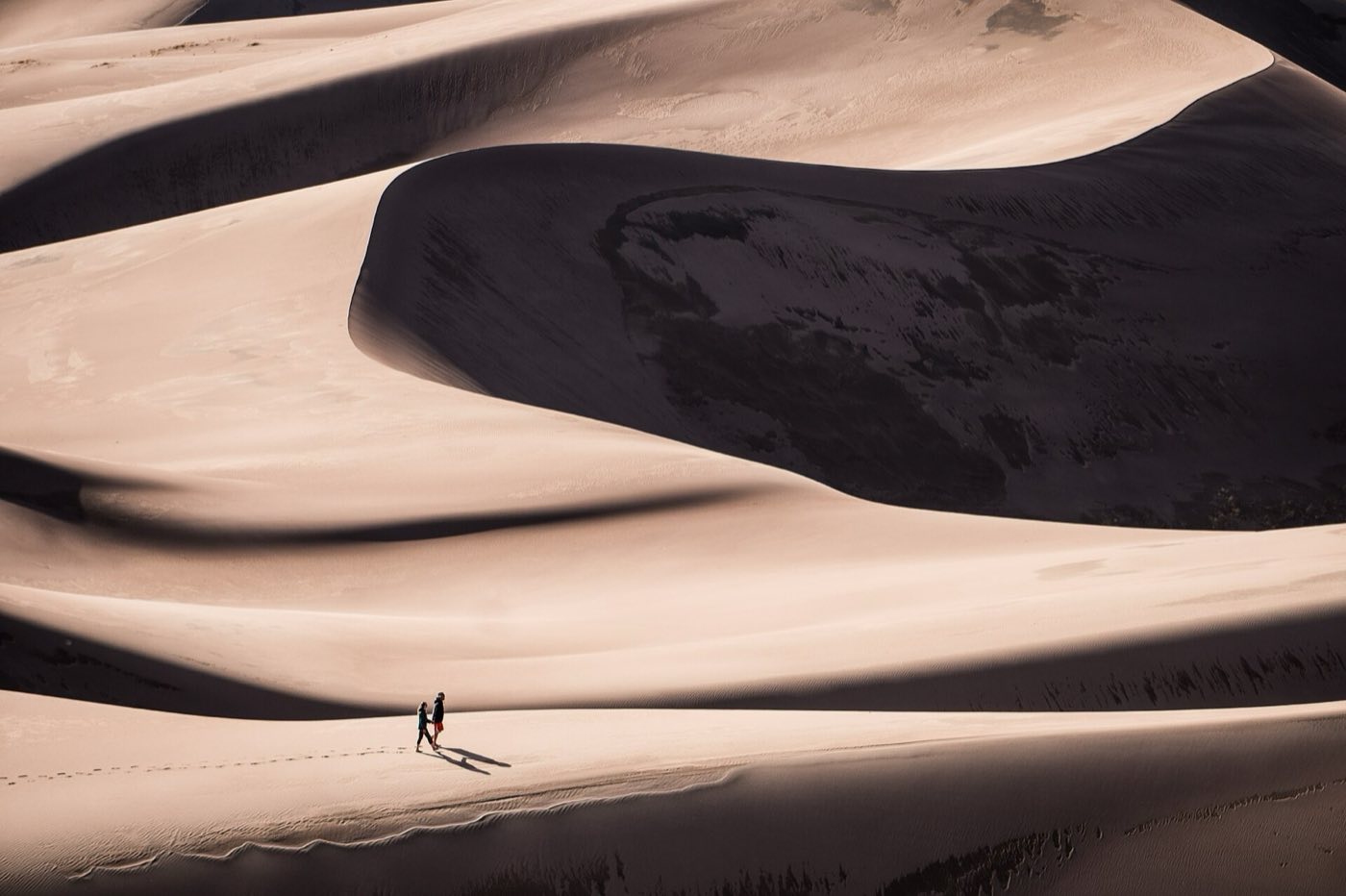
Great Sand Dunes protects the tallest sand dunes in North America, improbably piled against the snow-capped Sangre de Cristo Mountains in southern Colorado's San Luis Valley. The contrast is what gets you: a 741-foot dune field at 8,200 feet elevation, backed by 13,000-foot peaks, with a shallow creek running along the base in spring. It looks like someone collaged two landscapes that shouldn't exist together. The dunes formed over tens of thousands of years as sand blew east across the valley and piled up against the mountains. In late spring and early summer, snowmelt from the peaks feeds Medano Creek, which flows along the dune base in a uniquely rhythmic surge-flow pattern — low waves actually roll down the creek bed, and families spread out on the sand like it's a beach day in the Colorado high country. Later in summer the creek dries up, the sand surface can pass 150 degrees, and the dunes become a barefoot-impossible evening-only proposition. This is one of the best parks in the system for stargazing; it's an International Dark Sky Park, and on new-moon nights the Milky Way is so bright it reflects off the dune crests. Bring a kite, bring sand toys, bring warm layers for the nights.
What to See & Do
High Dune summit hike
High Dune isn't actually the tallest dune in the park, but it's the highest you can see from the Dunes Parking area and the standard summit goal. The hike is 2.5 miles roundtrip with about 700 feet of elevation gain — though measuring distance in sand is optimistic, since every step slides back a half-step. Plan two to three hours, start early in summer, and wear closed-toe shoes or go barefoot; sandals disappear in the sand. The ridge-walking final stretch rewards you with views across the entire dune field into the Sangres.
Star Dune
At 741 feet, Star Dune is the tallest dune in North America and a serious day hike — about 8 miles roundtrip with no shade, no trail, and unpredictable terrain. The route starts from the Dunes Parking area, crosses Medano Creek, then aims southwest across the main dune field. Plan six to eight hours, carry three liters of water per person, and start at dawn. Most visitors are content with High Dune; Star Dune is for people who specifically want to say they climbed the tallest dune on the continent.
Medano Creek's surge-flow waves at the dune base
From mid-May through mid-June in a typical year, Medano Creek flows along the dune base in a shallow stream with a strange property — the sand underwater forms antidunes that collapse rhythmically, sending small waves rolling downstream. Kids float on inner tubes, build sandcastles, and wade in cold snowmelt while the dunes rise above. Peak flow is usually Memorial Day weekend; by July the creek is usually dry. Check the park's real-time flow gauge before you come.
Sandboarding and sand sledding on the dune slopes
You can't rent sandboards or sleds at the park itself — you have to pick them up on the drive in. Oasis Store just outside the park entrance and Kristi Mountain Sports in Alamosa both rent specialized sandboards and waxed sleds that actually glide. Regular snow sleds don't work. Walk up whatever dune you want to try, wax the board liberally, and drop in — falls are soft but sand gets absolutely everywhere. Most fun for kids and nostalgic adults.
Sangre de Cristo mountain views from the dune ridge
Get to the top of any tall dune on a clear morning and turn east: the Sangres rise 6,000 feet above you in a jagged wall, with Crestone Peak, Humboldt, and the Crestone Needle all visible. In spring and early summer the peaks still carry snow; in September they frame a cobalt sky. The best light for photography is the hour after sunrise, when the low sun rakes across the dune ridges and throws the mountains into relief.
Dark-sky stargazing and Milky Way photography
The park is certified as an International Dark Sky Park, and the San Luis Valley has some of the lowest light pollution in the continental U.S. On a moonless night from May through September, the Milky Way core rises in the south and the whole sky seems alive. The Dunes Parking area is the easiest viewing spot; walking a hundred yards onto the dunes themselves gets you away from the handful of visitor lights. Bring a red headlamp and let your eyes adapt for 20 minutes.
Medano Pass Primitive Road 4x4 adventure
The 22-mile primitive road climbs from the main dunefield up into the Sangres and over Medano Pass at 10,040 feet, ending in the town of Westcliffe. This is a serious four-wheel-drive route — multiple stream crossings, deep sand near the dunes, and rocky alpine stretches higher up. Rentals almost never permit it; a personal high-clearance 4x4 is required. Deflating your tires to around 20 psi is basically mandatory for the sand section.
Getting There & When to Go
The closest airport is Colorado Springs (two and a half hours northeast); Denver International is a four-hour drive. Alamosa, Colorado, 35 miles southwest of the park, has a small regional airport with limited service. The park is open year-round, but each season offers something different. Medano Creek peaks mid-May through mid-June — that's when families come for the beach experience. July and August are hot (sand surface temperatures can pass 150 degrees by midafternoon) and bring afternoon thunderstorms; get off the dunes if you hear thunder. September and October offer cool days, clear nights, and fall aspen color in the Sangres. Winter is cold but wide open for solitude seekers.
Where to Stay
Inside the park, the Piñon Flats Campground is the only option; half its sites are reservable on recreation.gov from April through October, and the rest are first-come-first-served. Great Sand Dunes Oasis, just outside the entrance, has basic cabins, RV sites, and a small store. For hotels you want Alamosa (35 miles) or the small town of Mosca (25 miles), both with standard chain lodging. The Zapata Ranch, a working bison and guest ranch 16 miles from the park, is the distinctive local option with all-inclusive packages. Bring groceries in from Alamosa — there's almost nothing at the park itself.
Frequently Asked Questions
- When does Medano Creek flow?
- Peak flow typically runs mid-May through mid-June, with the exact window depending on winter snowpack and spring temperatures. The creek is fed entirely by snowmelt, so it dries up by early to mid-July most years. Check the NPS real-time flow gauge before you commit to a visit if the creek is the draw.
- Can I walk barefoot on the dunes?
- In morning and evening, yes. From late morning through late afternoon in summer, sand surface temperatures can exceed 150 degrees and will burn your feet in seconds. Wear closed-toe shoes or plan your dune hike for the first or last two hours of daylight. Dogs should not be on the dunes in midday heat for the same reason.
- Do I need a reservation to enter the park?
- No timed-entry reservation is required. Entry is $25 per vehicle, good for seven days, or free with an America the Beautiful pass. The Piñon Flats Campground and the Zapata Falls recreation area do take reservations, and the campground fills on weekends from May through September.
- Where do I rent a sandboard or sled?
- Not at the park. The closest rentals are at Oasis Store just outside the park entrance and Kristi Mountain Sports in Alamosa. Both rent purpose-built sandboards and waxed plastic sleds that actually slide on sand — snow sleds won't work. Reserve ahead on summer weekends when rentals can sell out.
Plan Your Visit
Book Nearby HotelsHave you visited Great Sand Dunes?
Track all 63 national parks on your map