National Park · CO · Est. 1906
Mesa Verde
Overview
Mesa Verde is the rare national park whose main attraction isn't a landscape but a people — the Ancestral Puebloans who built cliff dwellings into the sandstone alcoves of this southwestern Colorado mesa, lived in them for about a century, and then walked away around 1300 AD. The why of their departure is still debated, and the first time you duck through the T-shaped doorway of a kiva at Cliff Palace you feel the mystery of that in a way no museum exhibit conveys. The park is essentially a long plateau cut by deep canyons, and the cliff dwellings tuck under overhangs halfway down those canyon walls. Nearly all of them are accessible only on ranger-guided tours that require advance tickets, climbing ladders, and on Balcony House, crawling through a narrow tunnel on your hands and knees. Plan at least two full days to do it right: one for the two or three flagship tours, one for the Mesa Top Loop drive where you can trace the architectural evolution from pithouse to cliff dwelling at your own pace, plus time for the museum. Come in September if you can — the light on the sandstone at 5 p.m. is worth the trip on its own, and you'll share the ladders with a fraction of the summer crowd.
What to See & Do
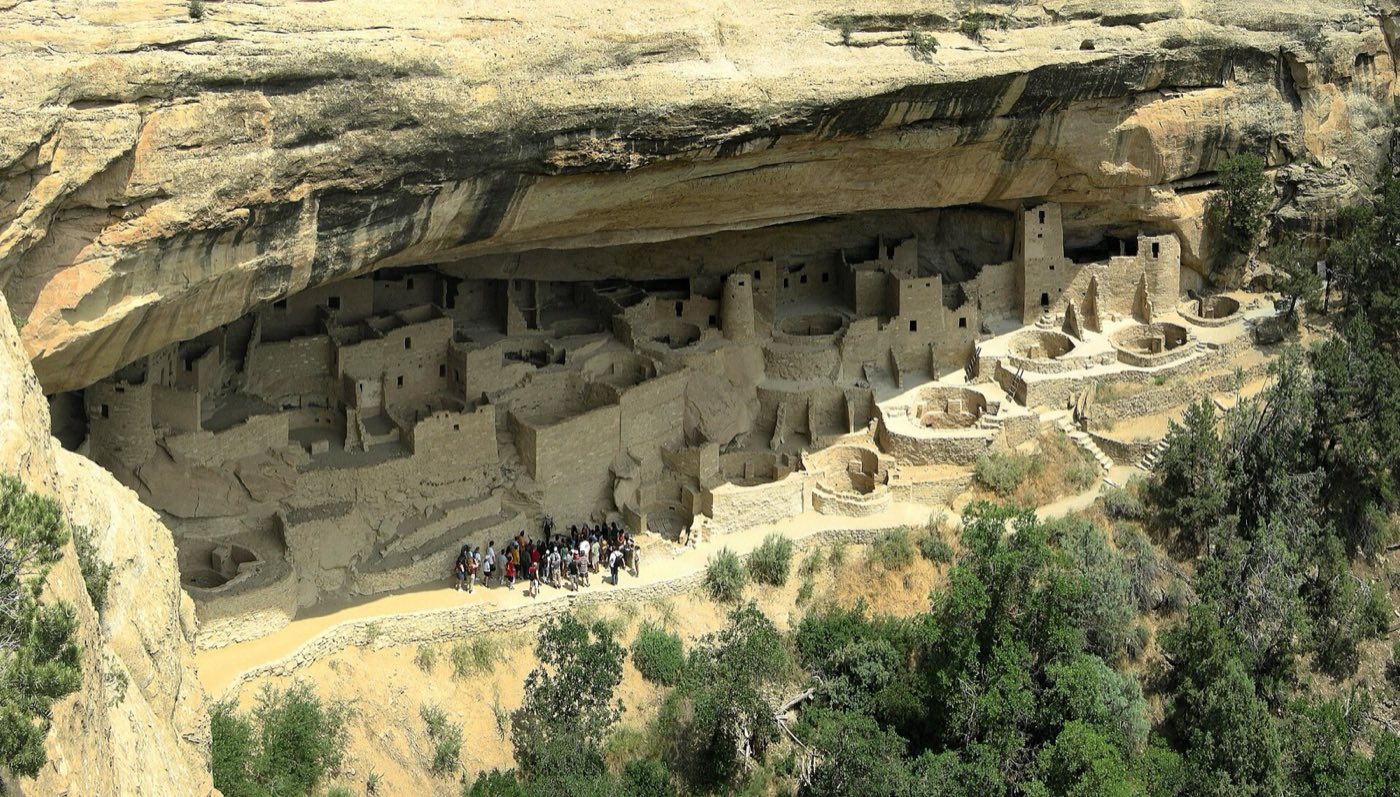
Cliff Palace ranger-guided tour — the largest cliff dwelling in North America
A 150-room village built into a sandstone alcove, probably home to 100 people at its peak in the 1200s. The hour-long tour drops 100 feet down uneven stone steps and climbs five short ladders, ending with you walking through the plaza between standing stone walls still wearing their original mud plaster. Tickets are timed and sell out days ahead in summer — buy them on recreation.gov as soon as you're within the 14-day booking window. The photograph from the overlook above it is iconic; the tour is the thing you remember.
Balcony House tour with ladder climbs and tunnel crawls
The physically demanding tour, and for most people the memorable one. You climb a 32-foot wooden ladder up the cliff face, walk through the 40-room village, then exit by crawling through a 12-foot stone tunnel and climbing two more ladders to get out. Rangers will turn you back at the trailhead if you have a hip or knee issue. Wear closed-toe shoes with grip. Tickets are timed; book ahead. Not recommended for small children or anyone with serious fear of heights.
Mesa Top Loop Road with pithouses and pueblo viewpoints
A six-mile one-way drive on the mesa top with a dozen short walking trails to pithouses, early pueblos, and overlooks down into the cliff dwellings across the canyon. This is the self-guided tour you can do any time — no tickets, no rangers — and it's the best way to see how the architecture evolved from 600 AD pithouses into the cliff villages. Plan two to three hours. Sun Point overlook and Sun Temple are the best views.
Spruce Tree House overlook (currently closed for stabilization)
The third-largest cliff dwelling and historically the only one you could walk into without a ticket, Spruce Tree House is closed for rockfall stabilization as of 2026 with no confirmed reopening date. You can still see it clearly from the paved overlook trail behind the Chapin Mesa Museum — a half-mile round-trip, well worth it. Check the park website before your visit to see if on-site tours have resumed.
Sun Temple and its mysterious astronomical alignments
A D-shaped stone structure on the mesa top that appears to have been built for ceremonial or astronomical purposes rather than housing — there's no evidence of cooking fires or sleeping rooms, and the walls align with solar events. It was never completed. You can walk around its exterior on your own from a Mesa Top Loop stop, and the setting above a deep canyon makes this one of the quieter, more contemplative spots in the park. Read the interpretive sign before you look.
Petroglyph Point Trail to ancient rock art panels
A 2.4-mile loop from the Chapin Mesa Museum that drops into a side canyon and follows the base of a sandstone cliff to the park's largest petroglyph panel — a 30-foot wall of carved figures, handprints, and spirals. The trail has tight squeezes through rock formations and some scrambling, and hiking register permission is required at the museum. Morning light reads the panel best. Allow two hours.
Chapin Mesa Archaeological Museum
Do not skip this. An hour in the museum before your first cliff dwelling tour transforms the tour completely — you see kivas, doorways, and mealing bins as the rooms they actually were instead of as vacant stonework. The exhibits are 1950s vintage in the best way: careful dioramas, clearly labeled artifacts, and a timeline spanning 700 years of Ancestral Puebloan life on the mesa. Free with park admission.
Getting There & When to Go
Durango-La Plata County Airport is 45 minutes east of the park entrance and the most convenient fly-in. Albuquerque is four hours south and often significantly cheaper. The park entrance road climbs steeply for 20 miles from US 160 to the main mesa top; allow 45 minutes from the gate to the main visitor areas. Cliff dwelling tours run May through mid-October only — book tickets on recreation.gov up to 14 days in advance, and don't arrive without them in July and August. September and early October are the sweet spot: cooler temperatures, thinner crowds, low-angle light on the sandstone. Winter closes many tours and roads but leaves the Mesa Top Loop accessible when the snow isn't heavy.
Where to Stay
Far View Lodge is the only in-park hotel, perched near the center of the mesa with motel-style rooms and a restaurant called Metate Room that does regional cuisine well. Staying here gets you onto the early tours without the 45-minute drive from town, and the balconies actually do have a far view — 100 miles on a clear day. Morefield Campground inside the park takes reservations on recreation.gov and has 267 sites. Outside the park, Cortez is 10 minutes west of the entrance with chain hotels at moderate prices; Mancos is 15 minutes east and quieter with a few good B&Bs. Durango is farther but gives you a lot more dining and nightlife if you're combining Mesa Verde with the narrow-gauge railroad.
Frequently Asked Questions
- Do I need advance tickets for the cliff dwelling tours?
- Yes, for Cliff Palace, Balcony House, and Long House. Tickets are timed, released 14 days ahead at 8 a.m. Mountain time on recreation.gov, and sell out within minutes for popular summer dates. Without a ticket you cannot enter these dwellings — no walk-ups, no same-day availability.
- How physically demanding are the tours?
- They vary. Cliff Palace is about an hour with 100 uneven stone steps and five short ladders, moderately strenuous. Balcony House includes a 32-foot ladder and a 12-foot tunnel crawl, and is the hardest. Long House is moderate. None is wheelchair accessible. Check the park website for specifics before booking and skip any tour that exceeds your comfort.
- Can I visit year-round?
- The main park road and the Mesa Top Loop are open year-round, weather permitting. Cliff dwelling tours run only from late April or May through mid-October. Winter visits can be stunning — snow on the sandstone, no crowds — but check road conditions before driving up the steep entrance.
- How long should I plan for a visit?
- Two days minimum to do the park justice. One day for two flagship cliff dwelling tours plus the museum, a second day for the Mesa Top Loop and Wetherill Mesa or a shorter hike. A quick one-day visit will get you one tour and a museum stop, which is better than nothing but leaves out the context that makes it all make sense.
Plan Your Visit
Book Nearby HotelsHave you visited Mesa Verde?
Track all 63 national parks on your map