Tanzania
- Capital
- Dodoma
- Population
- 65.5M
- Currency
- TZS
- Languages
- Swahili, English
Overview
East Africa's heavyweight safari country, and the one that holds the template images of the continent — acacia silhouettes on the Serengeti at dusk, a million wildebeest moving north through the short-grass plain, and Kilimanjaro rising in one vast ice-capped shoulder out of the savanna. Travelers come for the Northern Circuit parks, for Zanzibar's reef-fringed beaches, and for a climb of Africa's highest peak that asks nothing technical of you beyond the willingness to keep walking uphill for a week. What makes Tanzania distinctive is the density. The Ngorongoro Crater packs something like 30,000 animals into an 8,000-foot-wide caldera; the Serengeti delivers lion sightings that feel almost unfair; Tarangire at the end of the dry season concentrates elephants along a single riverbed in numbers you don't quite believe. And then you fly out to Zanzibar and the whole register changes — Swahili stone houses, Indian Ocean water the color of a swimming pool, and a spice-trade history layered over a thousand years of movement between Africa and Arabia. This is not budget travel. Park fees alone run USD 70–100 per person per day, and a quality Northern Circuit safari lands somewhere between USD 400 and USD 1,500 per day all-in depending on lodge level. But the wildlife experience is essentially unmatched, and the infrastructure — camps, guides, bush planes, airstrips — is as polished as anywhere on the continent. Come with a good operator, come in the right season, and don't skimp on the number of nights in each park.
Things to Do
Serengeti National Park Great Migration
The Serengeti's 14,000 square kilometers host the largest terrestrial mammal migration on Earth — around 1.5 million wildebeest plus hundreds of thousands of zebra and gazelle moving in a roughly circular annual loop. Where you go depends on when: the Mara River crossings in the northern Serengeti peak from late July through September, calving season in the southern Ndutu plains runs January to March, and the western corridor sees crossings of the Grumeti in June. Fly-in camps beat driving — budget three or four nights in migration-zone camps for a realistic chance of a crossing.
Ngorongoro Crater Big Five game viewing
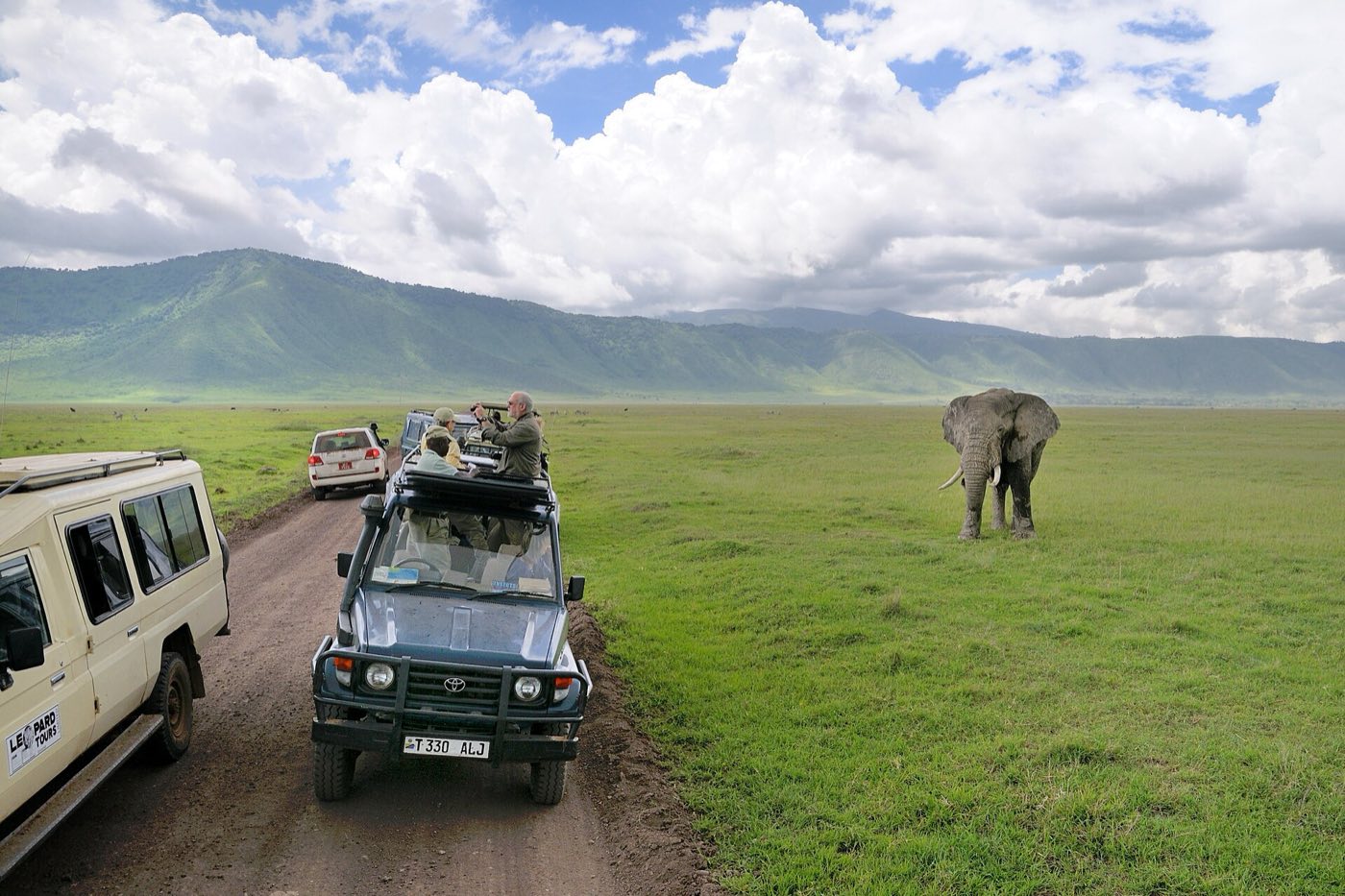
The world's largest unbroken volcanic caldera is a 260-square-kilometer bowl with its own permanent wildlife population — lions, leopards, elephants, buffalo, and one of East Africa's last genuinely wild black rhino groups. You descend from the rim at dawn on a single paved track, spend the day on the crater floor, and come back up in the afternoon. One full day is enough and two feels indulgent, but the density of sightings per hour is arguably the highest of any safari destination in Africa.
Mount Kilimanjaro summit trek
At 5,895 meters, Kilimanjaro is the highest free-standing mountain on Earth and the only summit above 5,500 meters that a fit walker with no technical skills can reasonably attempt. Most climbers choose between the Machame route (six to seven days, scenic, reasonable success rate) and the longer Lemosho or Northern Circuit (eight to nine days, much better acclimatization, highest summit rates). Don't go shorter than seven days — the difference in altitude-sickness outcomes is dramatic — and pay for a reputable operator who does proper porter welfare.
Zanzibar's Stone Town and pristine beaches
Stone Town is a UNESCO-listed Swahili port town of coral-rag walls, carved wooden doors, and narrow alleys that trap the afternoon call to prayer between buildings. Stay two nights to walk it properly, eat at the Forodhani night market, and tour a spice farm outside town. Then head east or north for the beaches — Matemwe and Paje for kitesurfing, Nungwi and Kendwa for tidal swimming that actually works at low tide, Michamvi for quieter sand. A week on Zanzibar after safari is the standard pairing and it works.
Tarangire National Park baobab landscape and elephants
Tarangire is the northern park everyone skips and shouldn't. From July through October, when the outside-park water dries up, elephants concentrate along the Tarangire River in herds that routinely run 200 strong, moving between ancient baobab trees in one of the most photographable landscapes on the circuit. Fewer vehicles than the Serengeti, excellent lion and leopard sightings, and night drives are permitted in the private conservancies adjacent — worth two nights at the start of any Northern Circuit trip.
Lake Manyara tree-climbing lions
A narrow ribbon of park squeezed between the Rift Valley escarpment and an alkaline lake, Manyara's claim to fame is lions that lounge in the branches of sausage trees, a behavior rare enough elsewhere in Africa to draw researchers. The flamingo flocks on the lake are a shadow of what they were a decade ago, but the birding remains excellent — over 400 species in a relatively small area. A half-day stop between Arusha and the crater rim is the usual way to fit it in.
Selous (Nyerere) Game Reserve boat safaris
Renamed Nyerere National Park in 2019 and now one of Africa's largest protected areas, Selous offers the Southern Circuit experience — boat safaris on the Rufiji River through pods of hippos, walking safaris with armed rangers, and camps that see a fraction of the Serengeti's vehicle traffic. The experience is wilder and the wildlife behavior less habituated, which is a real point of difference for anyone who has already done the Northern Circuit and wants something quieter.
Mafia Island diving
Off the southern coast, Mafia Island protects a marine park with coral reefs the tourism map has mostly forgotten — whale sharks aggregate from October through March, the diving on the western side is excellent, and the accommodation ranges from basic beach bandas to one outstanding upscale lodge. Getting there is a short flight from Dar es Salaam. It's the right call for divers who find Zanzibar too busy and want something closer to what Pemba used to feel like.
When to Go
June through October is the classic dry season — cooler temperatures, thinner vegetation, wildlife concentrated at water sources, and the Mara River crossings in the northern Serengeti from late July. January through early March is the other strong window, with the wildebeest calving in the southern Serengeti and excellent predator action as lions and cheetahs target newborns. The long rains from mid-March through May close some camps and make some roads impassable, though prices drop sharply and the landscape is at its greenest. Kilimanjaro is climbable January–March and June–October; avoid April, May, and November.
Getting Around
The Northern Circuit runs on a well-oiled combination of 4x4 safari vehicles between parks and bush flights to cover longer distances — a typical itinerary drives Arusha-Tarangire-Manyara-Ngorongoro and then flies into the Serengeti to save a punishing day on gravel roads. Zanzibar is a 20-minute flight from Dar es Salaam or a two-hour ferry, and the flights are cheap enough that most travelers fly. Domestic carriers like Coastal, Auric Air, and Precision Air run the tourist network reliably. Within cities, ride-hailing via Bolt and Uber works in Dar es Salaam and Arusha. Self-driving is legal but not recommended for first-time visitors — roads, signage, and park rules all favor going with an operator.
Cost & Currency
Tanzania uses the Tanzanian shilling (TZS), but safari operators, lodges, park fees, and Kilimanjaro trips are quoted and generally paid in US dollars — bring clean, post-2013 bills and a card that doesn't charge foreign-transaction fees. Park entry runs USD 70–100 per person per day plus concession fees, which is why an all-inclusive mid-range Northern Circuit safari realistically starts at around USD 450 per person per day and a fly-in luxury trip pushes past USD 1,200. In Stone Town and Dar es Salaam, a local meal is 15,000–30,000 TZS and a mid-range hotel room 200,000–400,000 TZS. Tipping on safari is expected: roughly USD 20–30 per day to your guide, plus pooled tips for camp staff.
Frequently Asked Questions
- Do I need a visa to visit Tanzania?
- Most travelers need a visa, and the easiest path is the official e-visa at immigration.go.tz — apply at least two to three weeks before travel, USD 50 for most nationalities and USD 100 for Americans on a multiple-entry visa. Visas on arrival are also available at Kilimanjaro and Dar es Salaam airports but lines can be long.
- How many days do I need for a safari?
- A minimum of six or seven nights for a proper Northern Circuit — one or two nights Tarangire, one night Ngorongoro, and at least three nights in the Serengeti to catch the migration zone properly. Shorter trips feel rushed and you will spend too much of your time driving. Add a week in Zanzibar at the end if the budget allows.
- Is Tanzania safe for tourists?
- Tanzania is generally safe for tourists, with the main concerns being petty theft in Dar es Salaam and occasional scams in Arusha and Stone Town around airport transfers. Violent crime against tourists is rare. Use hotel safes, avoid displaying valuables in city centers, and book Kilimanjaro operators with established safety records rather than the cheapest option.
- What vaccinations and medications do I need?
- Yellow fever is required only if you are arriving from a country with yellow fever transmission (so overland travelers from Kenya or Uganda will be asked for the certificate). Routine boosters plus typhoid and hepatitis A are recommended, and malaria prophylaxis is essential for safari areas and Zanzibar — consult a travel clinic six to eight weeks before departure.
- Can I climb Kilimanjaro without prior mountaineering experience?
- Yes — Kilimanjaro is a non-technical walk-up and requires no ropes or ice-axe skills, just cardiovascular fitness and the willingness to manage altitude. What matters far more than experience is choosing a seven-day-plus route and a reputable operator with a strong summit-success rate and proper porter welfare. Acclimatization, not athleticism, determines whether you reach the top.
Plan a Trip to Tanzania
Have you been to Tanzania?
Track 195 countries, 50 states & 63 national parks on your map