Slovakia
- Capital
- Bratislava
- Population
- 5.4M
- Currency
- EUR
- Languages
- Slovak
Overview
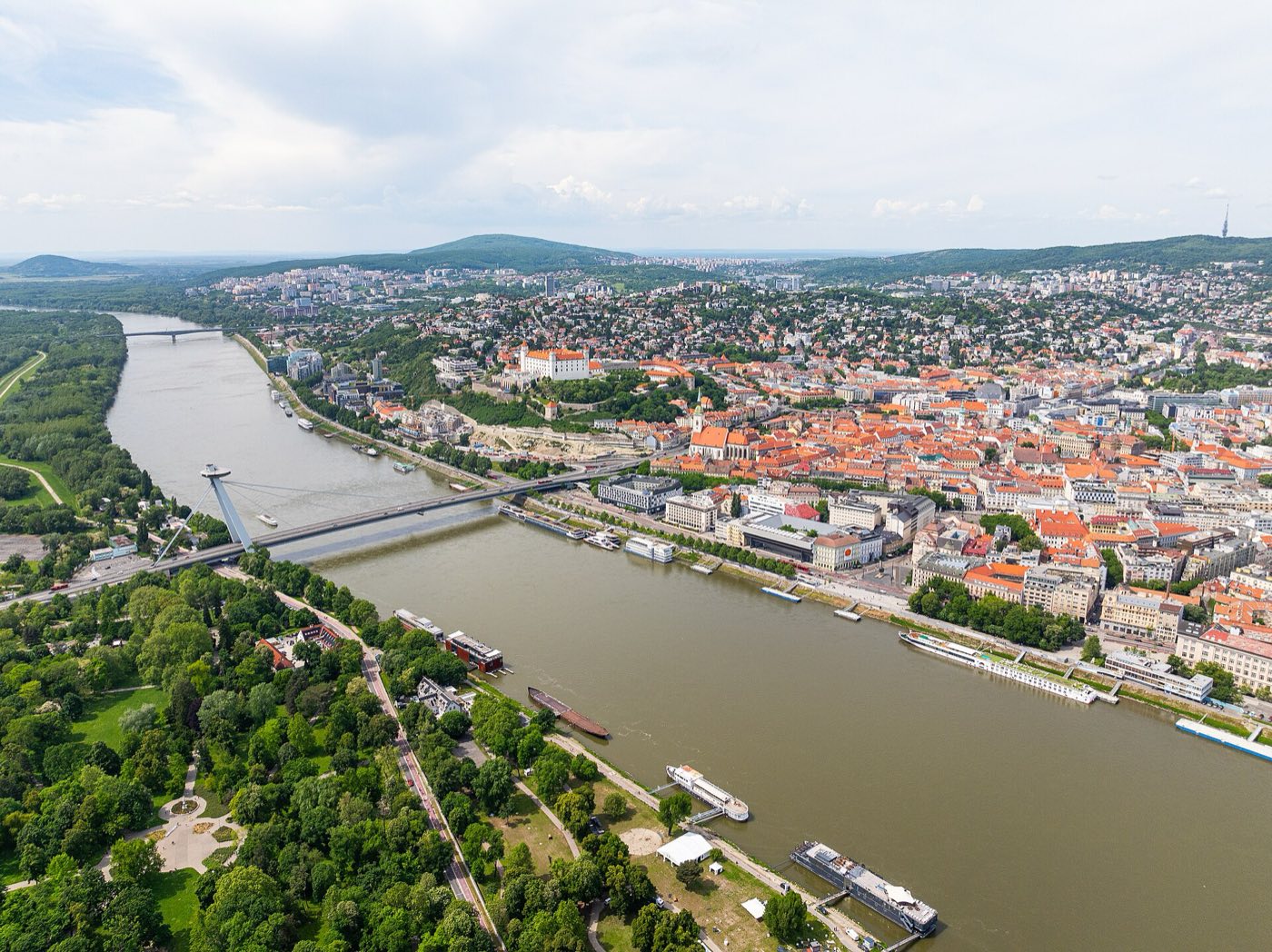
A Central European republic of soaring Tatra peaks, UNESCO-listed wooden churches, and medieval towns that see a fraction of the visitors who fill up Prague and Vienna next door. Travelers come for the High Tatras' dramatic alpine scenery, the remarkably intact Spiš Castle, white-water kayaking the Dunajec River Gorge, and the old mining town of Banská Štiavnica. The country is small enough to cross in a long day and varied enough that you won't want to. In the west, Bratislava presses up against the Danube with its hillside castle and a compact old town whose cafés and wine bars fill with students spilling over from the Austrian border. Drive east and the land folds up into limestone karst, then flattens into farmland studded with onion-domed churches, then rears up again into the High Tatras — a thirty-kilometer wall of 2,500-meter granite peaks that you can see from fifty miles out. Slovakia rewards travelers who like their mountains earned, their beer cheap, and their towns quiet after dark. It's a country of long hikes finished with goulash and Zlatý Bažant, of afternoon visits to painted wooden churches in villages most maps skip, and of train rides through the Tatras at treeline. Come for a week, stretch it to ten days if you want the east.
Things to Do
High Tatras mountain hiking and Štrbské Pleso
Europe's smallest alpine range by area, the High Tatras pack serious elevation into a compact ridge along the Polish border. Štrbské Pleso, a glacial lake at 1,346 meters, is the traditional starting point for day hikes to Rysy (2,503m) or the easier Popradské Pleso tarn. Ride the funicular up from the village to save two hours of uphill through spruce forest, then walk ridges with marmot whistles and views north into Poland. In winter the same slopes turn into Slovakia's main ski terrain.
Spiš Castle — one of Europe's largest castle complexes
The ruined fortress of Spiš sprawls across four hectares on a travertine hill in eastern Slovakia, with stone walls that have survived since the 12th century and earn their UNESCO listing. Walk up from the village of Spišské Podhradie — about twenty minutes — and you emerge into a series of baileys, cisterns, and a Romanesque keep still solid enough to climb. On a clear afternoon the view stretches across the Spiš basin to the Low Tatras. Pair it with the nearby ecclesiastical town of Spišská Kapitula.
Bratislava Old Town and castle
The capital's compact old town sits on a crook of the Danube, with Baroque palaces, a cathedral where eleven Habsburg monarchs were crowned, and the four-towered castle watching from a hill above. Walk the cobbled lanes from Michael's Gate to the Main Square, where cafés spill onto stone in any weather warm enough for it. Cross the SNP bridge for the UFO-style observation deck view back at the old town, then drop into a slovak tavern for sheep-cheese halušky and a local Pilsner.
Banská Štiavnica mining town UNESCO site
A medieval silver-mining town tucked into the caldera of an extinct volcano in central Slovakia, Banská Štiavnica was one of the richest cities in the Kingdom of Hungary for 400 years and retains its full Renaissance and Baroque townscape. The Old Castle, the New Castle, the Calvary hill above town, and the open-air mining museum where you descend into a restored shaft are all worth an afternoon each. Stay overnight — the town empties out after the day-trippers leave and the Calvary at dusk is the kind of quiet you remember.
Vlkolínec folk architecture reserve
A UNESCO-protected village of 45 painted log houses perched above the Liptov valley, Vlkolínec preserves a vernacular Carpathian architecture almost entirely lost elsewhere. About thirty people still live here full-time, which keeps the site from feeling like a museum, and the wooden bell tower, baroque chapel, and grass-lined lanes photograph beautifully in any season. A short stop on the way between the High Tatras and Banská Bystrica, best combined with a hike up the adjacent Sidorovo hill for the view back down.
Slovak Paradise National Park gorge hiking
East of Poprad, Slovenský Raj is a limestone plateau cut by narrow gorges where ladders, chains, and wooden catwalks carry you upstream alongside waterfalls — hiking that is closer to light scrambling than walking. The Sucha Bela and Piecky routes are the classics, each about three to four hours one-way with a loop back by ridge trail. Bring shoes with real grip, expect wet feet in spring, and start early in July and August when the ladders bottleneck.
Wooden churches of the Carpathians
Eight UNESCO-listed wooden churches scatter across the far east of Slovakia near the Ukrainian and Polish borders, built between the 16th and 18th centuries by Roman Catholic, Protestant, and Greek Catholic communities without a single nail. The Greek Catholic church at Ladomirová and the Protestant article church at Hronsek are the most striking, with icon screens and painted interiors preserved in working religious use. A car is essential; the villages are spread across hours of rural roads.
When to Go
June through September is the main window for the High Tatras and the gorge hiking in Slovak Paradise, with long daylight, warm days, and mountain huts open to serve beer on the terrace. December to March brings reliable skiing at Jasná and Štrbské Pleso plus Christmas markets in Bratislava and Košice that are about half the price of Vienna's. Shoulder months — May and October — can be excellent for lowland castles and towns before or after the crowds, though the high ridges may still carry snow or early storms. Avoid the first two weeks of July when Slovak schools break and the Tatras resorts fill up.
Getting Around
Trains run the main west-east corridor from Bratislava through Žilina to Košice and work well for city-to-city travel, with the intercity InterCity and Express services faster than the regional Osobný trains that stop at every village. Renting a car is the right call for the Tatras, the far east, and anywhere you want to reach the wooden churches or Vlkolínec, and highways are well maintained though toll stickers (dialničná známka) are required — buy one at border petrol stations. Within Bratislava and Košice trams and buses cover the old towns and main neighborhoods, and ride-hailing fills the gaps cheaply. Buses handle the rural routes trains skip, including to most ski villages in the Tatras.
Cost & Currency
Slovakia uses the euro and runs roughly 30% below Austrian prices for almost everything, making it one of the better-value countries in the eurozone. Expect €1.50–€2 for an espresso, €8–€14 for a hearty lunch of halušky or goulash in a neighborhood pub, and €50–€90 a night for a comfortable mid-range hotel outside Bratislava (€80–€130 in the capital or Tatra resorts). Cards are accepted almost everywhere in cities and larger towns; carry €20–€30 in cash for village pubs, mountain huts, and parking machines in smaller places. Tipping is modest — round up a café bill and leave about 10% at sit-down restaurants if the service was attentive.
Frequently Asked Questions
- Is Slovakia safe for travelers?
- Yes — Slovakia is one of the safer countries in Europe, with low violent crime and well-lit, patrolled tourist areas in Bratislava, Košice, and the Tatra resorts. Pickpocketing happens occasionally on crowded trams in Bratislava and around the main train station, so keep an eye on bags in those spots, but otherwise the country feels relaxed day and night.
- Do I need to speak Slovak?
- No — English is widely spoken in Bratislava, the Tatra resorts, and any tourist-facing business, and younger Slovaks especially are confident English speakers. In smaller towns and villages in the east, German is often more useful as a fallback, and a few polite Slovak phrases are appreciated everywhere.
- How does Slovakia compare to the Czech Republic as a destination?
- Slovakia is more mountainous, less visited, and cheaper than Czechia, while Czechia has the architectural firepower of Prague and Český Krumlov plus a more developed beer tourism scene. Most travelers combine the two — Bratislava is less than an hour from Vienna and four hours by train from Prague — and the pairing gives you Habsburg capitals plus serious alpine terrain in one trip.
- Is the High Tatras hiking difficult?
- It ranges from easy to serious — the Štrbské Pleso to Popradské Pleso walk is a flat two-hour round trip, while Rysy involves 1,200 meters of elevation gain across fixed chains. Stick to marked trails, check the weather the morning of your hike (storms come in fast above treeline), and don't attempt the ridge peaks without mountain experience or a local guide.
- What's the best way to get from Vienna to Bratislava?
- Take the train from Vienna Hauptbahnhof — it runs every hour, takes about an hour, and costs around €15 one-way. The Twin City Liner boat down the Danube is a more scenic option in summer at around €35 and takes about 90 minutes, landing you right on the Bratislava riverfront near the old town.
Plan a Trip to Slovakia
Have you been to Slovakia?
Track 195 countries, 50 states & 63 national parks on your map