Czech Republic
- Capital
- Prague
- Population
- 10.8M
- Currency
- CZK
- Languages
- Czech
Overview
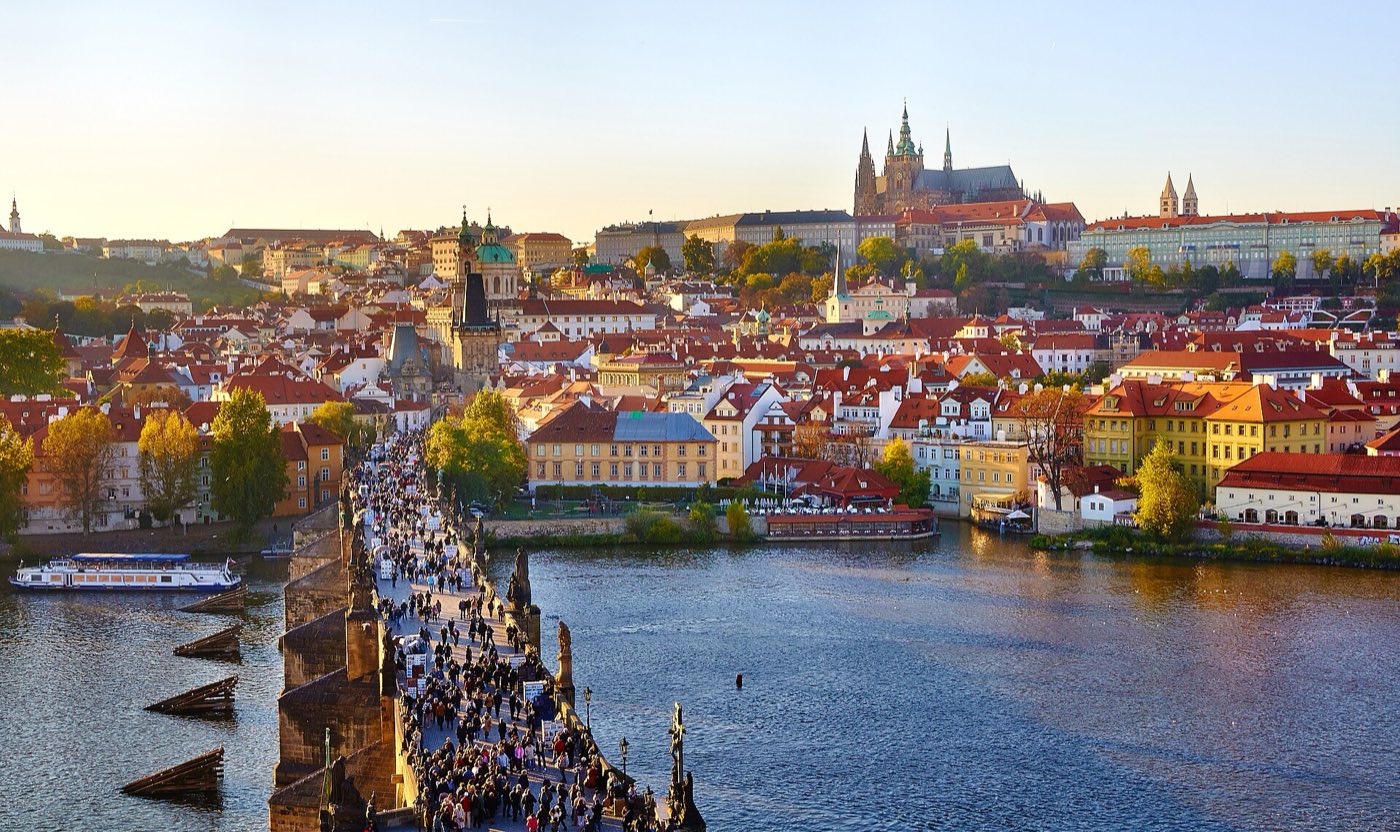
A landlocked country in the heart of Europe, the Czech Republic holds Gothic cathedrals, Baroque palaces, storybook riverside towns, and a beer culture that has been continuous since the 13th century. Travelers come for Prague's bridge-and-spire skyline, Český Krumlov's medieval riverbend, the spa town of Karlovy Vary, the bone chapel at Kutná Hora, and a pilsner tradition that invented the pale lager the world now drinks. Prague is where almost everyone starts, and for good reason. The city came through two world wars and forty years of state socialism with its medieval and Baroque core almost entirely intact, so you walk streets that look essentially as they did in the 17th century — cobbles, arcades, sgraffito-etched facades, the astronomical clock still chiming on the hour. Climb to the Castle and the whole red-roofed city opens out below with the Vltava curving through the middle. Cross the Charles Bridge at six in the morning before the tour groups and you'll understand why writers have been stuck on this city for four hundred years. The country is compact and well-connected by train — nothing is more than four hours from Prague. Český Krumlov in south Bohemia is the other essential stop, a UNESCO-listed bend of the Vltava wrapped in a castle town that genuinely looks painted. Plzeň and České Budějovice are the beer capitals if that's your angle. Moravia in the east is the wine country, quieter and cheaper, with Olomouc's Baroque squares and the karst caves around Brno. A week gets you Prague plus two or three of these; two weeks turns into a proper tour.
Things to Do
Prague Castle and St. Vitus Cathedral
The largest ancient castle complex in the world, Prague Castle sprawls across the hill above the Malá Strana quarter and is still the seat of the Czech presidency. At its center rises St. Vitus Cathedral, a Gothic giant begun in 1344 and finally finished in 1929, with Mucha's Art Nouveau stained-glass windows and the tomb of Saint Wenceslas. Budget three hours for the basic ticket — cathedral, Old Royal Palace, Basilica of St. George, Golden Lane — and go early; the line at 9 a.m. is a fraction of the midday one.
Charles Bridge at dawn
The 14th-century stone bridge across the Vltava is the most famous single piece of architecture in the country, lined with 30 Baroque saint statues and connecting the Old Town to Malá Strana. At noon in July it's a slow-moving crowd; at six in the morning you'll have it essentially alone with just a few photographers and fishermen. Come back at night when the lamps are lit and the castle is floodlit on the hill above. Cross it at least three times during your stay — the experience is different each time.
Prague's Old Town Square and Astronomical Clock
Staroměstské náměstí is the medieval heart of Prague, ringed by the Gothic Týn Church, the Baroque St. Nicholas, and the Old Town Hall whose 1410 astronomical clock still puts on its hourly show of apostles and skeletal figures. The show itself is modest — two minutes of mechanical procession — but the square is where you'll keep ending up for a beer or a coffee between sights. Climb the Old Town Hall tower for the best rooftop view in the city.
Český Krumlov's medieval riverside town
Three hours south of Prague by bus or train, Český Krumlov is a tight horseshoe bend of the Vltava wrapped in a 13th-century castle-and-town complex that reads like a painting from every angle. The Renaissance castle tower is painted in trompe-l'œil stonework; the town below is all red roofs and narrow lanes and river rafters paddling past in rented inflatables. Stay two nights in a pension on the river to see it after the day-trippers leave — the town transforms at dusk.
Karlovy Vary spa colonnades
In west Bohemia, Karlovy Vary (Carlsbad) is a 19th-century grand-imperial spa town built along the Teplá river valley with twelve hot mineral springs piped up through colonnaded arcades. You buy a porcelain spa cup at any shop, walk the colonnades sipping warm mineral water from each spring in turn, and afterward eat a Becherovka liqueur-infused oplatky wafer at one of the pastel Wilhelmine cafés. The International Film Festival in early July is the year's liveliest moment.
Kutná Hora's Sedlec Ossuary (Bone Church)
An hour east of Prague by train, the small town of Kutná Hora made its fortune from 13th-century silver mines and built two extraordinary Gothic churches on the proceeds: St. Barbara's Cathedral in the center of town, and the Sedlec Ossuary in a suburb where the bones of an estimated 40,000 plague and war victims are arranged into chandeliers, coats of arms, and chalices. It's macabre and meditative in equal measure — a small site, but one you won't forget.
Bohemian craft beer scene
The Czech Republic consumes more beer per capita than any country on Earth and invented the pale lager style now brewed worldwide. Plzeň is the pilgrimage — the Pilsner Urquell brewery still makes the original 1842 recipe and the cellar tour ends with unfiltered lager drawn straight from the oak-barrel lagering tanks. In Prague, skip the tourist pubs and hunt for smaller Prague micropivovar taprooms: U Medvídků, Lokál, Pivovarský Klub. Order the tankový pilsner — lager drawn from an unpressurized tank within a week of brewing. It's the freshest lager experience in the world.
When to Go
Late April through June and September through early October are the Czech sweet spots — warm days, long evenings, beer garden season open, and prices noticeably below the July-August peak. July and August are the high season with full tours and crowded Old Town Squares; book ahead. December is its own thing: Prague, Český Krumlov, and Olomouc run Christmas markets from late November through Christmas Eve, and the cities in snow with mulled wine and trdelník roasting over coals is genuinely magical if you can handle the cold. January and February are quiet and cheap, under gray skies but with the tourist crush gone.
Getting Around
The Czech rail network is excellent and covers nearly everywhere worth going — Prague to Brno in under three hours, Prague to Český Krumlov via České Budějovice, Prague to Karlovy Vary direct. Regiojet and Leo Express are private competitors to the state ČD, all three modern and cheap; book online a few days ahead for the lowest fares. Buses fill the gaps, especially for Český Krumlov (the bus is often faster than the train). Inside Prague, the metro-tram-bus network is one of Europe's best; a 24-hour unlimited ticket costs under €5 and covers everything. Renting a car is only worth it if you're deep-touring Moravia or the spa triangle; Prague itself is entirely walkable and driving is a headache.
Cost & Currency
The Czech Republic uses the koruna (CZK), not the euro — a reminder when paying in hotels or restaurants that quote dual prices. Rough costs: 60–90 CZK (€2.50–€3.70) for a half-liter of beer in a standard pub, 200–350 CZK (€8–€14) for a hearty pub lunch of svíčková or goulash, and 1,800–3,500 CZK (€75–€145) a night for a comfortable mid-range hotel in central Prague (meaningfully less outside the capital). Cards are accepted almost everywhere; keep 500–1,000 CZK in cash for small pubs, beer gardens, and market stalls. Tipping is expected — round up or add 10% at sit-down restaurants, and hand the tip to the server rather than leaving it on the table. Watch exchange booths in tourist Prague; many advertise great rates and hide them behind a fee.
Frequently Asked Questions
- Do I need a visa to visit the Czech Republic?
- Most Western travelers — EU citizens, Americans, Canadians, British, Australians — do not need a visa for stays up to 90 days within any 180-day period under the Schengen Area rules. From 2025 onward ETIAS pre-authorization will apply to visa-exempt non-EU travelers, similar to the US ESTA. Make sure your passport has at least six months of validity remaining from your planned departure.
- Is the Czech Republic safe for travelers?
- Yes — the country is one of the safer destinations in Europe, with very low violent crime and well-patrolled central Prague. The main risks are petty: pickpocketing in Old Town Square, on Tram 22 up to the Castle, and at Wenceslas Square after dark, plus dodgy currency-exchange booths and occasional taxi overcharging. Use Bolt or Uber rather than flagging a taxi, and use a real bank ATM rather than a Euronet.
- Is the tap water safe to drink?
- Yes, tap water is safe and meets EU drinking water standards across the Czech Republic, including in Prague. Locals drink from the tap in their homes. In restaurants you'll need to ask specifically for tap water — the default is bottled, still or sparkling, and servers won't volunteer the tap option.
- How long should I plan for a first trip?
- Five to seven days is a comfortable first visit — three or four nights in Prague for the core sights, a day trip to Kutná Hora, and two nights in Český Krumlov with the bus ride through south Bohemia. Ten days lets you add Karlovy Vary, Plzeň for the brewery, and a night in Olomouc or Brno. Prague alone can easily absorb a week if you want slower museum days and afternoons in beer gardens.
- What's the best way to get from Prague to Český Krumlov?
- Take the direct Regiojet or Leo Express bus from Prague's Florenc or Na Knížecí station — three hours, reserved seats, onboard Wi-Fi and snacks, and fares around 300–500 CZK booked a few days ahead. The train requires a change at České Budějovice and takes longer. If you're continuing on, the bus also runs direct from Český Krumlov to Salzburg and Vienna.
Plan a Trip to Czech Republic
Have you been to Czech Republic?
Track 195 countries, 50 states & 63 national parks on your map