Hungary
- Capital
- Budapest
- Population
- 9.6M
- Currency
- HUF
- Languages
- Hungarian
Overview
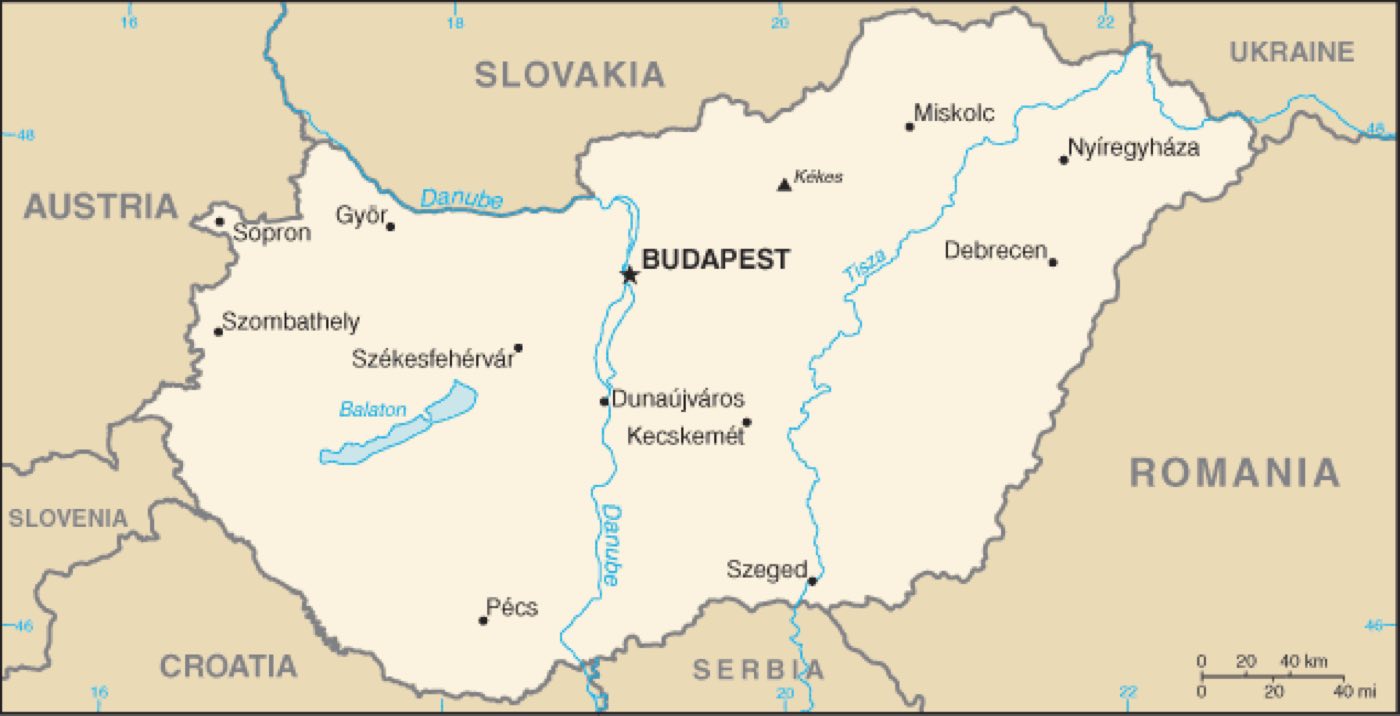
A landlocked central European country shaped by the Danube, the steppe of the Great Hungarian Plain, and a language spoken almost nowhere else. Hungary sits on top of one of the world's richest thermal-water aquifers — there are more than 1,300 hot springs across the country, and in Budapest alone a dozen grand bathhouses built over Ottoman and Habsburg foundations still fill steaming every day. This geology gives the country a genuinely distinctive travel identity: almost everywhere you go, there is somewhere to soak. Budapest is the draw for most first visitors, and with good reason. The city splits into hilly, medieval Buda on the west bank and flat, grand Pest on the east, joined by a sequence of chain bridges across the Danube that light up at night. Its architecture is mostly late-19th-century imperial on the Pest side — Parliament's neo-Gothic gables, Andrássy Avenue's Haussmann-style boulevards, the Opera House — layered over Roman ruins, Turkish baths, and the aching Jewish Quarter whose ruin pubs now sit inside the same tenement courtyards that emptied during the Holocaust. Beyond the capital, Hungary reveals itself slowly. The wine country around Tokaj and Eger, the horse-riding plains of Hortobágy, the baroque town of Pécs in the south — these reward the second and third trip rather than the first. Seven days is enough to do Budapest properly with a day or two out to Eger or Lake Balaton; ten gives you room to get into Tokaj.
Things to Do
Széchenyi Thermal Baths in Budapest
The largest medicinal bath complex in Europe, built in neo-Baroque yellow stucco in 1913 — eighteen pools fed by two hot springs, the outdoor pools steaming in the middle of a Budapest winter with locals playing chess on floating boards. Go early on a weekday morning to avoid the crowds, or after dark on a Saturday for the sparties (spa parties) if that is your speed. Bring your own towel and flip-flops to save on the rental fees, and allow at least three hours to properly rotate through the hot pools, the cooler swimming pool, the saunas, and the steam rooms.
Hungarian Parliament Building and Danube views
A neo-Gothic palace 268 meters long on the Pest bank of the Danube, finished in 1904 and still the tallest building in Budapest by local bylaw. The guided interior tour takes about 45 minutes and walks you through the cupola hall, the old upper-house chamber, and the Holy Crown of St. Stephen kept under armed guard. For photographs, the best view is from across the river at Batthyány tér or the Fisherman's Bastion on the Buda side at dusk, when the building catches the last sun and the lights come up along the embankment.
Buda Castle and Fisherman's Bastion
On the Buda side, Castle Hill holds a UNESCO-inscribed medieval quarter reconstructed after heavy WWII damage. The Royal Palace houses the Hungarian National Gallery and the History Museum; Matthias Church sits at the plateau's center with a tiled roof that photographs better than almost anything in the city; and the Fisherman's Bastion's seven white-stone turrets (one for each of the Magyar tribes that founded the nation) gives the Danube's best wide panorama. Walk up via the cobbled Király Lépcső steps from Clark Ádám tér rather than riding the funicular — more rewarding, ten minutes, free.
Tokaj wine region tastings
In the northeast, two and a half hours from Budapest by car or train, Tokaj is the historic home of Aszú — a sweet wine made from botrytised grapes that Louis XIV called the wine of kings and the king of wines. The region is a UNESCO cultural landscape of volcanic slopes, village cellars tunneled into tuff, and small family producers (Disznókő, Királyudvar, Oremus) who will sit you down for a tasting flight of dry Furmint and aged Aszú for a modest fee. A two-night stay in Tokaj town is the right amount; one day is not enough.
Eger castle and Valley of the Beautiful Women wine cellars
Two hours northeast of Budapest, Eger is a baroque town built around a 13th-century castle that famously held off an Ottoman siege in 1552 — the wine the defenders drank turned red the moustaches of the attackers and was thereafter called Bull's Blood (Egri Bikavér). On the town's edge, the Valley of the Beautiful Women (Szépasszony-völgy) is a horseshoe of around 60 wine cellars cut into a hillside, each a small tasting room with cheap glasses of Bikavér and Olaszrizling. Go with an appetite and a walking pace; nobody should drive after.
Hortobágy National Park puszta horseback riding
Hungary's Great Plain stretches flat and windswept east of Budapest — an old nomadic steppe where herds of long-horned Magyar grey cattle, racka sheep, and water buffalo still graze. Hortobágy National Park protects the core of the puszta and runs carriage rides out to watch the shepherd horsemen (csikós) perform their famous five-horse ride. Stay at one of the csárdák (plains inns) for a dinner of goulash cooked over open flame and sleep in the kind of deep silence that does not exist anywhere else in western Europe.
Pécs's early Christian necropolis UNESCO site
In Hungary's south near the Croatian border, Pécs is a university town of Roman and Ottoman layers — the 16th-century Mosque of Pasha Qasim still stands in the main square as a Catholic church, and the early Christian necropolis beneath the cathedral preserves the finest painted tombs north of the Alps from the 4th century. A two-day stop on the way through to Croatia, with the Villány wine region 30 kilometers south for a strong day of Cabernet Franc tasting.
When to Go
April through June and September to mid-October are the best stretches — warm days, low humidity, Danube outdoor dining open, and the wine harvest in the vineyards in early September. July and August are hot and busy, but also the season of the Sziget music festival on an island in the Danube in the second week of August — a one-week draw that brings in about 400,000 people. December turns Budapest into one of Europe's better Christmas-market cities, with Vörösmarty tér and St. Stephen's Basilica the main squares; bath visits in the outdoor Széchenyi pools are at their most atmospheric on a snowy night. Winter is shoulder-pricing territory and perfectly viable if the cold does not bother you.
Getting Around
Budapest's public transport is excellent and cheap — a network of four metro lines, trams (including line 2 along the Danube, one of the prettiest tram rides in Europe), and buses. A 72-hour travel card is the best value for a weekend. Intercity trains run by MÁV connect Budapest to Eger, Pécs, Tokaj, and the Lake Balaton towns reliably; book second-class reserved seats in advance for peak trains. Renting a car makes sense for wine-country trips (Tokaj, Villány, Badacsony on Lake Balaton) but is overkill in Budapest where parking is painful. Taxis should always be called through Főtaxi, Bolt, or the free-now app rather than hailed — unregistered taxis overcharge tourists at the airport and tourist hotspots.
Cost & Currency
Hungary uses the forint (HUF), around 350 HUF to 1 euro and 320 HUF to 1 US dollar in early 2026. Despite EU membership, the forint has been the budget traveler's friend for years — though inflation has pushed prices up meaningfully since 2022. Expect around 1,500–2,500 HUF for an espresso and pastry, 4,000–7,000 HUF for a neighborhood lunch, 20,000–35,000 HUF a night for a comfortable mid-range hotel in Budapest, and 10,000–15,000 HUF for a full bath entry at Széchenyi or Gellért. Cards are accepted nearly everywhere in cities; keep some cash for ruin pubs, small wine cellars, and cab drivers who claim the card reader is broken. Tipping is 10% at sit-down restaurants, rounded up.
Frequently Asked Questions
- Is Hungary safe for travelers?
- Yes — Hungary has low violent-crime rates and Budapest is safe to walk at night in most areas. The main issues are pickpocketing on the metro and crowded trams (notably the 4/6 and the metro M3), and some taxi scams around Keleti and Nyugati stations and the airport if you do not use a called or app-dispatched cab. Standard urban awareness is enough.
- Do I need to speak Hungarian?
- No — English is widely spoken in Budapest among younger people, in restaurants, hotels, and tourism businesses. German works well among older Hungarians in the wine regions and border areas. Hungarian is a Uralic language unrelated to anything else around it, so do not plan to pick it up on the fly, but köszönöm (thank you) and szia (hi/bye) will be appreciated everywhere.
- How many days do I need for Budapest?
- Three full days is the minimum to do the city well — one for the Pest side (Parliament, St. Stephen's, the Jewish Quarter, the Opera), one for the Buda side (Castle Hill, Gellért Hill, a thermal bath), and one for a day trip to the Danube Bend (Szentendre, Visegrád, Esztergom) or down to Lake Balaton. Four or five days lets you settle in and slow down.
- Can I visit the thermal baths with a swimsuit?
- Yes — the main baths (Széchenyi, Gellért, Lukács, Rudas) all require swimsuits in the co-ed pools. A few older Turkish baths have single-sex mornings where bathing is naked, but the modern sessions are all swimsuit-required. Bring your own or rent one on site; the same goes for towels and sandals.
- What currency should I bring?
- Neither forints nor euros in cash — withdraw forints from an ATM on arrival. Avoid the Euronet ATMs in tourist areas which charge poor exchange rates; use the bank-branded ATMs of OTP, K&H, or Erste instead. Card payments work almost everywhere and are the easier default; keep 20,000–30,000 HUF in cash for tips and small purchases.
Plan a Trip to Hungary
Have you been to Hungary?
Track 195 countries, 50 states & 63 national parks on your map