Austria
- Capital
- Vienna
- Population
- 9.1M
- Currency
- EUR
- Languages
- German
Overview
An alpine republic in the heart of Central Europe, Austria holds the weight of an empire that once ran from the Adriatic to the Carpathians and still shows in the scale of its capital. You come for Vienna's coffee-house afternoons and museum-dense Ringstrasse, for Salzburg and the Mozart obsession that fills every second shop window, for the mirror-still lakes of the Salzkammergut, and for the serious business of skiing in the Tyrolean Alps where the season runs Christmas through Easter. What stays with you is the sense of a country that takes its pleasures seriously. The coffee houses are not just places to drink coffee — they're designated UNESCO intangible cultural heritage, and you're expected to linger with a newspaper and a glass of water for as long as you like. The music scene in Vienna is still largely classical and still largely affordable: standing-room tickets at the Staatsoper go for a handful of euros if you queue. The cakes matter. The punctuality of the trains matters. The knee-high socks at a village festival matter. Austria rewards travelers who want a soft-landing introduction to German-speaking Europe without Germany's grit or Switzerland's prices. The cities are walkable, English is widely spoken in tourist contexts, the trains are on time, and the countryside between is quietly, reliably good-looking — neat farms, onion-domed churches, cowbells from every hillside. A week splits well between Vienna, Salzburg, and a lake or mountain stop; two weeks lets you add Innsbruck and the Wachau.
Things to Do
Schönbrunn Palace in Vienna
The Habsburgs' summer residence sits on the western edge of Vienna with 1,441 rooms, most of them unimpressive from the outside and quietly staggering once you're through the door. The Grand Tour audio guide takes you through forty of them, including the Hall of Mirrors where six-year-old Mozart performed for Maria Theresa. Leave time for the gardens, which are free — climb to the Gloriette monument on the hill behind the palace for the postcard view back across the city, and visit the world's oldest zoo on the west side if you have an afternoon.
Salzburg's Old Town and Hohensalzburg Fortress
Salzburg's compact old town fits on a flat bend of the Salzach river, easily walked in a morning, and the fortress looming above it is reached by a funicular that climbs the cliff in ninety seconds. Inside the walls you get a medieval prince-bishop's residence with princely views in every direction — Alps to the south, old town below, baroque spires and green domes punctuating the rooftops. Back down in town, Mozart's birthplace on Getreidegasse is the obvious stop; Cafe Tomaselli, where Mozart and his father drank coffee, is the better one.
Hallstatt lakeside village
Perched between a lake and a near-vertical mountainside in the Salzkammergut, Hallstatt is the image that launched a thousand calendars and, more recently, an Austrian theme park in China. It's small — you can walk the length of the village in ten minutes — and crushingly pretty, especially from the little ferry that crosses the lake from the train station. Come for an overnight rather than the bus-tour afternoon: the crowds thin after six, the light softens, and the salt mine above the village (the oldest in the world, still operable) is a proper morning outing.
St. Anton and Kitzbühel ski resorts
Austria's two most famous ski names sit in the Tyrolean Alps and do very different things well. St. Anton is the serious skier's town — steep off-piste terrain in the Arlberg, a lift system that links Lech and Zürs, and the Krazy Kanguruh apres-ski bar that locals pretend to be embarrassed about. Kitzbühel is the glamour end, with the Hahnenkamm downhill course (the most feared race on the World Cup circuit in January) and a medieval town that stays lovely even when the lifts are closed. Season runs late November to April.
Vienna's Belvedere and Kunsthistorisches Museum
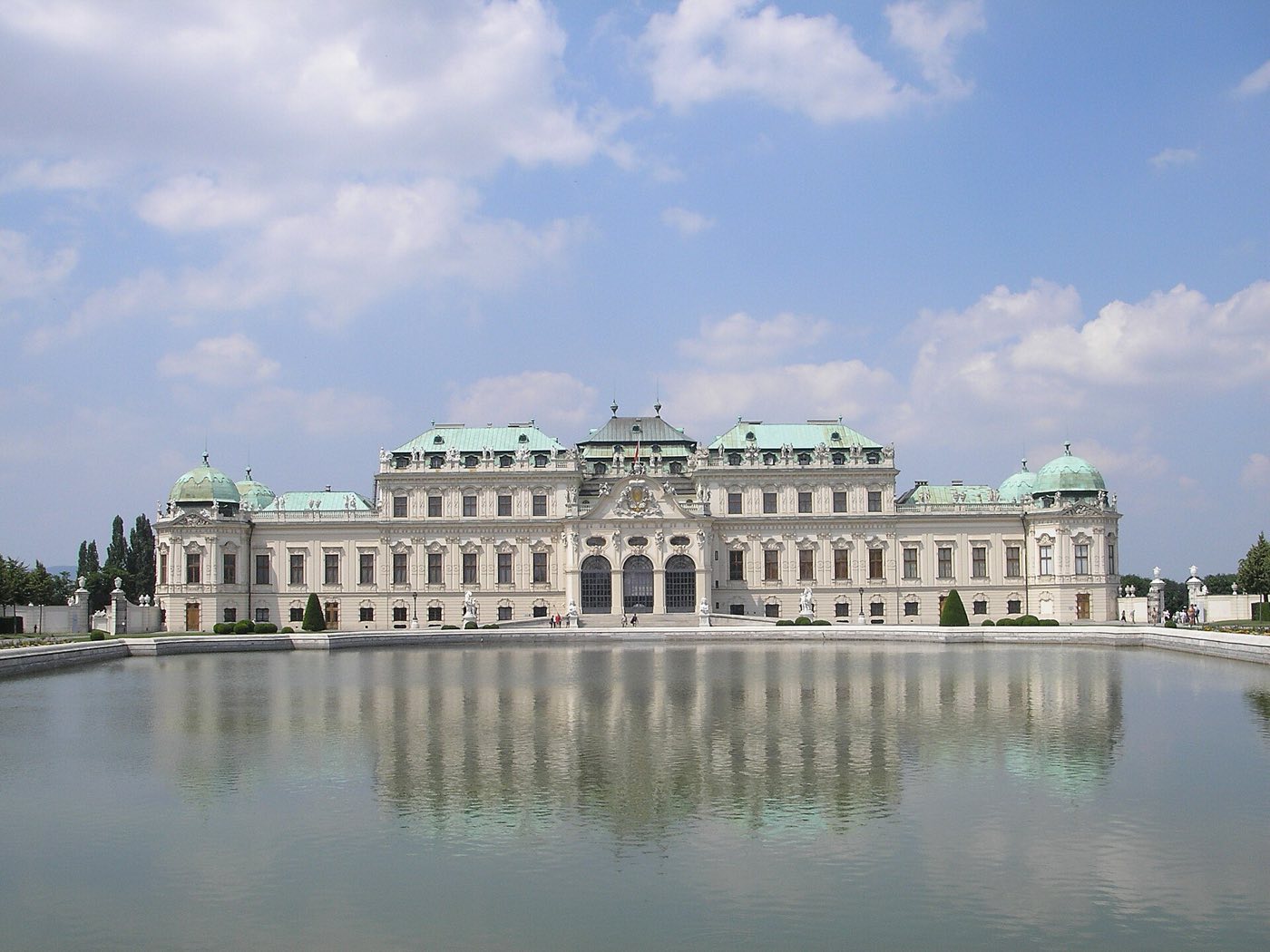
If you only have a day for Vienna's museums, split it between these two. The Belvedere, in a hilltop palace complex, holds Klimt's "The Kiss" and a knockout collection of Viennese Secession and Biedermeier painting. The Kunsthistorisches, on the Ringstrasse, is one of Europe's five or six greatest art collections — Bruegel's largest gathering of works anywhere, a dozen Vermeers and Caravaggios, Egyptian antiquities, and a coffee room in the dome that's almost reason enough on its own. Buy a combined Belvedere ticket that includes the Lower Belvedere; the garden between them is free to walk.
Innsbruck and the Tyrolean Alps
The capital of the Tyrol sits in a broad valley with mountains rising 2,000 meters on either side, and the contrast between the Habsburg old town and the alpine backdrop is the whole point. The Golden Roof — an oriel window covered in 2,657 fire-gilded copper tiles — marks the center, and from the Nordkette funicular designed by Zaha Hadid you can be on a 2,300-meter ridge in twenty minutes from the main square. Swarovski's crystal museum at Wattens is fifteen kilometers east and surprisingly good; Schloss Ambras on the edge of town is the more serious cultural stop.
Wachau Valley Danube cruise
West of Vienna the Danube threads through the Wachau, a narrow valley of terraced vineyards and apricot orchards between the market towns of Krems and Melk. The day-boat from Vienna is a long commit; the smarter move is to train to Melk, tour the enormous baroque abbey that sits above the town on a rock, take the afternoon cruise 35 kilometers downriver to Krems, and train back to Vienna. Wine tastings at Domäne Wachau or the small heurigen along the way are worth the stop — Grüner Veltliner and Riesling, at their most serious here.
When to Go
May through September is prime for the lakes, cities, and hiking — warm days, long light, the beer gardens full, and the alpine huts open for summer walkers. July and August are the busiest and most expensive months, so aim for June or early September if you can. December brings Christmas markets across Vienna, Salzburg, and Innsbruck that are genuinely worth traveling for — Vienna's Rathausplatz market and Salzburg's Christkindlmarkt in Mirabellplatz are the headliners. Ski season runs late November through early April in the Tyrol and Vorarlberg; March is often the sweet spot with longer days and reliable snow.
Getting Around
Austria's rail network is the obvious way to move — ÖBB trains connect every city and most towns, run on time, and the flagship Railjet service runs Vienna to Salzburg in 2 hours 20 minutes and onward to Innsbruck in another two. The Klimaticket, if you're staying more than a few weeks, is an all-network annual pass; for shorter visits, point-to-point tickets booked a week ahead are cheap enough. Within Vienna, Salzburg, and Innsbruck the U-Bahn and tram systems cover everything — single tickets are a few euros, day passes better value. A rental car only earns its keep for the Salzkammergut lakes, smaller alpine villages, or the wine regions east and north of Vienna.
Cost & Currency
Austria uses the euro and prices land between Germany and Switzerland — noticeably more than the Czech Republic next door but cheaper than Zurich by a wide margin. Expect €4–5 for a melange at a proper Viennese coffee house (the sit-down charge is the point), €14–20 for a weekday lunch of schnitzel or tafelspitz, and €110–160 a night for a mid-range hotel in Vienna, a bit less in Salzburg, more in ski-season Tyrol. Cards are accepted almost everywhere, though a handful of coffee houses and heurigen are still cash-only — keep €50 in your wallet. Tipping is modest: round up at cafes, add 5–10% at restaurants if service was warm.
Frequently Asked Questions
- Do I need to speak German?
- No — English is widely spoken in Vienna, Salzburg, Innsbruck, and any tourist-facing business, and staff at hotels and train stations will almost always switch without being asked. A few polite German phrases (grüß Gott, danke, bitte) go a long way in smaller towns and village guesthouses, and in rural Tyrol you'll occasionally meet older locals who prefer dialect to standard German, which can stump even Germans.
- Is Austria safe for travelers?
- Yes — Austria consistently ranks among the safest countries in Europe, with low violent crime and well-maintained public spaces. Petty theft does happen around Vienna's main tourist draws — Stephansplatz, the Prater, and the main train stations — so keep an eye on your bag and phone. Alpine risks are real in winter: avalanche awareness matters if you're going off-piste, and weather changes fast above the treeline.
- How long should I plan for a first trip?
- Seven to ten days is a comfortable first visit — three nights in Vienna, two in Salzburg, and the rest for Hallstatt or Innsbruck depending on whether you're leaning lakes or mountains. If you're adding a ski week in Tyrol, treat that as a separate trip; mixing cities and slopes in ten days is possible but rushed. Two weeks opens up the Wachau wine region and a deeper look at the Tyrolean valleys.
- What's the best way to get from Vienna to Salzburg?
- Take the ÖBB Railjet — it's the fastest direct service at 2 hours 22 minutes, with comfortable reserved seats, a dining car, and departures roughly every hour throughout the day. Book on oebb.at a few days ahead for the cheapest Sparschiene fares (as low as €19), though walk-up tickets are almost always available at around €55. Avoid driving unless you're also stopping in the Salzkammergut.
- Is Austria a good winter destination?
- Yes — for skiing and Christmas markets, it's one of Europe's top picks. The Tyrolean and Vorarlberg resorts (St. Anton, Lech, Ischgl, Kitzbühel) offer world-class terrain and lift infrastructure, usually at meaningfully lower prices than equivalent Swiss resorts. Vienna and Salzburg shine in the Advent weeks with markets, concerts, and cafe culture at its coziest. January and February are coldest but often the clearest days for both snow conditions and city walking.
Plan a Trip to Austria
Have you been to Austria?
Track 195 countries, 50 states & 63 national parks on your map