Serbia
- Capital
- Belgrade
- Population
- 6.6M
- Currency
- RSD
- Languages
- Serbian
Overview
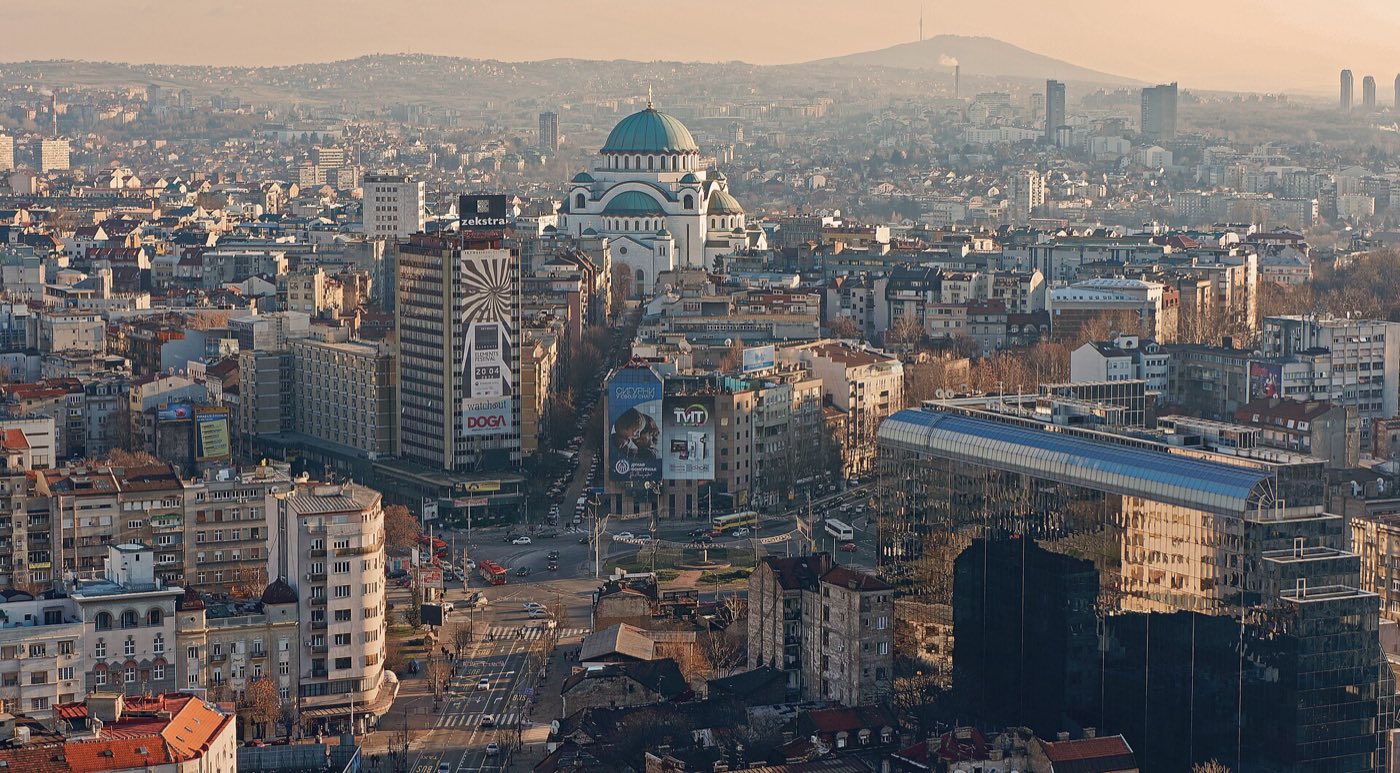
A Balkan country of fiercely held identity, frescoed Orthodox monasteries, and one of Europe's most underrated capitals, Serbia rewards travelers who prefer places that haven't yet been smoothed down for the guidebooks. Visitors come for Belgrade's fortress and river barges, the medieval churches of Studenica and Sopoćani, the forested canyons of Tara and Đerdap, and a café culture that takes three hours over a single coffee and calls it efficient. Belgrade is the entry point for most people and it catches you off guard. The city sits at the confluence of the Sava and the Danube, with Kalemegdan fortress on the prow between them and the neighborhoods of Dorćol, Vračar, and Savamala spreading back in cobbled, Austro-Habsburg-turned-socialist-turned-whatever-this-is layers. You drink rakija in a kafana, eat ćevapi off a grill on Skadarlija, and at night you walk down to the river barges where the splavovi nightclubs run from midnight to six. Serbia is for travelers who want substance — layered history, serious food, a distinct literary and musical culture, and prices that still feel like the early 2010s. English is common in Belgrade and Novi Sad, less so in the countryside. Bring an open mind about the 1990s, a willingness to eat meat and drink strong spirits, and about a week to get a proper feel for the country.
Things to Do
Belgrade's Kalemegdan Fortress and splavovi river nightclubs
The old fortress on the headland where the Sava meets the Danube has been fought over by Romans, Ottomans, and Habsburgs, and the walls still carry all of it. Wander the ramparts at sunset for the city's best views over the rivers, duck into the small military museum, then descend to the waterfront. The splavovi — floating clubs moored along the Sava — are a genuine Belgrade institution, running from indie-rock barges to techno to turbo-folk. Pick a row, walk it, and go where the music sounds right.
Exit Festival in Novi Sad
Held inside Novi Sad's Petrovaradin Fortress every July, Exit is the Balkans' biggest music festival — four nights of international electronic, rock, and hip-hop acts across twenty-plus stages threaded through the old bastions. The setting does half the work: you walk from one tunnel-stage to another at three in the morning with the Danube below you. Novi Sad itself is worth a day or two anyway, a compact Vojvodina capital with wide pedestrian streets and excellent coffee.
Studenica Monastery UNESCO site
Two and a half hours south of Belgrade, the 12th-century monastery founded by Stefan Nemanja sits inside a walled compound in a forested valley. The two white-marble churches at its center hold some of Serbia's finest medieval frescoes, still in use by the resident monks for daily liturgy. The monastery is at the heart of Serbian Orthodox identity and a living community, so dress modestly; women are asked to cover their heads, and long sleeves are expected year-round.
Tara National Park and Drina River House
In western Serbia near the Bosnian border, the Tara plateau drops into the Drina river canyon through dense fir and spruce forest with brown bears, lynx, and some of Europe's oldest trees. Hire a boat in Perućac or Bajina Bašta for the afternoon and you'll glide past the photogenic little cabin built on a single rock mid-river — the Drina River House, which has been rebuilt seven times since 1968 after floods, and has become a genuine Serbian icon.
Drvengrad (Küstendorf) Emir Kusturica's village
The filmmaker Emir Kusturica built a traditional wooden village on the slopes above Mokra Gora to use as the set for Life Is a Miracle and then kept it as a hotel, cinema, and arts complex. Streets are named for Fellini, Tarkovsky, and Maradona. The Šargan Eight narrow-gauge railway climbs through the surrounding hills on a figure-eight track that doubles back on itself repeatedly to gain elevation — a proper century-old mountain train experience, and twenty minutes' drive from Drvengrad.
Đavolja Varoš (Devil's Town) earth pyramids
In the country's south near Kuršumlija, a hillside of strange stone pillars — 202 of them, some fifteen meters tall, each capped by a flat stone — has been eroded out of volcanic soil over centuries. The light is best early or late, and the hike through the site takes about an hour on wooden walkways. Two nearby mineral springs, one red and one famously acidic, complete the otherworldliness. It's a three-hour drive from Niš or five from Belgrade.
Niš Fortress and Skull Tower
Serbia's third city is usually passed through on the way to Bulgaria or Greece, which is a mistake — Niš has an excellent Ottoman-era fortress on the Nišava river and the sobering Skull Tower, a monument built by the Ottomans in 1809 from the embedded skulls of Serbian rebels after the First Serbian Uprising. The Mediana Roman ruins and the Red Cross concentration camp memorial round out a serious half-day of history, then it's craft beer and grilled meat on a terrace in the old town.
When to Go
May, June, and September are the most comfortable months — warm days, cool evenings, and everything open. July and August are hot and the cities empty out on weekends for the coast or the mountains, but this is when Exit Festival happens and Belgrade's terrace culture is at full tilt. October brings harvest and wine festivals across Vojvodina and the Šumadija. Winters are cold and gray in the lowlands but the ski resorts at Kopaonik and Zlatibor run from December through March.
Getting Around
The modernized motorway from the Hungarian border through Belgrade south to the Macedonian and Bulgarian borders makes long-distance driving straightforward — tolls are paid by ticket or tag. Intercity buses are the true backbone of Serbian travel, running frequently between every town worth visiting, and Belgrade's main bus station has connections to almost the whole country. Trains are slower than buses on most routes but the Belgrade to Bar line through the Montenegrin mountains is scenic and cheap. Within Belgrade, GSP buses and trams cover the city, taxis are affordable and metered, and CarGo is the main ride-hailing app.
Cost & Currency
Serbia uses the Serbian dinar (RSD), and the country remains one of Europe's better travel values — easily 40% below eurozone prices for food and accommodation. Expect 200–300 RSD (about €2) for an espresso on a Belgrade terrace, 1,000–2,000 RSD for a solid lunch of ćevapi or pljeskavica with salad, and 6,000–12,000 RSD a night for a mid-range Belgrade hotel. Cards are accepted at most hotels, restaurants, and supermarkets; keep cash for kafanas, markets, and smaller towns. ATMs are everywhere. Tipping is gentle — 10% at sit-down restaurants, round up in taxis and cafés.
Frequently Asked Questions
- Do I need a visa to visit Serbia?
- Most Western travelers — US, UK, EU, Canada, Australia — can enter visa-free for stays up to 90 days within a 180-day period. You'll need a passport valid for at least 90 days beyond your departure. Register with local police within 24 hours of arrival; most hotels do this for you automatically.
- Is Serbia safe for travelers?
- Yes — Serbia is a safe country to travel in, with violent crime against visitors very rare. The usual urban precautions apply in Belgrade around crowded transit and nightlife zones. Football matches can produce brief flashes of hooligan activity; steer clear if one's on. Driving is the main daily risk — local habits can be aggressive, especially on two-lane roads outside cities.
- Can I use euros in Serbia?
- No — Serbia uses the dinar, and while a handful of hotels and tour operators will quote prices in euros, you'll pay in dinars almost everywhere. Change money at banks or licensed exchanges (menjačnica); rates are fair and spreads are small. Avoid airport exchanges if you can help it — the rates are noticeably worse than in the city.
- Is the tap water safe to drink?
- Yes, tap water is safe and drinkable throughout Serbia, including in Belgrade and the major cities. In mountain areas like Tara or Zlatibor the spring water is genuinely excellent. A few older neighborhoods have ancient plumbing that affects taste rather than safety, but you can drink the tap water anywhere without worry.
- How do Serbs feel about discussing the 1990s?
- With complexity — the wars of the 1990s are recent enough that almost every adult has a direct connection to them, and views differ sharply by generation, politics, and region. Most Serbs are happy to discuss history if you're genuinely curious and not performative; younger Belgraders are especially frank. Listen more than you argue and you'll learn a great deal.
Plan a Trip to Serbia
Have you been to Serbia?
Track 195 countries, 50 states & 63 national parks on your map