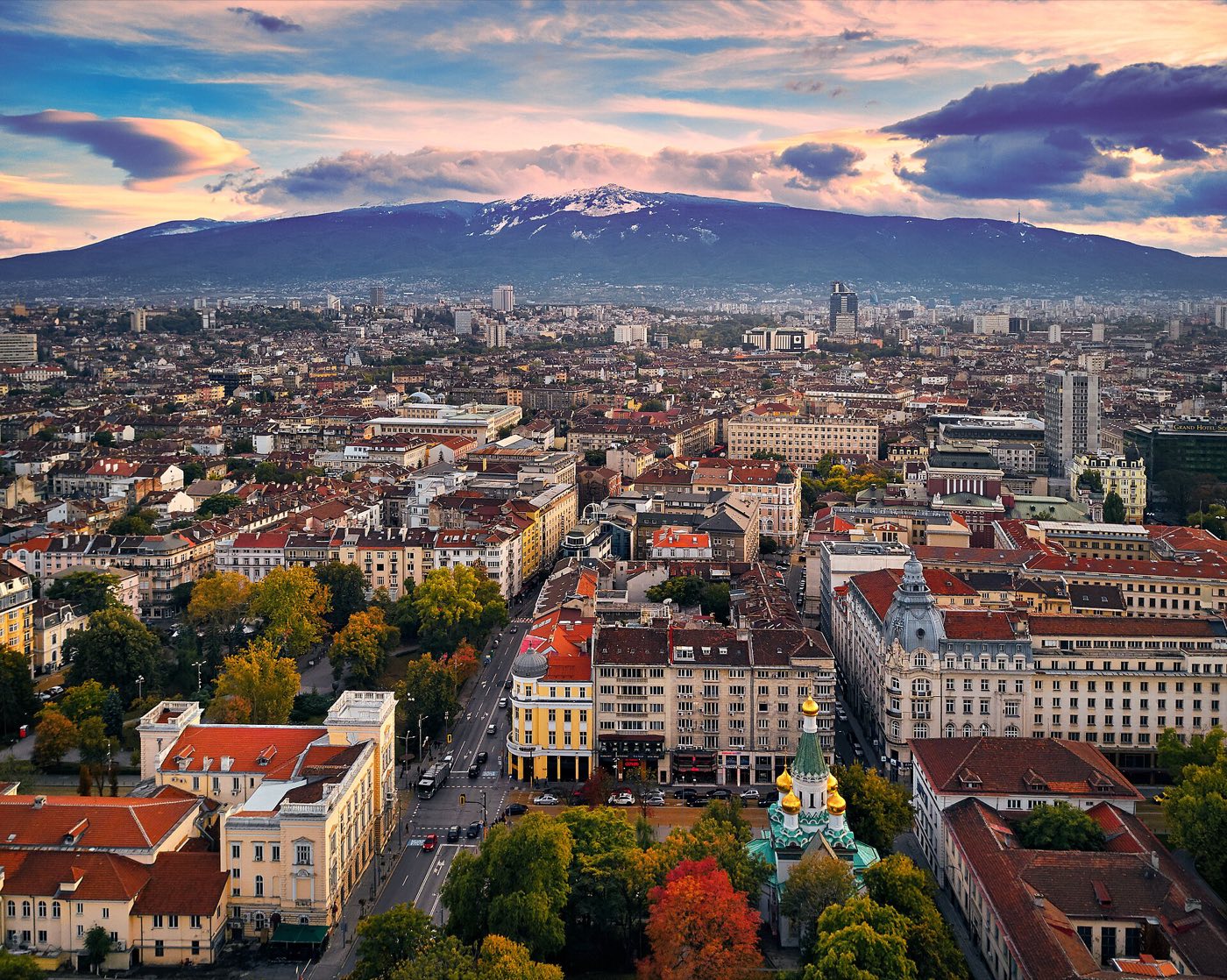
Bulgaria
- Capital
- Sofia
- Population
- 6.5M
- Currency
- BGN
- Languages
- Bulgarian
Overview
A southeastern European country where rose-filled valleys, Black Sea beaches, and medieval monasteries sit alongside some of the oldest continuously inhabited cities on the continent. Travelers come for Sofia's layered past, the frescoed courtyards of Rila, the Valley of the Roses in full June bloom, and prices that have not yet caught up with the rest of the EU. What surprises most first-time visitors is how quickly the country changes shape. You can stand at a 6th-century Thracian tomb in the morning, eat lunch in a Roman amphitheater still used for summer concerts, and be on a pine-shaded mountain trail by late afternoon. Plovdiv's cobbled Old Town layers Ottoman, Bulgarian Revival, and Roman eras on top of each other, sometimes in the same building; Sofia's yellow-brick boulevards bring you past Byzantine churches and Soviet apartment blocks on the same walk. Bulgaria rewards slow travel and a willingness to sit still. Meals stretch long over rakia and shopska salad, village guesthouses charge less than a city hotel room, and the train across the Balkan Mountains between Sofia and Varna costs less than breakfast in Vienna. Come for the monasteries, the wine, and the rose harvest, and stay for the quieter thing — a country that still feels like its own place, not a polished European set piece.
Things to Do
Rila Monastery UNESCO site
Two hours south of Sofia, tucked into a forested fold of the Rila Mountains, the monastery's striped arcades and painted outer galleries are the single most recognizable image of Bulgarian Orthodoxy. Founded in the 10th century and rebuilt in the 1800s after a fire, the frescoes in the main courtyard are worth an hour alone — biblical scenes, devils with teeth, saints in ochre and ultramarine. Arrive before the day-trip buses at around 11, and consider staying a night in the guesthouse inside the walls so you have the place to yourself at dawn.
Alexander Nevsky Cathedral in Sofia
The gold-domed neo-Byzantine giant at the center of Sofia was built between 1882 and 1912 as a memorial to the 200,000 Russian soldiers who died liberating Bulgaria from Ottoman rule. Step inside for the smell of beeswax and the low chant of Orthodox liturgy — the interior is dim, gilded, and cavernous, with a mosaic floor and an iconostasis of onyx and alabaster. The small crypt museum downstairs holds one of the finest icon collections in the Balkans and is worth the extra few leva.
Plovdiv's Roman amphitheater and Old Town
Bulgaria's second city is older than Rome and wears its seven thousand years openly. The 2nd-century Roman theater on the central hill still hosts summer opera and rock concerts, and the cobbled Old Town above it is a cluster of timber-framed merchant houses from the Bulgarian Revival, most painted in deep reds, greens, and creams. Kapana, the old craftsmen's quarter below, has filled with small bars and coffee roasters — come in the evening when the lanes are lit with string lights.
Valley of the Roses near Kazanlak
For three weeks around late May and early June, the valley between the Balkan and Sredna Gora ranges produces roughly half the world's rose oil — a tiny bottle of attar requires a ton of Rosa damascena petals. The Rose Festival in Kazanlak crowns the harvest with folk dancing and a queen, but arrive at the fields any dawn in the season to see women with wicker baskets picking before the sun burns the oil off. Factory tours and perfume tastings are easy to arrange in town.
Veliko Tarnovo's Tsarevets Fortress
The medieval capital of the Second Bulgarian Empire clings to three hills above a tight bend of the Yantra River. The reconstructed Tsarevets fortress sits on the central hill, with ramparts you can walk at sunset and a patriarchal church at the summit whose modern frescoes divide opinion but reward a visit. The old town below is full of workshops — leather, icons, knives — and the summer sound-and-light show projected onto the fortress walls is cheerfully over the top.
Black Sea beaches at Sozopol and Nessebar
Two small peninsulas on the southern Black Sea coast hold the prettiest seaside towns in the country. Nessebar is UNESCO-listed for its thirteen surviving medieval churches and wooden Revival houses, reached by a causeway from a modern resort. Sozopol, further south, is the easier place to actually swim and linger — wooden jetties, a forested public beach at Kavatsite ten minutes away, and fish restaurants built into the old town walls. Go in June or September if you can; August is packed.
Seven Rila Lakes hike
High above the monastery, a chain of seven glacial lakes sits in a cirque at around 2,100 to 2,500 meters — each named for its shape, from the Kidney to the Eye to the Tear. A chairlift from Panichishte takes you most of the way up; the full loop takes four or five hours at a relaxed pace with a climb to a saddle between the top two lakes for the classic overhead view. Wildflowers peak in July, and afternoon thunderstorms are common — start early.
When to Go
Late May through September covers most travelers — warm weather across the whole country, the rose harvest in early June, swimming in the Black Sea from late June through early September, and alpine hiking at its best from July to September. April and October are shoulder gold: open monasteries, autumn color in the Rhodopes, and hotel rates that drop by a third. For skiing, mid-December through March at Bansko, Borovets, and Pamporovo is dependable and far cheaper than the Alps. August is the one month to be careful about — Black Sea resorts fill up, prices rise, and Sofia empties as residents leave town.
Getting Around
Trains connect Sofia with Plovdiv, Burgas, Varna, and Veliko Tarnovo on cheap but slow routes — scenic, reliable, and rarely full. Buses are often the faster choice between cities, especially to Bansko, Rila, and the Black Sea resorts; book at the central bus stations or through the Biletnacentrala site. Renting a car makes sense if you want to combine monasteries, mountain villages, and rose-valley towns into a single loop; roads are paved on main routes and the motorway network keeps expanding, though rural lanes narrow quickly. Sofia has a clean metro and plentiful taxis; agree on the meter before you set off to avoid rare but persistent overcharging at the airport.
Cost & Currency
Bulgaria uses the Bulgarian lev (BGN), pegged to the euro at about 1.96 to 1, and euro adoption has been repeatedly delayed but remains on the near horizon — expect cards and prices to show both during any transition. Everyday costs stay well below Western Europe: a coffee runs 3–5 leva, a hearty tavern lunch of shopska salad, grilled meat, and a glass of local wine lands around 20–35 leva, and a comfortable mid-range hotel room in Sofia or Plovdiv costs 100–180 leva. Cards are accepted in cities, less reliably in small villages and monasteries; keep a hundred leva in cash for rural stops. Tipping is light — round up taxis and leave 10% at a sit-down meal if the service was genuine.
Frequently Asked Questions
- Is Bulgaria safe for travelers?
- Yes — Bulgaria is generally safe, with low violent crime and well-policed tourist areas in Sofia, Plovdiv, and the Black Sea towns. Keep an eye on your phone and wallet in crowded trams and around the central Sofia train station, where pickpocketing does happen. Taxi scams at Sofia airport are the other common complaint; use the official OK Supertrans rank or a ride-hailing app like Bolt to avoid the markup.
- Do I need a visa for Bulgaria?
- Most Western travelers — US, UK, EU, Canadian, Australian, and New Zealand passport holders — do not need a visa for stays up to 90 days. Bulgaria is an EU member but is only partially inside the Schengen Area as of this writing, so your 90-day Schengen clock and your Bulgarian days are counted separately in some cases. Check your country's foreign-office page close to travel for the latest.
- Is English widely spoken?
- In Sofia, Plovdiv, Bansko, and the Black Sea resorts, yes — younger Bulgarians generally speak solid English and tourism-facing staff are comfortable in it. In small mountain villages, monasteries, and among older locals, Russian or German are sometimes the better second language. A handful of Bulgarian phrases and a translation app cover almost every practical gap.
- Can I drink the tap water?
- Yes — tap water is safe across the country and mountain-spring water from public fountains in villages like Bansko and Koprivshtitsa is some of the best you will taste anywhere. Locals often fill bottles from these fountains by the gallon. Bottled water is cheap if you prefer the taste, but there is no health reason to buy it in most places.
- How many days do I need for a first trip?
- Seven to ten days covers a satisfying first visit — two nights in Sofia with a Rila day trip, two in Plovdiv, two in Veliko Tarnovo, and two or three on the Black Sea around Sozopol. Add three more nights if you want Bansko or the Rhodope villages. Shorter than that works if you focus on Sofia, Rila, and Plovdiv as a long weekend.
Plan a Trip to Bulgaria
Have you been to Bulgaria?
Track 195 countries, 50 states & 63 national parks on your map