Estonia
- Capital
- Tallinn
- Population
- 1.3M
- Currency
- EUR
- Languages
- Estonian
Overview
Estonia is a small country that rewards slow attention. The capital's medieval Old Town is the headline — intact walls, cobbled lanes, and a Gothic skyline that looks more like a fairytale illustration than a functioning city — but the rest of the country is quieter and stranger than the postcard suggests. Dense boreal forest covers more than half the land, 2,000-plus islands dot the coast, and the peat bogs that sprawl across the interior are some of the last proper wilderness in northern Europe. The country runs on an extraordinary digital infrastructure that has made it one of the most functional small states in the world. You pay for parking with an app, file taxes in minutes, and access government services from your phone — but none of that quite prepares you for the silence of a Soomaa bog walk at dawn or the smell of juniper smoke drifting out of a seaside smoke-sauna on Saaremaa. Estonia is quietly good at both things at once, and the contrast is the point. You'll move quickly between moods here. Tallinn is walkable in a day; Tartu, the university town, takes another. Then you want a car for the islands, the manor-houses and bogs of Lahemaa National Park, and the slow coastal road to Pärnu. A week is enough for the essentials, ten days gives you space for a proper island stay, and the country is compact enough that nothing is further than three hours from anywhere else. Estonian is famously difficult but English is near-universal among younger residents and throughout the tourism industry.
Things to Do
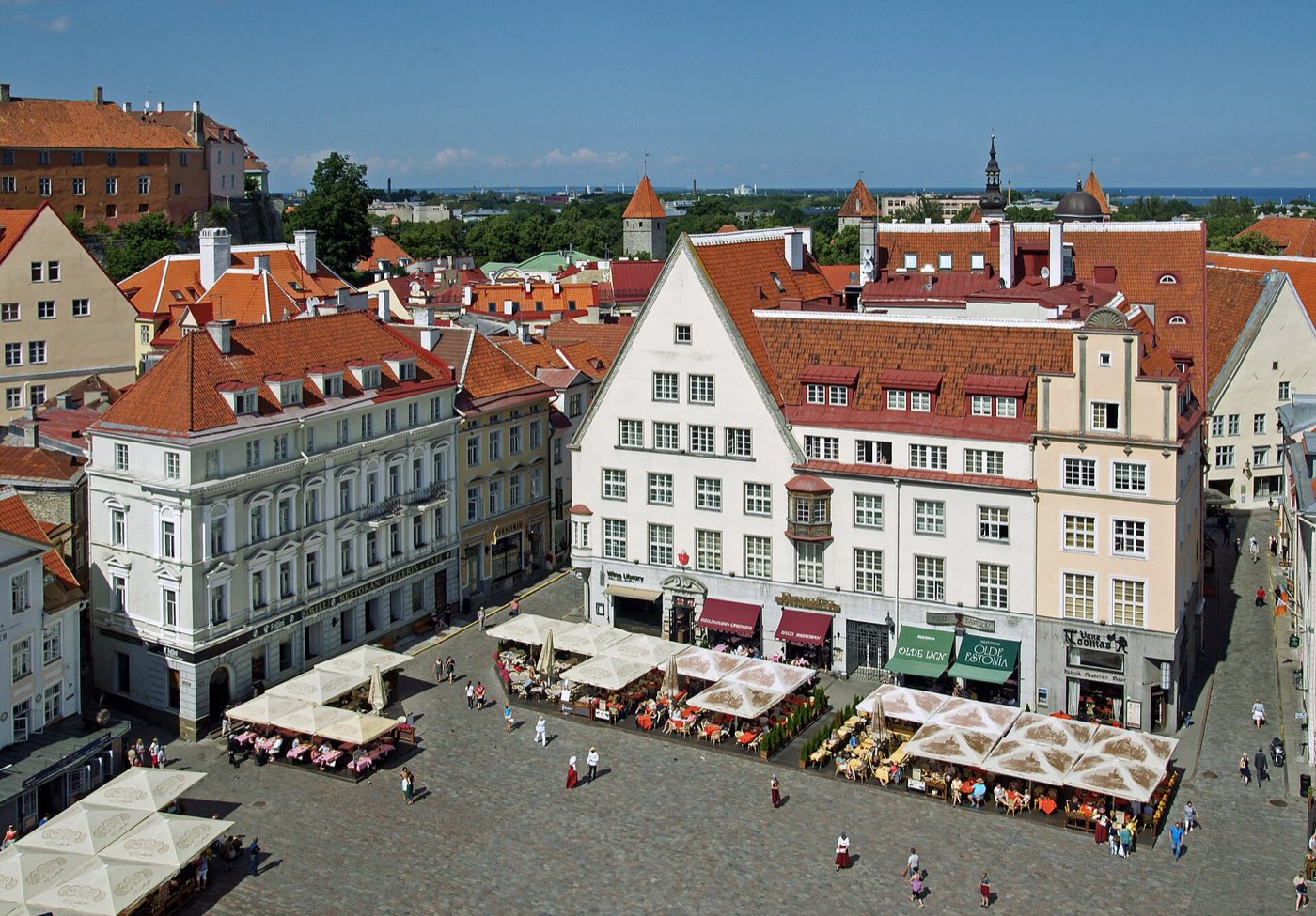
Tallinn's medieval Old Town
The walled upper and lower towns at the heart of Tallinn make up one of the best-preserved medieval city centers in Northern Europe, a UNESCO World Heritage Site with Gothic guildhalls, a thirteenth-century town hall, and a still-functioning stretch of original city walls you can climb. Walk it twice — once during the day, when the main square and Raekoja plats are full of visitors, and again at dusk, when the streets empty and the church spires silhouette against the sky. Don't skip Toompea hill for the panoramas, Kiek in de Kök for the tower museum, or a stop at Olde Hansa for the sort of candlelit medieval meal that sounds like a tourist trap but is actually excellent.
Lahemaa National Park's manor houses and bogs
An hour east of Tallinn, Lahemaa is Estonia's oldest national park and the easiest introduction to the country's wilder side. Restored eighteenth- and nineteenth-century manor houses at Palmse, Sagadi, and Vihula sit within thick pine and spruce forest, and between them run boardwalk trails across peat bogs where elk and wild boar leave tracks on summer mornings. The Viru Bog loop is the signature walk — four kilometers of wooden boardwalk across open moss and black pools with an observation tower halfway. An easy one-day trip from the capital, better as an overnight at one of the manor-house hotels.
Saaremaa Island and Kuressaare Castle
Estonia's largest island feels culturally and geographically distinct — a flatter, slower, windier version of the mainland with its own dialect, juniper-smoked cheeses, and a long tradition of homemade beer. The thirteenth-century Kuressaare Castle at the island's main town is one of the most intact medieval fortresses in the Baltics, with a moat still full of water and a museum inside the keep. The ferry from Virtsu takes thirty minutes; once there, rent a car for the Panga cliffs, the Kaali meteorite crater, and the smoke-sauna tradition still practiced on a handful of farms. Two or three nights is the right length.
Pärnu's summer beach resort
Estonia's Baltic beach town is where the country goes on holiday — a long crescent of pale sand, a shallow warm-shallow bay, and a compact wooden-villa downtown lined with spa hotels, some of them operating for more than a century. July and August are the lively months, with the beach promenade full and festivals rotating through the park stages. Outside high summer it's quieter and notably cheaper; the spa hotels themselves run year-round and are genuinely reasonable for the level of service. A two-hour drive from Tallinn makes it an easy two-night pairing.
Tartu's university town atmosphere
Two and a half hours south of the capital, Tartu is Estonia's intellectual heart — home to the oldest university in the country, founded in 1632 by the Swedes, and currently one of the European Capital of Culture cohorts. The central old town is smaller than Tallinn's but better for bookshops, student cafés, and museums; the Estonian National Museum on the city's outskirts is one of the best new museum buildings in Europe. Evenings, head to Werner for coffee and cake and then to a student bar in the cellar of Ülikooli tänav. A one-night stop works, two is better.
Soomaa National Park bog walking
In the southwestern interior, Soomaa is the country's wilderness showpiece — five vast raised bogs interleaved with floodplain forest and slow rivers. Guided bog-shoe walks across the open peat are the signature activity, and the experience of crossing an apparently endless brown-and-green mossy landscape in silence is one of the quieter pleasures available in Europe. In early spring, the park experiences its famous fifth season when spring floods turn the forest into a canoe-navigable network. Local operators in Viljandi and Tõramaa run half-day and full-day trips year-round.
Tallinn's Telliskivi Creative City
A ten-minute walk from the medieval center, Telliskivi is a former industrial compound turned creative quarter — converted warehouses holding design studios, independent cafés, the Fotografiska photography museum, and the country's best Saturday food market at Balti Jaama Turg next door. Come for a long slow afternoon: coffee at Reval, lunch at the market, a photography exhibition, craft beer at Pudel, and dinner at one of the pop-up restaurants in the old train-depot buildings. It is the contemporary counterweight to the Old Town and worth a proper half-day on its own.
When to Go
June through August is the high season for a reason — long days, White Nights around the summer solstice when the sun barely sets, warm Baltic water for swimming in Pärnu and on Saaremaa, and festivals almost every weekend. Late May and early September are quieter and still pleasant, with cheaper accommodation. Winter trips are underrated: December brings the Tallinn Christmas market in Raekoja plats, snow lies across the forests, and smoke-saunas on the islands come into their proper season. January and February can drop below minus ten but the country is well-equipped for it. Avoid November and early April if you want atmosphere — those are the grey, wet shoulder weeks.
Getting Around
Estonia is compact and well-connected. Intercity buses are the backbone of long-distance travel — frequent, cheap, modern, and reliable between Tallinn, Tartu, Pärnu, and the ferry ports. The rail network is smaller but useful for a Tallinn-Tartu run and a scenic trip to Narva on the Russian border. Ferries to Saaremaa and Hiiumaa run multiple times a day in season and less often in winter. Renting a car is the best option for Lahemaa, the islands, and any open-ended exploration of the interior; roads are excellent and traffic is light outside Tallinn. Within the capital, trams, trolleybuses, and a new tram line cover most of what you need, and ride-hailing via Bolt (founded here) is cheap and ubiquitous.
Cost & Currency
Estonia uses the euro and sits at the more affordable end of the EU, cheaper than the Nordics across the Gulf of Finland but more expensive than it was a decade ago. Budget roughly €10–€16 for a casual lunch of soup and a sandwich at a café, €25–€40 for a sit-down dinner at a midrange restaurant in Tallinn or Tartu, and €80–€140 a night for a comfortable hotel room in the Old Town. Craft beer runs €5–€7, a strong espresso €2.50–€3.50. Cards are accepted almost everywhere — this is genuinely a cashless country in practice — and contactless payment works on buses and trams via a Tallinn Card or bank card. Tipping is modest: round up at cafés, leave 10% at a sit-down dinner if service was attentive, and nothing beyond that is expected.
Frequently Asked Questions
- Do I need a visa to visit Estonia?
- Estonia is a Schengen area member, so travelers from the US, UK, Canada, Australia, New Zealand, and most EU countries do not need a visa for stays of up to 90 days in any 180-day period. Starting in 2026, non-EU visitors will need the new ETIAS travel authorization, a quick online form and fee processed before departure. Check official EU sources for the latest on rollout timing.
- Is English widely spoken in Estonia?
- Yes, particularly among anyone under 50 and throughout the tourism industry. English is the default second language for most younger Estonians, taught in schools from an early age. Russian is widely understood among older residents and in the east of the country. Estonian itself is famously difficult and travelers rarely attempt more than thank-you and hello, which is genuinely appreciated when you do.
- How long should I plan for a first trip?
- Five to seven days is the sweet spot — two nights in Tallinn to cover the Old Town and Telliskivi, a day trip or overnight to Lahemaa, two nights on Saaremaa, and a pass through Pärnu or Tartu on the way back. Ten days gives you space for a proper summer stay at the beach or a winter smoke-sauna stop. The country is small enough that you do not need much longer unless you are slowing down on purpose.
- Is it better to visit in summer or winter?
- Depends on what you want. Summer is the obvious choice for long daylight, warm weather, island trips, and outdoor festivals, and it is when most first-time visitors come. Winter is underrated for Christmas markets, smoke-sauna culture, snow on the bogs, and cheaper prices on hotels. Autumn is the quiet shoulder with good foliage in Lahemaa; late spring is short but pleasant once the snow melts.
- How is Estonia for digital nomads and remote work?
- Exceptionally good. Estonia pioneered the digital-nomad visa in 2020 and offers a genuine one-year remote-work residency with a clear online application. Wi-Fi is fast and free in almost every café and public space, and Tallinn has a serious coworking scene across Telliskivi and the old city. If you want to combine a trip with a few weeks of remote work, Estonia is one of Europe's easiest places to do it.
Plan a Trip to Estonia
Have you been to Estonia?
Track 195 countries, 50 states & 63 national parks on your map