Nigeria
- Capital
- Abuja
- Population
- 224M
- Currency
- NGN
- Languages
- English
Overview
Africa's most populous country and its largest economy, Nigeria is a country of 220 million people, three major ethnic nations (Yoruba, Igbo, Hausa-Fulani) and several hundred smaller ones, and a creative output — Afrobeats, Nollywood, Chimamanda Adichie, Wole Soyinka — that has pulled the continent's cultural gravity south and west over the past two decades. Travelers come for Lagos's music and nightlife, the ancient Yoruba sacred groves of Osun, the bronze-casting traditions of Benin City, and the Sahel-facing emirates of the north. Lagos is where most trips begin and where most of your time will probably go. The city is enormous, loud, and creatively ferocious — 20-plus million people compressed between lagoon and Atlantic, a traffic jam always in progress, and a club and gallery scene that genuinely sets the continent's tone. You move by app-hailed car when you can afford the wait, and by keke (three-wheeler) or okada (motorbike) when you cannot. Mainland neighborhoods like Yaba and Surulere are where the art, fashion, and live music are happening; Victoria Island and Ikoyi are where the hotels and restaurants cluster. Nigeria is not uniformly easy to travel. The south — Lagos, Abuja, Calabar, Benin City, and the Yoruba southwest — is navigable with planning and common sense. The north and northeast are a different calculation: Boko Haram remains active in Borno, Yobe, and Adamawa; banditry and kidnapping have made parts of Zamfara, Kaduna, and Katsina effectively off-limits to foreign travel. Most governments advise against all but essential travel to those states. Stick to the south, fly rather than drive between major cities, and you will find a country that rewards every hour you give it.
Things to Do
Lagos's Lekki Conservation Centre and Nike Art Gallery
The Lekki Conservation Centre gives you an afternoon's respite from Lagos traffic — a 78-hectare reserve of swamp forest on the peninsula with a 401-meter canopy walkway, one of Africa's longest, that sways pleasantly between the trees and over mona monkey and crocodile habitat. Pair it with a visit to the Nike Art Gallery a few kilometers away, a five-story private collection of contemporary Nigerian art founded by textile artist Nike Davies-Okundaye — thousands of pieces across painting, sculpture, and adire cloth, and usually Nike herself on hand to talk you through the history.
Osun-Osogbo Sacred Grove UNESCO site
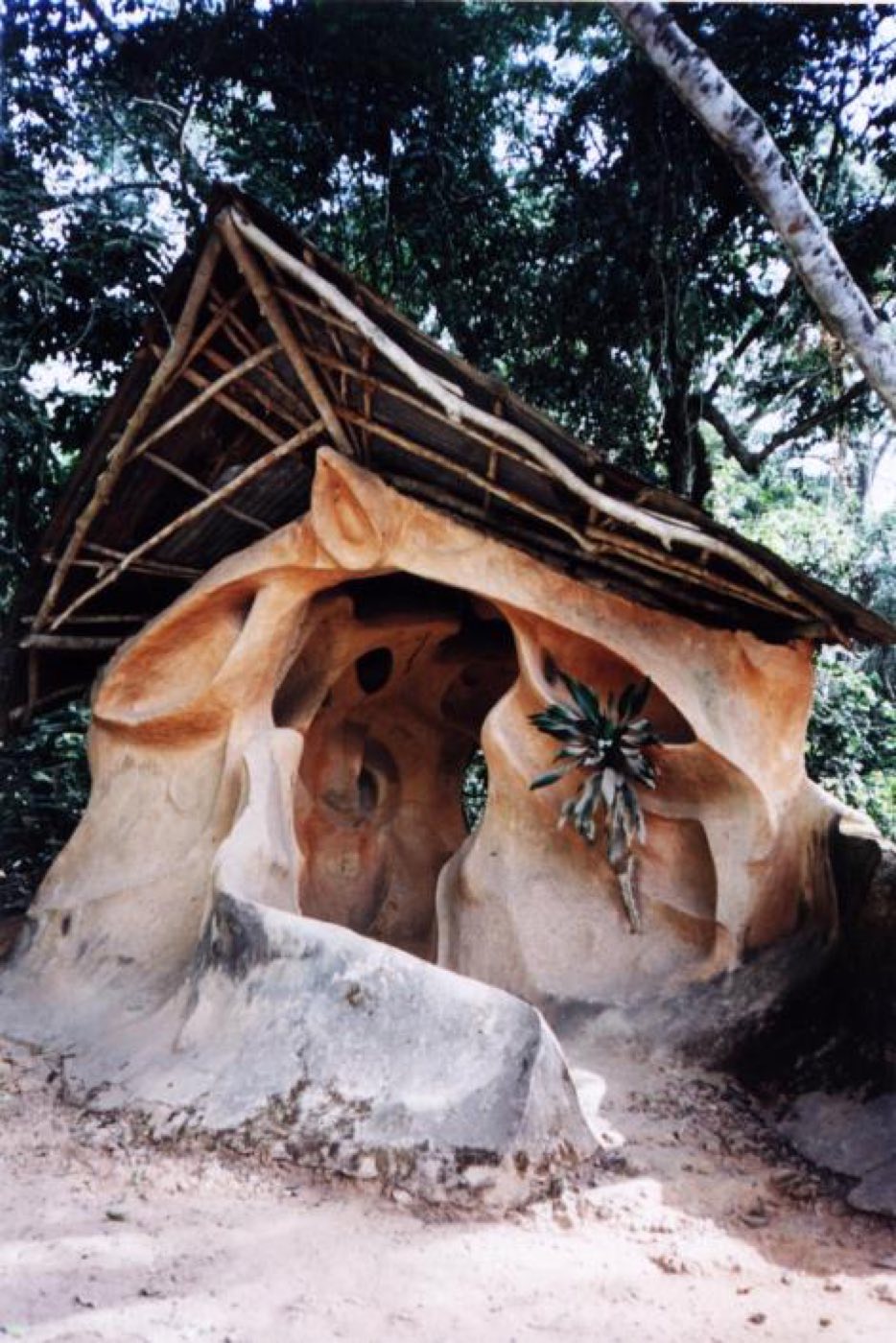
A dense patch of primary forest along the Osun River outside the city of Osogbo, this is the last intact sacred grove of Yoruba religion — studded with shrines, sculptures, and sanctuaries to Osun, goddess of fertility and the river, many of them rebuilt in the 1950s and 60s by Austrian artist Susanne Wenger and her circle of Yoruba collaborators. UNESCO listed the grove in 2005. The annual Osun-Osogbo festival each August draws practitioners and pilgrims from across the diaspora and is the single most remarkable cultural event you can attend in southern Nigeria.
Yankari National Park warm springs and elephants
In Bauchi State in the central-east, Yankari is Nigeria's best wildlife reserve — 2,244 square kilometers of savanna supporting one of West Africa's largest surviving elephant populations plus hippos, baboons, and good birdlife. The Wikki Warm Springs at the lodge stay a steady 31°C year-round and you can swim in them under palm trees at the end of a morning game drive. Note that Bauchi borders states with active insecurity; check advisories close to travel and go with an established operator out of Abuja or Jos.
Zuma Rock near Abuja
An enormous monolith of igneous rock rising 725 meters straight up out of the savanna about an hour north of Abuja on the road to Kaduna, Zuma Rock is one of the country's defining natural landmarks — the face on the 100 naira note. Most travelers stop to photograph it from the highway viewpoint; organized climbs of the easier slope are possible with local operators out of Abuja but require permits and local guides, and the route can be closed without warning.
Benin City's royal court and bronze-casting tradition
The capital of the old Kingdom of Benin, the Edo city in southern Nigeria is where the Benin Bronzes were cast between the 13th and 19th centuries — the same works British forces looted in 1897 and that museums across Europe are now slowly returning. The current Oba of Benin still holds court at the royal palace; the National Museum on Ring Road holds a small but serious collection of surviving bronzes, and the Igun Street guild of casters is still working in the same techniques their ancestors developed.
Sukur Cultural Landscape UNESCO site
On the Mandara Mountains in far northeast Adamawa State, the Sukur Kingdom's terraced hillsides, sacred stones, and palace complex have been inhabited continuously for centuries and became Sub-Saharan Africa's first cultural landscape UNESCO listing in 1999. Note that Adamawa borders Boko Haram-affected areas and the security situation has disrupted visits repeatedly over the past decade. Do not attempt Sukur without current on-ground intelligence and a Nigerian guide who works the region.
Olumo Rock in Abeokuta
An hour and a half inland from Lagos, the city of Abeokuta grew up around this 137-meter granite dome that sheltered the Egba people during the 19th-century Yoruba civil wars. A staircase cut into the rock climbs past shrines and caves to a viewing platform with the whole city spread below. A small museum at the base covers Abeokuta's history and the rock's role as refuge. Easy day trip from Lagos if traffic is kind to you.
Calabar Carnival in December
Billed as Africa's biggest street party, Calabar Carnival takes over Cross River State's capital in the second half of December, peaking on the 27th with competing carnival bands parading floats, costumes, and choreographed drumming through the city for 12 hours straight. The parties around the main event run for weeks. Calabar itself, on the Cross River near the Cameroonian border, is one of Nigeria's pleasantest cities — slower than Lagos, greener, and with a strong food scene built around the region's distinctive palm-oil cooking.
When to Go
November to February is the best stretch — dry, cooler than the rest of the year, and with the harmattan wind blowing Saharan dust south to haze the skies and knock the temperatures down, especially in the north. December is when Lagos fills up with returning diaspora and the city's social calendar goes into overdrive around what locals call Detty December. The rainy season runs from April through October and is heaviest in the southeast; flooding can disrupt road travel and the humidity is punishing. The northern dry season aligns with the southern one, making December-February also the sensible window for Yankari and Zuma Rock.
Getting Around
Flying is the realistic way to cover distance in Nigeria — Lagos to Abuja, Abuja to Port Harcourt, Lagos to Calabar all take about an hour versus a full day or more overland. Air Peace, Arik, and Dana run regular domestic schedules; book early and expect delays. Road travel between cities is doable in the south but exhausting, and foreign governments strongly discourage long-haul driving in the north because of kidnapping risk. Within Lagos, use Bolt or Uber wherever possible and avoid driving yourself; keke napep three-wheelers handle shorter hops. Intercity buses like GUO and ABC Transport are reliable for Lagos-Benin-Onitsha-Enugu but less so further north. Hire a driver for any multi-day itinerary.
Cost & Currency
Nigeria uses the naira (NGN), and the exchange rate has moved sharply over the past few years — roughly ₦1,500–₦1,700 to the US dollar at recent rates, though the official and parallel markets have diverged historically. Lagos is expensive by African standards and cheap by Western ones: expect ₦6,000–₦15,000 for a decent restaurant meal on Victoria Island, ₦60,000–₦200,000 a night for mid-range to upper-mid hotels in Ikoyi or Lekki, and ₦3,000–₦8,000 for typical Bolt rides across the city. Outside Lagos prices drop significantly. Cards work at better hotels and restaurants in Lagos and Abuja; cash is essential everywhere else. Change money at your hotel or a registered bureau de change rather than on the street, and keep small naira notes for tips and transport.
Frequently Asked Questions
- Is Nigeria safe for travelers?
- It depends heavily on where you go. Lagos, Abuja, Calabar, and most of the Yoruba southwest are manageable with normal urban caution — watch for pickpocketing, avoid flashing phones, use ride-hailing rather than street taxis. The northeast (Borno, Yobe, Adamawa) has an active Boko Haram insurgency; the northwest (Zamfara, Kaduna, Katsina) has serious banditry and kidnapping; most governments advise against all travel there. Check your foreign ministry's current advice before booking.
- Do I need a visa to enter Nigeria?
- Yes — almost all travelers require a visa, and the application process is genuinely involved. You will need a letter of invitation from a Nigerian host or hotel, a yellow fever certificate, and in most cases a trip to a Nigerian embassy or consulate. A visa-on-arrival scheme exists for business travelers with pre-approval. Start the process at least a month before travel and build in buffer time.
- What vaccinations and health precautions do I need?
- Yellow fever vaccination is legally required to enter Nigeria and you will be asked for the certificate. Malaria is present year-round across the country and prophylaxis is essential — talk to a travel clinic about atovaquone/proguanil or doxycycline. Typhoid, hepatitis A and B, and routine boosters are strongly recommended. Drink bottled or filtered water, and be cautious with street food until your stomach adjusts.
- Can I travel independently or do I need a guide?
- Lagos and Abuja are navigable independently if you are comfortable in large African cities and use ride-hailing apps. For any travel outside the main cities — Osun, Benin City, Yankari, the Cross River area — a local fixer or tour operator will save you substantial time and hassle around checkpoints, fuel queues, and accommodation. For anywhere in the north or northeast, a guide with current local knowledge is essential, not optional.
- When is Calabar Carnival and is it worth attending?
- Calabar Carnival runs through most of December in Cross River State, with the main parade on December 27 and events building from mid-month. It is worth the trip if you want to see Nigeria at its most creatively extroverted — costuming, choreography, and street energy on a scale that rivals any carnival in the world. Book flights and accommodation in Calabar months ahead; the city fills up and prices spike.
Plan a Trip to Nigeria
Have you been to Nigeria?
Track 195 countries, 50 states & 63 national parks on your map