Mauritania
- Capital
- Nouakchott
- Population
- 4.9M
- Currency
- MRU
- Languages
- Arabic
Overview
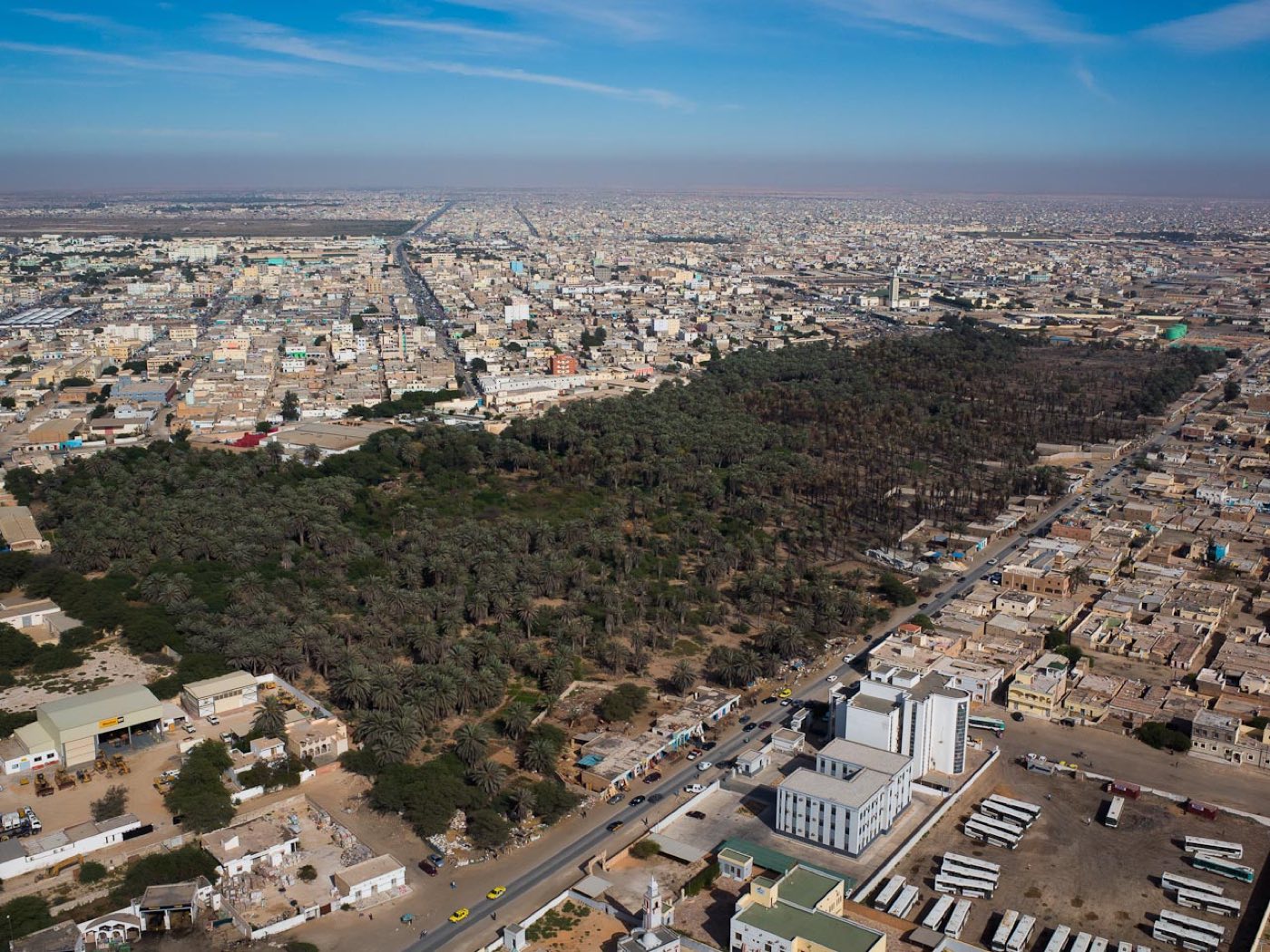
A vast Saharan and Sahelian country where ancient camel-caravan cities like Chinguetti — once the fifth holiest city of the Islamic world — rise out of a sea of sand, and where the Atlantic coast at Banc d'Arguin hosts one of the greatest bird migrations on the planet. Mauritania is the kind of place travelers come to when they want the Sahara without the development of Morocco, and where the effort involved becomes part of what you remember. Flying into Nouakchott you see the sand first — drifts of it across the runway, across the roads, up against the walls of the low ochre buildings. The wind off the desert carries a fine dust that coats everything within a few hours, and the city itself feels temporary, spread thin between the ocean and the dunes. You leave it quickly in either direction: west to the mile-long line of fishing pirogues hauling their catch up the beach at the port, or east by 4x4 toward Atar, where the real journey into the Adrar region begins. Mauritania rewards travelers willing to commit to slow, deliberate travel — desert driving, nights under a sky thick with stars, meals of camel meat and sweet green tea shared on carpets with drivers and guides. Security matters here: the Sahel borders with Mali and Algeria carry ongoing government advisories against travel, and the Adrar region, while safer, absolutely requires an accredited local guide and driver. Book through a reputable Atar-based agency, check your government's current guidance, and travel with a yellow fever certificate and malaria prophylaxis.
Things to Do
Ancient Ksour of Chinguetti UNESCO site
Founded in the 12th century as a caravan stop and Islamic scholarly center, Chinguetti still holds five medieval manuscript libraries in private family hands — Qurans, astronomical treatises, and jurisprudence volumes from 800 years ago, kept in modest rooms where the families will show you volumes by appointment. The old quarter is a cluster of stone houses being slowly reclaimed by dunes from the east; some doorways are already half-buried. Stay in a small guesthouse in the old town, visit at least one manuscript library, and walk out into the dunes at dawn.
Banc d'Arguin National Park birdwatching
This UNESCO coastal park is one of the most important bird sites in Africa — millions of migratory waders overwinter in the shallow flats where the Sahara meets the Atlantic. Flamingos, pelicans, spoonbills, and sandpipers concentrate in numbers that defy photography. The park is reached by 4x4 from Nouakchott, usually as part of a two- or three-day trip; Imraguen fishing villages inside the park still practice a traditional method where dolphins herd mullet into shore nets. Bring binoculars and a scope if you have one.
Ouadane ancient Saharan trading town
Older than Chinguetti — founded in 1147 — Ouadane sits on a rocky outcrop deep in the Adrar and was once the gateway to the salt trade from Taoudenni. The old town, also UNESCO-listed, is a ruin of stone walls and half-collapsed houses with a few still-inhabited compounds threaded through. A local guide can walk you through the mosque, the caravan routes, and the Street of the Forty Scholars. Come in winter — summer temperatures here become genuinely dangerous.
Richat Structure (Eye of the Sahara)
A 40-kilometer circular geological formation visible from space, the Eye of the Sahara is a deeply eroded dome of concentric ridges exposed over millions of years — not an impact crater, despite its appearance. From ground level you drive up to the rim and camp; the scale only becomes legible at sunrise when the low light picks out each ring of rock. Getting there takes a full day of desert driving from Atar with an experienced guide; there is no road to speak of, only tracks.
Saharan camel trekking from Atar
Multi-day camel treks from Atar into the Adrar region are the way to experience the Mauritanian Sahara on its own terms — usually three to seven days, sleeping in tents or under the stars, covering maybe 20 to 30 kilometers a day at walking pace alongside the camels. Expect mint tea at every stop, millet porridge and rice for most meals, and a rhythm that resets your sense of time within 48 hours. Arrange through an Atar-based cooperative; the Mauritanian Tourism Federation maintains a list of accredited operators.
Terjit Oasis palm canyon
A narrow rock canyon in the Adrar where two springs — one warm, one cold — feed a palm grove and cascade into shallow pools you can swim in. It's a logical stop on any Adrar loop, about an hour's drive from Atar, and the contrast of cold water and date palms against bare desert sandstone is the kind of thing you remember. A small local family runs a simple guesthouse nearby if you want to overnight; otherwise it's a half-day visit.
Nouakchott's fish market and port
The Port de Pêche on the Atlantic coast of the capital is one of the most photogenic working fish markets in West Africa — hundreds of wooden pirogues pulled up on the beach, men hauling catches in by hand, women working fish on long wooden tables, and gulls everywhere. Arrive in the late afternoon when the boats come in, around four to six. Go with a guide the first time; the scene is welcoming but chaotic, and camera etiquette matters.
When to Go
November through March is the only realistic travel window for most of the country. Daytime desert temperatures drop to a comfortable 20 to 28 degrees Celsius, nights turn genuinely cold in the Adrar, and the Harmattan wind can occasionally haze the sky with Saharan dust. Banc d'Arguin's bird migrations peak from December through February. From April onward, daytime temperatures climb rapidly, and by May through September they regularly exceed 45°C in the interior, making desert travel dangerous. The short rainy season in the south runs July through September and can wash out rural tracks.
Getting Around
Hiring a 4x4 with a local driver-guide is the realistic option for any travel outside Nouakchott and Atar, and is required for the Adrar region both by road conditions and by current security practice. A reputable Atar-based agency will provide the vehicle, driver, cook, and the permits and check-in relationships needed to move through rural areas. Shared taxis and minibuses connect the main cities on paved routes — Nouakchott to Atar is a full-day 450-kilometer drive — but are not a sensible option for visitors given language and security friction. The Iron Ore Train from Zouérat to Nouadhibou is a famous 20-hour ride on the world's longest freight train, though it's a serious undertaking and requires extensive preparation.
Cost & Currency
Mauritania uses the ouguiya (MRU), a local currency that is not convertible outside the country — change euros or US dollars at banks in Nouakchott on arrival and carry cash throughout your trip. Prices are modest but guide and 4x4 costs dominate any budget: figure 120 to 200 euros per day for a guide, driver, fuel, and 4x4 together, plus 15 to 30 euros for a guesthouse bed or campsite contribution. A plate of rice and fish in a local Nouakchott restaurant runs 80 to 200 MRU (roughly 2 to 5 euros). Credit cards are accepted at a handful of Nouakchott hotels and nowhere else useful. Tipping drivers and guides at the end of a trip — a day's wage or two — is standard and appreciated.
Frequently Asked Questions
- Is Mauritania safe for travelers?
- The Adrar region around Atar, Chinguetti, and Ouadane is generally safe when traveling with an accredited local guide and driver, and most tour operators work within areas the Mauritanian government considers secure. The border regions with Mali and Algeria carry serious Sahel advisories from most Western governments and should be avoided. Check your foreign ministry's current guidance before booking, and never travel in the interior without a local guide.
- Do I need a visa?
- Most nationalities need a visa, which for many travelers is issued on arrival at Nouakchott airport for around 55 euros — bring crisp euro notes, a passport-size photo, and patience for the process. Check whether your nationality is eligible for visa-on-arrival before flying; a few countries still require an embassy visa in advance. Yellow fever vaccination is required for entry.
- What language is spoken and will English get me by?
- Arabic and French are the working languages, and French is essential — English is rare outside a few Nouakchott hotels and will not get you through rural interactions. Hassaniya Arabic is the spoken language across most of the country, with Pulaar, Soninke, and Wolof in the south. Arrange a French- or English-speaking guide through your tour operator; solo travel without French is not practical here.
- What should I pack for the Adrar desert?
- Layers for cold nights (temperatures drop below 10°C in winter), a warm sleeping-bag liner if your operator provides thin bedding, a scarf or cheche for sun and dust, sturdy closed shoes, and a headlamp. Sunscreen, electrolyte tablets, and hand sanitizer are worth their weight. Pack modestly — shoulders and knees covered for both men and women — out of respect for local custom.
- Can I ride the Iron Ore Train?
- Yes, though it requires preparation. The 20-hour ride from Zouérat to Nouadhibou on open ore wagons is free but extremely dusty, cold at night, and exposed — most travelers now take the passenger car that runs at the end of the train for a small fee. Bring goggles, a dust mask, a sleeping bag, food and water, and a guide who has done it before. The experience is genuine desert legend but not a soft introduction to the country.
Plan a Trip to Mauritania
Have you been to Mauritania?
Track 195 countries, 50 states & 63 national parks on your map