Mali
- Capital
- Bamako
- Population
- 22.6M
- Currency
- XOF
- Languages
- French
Overview
Mali was once one of the most rewarding destinations in Africa for travelers — the mud-brick Great Mosque of Djenné, the cliff villages of the Dogon along the Bandiagara Escarpment, and the legendary libraries of Timbuktu that preserved hundreds of thousands of medieval manuscripts. This is a country that was, at its 14th-century peak under Mansa Musa, one of the wealthiest empires in the world, and whose music — Ali Farka Touré, Salif Keita, Amadou and Mariam, Tinariwen — shaped a generation of global sound. It is also, right now, not a country most people should visit. Jihadist insurgency across the Sahel has pushed the security situation backwards for more than a decade. The entire north and most of the center are off-limits — the UK, US, and most European foreign offices advise against all travel to anywhere outside Bamako and a narrow corridor to the southern border. Timbuktu has been effectively closed to visitors since the 2012 Tuareg rebellion and subsequent Islamist occupation. Djenné, Mopti, Ségou, and Dogon Country all sit in zones under advisory against travel. Overland crossings from Mauritania, Algeria, and Burkina Faso are dangerous or closed. What remains realistically accessible is Bamako and a short strip of the Niger River basin south of it. That is where the live music scene is still genuinely extraordinary, where you can still feel the country's cultural gravity, and where the overwhelming majority of the few remaining foreign travelers go. Anyone considering Mali should read their government's latest advisories, work with a local fixer who understands current security conditions, and be honest about what is realistically possible. The cultural landmarks are still there — you just cannot safely reach most of them.
Things to Do
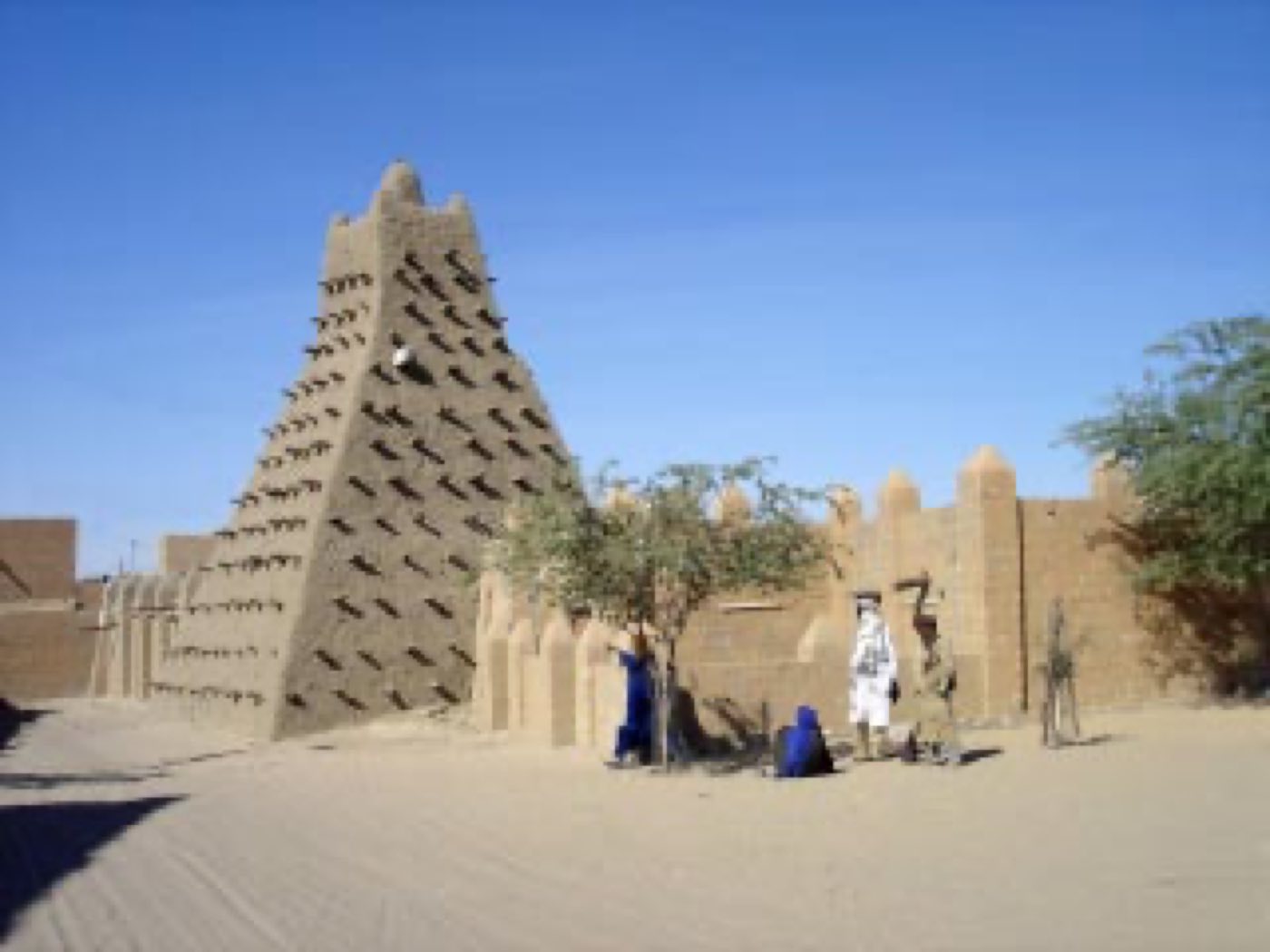
Great Mosque of Djenné — world's largest mud-brick structure
Access advisory: Djenné sits in a region under advisory against all travel from most Western governments, and the Monday market that surrounds the mosque now runs under heavy security. The mosque itself is the single largest adobe building in the world, rebuilt in 1907 on foundations going back to the 13th century, and its annual crepissage — when the whole town replasters the walls in a day — is a defining African cultural event. Verify current access through your embassy and a trusted local operator before including it.
Dogon Country cliff villages on the Bandiagara Escarpment
Access advisory: The Bandiagara region has been closed to tourism in practice since 2015 because of jihadist activity and inter-communal violence. The cliff villages themselves — granaries and houses built into a 150-kilometer sandstone escarpment by a culture with one of the most documented cosmologies in West Africa — are UNESCO-listed and architecturally extraordinary. Historically a multi-day trek with a Dogon guide was the country's signature experience. Do not attempt it without current, specific guidance from a local operator confirming access is safe.
Timbuktu's ancient mosques and manuscripts
Access advisory: Timbuktu has been effectively closed to international visitors since 2012, when Tuareg separatists and then Islamist militants occupied the city. Many of the shrines at the Djingareyber, Sankoré, and Sidi Yahia mosques were destroyed, and roughly 300,000 manuscripts from the city's libraries were smuggled to Bamako for safekeeping, where they remain. Scholars now access the manuscripts in the capital at the Ahmed Baba Institute. The city itself is under advisory against all travel and should not be attempted.
Bamako's live music scene
The capital remains the cultural heart of the country and is where most visitors who do come to Mali actually spend their time. Clubs like Diplomate, Djembe, and the rooftop bars along the Niger put on live Malian music most nights of the week, often with musicians who have recorded albums you already own. Bamako has a functioning Western-grade hotel infrastructure and reasonable safety within the main neighborhoods (ACI 2000, Hippodrome, Koulouba). Three to five nights for live music, the National Museum, and the Artisan Centre is a realistic trip.
Niger River boat journeys
Access advisory: The classic pinasse trip from Koulikoro north to Mopti and beyond, once a defining Malian experience, runs through regions under travel advisory and is not currently recommended. Short river excursions from Bamako itself — a few hours on the water at sunset with pirogue drinks and a view of fishermen casting their nets — remain accessible and are among the pleasanter ways to spend an afternoon in the capital. Longer river journeys north should be verified with local operators and embassy guidance.
Ségou's pottery workshops and Mopti's harbor
Access advisory: Both Ségou (three hours east of Bamako) and Mopti (eight hours northeast) sit in zones under advisory against all but essential travel. Historically Ségou was the country's easiest day trip from the capital, a French colonial town on the Niger with a calendar of pottery and music festivals; Mopti was the country's busiest inland port and the gateway to Dogon Country. Check latest advisories; Ségou is sometimes included on shortened modern itineraries when security permits, Mopti generally is not.
Hombori Tondo — Mali's highest peak
Access advisory: Hombori Tondo, the mesa-like sandstone peak that rises to 1,155 meters out of the plains between Mopti and Gao, sits in one of the country's most dangerous regions and has not been accessible to foreign climbers since 2012. Its sheer walls once drew occasional international expeditions. It is listed here for completeness; do not attempt to reach it under current conditions.
When to Go
Timing within Bamako follows the Sahel's standard calendar: November through February is the cool dry Harmattan season with comfortable daytime temperatures and cold nights, and it is when any realistic visit should happen. March through May is brutally hot with daytime highs above 40°C. The rainy season from June through September is cooler but comes with unpaved road degradation and humidity. The Festival sur le Niger in Ségou each February has historically been the country's signature event for visitors, though recent editions have run under modified formats — check schedule and security guidance before booking around it.
Getting Around
Travel realistically means Bamako and short trips within its immediate region. Within the capital, taxis and rideshare apps (Sotrama minibuses for the budget-minded) cover short hops cheaply. Domestic flights to the north have largely been suspended or run only with security clearances; overland travel beyond the southern corridor is not recommended. Roads within Bamako are paved, congested, and adequate. If you do travel with a local operator, they will arrange 4x4 transfers for any journey outside the city, and you should confirm routes and timing against the current day's security situation before setting off. Hire a driver rather than self-driving; local knowledge of checkpoints and road conditions matters.
Cost & Currency
Mali uses the West African CFA franc (XOF), pegged to the euro at 655.957 to 1. Prices on the ground remain low — a plat du jour lunch runs 2,000–4,000 CFA ($3–$7), a mid-range hotel room in Bamako 40,000–80,000 CFA ($70–$140), and taxi rides within the capital rarely exceed 3,000 CFA. Upmarket hotels in Bamako with reliable power, water, and security cost $150–$250 per night and are worth it. Cards work at larger hotels and a few supermarkets; elsewhere is cash, and changing euros at a bank in Bamako is the reliable method. Budget for a security-aware local operator and driver — $150–$250 per day — which is the realistic way to travel anywhere outside the capital.
Frequently Asked Questions
- Is it safe to visit Mali?
- The north and center of the country are not safe — most Western governments advise against all travel there because of active jihadist insurgency and banditry. Bamako and a narrow southern corridor are where the few foreign visitors who still come actually spend their time, and safety there depends on staying in established neighborhoods, using a trusted driver, and avoiding political gatherings. Check your foreign office advisory close to travel.
- Can I visit Timbuktu?
- No — Timbuktu has been effectively closed to international visitors since the 2012 rebellion and subsequent Islamist occupation, and the city remains under advisory against all travel. The manuscripts once held in its libraries were evacuated to Bamako and are now viewable at the Ahmed Baba Institute there, which is the closest most visitors can reasonably get to that piece of Malian history.
- Do I need a visa to enter Mali?
- Yes — most nationalities need a visa, obtained in advance from a Malian embassy. A yellow fever vaccination certificate is also required on arrival. Check with the embassy or consulate in your country, since processing times and documentation requirements have changed several times since the 2020 and 2021 political transitions.
- What vaccinations and medical preparation do I need?
- Yellow fever is legally required, and routine boosters plus typhoid, hepatitis A, meningitis, and malaria prophylaxis are strongly recommended. Medical facilities in Bamako are basic; serious conditions require evacuation, so comprehensive medical insurance with repatriation coverage is essential. Carry a personal medical kit and any prescriptions with you in original packaging.
- Is the music scene in Bamako still worth traveling for?
- Yes — Malian music remains one of the great living traditions on the continent, and Bamako is still where most of it happens. Clubs run live sets most nights, the annual Festival sur le Niger in Ségou draws international artists in February, and you can catch kora players and griot singers in small venues almost any evening. For music-focused travelers willing to accept the restricted itinerary, a Bamako-only trip still delivers.
Plan a Trip to Mali
Have you been to Mali?
Track 195 countries, 50 states & 63 national parks on your map